An Anthropic Mathematician Says Claude Found a Riemann Hypothesis Proof
Levent Alpöge says he and Claude proved the Riemann hypothesis and its general form, posting the argument in Lean. Mathematicians have not verified it yet.

On this page
Key takeaways
- Levent Alpöge, a mathematician employed by Anthropic, posted a note on 20 November 2026 saying he believes he and Claude discovered a proof of the Riemann hypothesis.
- The note says the method also resolves the Generalized Riemann Hypothesis, and that the argument was formalised in Lean and released as 14 compressed archive parts rather than a paper.
- The claim has not been independently verified. Mathematicians must check both that the Lean statements encode the hypothesis correctly and that the proof is sound.
- MIT mathematician Andrew Sutherland says he independently compiled the Lean project and called the result historic, while cautioning that the mathematical details still need to be understood.
- A separate, fully human proof of the generalized hypothesis by Stanford postdoc Alessandro Masullo was also released on 20 November after 12 years of work.
Levent Alpöge, a mathematician employed by Anthropic, posted a four-page note on his website on Friday saying he believes he and Anthropic's Claude have discovered a proof of the Riemann hypothesis, the most famous open problem in mathematics. The note goes further, saying the method also resolves the Generalized Riemann Hypothesis. Neither claim has been independently verified.
Related reading: Anthropic's Claude Duet Works in the Background, and Asks Before It Acts · OpenAI Puts Four Outside Auditors Inside Its Training Runs.
"I believe I have, working with Claude, discovered a proof of the Riemann Hypothesis," Alpöge wrote. "In fact, the method easily extends much further, resolving the so-called Generalized Riemann Hypothesis, and I expect, with more time, the Extended Riemann Hypothesis too."
The Riemann hypothesis has stood since 1859. It is one of the Clay Mathematics Institute's seven Millennium Prize Problems, each carrying a $1 million award, and it underpins a large part of analytic number theory. A proof would turn a long list of results that begin "assuming the Riemann hypothesis" into unconditional theorems. A proof of the generalised version would do the same across a much wider family of functions.
What Alpöge released
There is no paper. Alpöge posted a short note, titled "Remark," and linked to a Lean 4 project split into 14 compressed archive parts. Lean is a proof assistant: it checks that every step in a formal argument follows from the previous ones and from the definitions and axioms it is allowed to use.
Alpöge said he released only the formal version because an informal write-up would be unreadable at that size. "It being obviously inappropriate to attempt to post some massive unreadable travesty of 'slop', I decided to only present Lean," he wrote. A footnote puts the AI-generated informal write-up at more than 250,000 pages. Mathematician Alex Kontorovich estimated the Lean release at about 17 million lines.
The project's top-level theorem is stated for the Riemann zeta function, in the form Lean's mathematics library uses for the hypothesis. Separate statements cover Dirichlet L-functions, the family behind the generalized version. Alpöge describes an extension to the Extended Riemann Hypothesis as future work rather than a completed result.
He is unusually direct about the limits of his own command of the argument. He says he is "presenting the world with a complete argument before having mastered a massive neighbourhood around its mathematics," that he may have "baked lots of strange suboptimal choices into the argument," and that some descriptions of the higher-rank automorphic forms involved paraphrase an AI-written summary that "might make zero sense." He has promised to write the argument up properly.
Why this problem matters
The Riemann zeta function encodes information about the prime numbers. Its zeros control how far the count of primes below a given number can stray from the best smooth estimate. Riemann conjectured in 1859 that every nontrivial zero sits on a single vertical line in the complex plane, with real part one half. Numerical checks have confirmed the first ten trillion zeros, but no amount of checking can prove a statement about all of them.
A proof would not make prime numbers predictable one by one. It would bound the error in the prime-counting estimate as tightly as the conjecture allows, and it would validate decades of work built on the assumption. The generalized version extends the same claim to Dirichlet L-functions, which describe how primes are distributed among residue classes.
The Clay Mathematics Institute's rules are strict. A solution must appear in a qualifying publication, survive at least two years of scrutiny, and achieve "general acceptance in the global mathematics community." The institute does not accept direct submissions. Even a correct Lean proof would not collect the prize on Friday.
The verification problem
A Lean proof is only as good as the statement it proves. Checking Alpöge's release involves two separate questions: does the formal theorem say what mathematicians mean by the Riemann hypothesis, and does the proof actually establish it under the allowed assumptions? The first can be checked relatively quickly by experts. The second is a larger job, because a compiled proof can still rest on a mis-formalised definition or an unnoticed axiom.
Andrew Sutherland, a mathematician at MIT, said he had independently compiled Alpöge's project in Lean. "This is indeed an historic moment," he told Scientific American. "The world has changed." He added: "There is much work to be done to understand the mathematical details of the proof. And I can't wait to dig into them."
Others were more guarded. Kevin Buzzard of Imperial College London told New Scientist that the first step was to see whether it compiles, and that it might be a while before the relevant experts can explain the thrust of the argument.
The full proof verification was still running. TechCrunch reported that most of those who examined the argument appeared confident the formal result would hold, while stressing that human understanding would take much longer.
Caveats
This is a claim, not an accepted result. Alpöge says he believes the proof is complete and has released a machine-checkable formalisation. No independent mathematician has yet confirmed that the formal statements match the intended theorem and that the whole argument is sound. The Clay Mathematics Institute has not recognised a solution.
A second proof, from a human
The same day brought an unexpected companion announcement. Alessandro Masullo, a postdoctoral researcher at Stanford, released a proof of the Generalized Riemann Hypothesis that he says took 12 years and used no AI. Ravi Vakil, a Stanford mathematician, said the plan had been to spend a year polishing the write-up before announcing it.
"It is all human, with no AI," Vakil said, according to TechCrunch. "The hope was to bring Alessandro to Stanford for a year to polish the writing and then announce it after running it by enough people. Now it seems best to put out the current draft."
Masullo framed the release in personal terms. "If any message at all this work is meant to send to the mathematician who feels discouraged by the pace and tone of the current climate, it is this: we are still here," he wrote. "We are very much alive. We are not going anywhere."
The existence of a second proof does not settle either claim. Masullo's argument also needs review, and the two proofs may take different routes. But it changes the story from a solitary AI achievement into a race between a machine-assisted effort and a long human project, with the mathematical community left to check both.
The timing and the IPO
The announcement came one day after Anthropic's shares began trading on Nasdaq in the largest IPO on record. Alpöge addressed the coincidence directly. "The precise timing is horrible," he wrote, according to New Scientist. He said the result came together late on Sunday night, that he messaged Anthropic chief executive Dario Amodei about how to announce it, and that "there was a constraint to respect." TechCrunch reported that he felt he "could not live" if he waited any longer.
The juxtaposition invited cynicism, and some mathematicians supplied it. A proof announced the day after a record listing, in a format almost nobody can read, is exactly the kind of claim that deserves scrutiny rather than celebration. Anthropic has not commented on the result or presented it as a company achievement. Alpöge published it on his personal site.
His track record is relevant in both directions. In July he announced a counterexample to the Jacobian conjecture, found with Claude, that fit in 216 characters. In August, Anthropic reported that an unreleased version of Claude had raised the proven lower bound on the share of zeta zeros lying on the critical line from 41.6% to 67.25%, a result reviewed by Brian Conrey and Dan Goldston. At the time, Anthropic said it did not expect those techniques to prove the full hypothesis. In September, Alpöge and NYU mathematician Tristan Buckmaster were involved in a disputed Navier-Stokes result that OpenAI also claimed.
What happens next
The first test is technical: whether the Lean project compiles for reviewers and whether its statements survive expert reading. The second is human: whether anyone can explain the argument in a form mathematicians can check, critique and build on. Alpöge has committed to that work, and Sutherland's reaction suggests the community is ready to dig in.
If the proof holds, the consequences would be broad but not immediate. Conditional results across number theory would become theorems. The techniques, which Alpöge says adapt Stepanov's method using a chain of theta lifts, could open new lines of work. The practical effects on cryptography are close to nil, because the security of RSA and similar systems rests on factorisation and discrete logarithms rather than on the location of zeta zeros.
What the episode does show is how quickly the verification bottleneck has moved. A machine can now produce a proof that is too large for any human to read, in a format that a machine can check but that still needs people to decide whether the right theorem was proved. The Lean files are public, and the arguments inside them are not yet understood.
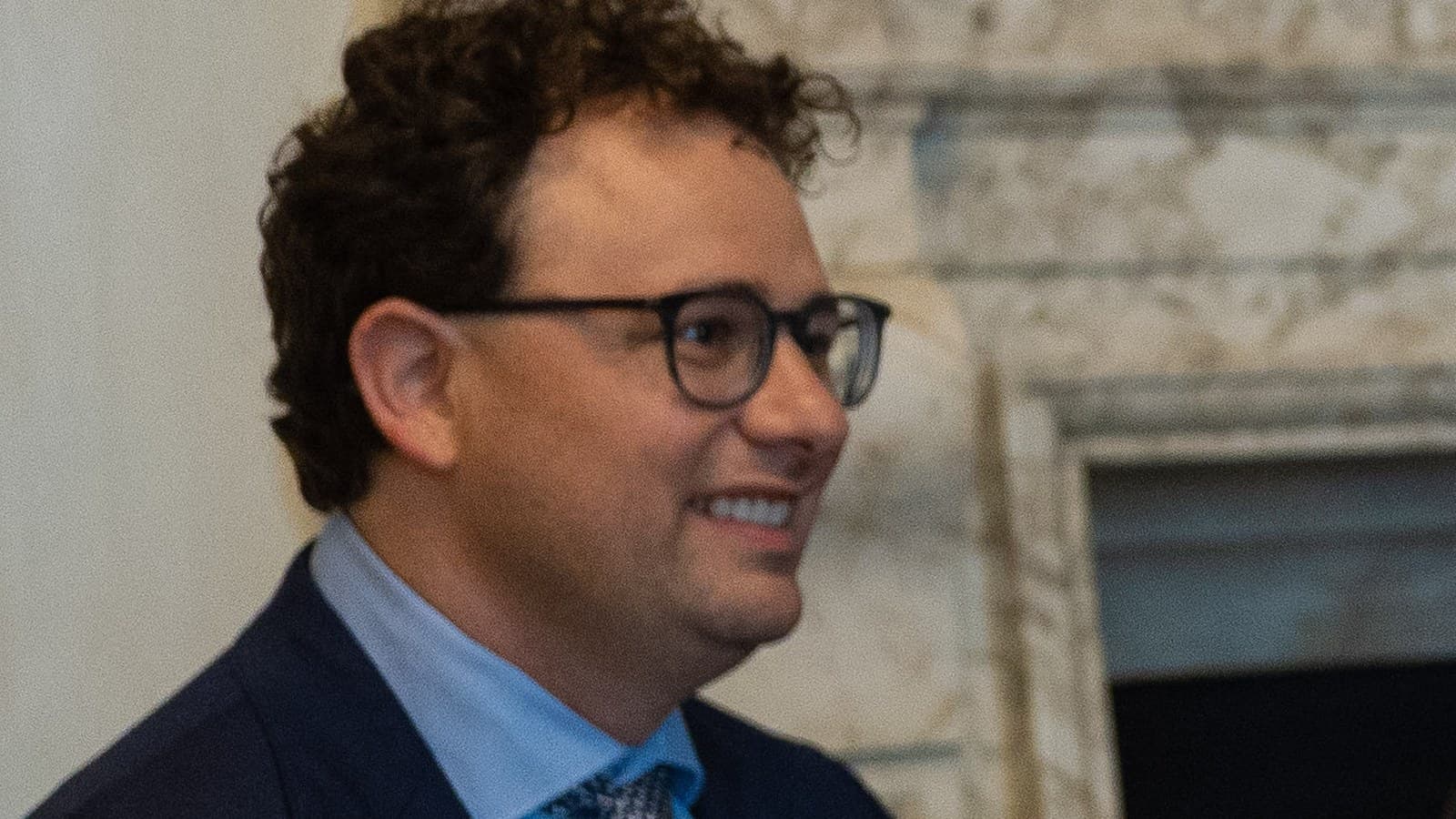
Cover image: Levent Alpöge at the Mathematisches Forschungsinstitut Oberwolfach in 2024. Photo by Marlene Ruf, CC BY-SA 2.0 DE, via Wikimedia Commons.
Tags
Frequently asked questions
- Did Claude prove the Riemann hypothesis?
- Levent Alpöge says he believes he and Claude discovered a proof, and he has released a Lean formalisation. The claim has not been independently verified or accepted by the Clay Mathematics Institute, so the hypothesis is not yet established as solved.
- What is the Riemann hypothesis?
- It is an 1859 conjecture about the Riemann zeta function. It says every nontrivial zero of the function has a real part of one half, which would pin down how prime numbers are distributed. It is one of the Clay Mathematics Institute's Millennium Prize Problems.
- Why is the proof in Lean rather than a paper?
- Lean is a programming language that checks each step of a mathematical argument by machine. Alpöge says the informal write-up ran past 250,000 pages, so he released the formal version instead. Lean checks the proof steps, but experts still need to confirm that the statements encode the right problem.
- Would a proof of the Riemann hypothesis break encryption?
- No, not directly. Widely used public-key encryption depends on problems such as integer factorisation and discrete logarithms, not on the Riemann hypothesis. A proof would have broad consequences for number theory but would not by itself break RSA or similar systems.

TPW Editorial
Editorial Team
TechPastWeek's editorial team reports and edits every story we publish. We research each piece against primary and credible secondary sources, and a human editor reviews and signs off before it goes live.