
EA Recreates John Motson's Voice With AI for FC 27 Commentary
EA will add an AI recreation of the late John Motson to EA Sports FC 27 on 26 November, using archive audio and generated speech with his family's permission.

On this page
Key takeaways
- EA will add an AI-recreated John Motson to EA Sports FC 27 on 26 November 2026 in Title Update v1.3.0, as an optional commentary selection.
- The voice mixes almost ten years of Motson's original in-game recordings with an AI recreation trained on recordings of him, made with permission from his widow and son.
- EA paid the family for the rights to use Motson's likeness and voice; the terms were not disclosed.
- Motson, who died in February 2023 aged 77, was the series' first commentator and called matches in the FIFA games from the mid-1990s to the mid-2000s.
- EA says it has no plans to replace commentators with AI, while the campaign group Save Our Voices Now argues Motson could not consent to the recreation himself.
EA will add a digitally recreated John Motson to EA Sports FC 27 on 26 November, giving the football series a voice it has not used as a regular commentator since the mid-2000s. The company told the BBC on 25 November that the commentary would arrive in Title Update v1.3.0 as an optional selection, alongside the game's existing broadcast teams. It is the first time the series has featured a deceased commentator.
Related reading: CD Projekt Signs Sony Deal for The Witcher 4 Marketing and PS Plus · GTA VI's Leaked Xbox Build Gets Its Missing Executable, and the Port Race Begins.
The voice is a hybrid. EA says it built the tribute from almost ten years of Motson's original in-game recordings plus an AI recreation trained on recordings of him. His widow and son agreed to the project, and EA paid the family for the rights to use his likeness and recreate his voice. Neither side disclosed the terms.
Motson died in February 2023, aged 77, months after the public launch of ChatGPT. The technology that can now reproduce his voice arrived after he stopped speaking into a microphone. That gap is what makes the tribute a test case for how games handle dead performers, family consent and the parts of a commentator's job that a model can imitate.
What EA is adding
The feature is a commentary pack, not a replacement for the game's current voices. EA says Motson will sit alongside the existing teams and can be selected by players who want him. The update lands on 26 November, two months after FC 27 launched on 25 September.
EA's announcement describes the work as a "digital tribute" and says it was made "with the blessing and partnership of Motson's family". The BBC had the story first, with interviews with Motson's son Fred, EA senior game design director Mat Prior, current BBC lead commentator Guy Mowbray, FC commentator Derek Rae and Peter Caulfield of the campaign group Save Our Voices Now.
Motson's voice is one of the most recognisable in English football. He was the BBC's main commentator for decades, covering 10 World Cups, 10 European Championships and 29 FA Cup finals, and he received a BAFTA Special Award in 2018. EA says he called more than 2,500 matches and 20 international tournaments during 50 years at the BBC.
He was also the first voice in EA's football games. Motson appeared from FIFA 96 through the mid-2000s and returned for a cameo in FIFA 19. For players of a certain age, his commentary is part of what the series sounded like before it became FC.
How the voice was rebuilt
The technical description is short. EA says it combined original audio with an AI recreation trained on recordings of Motson. The company did not name the model, the vendor or the amount of source material, and it did not say how it handles the risk of the model producing a line Motson would never have said.
Prior told the BBC that the AI was "the only way" to include Motson talking about modern players such as Bradley Barcola and Chloe Kelly, because the archive does not contain those names. That is the practical case for the technology: a commentator's recorded vocabulary is tied to the players and teams of his era, and a current football game needs names that did not exist in his working life.
The result is a voice that can say new things in an old cadence. Whether it sounds right is a matter for players after the update goes live. Voice recreation has improved quickly, but commentary is a hard test: it depends on timing, emphasis, the small reactions between phrases and the ability to sound surprised by something that happened in a match the commentator never saw.
The family said yes. The consent question is harder.
Fred Motson gave the project his approval in terms that are easy to understand. "It means an awful lot," he told the BBC. "I grew up with Fifa. I always used to tell my parents that I needed the latest console for Christmas because otherwise dad couldn't see how the game worked."
He also said his father would have wanted it. "My dad was the least technological person in the world," Fred Motson said. "Till his dying day, he had a typewriter on his desk. So I don't think he would have quite understood what the AI was doing technologically, but I think, on the other hand, he was always really keen to get involved in these kinds of projects."
EA's statement quotes Fred Motson saying his father "adored being the voice of the game" and that the family was grateful for the tribute.
Peter Caulfield of Save Our Voices Now drew the line somewhere else. He told the BBC he has no objection when someone has signed a deal allowing their likeness to be used after death. "But in life or in death, unless you have specifically agreed to it, AI cloning of any kind should not be allowed," he said. "Being a family member shouldn't automatically give you that right either."
That is the unresolved argument. Motson could not consent: the project began after his death. His family could, and did. EA treated that as the permission that mattered. Caulfield treats it as a substitute for the consent of the person whose voice is being used, and he says a family relationship does not automatically confer the right to grant it.
EA says the humans stay
The obvious worry for working commentators is that a convincing synthetic voice makes the studio session optional. EA is arguing the opposite.
"It's not there to replace commentators in any way shape or form," Prior told the BBC. "There's certainly no future plans to replace anyone with AI."
Derek Rae, who has recorded commentary for the series for several years, described the work that remains. He said he records two or three times a month during the season, which runs from around November to May, and that the creative parts still need a person. "The more creative things have to be done with the human voice because they have to have the personality, sometimes a little chuckle thrown in the middle of a sentence or a little idiosyncrasy," he said. Routine surnames such as Smith, Jones and Brown are the kind of thing AI can handle, he added.
Guy Mowbray, the BBC's lead football commentator, called it "quite a nice, sort of non-scary use of AI" and put the appeal in terms of memory. "We're in the business of nostalgia," he said. "I hear commentary not in my own voice, but in John's voice, because that's the voice I knew growing up."
Rae was less sure he would want the same treatment. "If we're being modest, we might say, well, no, I don't want to inflict my voice on the next generation," he said.
A tribute that lands under new ownership
EA is not a neutral party in this debate. The company was taken private in August in a $55 billion buyout led by Saudi Arabia's Public Investment Fund, Silver Lake and Affinity Partners. The BBC reported that the deal left the business carrying about $20 billion of debt, which it will have to repay.
FC is one of EA's most reliable annual products. The debt creates pressure to keep production costs down, though EA has not said the Motson project was driven by cost. It has also been experimenting with AI in its games for years. Prior pointed to machine learning in animation systems as an example that predates the current generative wave. The Motson tribute is a different use: a generative model producing a specific person's voice for a consumer feature.
The economics are easy to see, even without EA's numbers. A human commentator records through the season, session after session. A synthetic voice can be extended to new players, teams and languages without another studio booking. EA says the technology is additive and that the family was paid. Both can be true, and the cost saving can still be the reason the project exists.
The timing also matters because the industry is arguing about AI's place in games. Ubisoft turned its generative AI team into a subsidiary called Motherbrain this month while cutting 166 jobs. Nicalis pulled AI-generated music from Binding of Isaac after players found Suno tags. Sports games have a different production model and a different audience, but the same questions about consent, credit and work apply.
Caveats
EA has not published the model, the vendor, the size of the training set or the terms of its agreement with the Motson family. The claim that the voice mixes original audio and AI comes from the company and from the BBC's interviews; no independent technical assessment exists. "No plans to replace commentators" is a statement about current intentions, not a commitment that binds future releases. The 2,500-match and 50-year figures are EA's; the 10 World Cups, 10 European Championships and 29 FA Cup finals are the BBC's. The Save Our Voices Now position is a campaign argument, not a legal ruling.
What to watch
The first signal will come from players after 26 November. A commentary pack that sounds wrong will be clipped and shared within hours; one that sounds right will be praised for the same reason. EA has not said whether it will extend the technique to other voices or other languages, which is the difference between a one-off tribute and a production method.
The family deal is the other precedent. If estates see a market for posthumous voice work, more of these arrangements will follow, and the consent argument will move from a campaign group's objection to a contract term. The update goes live on 26 November. EA has not said what comes after it.
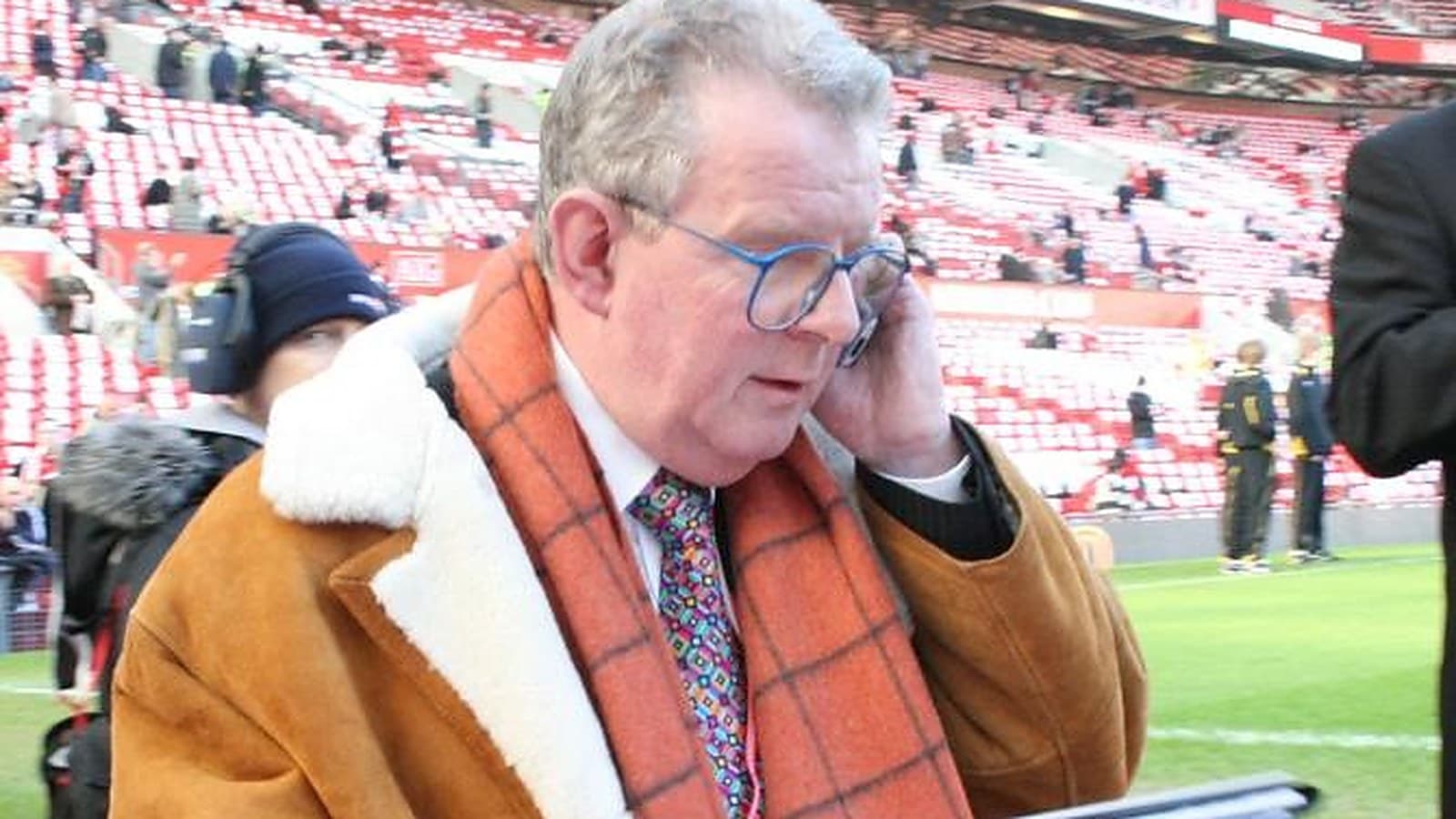
Cover credit: John Motson at Old Trafford in February 2008. Photo by gordonflood, CC BY 2.0, via Wikimedia Commons. Cropped to 16:9.
Tags
Frequently asked questions
- Is the John Motson commentary optional in FC 27?
- Yes. EA says the Motson tribute arrives on 26 November 2026 in Title Update v1.3.0 as an optional commentary selection, sitting alongside the game's existing broadcast teams.
- Did John Motson's family approve the AI voice?
- Yes. EA says it worked with Motson's widow and son, paid the family for the rights to use his likeness and recreate his voice, and would not have proceeded without their approval. The financial terms were not disclosed.
- Is the commentary entirely AI-generated?
- No. EA describes it as a mix of Motson's original audio from almost ten years of in-game recordings and an AI recreation trained on recordings of the man himself. The AI supplies lines for players and situations that were not in the archive.
- Will EA replace real commentators with AI?
- EA says it has no plans to do so. Senior game design director Mat Prior said the technology is not there to replace commentators, and commentator Derek Rae said creative lines still need a human voice.

TPW Editorial
Editorial Team
TechPastWeek's editorial team reports and edits every story we publish. We research each piece against primary and credible secondary sources, and a human editor reviews and signs off before it goes live.