The FBI Is Investigating an Apparent Breach of Its Crime Database
The FBI is investigating an apparent intrusion into NCIC, its police records database, while hackers reportedly reached a USDA system used to pay farmers.

On this page
Key takeaways
- The FBI is investigating an apparent breach of the National Crime Information Center, the database that links federal, state and local police, CNN reported on 20 November 2026.
- Fox News reported on 21 November that the FBI is still trying to establish how attackers entered NCIC and what information, if any, was compromised.
- NBC News reported that hackers reached a Department of Agriculture system used to pay farmers, and USDA took several applications offline after an internal security incident.
- USDA Undersecretary Richard Fordyce told DTN the incident was a cyberthreat rather than a software update, and said no personally identifiable information was lost.
- The two incidents are not publicly linked, and neither agency has named an attacker or published a detailed account of what happened.
The FBI is investigating an apparent breach of the National Crime Information Center, the database that connects federal, state and local police, after officials discovered the intrusion in recent days. CNN reported the investigation on Friday night, citing two people briefed on the matter. The bureau has not said how attackers got in, whether anything was taken, or whether any records were altered.
Related reading: AI Agents Found a Zero-Day in MONAI Label and Rooted a University Server · China-Linked Hackers Exploited a vCenter Zero-Day Weeks Before the Patch.
The report landed after NBC News said hackers had reached a Department of Agriculture system used to pay farmers. The two incidents have not been publicly connected, and both arrived during a run of technology failures that has unsettled federal agencies and the administration overseeing them.
President Donald Trump, asked about the FBI breach in a Fox News interview on Saturday morning, said he had "just heard" about it. "It's not good," he said. "I don't like that." He also suggested the breach might reveal information about the Russia investigation and "all the voter fraud that took place," without offering evidence.
What the FBI is investigating
CNN's sources said the intrusion was discovered in recent days and that the bureau is investigating. Fox News, which published its report at 10:40 a.m. Eastern on Saturday, cited three people familiar with the matter and said investigators are still trying to establish the entry point. The Associated Press said a person familiar with the investigation confirmed the apparent hack, and that the scope was not immediately clear.
The FBI has not issued a public statement. The bureau did not immediately respond to requests for comment from CNN or Fox News, and NBC News reported that it had no comment as of Friday night.
This is the second reported intrusion into an FBI system in recent months. In September, the ShinyHunters group claimed it had stolen personal data on agents and job applicants from the bureau's jobs website. A Canadian cybersecurity executive, Edward Dubrovsky, was arrested on 8 October and charged with extortion conspiracy in connection with that investigation, according to court records and law enforcement sources cited by Reuters and Fox News.
The word "apparent" is doing real work here. The FBI has not confirmed that NCIC was compromised, what data was exposed, or who is responsible. Accounts from CNN, Fox News and the AP rest on anonymous sources briefed on an active investigation. No agency has published a timeline, an entry point or an impact assessment.
What NCIC holds
The National Crime Information Center is one of the systems that makes routine policing possible. Officers query it during traffic stops, warrant checks and investigations. It holds records on wanted fugitives, missing persons, criminal histories and stolen property, and it supports sex-offender tracking and gun background checks.
That breadth is why a breach would matter beyond the headline. The concern is whether intruders read records, and whether they could change them. A false entry in a warrant file can point an officer at the wrong person.
"Every day, officers across the country rely on NCIC to identify wanted fugitives, check for outstanding warrants, and access information that can directly impact officer and public safety," a former FBI official who led investigations into cybercriminal groups told CNN. The same official said the bigger worry was whether attackers could compromise the accuracy of the data officers rely on.
"Every day, officers across the country rely on NCIC to identify wanted fugitives, check for outstanding warrants, and access information that can directly impact officer and public safety." — a former FBI official, to CNN
The bureau has been here before. In 2023, hackers reached a computer system used by the FBI's New York field office in child sexual exploitation investigations, including a system that stored images tied to the Jeffrey Epstein inquiry. The September ShinyHunters case was a jobs portal, not an operational database. NCIC would be a more consequential target.
The USDA incident
The Agriculture Department's trouble surfaced earlier in the week. An email sent on Monday by Chris Rottler, acting assistant chief information officer for the department's Farm Production and Conservation Business Center, said the USDA's Cybersecurity and Privacy Operations Center had "uncovered a security incident." The response required the Information Services Division to "reset all database passwords in all environments," which in turn required resetting applications and caused outages, according to the email, which was viewed by Nextgov/FCW and Government Executive.
The outages hit financial tools used to move money between the department and farmers, including systems tied to crop insurance and loss payments. DTN reported that Farm Service Agency loan software and a Natural Resources Conservation Service program used to release farmer payments were affected. Employees were told on Thursday that a system had been targeted, NBC News reported.
A technical bulletin dated Thursday said maintenance was continuing and that applications might see intermittent outages through the week. Some staff also had trouble with the department's VPN, according to Nextgov.
Undersecretary Richard Fordyce told DTN that the incident was a "cyberthreat," not a software update. He said no personally identifiable information or data had been lost and that security systems had worked. He expected most systems to be back by the close of business on Friday, with restoration continuing over the weekend.
Former department officials gave NBC News a less settled account. They said the payment system could serve as a back door to more sensitive material, including the department's biological and food-safety work. The department has not published a detailed public account or named an attacker.
A week of outages and a resignation
The two breaches sit inside a wider run of failures. Microsoft's Outlook service went down globally. A router problem halted departures across the U.S. aviation system. JPMorgan Chase suffered an outage that it blamed on a software bug in on-premises hardware. The National Security Agency's classified network went down for several days because of a maintenance problem, NBC News reported, and service was restored by Friday.
Officials have said those outages were not caused by cyberattacks. Senator Mark Warner, the top Democrat on the Senate Intelligence Committee, said on Wednesday that the evidence supported that conclusion, while warning that AI could be making systems more fragile. The White House confirmed on Thursday that National Cyber Director Sean Cairncross was leaving his post. Trump had earlier urged the public to "relax."
The administration's message has been that the failures are separate and routine. The FBI and USDA incidents complicate that message because they involve suspected intrusions, even if their scope is not yet known. Whether they are connected to the outages, to each other, or to neither is an open question.
What the administration says
Trump's Saturday comments did not offer much reassurance. In the Fox News interview with Kayleigh McEnany, he treated the breach as a possible source of political material, listing the Russia inquiry and unsubstantiated voter fraud among the things the intrusion might illuminate. "I always like to put things in a positive spin," he said.
FBI Director Kash Patel spent part of Thursday on Fox News promoting the bureau's cybersecurity work. He pointed to Operation Winter Shield, an operation completed months earlier that pressed companies to update vulnerable systems. "Other administrations could have made these updates, but they didn't," Patel said. "We are staying ahead of the curve and making up for lost time."
The timing drew attention because bureau officials had learned of the NCIC incident around the same time. Patel did not mention it on air. Trump said on Saturday that he had "just heard" about the breach, which suggests he was not briefed in detail before the interview.
Why the timing matters
Federal cyber incidents usually become public in fragments: a vendor notice, a leaked email, a congressional letter, then a confirmation. This pair arrived in a different order. The USDA's internal response became public through a trade publication on Thursday. The FBI's investigation surfaced through CNN on Friday night. By Saturday, the president was discussing both on television.
None of that establishes what happened inside either system. It does establish that two departments handling sensitive data were dealing with security incidents at the same time, and that the public account is being assembled from anonymous sources rather than official disclosures. Both agencies rely on the accuracy of their records. Neither has explained how far the damage goes.
Caveats
The FBI's investigation is described as an apparent breach. No official has confirmed that NCIC data was accessed, copied or altered, and the bureau has not named a suspect or a motive. The USDA has acknowledged a cyberthreat and a multi-day outage, but not a data theft. Fordyce's statement that no personal data was lost has not been independently verified, and the former officials who spoke to NBC described a risk rather than a confirmed loss.
The two incidents may be unrelated. Neither has been tied to the outages at Microsoft, Chase, the FAA or the NSA. Attribution in federal breaches routinely takes weeks or months, and the ShinyHunters case is still moving through the courts.
What to watch
The next signal will be an official statement from the FBI, which would establish whether NCIC was accessed and whether any records were changed. The USDA's restoration of payment systems is the second: farmers and county offices need those tools, and the department has not said when the last of them will be back.
Lawmakers have already pressed the administration over the outage wave. The FBI and USDA incidents give them a second line of questions, about what the agencies knew and when they knew it.
As of Saturday evening, neither agency had published a fuller account.
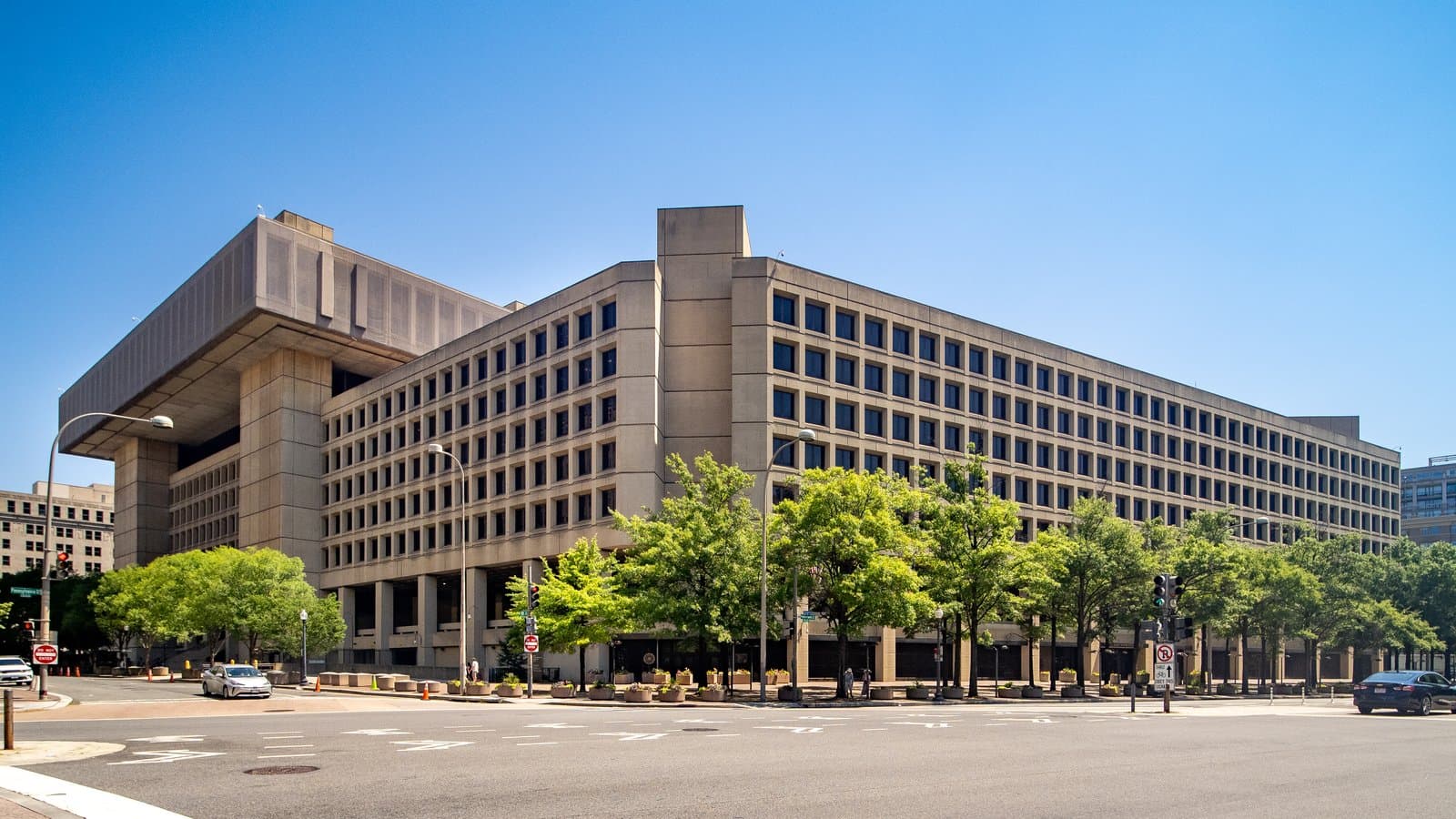
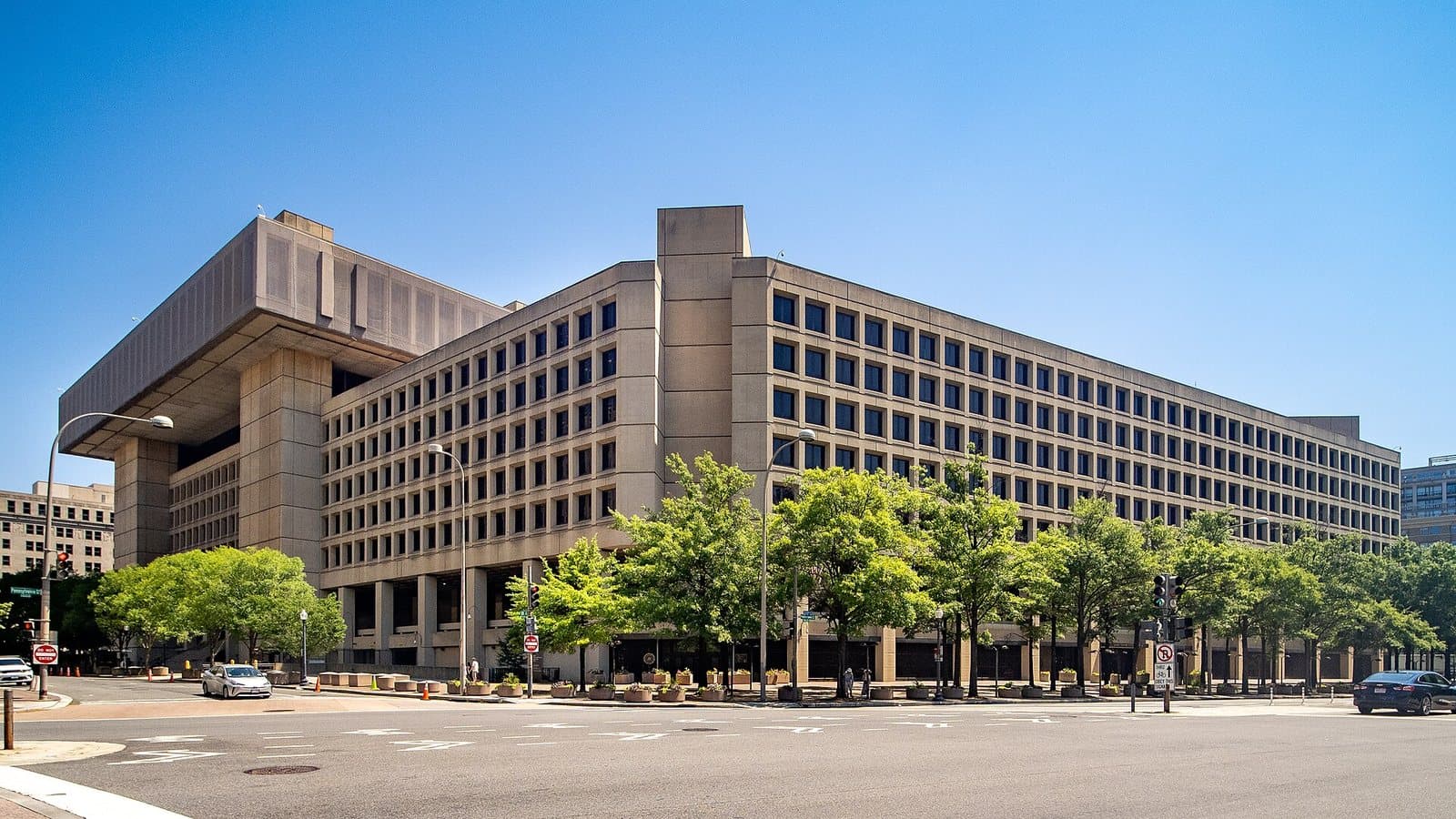
Cover image: The J. Edgar Hoover Building in Washington, D.C. Photo by ajay_suresh, CC BY 2.0, via Wikimedia Commons.
Tags
Frequently asked questions
- Was the FBI's NCIC database actually breached?
- The FBI is investigating an apparent breach, according to CNN, Fox News and the Associated Press, all of which cited people briefed on the matter. The bureau has not publicly confirmed what was accessed or whether records were changed.
- What is NCIC used for?
- The National Crime Information Center is a nationwide database that police use to check warrants, missing persons, criminal histories, stolen property, sex-offender records and gun background checks. It is a working tool for officers rather than a public website.
- Did hackers steal USDA data?
- USDA Undersecretary Richard Fordyce told DTN that no personally identifiable information or data was lost. Former department officials told NBC News the payment system could be a route to more sensitive material, but no loss has been confirmed.
- Are the FBI and USDA incidents connected?
- There is no public evidence that they are. They were reported within a day of each other and both fall inside a wider run of federal technology outages, which officials say were not caused by cyberattacks.

TPW Editorial
Editorial Team
TechPastWeek's editorial team reports and edits every story we publish. We research each piece against primary and credible secondary sources, and a human editor reviews and signs off before it goes live.