China-Linked Hackers Exploited a vCenter Zero-Day Weeks Before the Patch
Google says Armory Castle exploited CVE-2026-123890 in vCenter from early September. Broadcom's fixes are out, but vSphere 7.0 still has no public patch.

On this page
Key takeaways
- Broadcom patched CVE-2026-123890, a vCenter authentication bypass rated 9.8 under CVSS 3.1, on 19 November in advisory VMSA-2026-0009.
- Google Threat Intelligence Group and Mandiant say Armory Castle, a suspected China-linked group, exploited the flaw from early September 2026 with a tool called BONESAW.
- BONESAW created an SSO administrator account, copied vCenter's directory database and SAML signing key, and let the group reach ESXi hosts and virtual machine disks.
- Fixed builds are vCenter 9.1.1.0200, 9.0.2.0200 and 8.0 U3m; vSphere 7.0 has no public patch and needs an extended support contract.
- Broadcom's advisory does not mention exploitation, and the flaw was not in CISA's KEV catalog as of 20 November.
Broadcom shipped patches on 19 November for a critical authentication bypass in VMware vCenter that a suspected Chinese espionage group had been exploiting since early September, according to Google's threat intelligence and incident response teams.
Related reading: AI Agents Found a Zero-Day in MONAI Label and Rooted a University Server · JPMorgan Chase Says a Vendor Breach Leaked Customer Names and Emails.
The bug is CVE-2026-123890, rated 9.8 under CVSS 3.1. It sits in the VMware Directory Service, the component behind vCenter Single Sign-On. An attacker who can reach the appliance over the network needs no password: the flaw discloses a session key during SRP authentication, and the stolen key is enough to open an authenticated session as [email protected].
Google Threat Intelligence Group and Mandiant published their reconstruction of the intrusion on the same day as Broadcom's advisory. They attribute it to Armory Castle, formerly tracked as UNC5221, and to an exploitation tool they call BONESAW. The group used it against a vCenter that had already been patched against an earlier vCenter authentication bypass from July, which suggests the tool was held in reserve rather than picked up after a public disclosure.
What the flaw actually gives away
Mandiant's write-up calls CVE-2026-123890 an unauthenticated Secure Remote Password (SRP-6a) session key disclosure over DCE/RPC. The weakness is predictable UUIDv1 timestamp generation in the SRP interface of vmdir, which lets an attacker recover the shared session key without knowing any password.
"Successful exploitation results in a remote authentication bypass which creates an authenticated session established as [email protected]," the researchers wrote.
From there an attacker can run commands and pull files through the Directory Service's RPC interface, including data.mdb, the LMDB database that holds vCenter's directory data. The CVSS vector is network reachable, low complexity, no privileges required, no user interaction, with high impact on confidentiality, integrity and availability.
vCenter is the control plane: it manages ESXi hosts, provisions and migrates virtual machines, and issues the SSO tokens administrators use to reach everything else. One stolen vCenter session reaches every host that appliance manages.
How the intrusion ran
Armory Castle did not arrive through vCenter. According to GTIG, initial access came through CVE-2026-102764, a zero-day in BeyondTrust Remote Support that the same teams described in October. From that appliance the group moved to an internal Linux host, dropped two JSP web shells and raised privileges to root by setting the SUID bit on /bin/env with gdb. One shell, tracked as SLIMSAVAGE, runs commands when a request carries the hard-coded password pwd=123; the other, CAGEMATCH, stages uploads into /tmp.
Reconnaissance was VMware-specific. The group ran nmap sweeps for ports 9080, 5480 and 2012. Port 2012 carries the vCenter Single Sign-On control interface, and it is the port BONESAW needs.
BONESAW ran from /tmp/123, unpacked from a RAR archive fetched over curl. It created an SSO administrator, streamed the directory database, extracted the VMware Security Token Service signing key and forged SAML assertions, and granted Global Administrator on the vCenter root folder through the vSphere SOAP API.
A second utility, SAWSNAKE, followed. It is a Go port of the public vcenter_saml_login.py script and turns the stolen signing key into Golden SAML: forged tokens, MFA bypassed, any user impersonated. Then BEARBONES, a C backdoor built on the Dropbear SSH server, opened a listener on TCP 33992. It accepts a password whose first 14 bytes hash to a fixed SHA-256 value, logs the plaintext, and advertises itself as SSH-2.0-pulsesecure_23345.
With that access the group enabled SSH on the vCenter appliance through the VAMI API, created a local administrator named sps-<redacted>@vsphere.local, and took the vCenter master encryption key and PostgreSQL credentials. It switched SSH back off afterwards.
The last stage reached the hypervisors. The attackers authenticated to ESXi as vpxuser and over SSH as root, added their own key to root's authorized keys, mounted VMFS volumes and ran a Python tool, vmfs_browser.py, against virtual disks. In the incident Mandiant describes, that pulled NTDS.dit, SYSTEM and SECURITY out of a Windows virtual machine's disk, the files needed to extract Active Directory password hashes. Data was staged in a hidden .a directory on a VMFS volume, archived as o.tar.gz, and pulled back to the Remote Support appliance over HTTP.
A further backdoor, LAZYBONES, went onto a separate Linux host. It polls a Slack channel for commands, encrypts them with AES-256-CTR, and survives through a systemd unit set to restart every 50 minutes. Mandiant saw the same backdoor in an Ivanti Connect Secure intrusion in 2025.
Patching closes the hole. It does not remove an intruder who already used it. If a vCenter was exposed and unpatched, treat the SSO signing key and the master encryption key as compromised, and look for the accounts and keys the group left behind before deciding the work is done.
A tool built before the July patch
The build date inside BONESAW is the detail that should worry defenders. It carries a Go build timestamp of 13 July 2026, sixteen days before Broadcom disclosed CVE-2026-59309, a separate vCenter authentication bypass. GTIG says the binary was executed in early September against a vCenter already patched for that July flaw. Charles Carmakal, Mandiant's chief technology officer, said on LinkedIn that the tool was first discovered in July and that the company has investigated multiple incidents involving its use.
Go build metadata can be edited before compilation, so the timestamp is evidence rather than proof. GTIG's own reading is that the tool was probably built for wider operations, not for a single target. Its command-line options include auto-discovery of the SSO tenant and a mode that skips the remote download when an operator already holds a copy of data.mdb.
July was a busy month for vCenter. CVE-2026-59309 was an authentication bypass in the same directory service. CVE-2026-59310 was a directory traversal in the Syslog server that later entered CISA's Known Exploited Vulnerabilities catalog and drew ransomware operators. CVE-2026-123890 is a distinct bug, and Broadcom's Q&A says so plainly, but two of the three vCenter flaws in that stretch landed in the same directory service.
Which builds are fixed
Broadcom's fixed versions, from VMSA-2026-0009:
- VMware Cloud Foundation and vSphere Foundation 9.1.x: 9.1.1.0200
- 9.0.x: 9.0.2.0200
- vCenter 8.0: 8.0 U3m
- VMware Cloud Foundation 5.x: 5.2.5, with vCenter 8.0 U3m applied through the asynchronous patching process
- Telco Cloud Platform and Telco Cloud Infrastructure: vCenter 8.0 U3m
- vSphere 7.0: no public patch. The release left general support on 2 October 2025, and Broadcom directs customers with an extended support contract to its support channels.
ESX hosts are not affected by this advisory, and Broadcom lists no workaround. It calls the vCenter fix an emergency change, and Mandiant says BONESAW works against the 7.x and 8.x appliances it tested. Two operational details matter before a maintenance window: the update is not eligible for vCenter Quick Patch, and both 8.0 U3m and 9.0.2.0200 block an upgrade to VCF 9.1.1 until 9.1.2 ships, a "back-in-time" restriction. Updating vCenter does not stop running workloads.
What to check on a vCenter that may have been hit
Mandiant published indicators, and several are cheap to look for:
- Local SSO accounts nobody created, particularly ones beginning
sps-in thevsphere.localdomain. - SSH enabled on the appliance without a change record. The VAMI API call is a
PUTto/rest/appliance/access/ssh. - SSH banners reading
SSH-2.0-pulsesecure_23345on high ports inside the network, which GTIG also ties to a set of compromised firewalls and routers. /usr/bin/vmtoolscsand a systemd unit that restarts every 50 minutes, the LAZYBONES footprint.- Hidden directories on VMFS volumes, or
vmfs-pydist.tar.gzon an ESXi host. - New entries in root's
authorized_keyson ESXi, and unusual use of thevpxuseraccount.
Recovery takes longer than patching. If the SAML signing key left the appliance, an attacker can mint new administrator tokens at will, so rotating passwords is not enough. The SSO certificates and machine accounts need replacing, and that normally means rebuilding vCenter rather than cleaning it. Mandiant's hardening advice points the same way: keep port 2012 off networks that do not need it, filter egress from the appliance, and stop relying on the VAMI firewall, which a compromised administrator session can switch off. The researchers also published a VCSA hardening script that enforces default-deny rules at the kernel level.
What is still unknown
Nobody has published a victim count, a list of sectors or a country breakdown. GTIG says Mandiant investigated multiple incidents but does not say how many. Broadcom's advisory does not mention exploitation at all. The NVD record and CISA's SSVC assessment listed no known exploitation as of 19 November, and the CVE was not in the KEV catalog when this article was written on 20 November. Those are gaps in the public record, not evidence that the exploitation reports are wrong.
There is no public exploit code for CVE-2026-123890, and BONESAW has not been released. That lowers the immediate risk from opportunistic scanning, though not by much. The write-up describes the flaw precisely enough for another capable group to attempt the same chain, and unpatched 7.0 estates have no vendor fix to apply.
"The use of three separate specialized sets of malware and two zero-days in the course of a single campaign indicates that there are significant resources supporting Armory Castle operations," GTIG wrote. Carmakal's advice was narrower: apply the patches, then examine the systems for evidence of compromise. The second half is the part that takes longer.
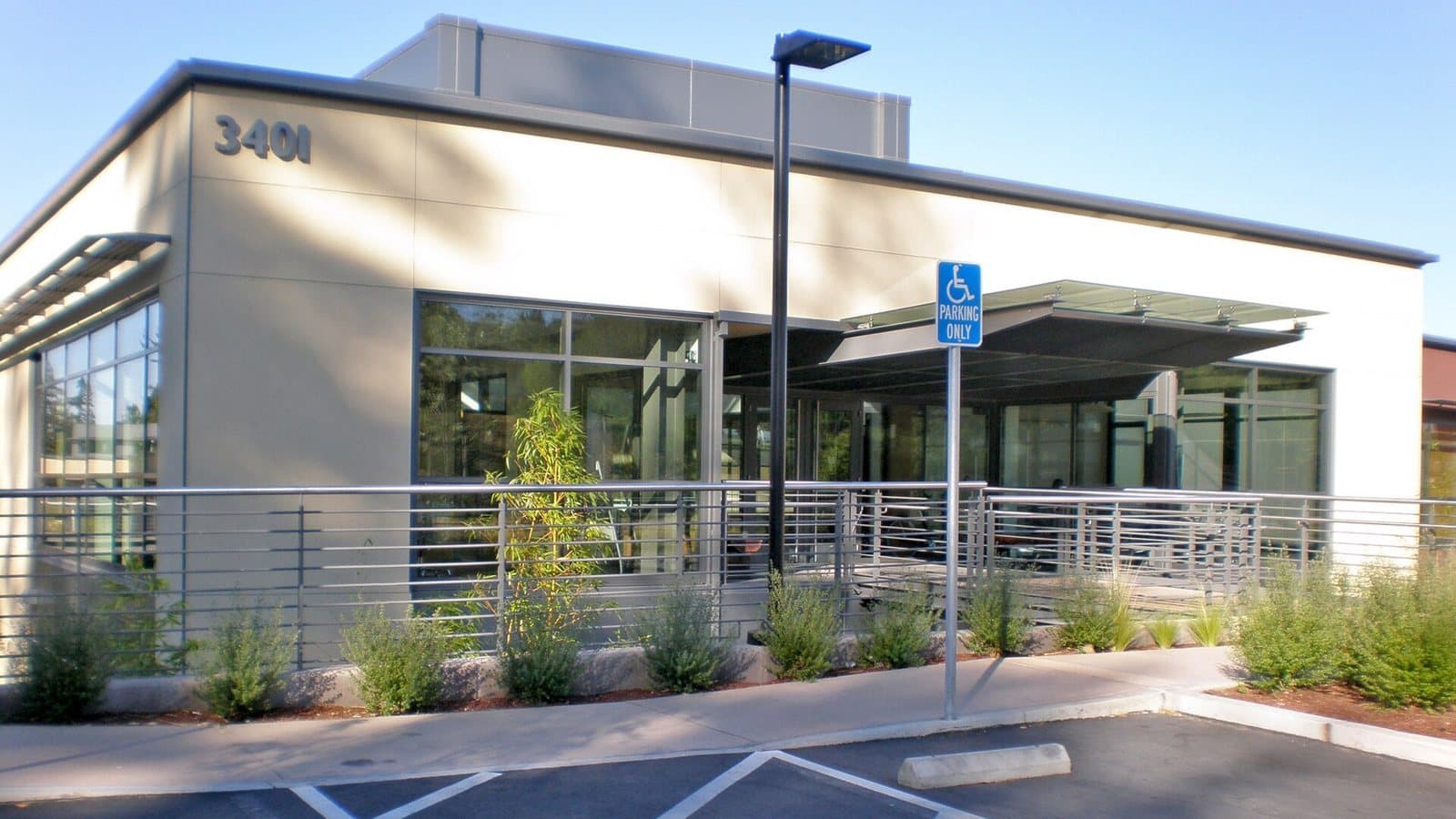
Cover photo: the entrance to VMware's headquarters at 3401 Hillview Avenue in Palo Alto, California, by BrokenSphere, CC BY-SA 3.0, via Wikimedia Commons.
Tags
Frequently asked questions
- What is CVE-2026-123890?
- It is an authentication bypass in the VMware Directory Service inside vCenter Server, rated 9.8 under CVSS 3.1. Mandiant describes it as an unauthenticated session key disclosure in SRP authentication over DCE/RPC on port 2012, which lets an attacker open a session as [email protected] without a password.
- Which vCenter versions fix CVE-2026-123890?
- Broadcom fixed it in vCenter 9.1.1.0200 for the 9.1.x line, 9.0.2.0200 for 9.0.x, and 8.0 U3m for the 8.0 line, with Cloud Foundation 5.x moving to 5.2.5. ESX hosts are not affected. vSphere 7.0 has no public patch and requires an extended support contract.
- Was CVE-2026-123890 exploited before the patch?
- Google Threat Intelligence Group and Mandiant say Armory Castle exploited it in early September 2026, more than two months before Broadcom's 19 November advisory. Broadcom's own advisory does not mention in-the-wild exploitation, and the flaw was not in CISA's KEV catalog as of 20 November.
- What should administrators check for after patching?
- Look for unexpected SSO accounts in the vsphere.local domain, especially ones beginning with sps-, SSH enabled on the appliance through VAMI, the SSH banner SSH-2.0-pulsesecure_23345, hidden directories on VMFS volumes, and new keys in root's authorized_keys on ESXi. If the SAML signing key was taken, rebuilding vCenter is usually safer than cleaning it.

TPW Editorial
Editorial Team
TechPastWeek's editorial team reports and edits every story we publish. We research each piece against primary and credible secondary sources, and a human editor reviews and signs off before it goes live.