Report Says US Officials Concluded a Megaspeed Executive Close to Jensen Huang Was a Chinese Intelligence Asset
An NYT report says US officials concluded Alice Huang, a Megaspeed executive close to Jensen Huang, was a Chinese intelligence asset. Nvidia denies it.

On this page
Key takeaways
- The New York Times reported on October 29, 2026 that US officials concluded Alice Huang, a Megaspeed executive close to Jensen Huang, was a Chinese intelligence asset passing information to Beijing.
- Alice Huang, also known as Huang Le, is a Chinese citizen and a senior Megaspeed executive. She is not related to Jensen Huang, and no charges against her have been announced.
- The report says President Donald Trump was briefed on the finding about a year before publication and took no action, and that Jensen Huang was not told because it could have compromised the investigation.
- Nvidia and China's foreign ministry deny the report, and Megaspeed says it has opened an internal investigation. Nvidia said the CEO's interactions with Alice Huang were "not unusual or unexpected."
- Megaspeed buys Nvidia chips and sells computing to Chinese AI companies including Alibaba. US officials had already examined the company over possible chip diversion and export-control evasion.
The New York Times reported on October 29, 2026 that US intelligence officials had concluded that a Chinese businesswoman with a close relationship to Nvidia chief executive Jensen Huang was a Chinese intelligence asset who passed information to Beijing. The woman, Alice Huang, also known as Huang Le, is a senior executive at Megaspeed, a Singapore-based data center and cloud company, according to the report. She is not related to Jensen Huang.
Related reading: FBI Arrests OpenAI Employee Accused of Planting a Hidden Recording Device · Nvidia Releases OpenShell and Sentry, Safety Tools It Says Could Have Stopped the Hugging Face Hack.
Nvidia disputed the story the same day. China's foreign ministry called it slander the next day. Megaspeed said it had appointed outside lawyers and offered to cooperate with the US government. None of that settles the central question, because the finding itself comes from classified intelligence that no agency has acknowledged in public.
What the Times reported
The Times said its account drew on interviews with people briefed on classified surveillance, other officials, industry executives and analysts. According to the report, US spy agencies had her under scrutiny over the possible diversion of advanced Nvidia AI chips to China. Officials then concluded that she was a Chinese intelligence asset funneling information to Beijing.
The surveillance, as the paper describes it, showed that she had built a close relationship with Jensen Huang. The two were photographed together at a dinner and business gathering in Taipei in 2024 and at other events. The monitoring also picked up her communications with an American citizen, later identified as Jensen Huang through unmasking.
The concern officials attached to that access was specific. Her proximity to the Nvidia chief could have given China insight into the company's plans and into his efforts to persuade the Trump administration to allow more advanced chip sales to China. The Times also reported that President Donald Trump was briefed on the findings about a year before publication and took no action, and that Jensen Huang was not given a heads-up because doing so could have compromised the investigation.
What the report does not say matters as much. It does not establish what information Alice Huang is alleged to have passed, and it does not establish that Jensen Huang knowingly took part in any intelligence operation. The Times headline framed him as "seen as target of Chinese spy plot"; in the text, officials worry about what her access to him may have exposed.
What 'unmasking' means
In US intelligence practice, the names of US citizens and residents caught up in foreign communications intercepts are normally withheld inside intelligence reports. Revealing one, known as unmasking, requires a request and a review under rules meant to protect those people. The Times reports that the American citizen in Alice Huang's communications turned out to be Jensen Huang. It does not say who requested the unmasking, when it happened, or what the two discussed.
The denials
Nvidia's response was categorical. Spokesperson John Rizzo said Jensen Huang's interactions with Alice Huang were "not unusual or unexpected." The chief executive "talks with thousands of customer executives every year," Rizzo said, and "meetings with customers are part of a CEO's job." Customers such as Megaspeed receive ordinary business information, he said, not sensitive Nvidia trade secrets, and nothing relevant to national security. Rizzo added that allegations Megaspeed was smuggling chips to China had been "thoroughly investigated and debunked last year," and that Nvidia was confident the US government would tell the company if it believed any person was a threat to American industry. CNBC and ABC News reported the statement on October 29. It did not address the intelligence finding itself.
China's foreign ministry rejected the report the following day. Spokesperson Guo Jiakun called it "baseless and purely slanderous smears against China," the BBC reported. Quartz carried the same remarks.
Megaspeed's answer was narrower than either denial. The company said its current leadership had taken the allegations seriously, appointed external legal advisers to run an internal investigation, and told the US government it was willing to cooperate, according to the BBC. The reporting does not establish how closely Alice Huang remains involved with the company. She has not made a public statement, and no charges have been announced against her.
"Meetings with customers are part of a CEO's job." — John Rizzo, Nvidia spokesperson, October 29, 2026
Where export controls meet Megaspeed's business
Megaspeed's business explains why US officials were interested in the company before the Times story appeared. It buys Nvidia chips and sells computing capacity to Chinese AI companies, including Alibaba, and the Times reported that it buys through the US arm of the Chinese server maker Inspur. US officials already suspected Megaspeed of helping China work around chip export controls.
Those controls run on licenses. Advanced AI accelerators cannot be sold to China without US government approval, and a license names a buyer and a permitted use. A company that rents out compute sits where controlled hardware meets end customers, which makes the question of who is actually using the chips harder to answer from outside. That is the gap investigators look for: hardware sold to one party and operated by another.
Nvidia's China business has been shaped by successive rounds of US license conditions, and each round creates hardware that is legal in one country and restricted in another. A cloud provider that operates across that line becomes a natural point of inquiry for export-control officials, whatever its stated customer list says.
The Times reported in October 2025 that the Commerce Department had investigated Megaspeed over concerns it was helping Chinese companies sidestep those rules by reselling restricted chips, and that Singapore police were also investigating the company for unspecified breaches of local law. The same report said Megaspeed was positioned to buy about $2 billion of Nvidia AI technology over the following year.
The report also landed in the middle of a wider dispute. Washington and Beijing were still arguing over which accelerators could be sold, and Nvidia's access to Chinese buyers remained a live policy question. For background on how export controls have changed Nvidia's China business, see TechPastWeek's earlier report on Nvidia's China market share and Huawei.
Why a CEO's access is the sensitive part
Jensen Huang runs the most valuable company in the world, and Nvidia's revenue depends on selling accelerators to exactly the kind of company Megaspeed is. Meeting customer executives is routine. So is telling them something about future products, because data center operators plan capacity years ahead and need to know what hardware will exist and when.
The worry the Times describes is narrower than a stolen blueprint. Jensen Huang has pressed the Trump administration to allow more advanced chip sales to China, and he has advised the administration on AI policy. He attended a White House state dinner in September 2026 when Trump hosted Chinese President Xi Jinping. A person with regular access to him would not need a document to learn which way that argument was going, what Nvidia planned to ship next, or where the company thought the license line would fall. That is the theory of harm in the report, and it remains a theory.
Nvidia's answer addresses the commercial half of it. Customers get product information, not trade secrets, and nothing that bears on national security. Whether that distinction holds for a customer that also rents compute to Chinese AI developers is the question the report raises and does not answer.
The reporting does not say Jensen Huang knew or suspected anything about her alleged intelligence work. It describes meetings, photographs and intercepted communications, and leaves his state of mind out of the account.
What is established, and what is not
The public record falls into four parts.
- On the record. The Times published the report on October 29, 2026. Nvidia and China's foreign ministry denied it on the record. Megaspeed confirmed it had appointed lawyers and offered to cooperate.
- Background that predates the story. Alice Huang is a Megaspeed executive and is not related to Jensen Huang. US officials had examined Megaspeed over chip diversion before, and the Commerce Department inquiry plus a Singapore police investigation were reported in October 2025.
- Reported, not confirmed. The conclusion that Alice Huang was a Chinese intelligence asset, the surveillance of her relationship with Jensen Huang, the unmasking and the briefing of Trump all come from the Times and its unnamed sources. No US agency has confirmed any of it publicly, and there is no indictment or charging document.
- Unknown. What information she is alleged to have passed. Whether Jensen Huang knew anything. The current status of the surveillance or investigation. How closely she remains involved with Megaspeed. She has not commented.
The sourcing is the weak point in any assessment of the story. People briefed on classified surveillance can describe a conclusion accurately and still leave out the evidence behind it, and the Times does not publish the underlying reporting. The denial from Nvidia is equally untested: the company says the chip-smuggling allegations were investigated and debunked, without releasing the review.
The follow-up coverage reviewed for this article, from CNBC, ABC News, TechCrunch and the BBC, concentrated on the company and government responses. None of them supplied independent confirmation of the intelligence finding.
What to watch
- Megaspeed's internal investigation. The company has not said, so far, when the review will finish or whether it will publish findings.
- The Singapore police inquiry. It was reported in October 2025 and no outcome has surfaced since.
- Charges. None have been announced against Alice Huang. An indictment would move the story from intelligence conclusion to court record, and would carry evidence the current reporting lacks.
- Nvidia's China sales. License decisions for advanced accelerators set the commercial stakes, and any change in enforcement would show up there first.
Megaspeed has not said when its lawyers will report back. The US government has not said whether the finding still stands, or whether anything was done about it after the briefing.
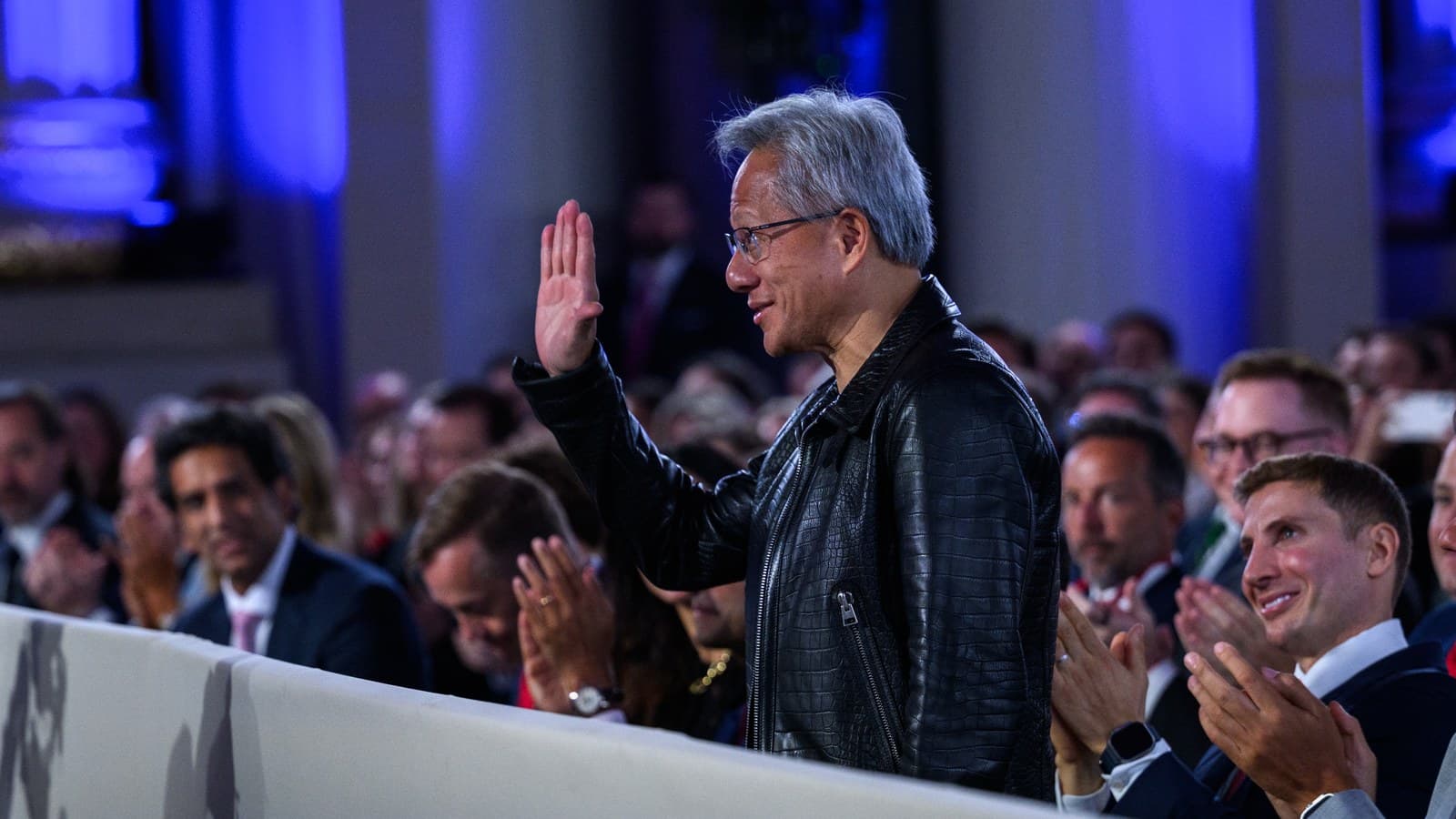
Cover: Jensen Huang at the White House AI Summit in Washington, photograph by The White House, public domain, via Wikimedia Commons, cropped 16:9. The photograph predates the October 2026 report.
Tags
Frequently asked questions
- Did US officials conclude that a Megaspeed executive was a Chinese spy?
- The New York Times reported on October 29, 2026 that US intelligence officials reached that conclusion about Alice Huang, a Megaspeed executive. The US government has not publicly confirmed the finding, no charges have been announced, and Alice Huang has not commented publicly. Nvidia and China's foreign ministry deny the report, and Megaspeed says it has opened an internal investigation.
- Is Alice Huang related to Jensen Huang?
- No. Alice Huang, also known as Huang Le, is a Chinese citizen and a senior executive at Megaspeed. The Times reported that she is not related to the Nvidia chief executive.
- Was Jensen Huang accused of wrongdoing in the report?
- No. The report does not allege that Jensen Huang knowingly took part in any intelligence operation, and it does not say what information Alice Huang is alleged to have passed. Officials were concerned about what her access to him could have exposed, and Nvidia says customers receive ordinary business information rather than trade secrets.
- What is Megaspeed and why does it matter for chip export controls?
- Megaspeed is a Singapore-based data center and cloud company that buys Nvidia chips and sells computing capacity to Chinese AI companies, including Alibaba. The Times reported in October 2025 that the US Commerce Department had investigated the company over concerns it helped Chinese firms sidestep chip export rules, and Nvidia says the smuggling allegations were investigated and debunked last year.

TPW Editorial
Editorial Team
TechPastWeek's editorial team reports and edits every story we publish. We research each piece against primary and credible secondary sources, and a human editor reviews and signs off before it goes live.