The New Stanford Prison Experiment Review Roundup: Critics Split at 40 on Metacritic
Netflix's The New Stanford Prison Experiment scores 40 on Metacritic from seven reviews, with critics split on whether it is science or engineered reality TV.

On this page
Key takeaways
- The New Stanford Prison Experiment premiered on Netflix on Wednesday 21 October 2026 as a six-episode unscripted series filmed in a working county jail in Georgia.
- Thirty participants took part over two weeks, split into eight guards, three of them women, and 22 prisoners, all men, with no cash prize and a safe word of 'Pineapple'.
- Metacritic stood at 40 from seven critic reviews on 22 October 2026: no positive notices, four mixed and three negative.
- The Independent scored the series 60, the Los Angeles Times and San Francisco Chronicle 50 each, The Guardian 40, and The New York Times, Decider and Slate 30 each.
- Reality Blurred documented producers telling guards to 'take control of the pod', issuing riot gear and setting challenges, which contradicts the show's stated claim of 'no interference, no bias, just observation'.
Netflix's six-episode The New Stanford Prison Experiment premiered on Wednesday 21 October 2026, and the reviews have landed in a shape that is unusual for a reality series. Metacritic recorded 40 from seven critics as of 22 October: no positive notices, four mixed and three negative. Underneath the scores sits a question about authority: whether a show can borrow the force of a famous psychology study while behaving like every other engineered reality series.
Related reading: Nocturne Opens at 100% on Rotten Tomatoes, Then Slips to 83% · Lupin Part 4 Debuts at No. 1 as Critics Back a Bigger, Uneven Return.
What Netflix actually built
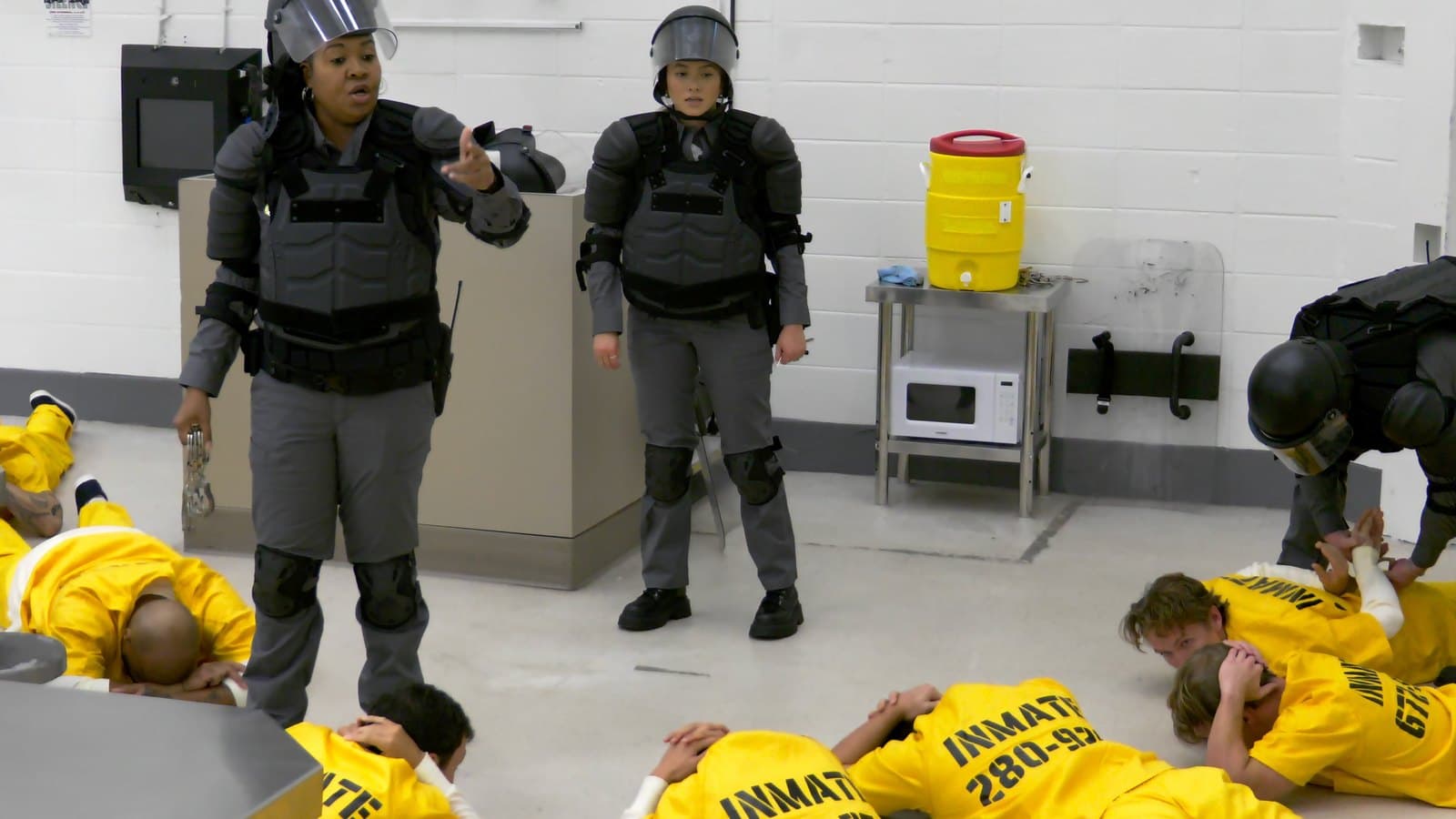
The format is simple to describe and harder to classify. Thirty participants enter a real, still-operating county jail in Georgia for two weeks, divided into eight guards, three of them women, and 22 prisoners, all men, as The Guardian sets out. The production planned four phases: transition, hierarchy, role reversal and self-governance, the Los Angeles Times reports. Participants could leave at any time with the safe word "Pineapple", and there was no cash prize, per The Independent and Reality Blurred.
The people making it are not a documentary unit. The producers are Dan Cutforth and Jane Lipsitz of Alfred Street Industries, whose credits include Top Chef and Project Runway, the LA Times notes. Three experts comment across the run: Alison Wood Brooks, a behavioural scientist at Harvard Business School; Michael Cantrell, a retired federal corrections professional; and the journalist Trymaine Lee. The billing is "A Netflix Experiment", per the LA Times.
That combination tells you what the show is before anyone enters the jail. A reality format supplies the structure, a production company supplies the pacing, and a panel of experts supplies the vocabulary of a study. The jail is real: a working facility, not a set built for the shoot.
The scores, and what divides them
The middle of the field is warmer than the bottom. The Independent's Kevin E G Perry scored it 60, calling it "surprisingly heartwarming" and "Big Brother with handcuffs", and conceding that it offers "precious little real scientific insight". The Los Angeles Times' Robert Lloyd also gave 50, writing that the show "sits equidistant from the actual Stanford Prison Experiment, Big Brother and Wonka's the Golden Ticket" and that "it doesn't offer any grand theory of human behavior, only what you knew already, that everyone is different". The San Francisco Chronicle's Bob Strauss scored 50, asking "safer than the original. Is it better?" and finding that "worthwhile insights, about both individuals and institutions, are achieved".
Below that, the notices get colder and more specific. The Guardian's Jack Seale gave 40, writing that the show "pretends to be science. It isn't – it's patronising reality television". He adds that it "refuses to sit still for more than half an episode before drawing on textbook reality TV tricks to engineer discord". The New York Times' James Poniewozik scored 30 under the headline "Is a Stiff Sentence". Decider's Joel Keller and Slate's Nadira Goffe both scored it 30. Keller was "marginally interested" in a "'rubbernecking as we pass an accident' kind of way". Goffe wrote that "nothing about this new, televised version is 'revealing,' and certainly nothing is 'raw.' It's all just gloss".
Two outlets sit outside that count. USA Today published an analysis on 21 October under the headline that the series "proves reality TV is at a low". Reality Blurred's review is the most hostile of the lot and the most useful one, because it documents how the guards were directed.
The claim at the centre of it
The series presents itself with the line "no interference, no bias, just observation", as Reality Blurred quotes it. The same review records guards being told to "take control of the pod", being issued riot gear and being set challenges. Those are not production footnotes. They go to whether the six episodes are an experiment at all.
This is where the roundup stops being a matter of taste. A viewer can prefer the warmer read or the colder one, and both are available from the same six episodes. But the show's promotional line is a factual claim about method, and the reporting contradicts it. Where The Guardian objects that the series engineers discord, the point is whether that discord would have happened without a producer.
Poniewozik's objection is different: the show fails on both of its own terms, as television and as experiment.
"While the series doesn't fall into barbarity, it fails as TV and isn't persuasive as an experiment." — James Poniewozik, The New York Times, 21 October 2026
That is the more damaging version of the case, because it does not require the reader to care about research ethics. It only requires the reader to notice that the six episodes are not very illuminating.
The original was already contested
The 1971 study the show borrows had lost much of its authority long before Netflix built a series around it. Philip Zimbardo recruited 24 volunteers, randomly assigned them as guards and prisoners, and placed them in a simulated prison in a basement corridor of Stanford's psychology department. The plan was two weeks. It was stopped after six days as guards became abusive and prisoners broke down, the NYT records.
Since then the study has been criticised on ethical and scientific grounds. Zimbardo was accused of pushing guards toward aggression, and a 2019 analysis of archival materials by Thibault Le Texier found that the guards had received precise instructions, according to the NYT and Reality Blurred.
So the remake inherits a study whose central finding was already in question, then adds a production layer on top. That is an odd inheritance for a show that wants to test what power does. The original was accused of coaching its guards. The remake gives its guards instructions too, and the instructions are the part the marketing denies.
Safety changes what is being tested
The new version is safer by design, and the reviewers notice. The safe word, the freedom to leave, the absence of a cash prize: each of those reduces the chance that a participant is harmed. Perry at The Independent credits the producers for going to lengths to protect the people taking part, and on the evidence of the series that credit looks deserved.
Safety has a cost
The 1971 study was stopped after six days because guards became abusive and prisoners broke down. The 2026 series gives participants a safe word and the freedom to leave, and offers no prize. Those are the right protections, and they also remove the conditions that made the original notorious.
That trade-off is the part the show does not address. Take away the conditions that produced the harm and you have taken away the thing the study was measuring. What remains is a two-week game in a jail, and the live question is whether thirty people will keep playing it. Lloyd's line about the show offering only what you already knew is a gentler version of the same point.
Why the mixed reviews are judging something else
The mixed notices are not naive about any of this. Perry and Lloyd both accept that the manipulation is the format, then judge the result on whether it is watchable. From that angle the show holds up: a reliable six-episode engine, thirty people who agreed to take part, and a setting that does a lot of work on its own.
The San Francisco Chronicle's description of the series as "big on personal interviews and 24/7 robo-cam scrutiny that rarely reveals anything truly upsetting" points at the same conclusion from the other side. Nothing in the jail is shocking, because the production has arranged for nothing to be. That is good practice for the people inside it and thin material for a show that wants to say something about captivity.
Read together, the two camps are not really arguing. One is reviewing a reality show and finding it decent. The other is reviewing a scientific claim and finding it unsupported. The reason the negative notices read as the stronger set is that the claim is the show's own, printed in its marketing, and the series cannot withdraw it without losing the reason anyone tuned in.
Caveats
The numbers first. Metacritic's 40 is a snapshot of seven reviews taken on 22 October 2026, the day after release, and more notices will move it. Rotten Tomatoes had published no aggregate at the time of writing, and no audience score appears in the sources used here. The 40 should not be treated as settled.
The second limit is categorical. This is unscripted reality television, not a controlled study, and it was cut for entertainment. Whatever the expert panel says across the six hours, the programme cannot produce the kind of evidence the 1971 study was trying to generate, which is why the reviews that treat it as a failed experiment and the reviews that treat it as decent television are both responding to the same mismatch.
A third note is about sourcing. Reality Blurred is not part of the Metacritic count, and its findings on producer instructions carry much of the weight in the negative case.
What the argument leaves open
The television question will answer itself faster than the scientific one. The audience verdict, whatever it turns out to be, will arrive before any academic response does. Reality TV has used the "social experiment" label for decades, and audiences have learned to read it as a format note rather than a promise. This series raises the stakes by borrowing a specific study with a specific history, and that is why the reviews are arguing about method rather than about pacing.
The ethical question is harder to close. A production can protect its participants and still mislead its audience, and the difference between those two things is the whole dispute here. The experts on the panel were brought in to comment on what happened. The complaint from the colder reviews is that the production decided what would happen first.
The series is streaming on Netflix. Metacritic's 40 is a reading of seven reviews published on 21 and 22 October, and it will change.
Cover image: A scene from Netflix's The New Stanford Prison Experiment. Photo courtesy of Netflix.
Tags
Frequently asked questions
- What is The New Stanford Prison Experiment about?
- It is a six-episode unscripted Netflix series in which 30 participants spend two weeks in a real, still-operating county jail in Georgia, divided into eight guards and 22 prisoners, recreating the structure of the 1971 Stanford study as reality television.
- What score did The New Stanford Prison Experiment get?
- Metacritic stood at 40 from seven critic reviews on 22 October 2026, with no positive notices, four mixed and three negative. The Independent gave it 60, the Los Angeles Times and San Francisco Chronicle 50, The Guardian 40, and The New York Times, Decider and Slate 30.
- Is The New Stanford Prison Experiment a real experiment?
- No. It is unscripted reality television, not a controlled study. Reality Blurred's review also notes that producers directed the guards, which undermines the show's claim of 'no interference, no bias, just observation'.
- When did The New Stanford Prison Experiment premiere on Netflix?
- It premiered on Wednesday 21 October 2026. The first reviews were published the same day, and Metacritic had recorded seven of them by 22 October.

TPW Editorial
Editorial Team
TechPastWeek's editorial team reports and edits every story we publish. We research each piece against primary and credible secondary sources, and a human editor reviews and signs off before it goes live.