Tesla and SpaceX Boards Open Merger Review With Musk Outside Both Rooms
Tesla and SpaceX have each formed a special committee of independent directors to review a possible merger. Musk is excluded, and no deal terms exist yet.

On this page
Key takeaways
- Tesla and SpaceX each formed a special committee of independent directors to review a possible merger, Musk said on SpaceX's 20 October 2026 earnings call.
- Musk is not a member of either committee and said he is excluded from their discussions because he is a conflicted party.
- Musk said Tesla approval would need 50 percent of all shares, including those held by people who do not vote, which he called 'quite a high hurdle'.
- SpaceX reported Q3 2026 revenue of $14.6 billion, up 161 percent, while Tesla reported $28.0 billion in revenue, flat year on year, and operating income down 56 percent.
- Tesla's annual shareholder meeting is set for 3 December 2026, and Barclays has suggested an announcement could come before it.
SpaceX and Tesla have each formed a special committee of independent directors to review a possible merger, Elon Musk said on SpaceX's third-quarter earnings call on Tuesday 20 October 2026. The committees were formed at shareholders' request. Musk is not a member of either one, and he said he is not taking part in their discussions. No terms have been agreed, and he told listeners that a deal should not be treated as settled.
Related reading: Microsoft Borrows $25 Billion as the AI Buildout Moves Onto the Bond Market · Amazon's AWS Grew 39% While Free Cash Flow Fell to -$42.4 Billion.
The disclosure matters beyond the deal itself. It puts a formal review on the record at two companies that share an independent director, are led by the same person, and would have to clear a Tesla shareholder vote that Musk himself describes as unusually hard. The news also landed in the same 48 hours as both companies' quarterly results, which describe two very different businesses and explain why the idea keeps coming back.
"Because I'm a conflicted party, I can't actually be in the discussions of the special committees, so it's this sort of a … It's an odd kabuki dance where two groups of people are talking, and I can't be in the conversation." — Elon Musk, on SpaceX's third-quarter earnings call, 20 October 2026
Two boards, one shared director, and no names
Tesla's 19 October 2026 proxy filing lists seven independent directors under Nasdaq standards: board chair Robyn Denholm, Ira Ehrenpreis, former Tesla chief technology officer JB Straubel, Joe Gebbia, Jack Hartung, James Murdoch and Kathleen Wilson-Thompson, TechCrunch reported. SpaceX lists six: Ehrenpreis, Randy Glein, Donald Harrison, Steve Jurvetson, Luke Nosek and Roelof Botha. Ehrenpreis sits on both boards, and he chairs SpaceX's compensation and nominating committee.
Neither company named the members of its committee, so the negotiating pair is unknown. The pool of candidates is small. Tesla's independent ranks exclude Musk's brother Kimbal Musk, who is a director but not independent. SpaceX's exclude Antonio Gracias, Musk and SpaceX president and chief operating officer Gwynne Shotwell, all directors but not independent. At SpaceX, that leaves six people, one of whom also sits on the Tesla board that has to approve the other side of any transaction.
The overlap is legal. It still creates a specific problem here: Ehrenpreis would be a candidate for either committee, and if he were appointed to both, the two committees would share a member. If he is appointed to one, the other has no director with a seat on both boards. Neither company has said which way it went.
The money explains why anyone is talking
SpaceX reported revenue of $14.6 billion for the quarter, up 161% year on year, according to The Verge. Its Super Intelligence division produced $7.6 billion of that, up 830%, which the company attributed to new cloud services agreements, the acquisition of Cursor and wider Grok adoption among businesses and consumers. Connectivity revenue was $5.2 billion, with 13.6 million Starlink consumer subscribers, and the division posted $2.4 billion in operating income. The space division brought in $1.8 billion, up 6%, and posted an operating loss of $7 million. Super Intelligence operating income was $431 million.
Tesla's quarter, reported a day later, was flat. Revenue was $28.0 billion, unchanged year on year, and operating income fell 56% to $718 million, The Verge reported. Revenue beat Wall Street's $27.9 billion expectation but came in below Tesla's own $28.3 billion company-compiled figure. Automotive revenue fell 3% to $20.5 billion and energy generation and storage fell 16% to $2.9 billion, partly offset by services and other revenue of $4.6 billion, up 33%. Capex rose 110% to $4.7 billion, operating expenses rose 39% to $4.8 billion, operating income fell 56% to $718 million, and free cash flow fell 62% to $1.5 billion. Deliveries were down 2.1% year on year. The $7,500 US federal EV tax credit expired on 30 September 2025, and Musk has said Tesla faces "a few rough quarters."
The two reports point in different directions. Tesla's capex rose 110% in a quarter when automotive revenue fell 3%, and its operating income fell by more than half. SpaceX's fastest-growing division sells compute. Both companies are now funding the same expensive projects, which is the practical argument for a single balance sheet. Musk's own list of what combination would buy is mostly shared infrastructure: superintelligence software, chip design, Terafab (the joint Tesla and SpaceX chip project), robotics, the Starmind orbital data-centre constellation and connectivity.
"I do think there's a lot of merit to combining companies as we are pretty much in the superintelligence singularity," he said, in a passage The Verge quoted. He then listed the areas where he sees gains from cooperation: superintelligence software, chip design, TeraFab, robotics, mass to orbit with the Starmind constellation, and connectivity. That is a case for cooperation. It is not a case for a specific ownership structure, and nothing in either company's results dictates one.
No term sheet exists in public. There is no agreed exchange ratio, no financing structure, no named acquirer and no committee membership. The $3.6 trillion figure attached to the story is a market-value snapshot of a combined company, and neither company has published a deal valuation.
Fifty percent of all shares is a different kind of vote
The Tesla side is where the arithmetic gets awkward. Musk set out the requirement himself: "At the end of the day, the shareholders have to be supportive of this. And particularly on the Tesla side, we will need a 50 percent vote of all shares, not just those who vote, but of all shareholders. And that's quite a high hurdle to try to achieve." The Verge reported the remark from the call.
A majority-of-outstanding standard counts every shareholder who stays home as a no. Approval then depends on turnout as much as on sentiment, and a favorable poll of active holders does not necessarily translate into a majority of the register. Musk called the bar high, and the description is his; Tesla has not published its own reading of the requirement.
The SpaceX side looks different. Musk controls more than 50% of voting power at SpaceX through super-voting shares, TechCrunch reported. If SpaceX is the buyer, its own shareholder vote is not the binding constraint in the way Tesla's would be. That asymmetry is one reason most Wall Street analysts and legal experts expect SpaceX to acquire Tesla, or to absorb it through a stock swap, rather than the reverse. SpaceX has held the higher valuation since its June 2026 IPO, which is the basis for that expectation.
It is still an expectation. Neither board has said who would be the acquirer, and neither committee has described the structure it is weighing.
Where the three point six trillion figure comes from
The Verge put the combined entity at upwards of $3.6 trillion. That figure reflects the market value of two separately listed companies at current prices. A merger price would be set by negotiation, and the premium or discount on Tesla shares would decide who captures what.
SpaceX has been public since June 2026, and this was its second earnings report as a listed company. Tesla's annual shareholder meeting is scheduled for 3 December 2026. Barclays published a client note earlier in October suggesting a combination could be announced before that meeting, The Verge reported. That is a bank's guess about timing, not a company plan, and the meeting will happen whether or not a deal is announced.
Musk spent more energy lowering expectations than raising them. "I think some people out there assume that a SpaceX and Tesla Motor is a certainty, and I think that would be overstating it," he said, according to TechCrunch. The same call carried the committee disclosure and that warning.
Caveats
- The committees are exploring a deal. There are no agreed terms, no exchange ratio, no financing structure and no announced acquirer.
- The $3.6 trillion figure is a market-value snapshot, not a deal price.
- The expectation that SpaceX acquires Tesla is analyst and legal consensus reported by The Verge, not company guidance.
- The 50%-of-all-shares hurdle is Musk's description of the requirement, not a citation of Tesla's charter.
- Q3 figures are as reported and include one-off items. They should not be annualised.
- Neither company has named committee members, advisers or a timetable.
What to watch before 3 December
The next real signal will be a filing rather than a call. Watch for a Tesla proxy supplement or an 8-K that names committee members, and for any disclosure of the advisers each side has retained. The identity of the chair matters more than the headline valuation, because the chair sets the process and decides when a proposal is ready to go to shareholders.
Watch the 3 December meeting for two separate things: whether Tesla puts any merger resolution on the ballot, and what management says about the vote threshold if asked directly. Barclays' timing may prove right; the meeting itself is fixed.
And watch SpaceX's next quarterly report for whether the Super Intelligence division keeps growing at the rate it did in this quarter. The 830% figure came with a small base and a list of one-time drivers, including the Cursor acquisition, and a single quarter does not establish a trend.
Neither company has said when either committee will report, or whether it will publish anything before Tesla shareholders meet.
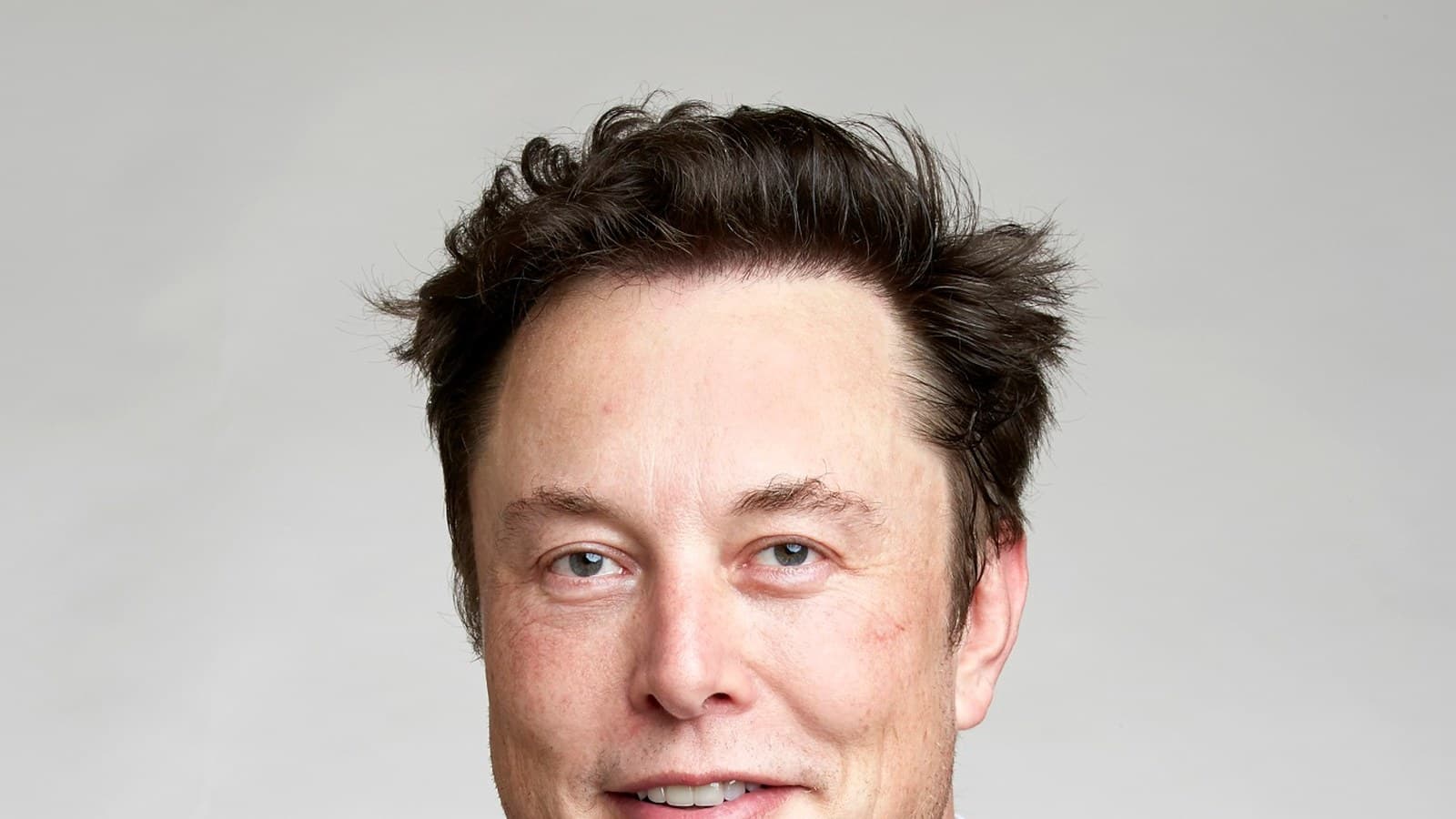
Cover image: "Elon Musk Royal Society (crop2)" by Debbie Rowe, CC BY-SA 3.0, via Wikimedia Commons.
Tags
Frequently asked questions
- Have Tesla and SpaceX agreed to merge?
- No. Both boards have formed special committees of independent directors to review a possible merger, but Musk said no terms have been agreed and that treating a deal as certain would be 'overstating it'.
- Why is Elon Musk not involved in the merger discussions?
- Musk said he is a conflicted party, so he cannot sit on either special committee or take part in its talks. He described the arrangement as 'an odd kabuki dance' between two groups of people he cannot join.
- What vote would Tesla shareholders need to approve a merger?
- Musk said Tesla would need a 50 percent vote of all shares, including shares whose holders do not vote. He called that 'quite a high hurdle', since abstentions count against approval.
- When could a Tesla-SpaceX merger be announced?
- No date has been set. Tesla's annual shareholder meeting is scheduled for 3 December 2026, and a Barclays client note in October suggested a combination could be announced before that meeting, which is an analyst expectation rather than company guidance.

TPW Editorial
Editorial Team
TechPastWeek's editorial team reports and edits every story we publish. We research each piece against primary and credible secondary sources, and a human editor reviews and signs off before it goes live.