Schneider Electric to Buy PTC for $22.6 Billion in Its Biggest Deal Yet
Schneider Electric agreed to acquire PTC for about $22.6 billion in cash, its largest deal, betting on industrial AI. The closing is expected in Q3 2027.

On this page
Key takeaways
- Schneider Electric agreed on October 5, 2026 to acquire PTC for about $22.6 billion in cash, an equity value that implies an enterprise value of roughly $23.7 billion.
- PTC shareholders will receive $205 per share in cash, a 42.3 percent premium to the stock's prior close, in Schneider's largest acquisition to date.
- The transaction is expected to close in the third quarter of 2027, subject to shareholder and regulatory approvals, funded by roughly 5 billion to 6 billion euros in new equity and 16 billion to 17 billion euros in new debt.
- Schneider targets recurring software revenue at about 24 percent of total sales, alongside roughly 250 million euros in annual cost savings and about 800 million euros in revenue synergies.
- Schneider shares fell nearly 10 percent on the announcement as investors weighed the premium and the added borrowing.
Schneider Electric has agreed to buy PTC, the Boston-based industrial software company, for about $22.6 billion in cash, an equity value that implies an enterprise value of roughly $23.7 billion. The French energy-management group announced the agreement on October 5, 2026, confirming a transaction Reuters had reported was near a day earlier. It is the largest acquisition Schneider has made, and it is not finished business: the two companies expect it to close in the third quarter of 2027, subject to shareholder and regulatory approvals.
Related reading: Amazon in Advanced Talks to Buy AI Startup Decart for About $7 Billion · Microsoft Borrows $25 Billion as the AI Buildout Moves Onto the Bond Market.
PTC shareholders will receive $205 a share in cash, a 42.3 percent premium to the stock's prior close, Reuters reported. Bloomberg put the enterprise value above $23 billion. The premium is a bet that the next phase of industrial automation runs on software and data as much as on the electrical gear and cooling equipment Schneider already sells into factories and data centers.
What Schneider is buying
Schneider supplies electrical distribution, power management, cooling, and automation equipment. Its customers include data-center operators, utilities, and manufacturers. PTC adds the layer above the hardware: software for designing products, managing a product through its lifecycle, and the engineering work in between, plus the industrial data those tools produce. Silicon Republic framed the deal as one built around industrial software and AI.
Schneider describes the combination as a “leading, scaled, open and interoperable industrial software and AI franchise,” and speaks of a “digital thread” that carries data from design through production and operation. The language is aimed at investors asking what AI is actually good for in a factory. A digital thread is one answer: a continuous record that models, machines, and engineers can all read.
If that record is the prize, PTC is the means of getting it. Product design and lifecycle software is where a lot of industrial data is born, and whoever controls that layer controls what an AI system can see. That is the case Schneider is making to its shareholders, and the case it will have to prove as the deal moves through review.
The pitch also rests on scale Schneider already has. Schneider sells into the same industrial customers that PTC builds software for, which is the basis for the cross-selling claim. Whether those customers want design software from their electrical supplier is a separate question, and the deal's success depends on the answer.
Two numbers, two measures
The $22.6 billion figure is the equity value, roughly what shareholders are paid. The enterprise value of about $23.7 billion adds the company's debt and cash position. Deals are often compared on enterprise value because it captures the whole business rather than just the shares, which is why both numbers appear in coverage of the same transaction.
The industrial-AI logic
PTC's software touches how products get designed and how that design data is managed over time, which is where much industrial data begins. If Schneider's equipment and PTC's software share a data layer, Schneider argues it can sell more of both, and make its hardware easier to use with AI tools that need structured data to do anything useful.
The company also wants the revenue mix that software brings. Hardware sales rise and fall with capital spending cycles and carry lower margins than subscriptions. Schneider says the combination would lift recurring software revenue to about 24 percent of total sales, and management targets roughly 250 million euros in annual cost savings and about 800 million euros in revenue synergies, as Reuters reported.
Industrial AI also demands different things than the consumer kind. A chatbot can improvise an answer; a system that schedules maintenance or adjusts a production line cannot, because it depends on accurate data about specific machines and specific products. That is why the data layer is worth paying for, and why an equipment maker with a large installed base might believe it can turn that base into a software advantage.
Chief executive Olivier Blum put the deal in the frame the company wants investors to use:
The acquisition of PTC represents an important step forward in our ambition to lead the new era of energy and industrial intelligence.
PTC chief executive Neil Barua is also quoted in the announcement. Both men are selling a story about two halves of an industrial system: the power and machines, and the software and data that describe them.
Why investors flinched
The market did not treat the deal as a bargain for the buyer. Schneider shares fell nearly 10 percent on the news, Quartz reported, as investors weighed the size of the premium and the cost of financing it. Schneider is paying in cash rather than stock, which means raising money to fund the purchase.
That reaction sets the terms of the debate over the next year. If PTC's software revenue grows inside Schneider and the savings land, the drop will look like a buying opportunity. If the financing costs bite and the synergies slip, the same fall will look like an early warning.
Part of the concern is timing. Schneider is committing to the purchase and the money to fund it now, while the revenue and savings it expects arrive over years. The gap between when the cash leaves and when the returns show up is what investors are weighing, and the market priced some of it into the shares on day one.
The deal is not complete
Schneider and PTC signed an agreement, not a completed transaction. The deal still requires PTC shareholder approval and clearance from regulators, and is expected to close in the third quarter of 2027. The two companies remain separate businesses until then, and the figures above are the announced terms, not final results.
The financing and the integration risk
The deal is funded with new money. Reuters reported roughly 5 billion to 6 billion euros in new equity and about 16 billion to 17 billion euros in new debt, in its coverage of the transaction, a mix that dilutes existing shareholders while adding debt to the balance sheet. The price and the financing burden were both part of the market's reaction.
That debt matters because Schneider is buying a software business to sell alongside hardware, and the value of that combination depends on execution rather than on the assets themselves. Cost savings of about 250 million euros a year are one lever; the 800 million euros in revenue synergies is the one that depends on selling PTC's products into Schneider's customer base and Schneider's equipment into PTC's.
Integration is the harder part. Software and industrial hardware run on different sales cycles, different margins, and different engineering cultures, and merging two customer bases takes longer than drawing down a credit facility.
The closing date reflects that. The third quarter of 2027 is roughly a year away, which is the time a deal this size needs for regulatory clearance and the other conditions attached to it.
A second software bet in three months
PTC is not Schneider's first move into industrial software this year. In July 2026, the company agreed to acquire Cognite, an industrial data and AI software company, for $3.1 billion. That deal was about the data plumbing that feeds industrial AI; PTC is about design and lifecycle. Read together, they describe a strategy: own the data layer and the software that sits above Schneider's installed base of equipment.
Schneider is France's third-largest listed company, valued at around $196 billion, and it reports third-quarter 2026 results on October 16. That report is the first earnings event where management will have to defend the price directly to investors and analysts.
The wider pattern is that the buyers of industrial software increasingly come from the companies that make industrial hardware. Schneider's two purchases in three months fit it, and they point at a simpler logic: buying the software layer outright is a faster route to recurring revenue than building one, even when the price is high.
Caveats
Three things are announced rather than settled, and they define how the story could change.
The first is the price. The $22.6 billion equity value and the 42.3 percent premium are the numbers on the page, as GuruFocus recorded, but the terms can shift before closing, which is expected in the third quarter of 2027. Regulatory conditions are one way value moves after the announcement.
The second is the synergy math. Cost savings and revenue synergies are management targets, not reported results. Whether Schneider can cross-sell PTC's software into its own customer base, and the reverse, is the central operational question, and it will not be answered until well after the deal closes.
The third is financing. A deal funded with a large debt component depends on borrowing costs the company does not control, and the equity raise dilutes current holders. The roughly 10 percent share drop is the market's first pass at that trade-off. Schneider will face the question again when it reports results on October 16.
What to watch
- Regulatory review. The deal needs approvals across jurisdictions, and a large concentration in industrial software will draw attention from competition authorities.
- The Cognite tie-in. Schneider's July acquisition of Cognite has not fully settled into the business. How the two software purchases fit together will shape the industrial-AI story for years.
- The October 16 results. Schneider's third-quarter report is the first chance for investors to press management on the price and the financing plan.
- Software revenue share. The company targets recurring software at about 24 percent of total sales. Watch the reported number over the next year for signs the mix is shifting.
- PTC's renewals. PTC's business depends on customers renewing software contracts. A disrupted customer base after acquisition would undercut the revenue-synergy case before it starts.
The agreement is signed. The next test is whether the software revenue and the savings show up in the reported numbers.
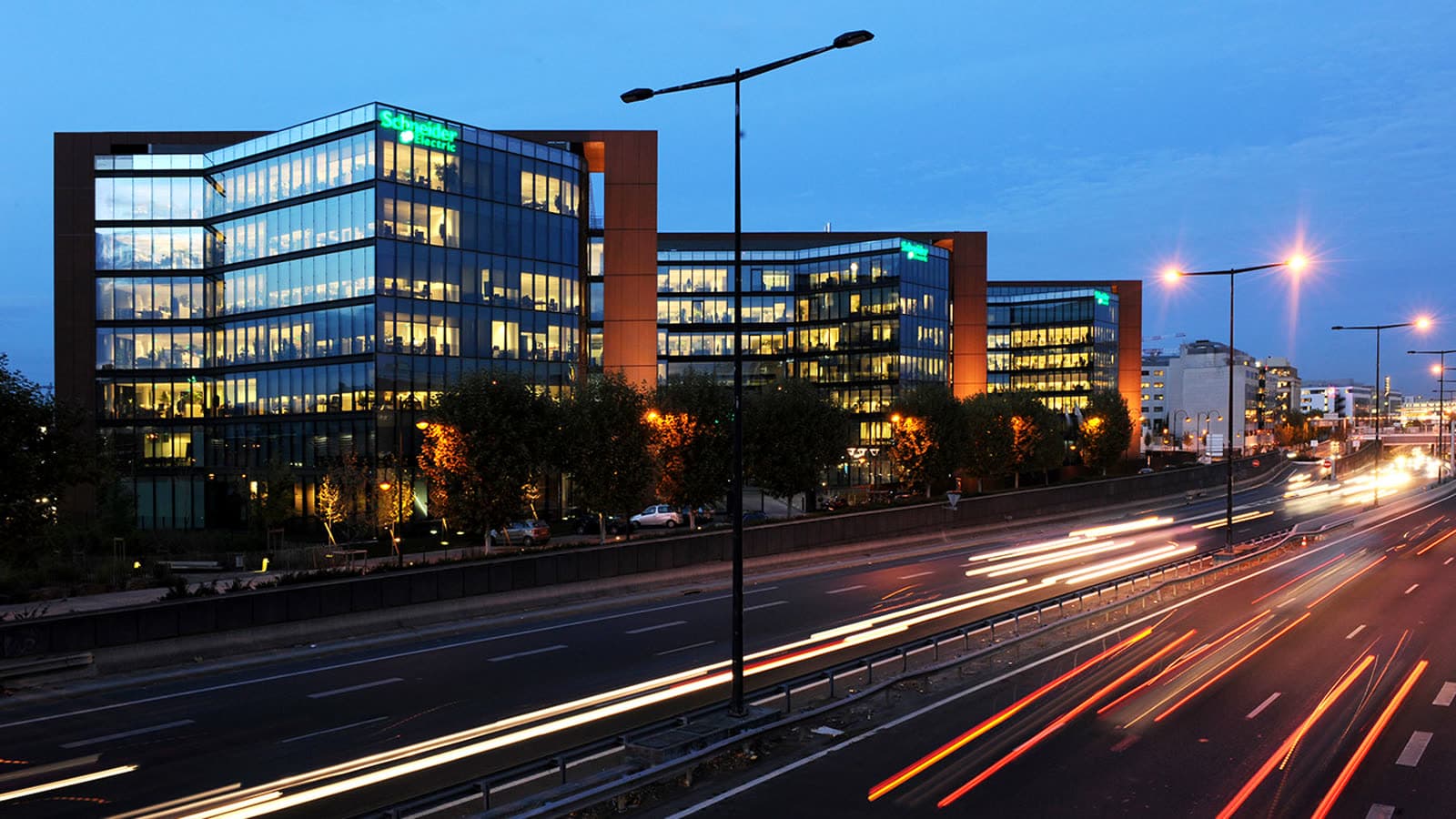
Cover: Schneider Electric's headquarters. Photo by Wilmotte & associés architectes via Wikimedia Commons, CC BY-SA 4.0.
Tags
Frequently asked questions
- How much is Schneider Electric paying for PTC?
- About $22.6 billion in cash, which is the equity value going to PTC shareholders. Including debt and cash, the implied enterprise value is roughly $23.7 billion, and PTC investors receive $205 per share.
- When is the Schneider Electric and PTC deal expected to close?
- The companies expect the transaction to close in the third quarter of 2027. It still needs PTC shareholder approval and clearance from regulators, and the two businesses remain separate until then.
- Why is Schneider Electric buying PTC?
- Schneider sells power, cooling, electrical distribution and automation equipment, and PTC adds product design, product-lifecycle-management and engineering software plus industrial data. Schneider says the combination creates a digital thread for industrial AI.
- Is the Schneider Electric PTC acquisition complete?
- No. The two companies signed an agreement announced on October 5, 2026, but the deal is not closed. Completion is expected in the third quarter of 2027, pending shareholder and regulatory approvals.

TPW Editorial
Editorial Team
TechPastWeek's editorial team reports and edits every story we publish. We research each piece against primary and credible secondary sources, and a human editor reviews and signs off before it goes live.