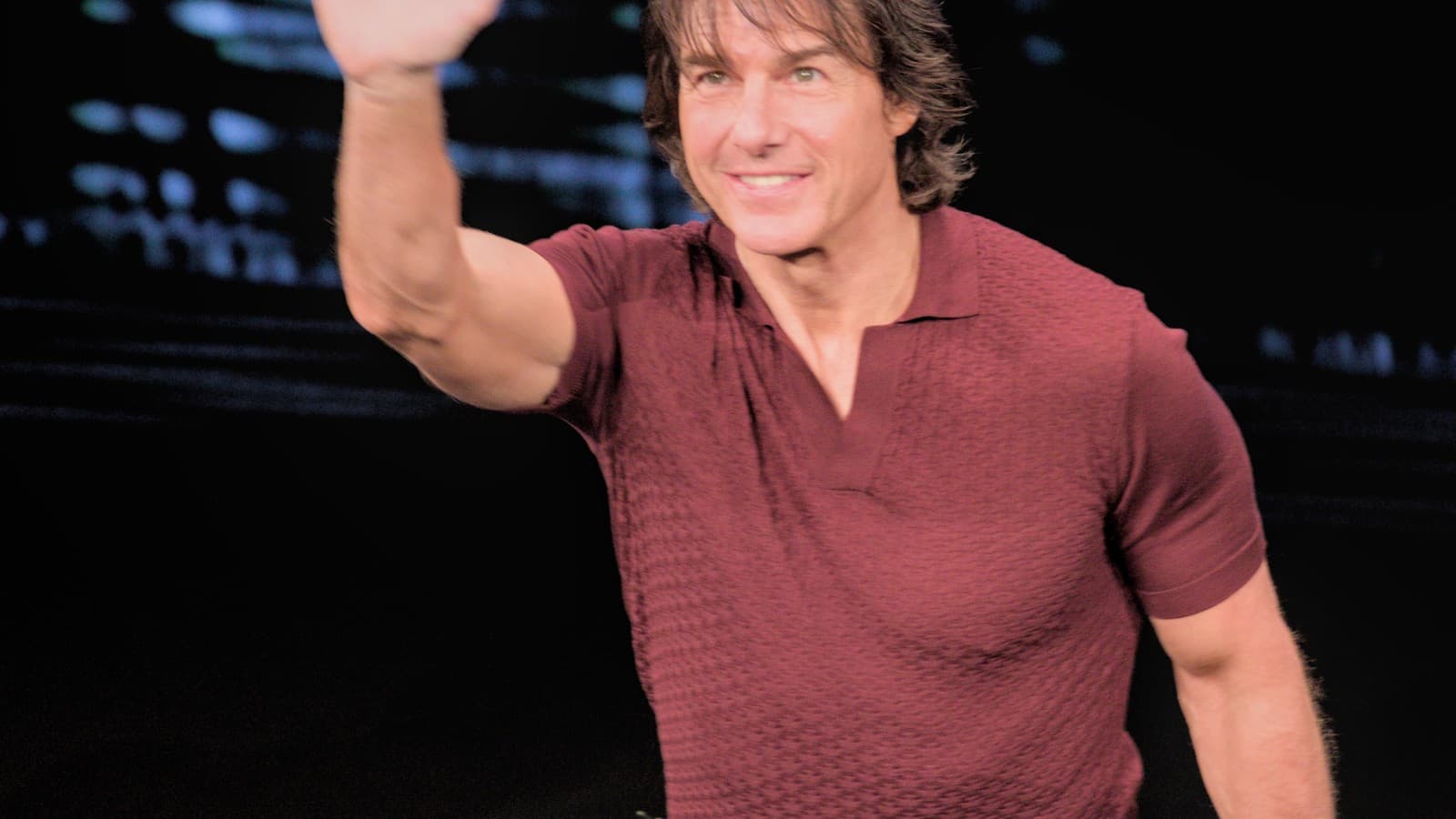
Wicker Wins Over Critics and Audiences. Its $5.75 Million Opening Is the Interesting Part.
Wicker opened to $5.75 million from 1,471 theatres and a 94% Rotten Tomatoes score. Critics agree on Colman and the creature, and split on the length.

On this page
Key takeaways
- Wicker opened in 1,471 North American theatres on 23 October 2026 and earned $5.75 million, finishing fifth behind Clayface at $24 million.
- Rotten Tomatoes showed 94 percent from critics and 93 percent from audiences on 23 October; Metacritic stood at 70 out of 100 from 31 critics.
- Black Bear acquired the film for $2.5 million after it premiered at Sundance 2026. That figure is not the production budget, which has not been disclosed.
- The film runs 105 minutes and adapts Ursula Wills-Jones's 14-page 2008 short story 'The Wicker Husband'; IndieWire and Blu-ray.com both said the material is stretched thin.
- Wicker was set to play in 97 AMC Dolby Cinemas on 25 October and 76 4DX locations from 29 October, with some shows already sold out, per Deadline.
Wicker opened in 1,471 North American theatres on 23 October 2026 and earned $5.75 million across the weekend, fifth place in a frame led by Clayface. It is an R-rated romantic fantasy comedy about a lonely fisherwoman who commissions a husband made of wicker, directed by Alex Huston Fischer and Eleanor Wilson, bought by Black Bear for $2.5 million after Sundance, and now sitting at 94 percent on Rotten Tomatoes. The fifth-place finish is the least interesting thing about that sentence.
Related reading: Klara and the Sun Reviews: 25 Percent on Rotten Tomatoes, 81 Percent From Audiences · Wildwood Opens at 100% on Rotten Tomatoes as Metacritic Stands at 87.
The weekend gross measures attendance. The theatre count and the acquisition price set the terms, and on both counts this is a better result than the chart position suggests. Meanwhile the reviews have settled into an unusual shape: near-unanimous praise for Olivia Colman and the practical creature work, and a narrower argument about whether a 14-page short story can carry 105 minutes of film.
The opening is modest. The per-screen average is not
The weekend broke down as $2.36 million on Friday, including $620,000 from Thursday previews, then $1.8 million on Saturday and an estimated $1.55 million on Sunday, according to Deadline. Against 1,471 theatres, that works out to about $3,909 per screen. For an original, R-rated adult comedy with no franchise attached, on fewer than 1,500 screens, that is a respectable number rather than a soft one.
The competition explains the ranking. Clayface opened at No. 1 with $24 million, Variety reported. You Can See Everything took $19.5 million in second, Wildwood $11.2 million in third, and Street Fighter $8.6 million in fourth after a 72 percent drop. Wicker was never going to win that frame. The question is whether it can hold screens long enough to build the slow tail that adult audiences sometimes give a film with strong word of mouth.
Black Bear is already acting as if it can. Deadline reported that Wicker would play in 97 AMC Dolby Cinemas on Sunday 25 October and 76 4DX locations from Wednesday 29 October, with some shows already sold out. Those premium bookings are a second pass at the same audience: people who skipped the first weekend get a reason to pay more for the same 105 minutes.
What 94 percent on Rotten Tomatoes actually measures
The aggregate numbers are strong, and they do not say quite the same thing. Rotten Tomatoes showed 94 percent from critics on 23 October, with audiences at 93 percent. By 25 October, ScreenRant reported a 94 percent audience score from more than 100 ratings and framed it as a career record for Skarsgård. Metacritic put the film at 70 out of 100 from 31 critics, a "generally favorable" rating.
Those two numbers are built differently. A Rotten Tomatoes percentage is the share of critics who filed a positive notice, counted as fresh or rotten. It says how many reviewers cleared the bar, not how far over it they went. Metacritic weights each review and lands on a score, which is why 70 is the more informative figure here. A 94 percent fresh share paired with a 70 average describes a film that almost nobody hated and a good number of critics merely liked.
Rotten Tomatoes published a roundup of the first notices on 23 October. The interesting material is in the notices that sit just below the fresh line, because they agree on what works and disagree on whether it is enough.
The craft holds. The running time is where critics split
The craft argument is easier to settle. WETA Workshop built the wicker creature, with Joe Dunckley credited for the practical effects, and the reviews are close to unanimous that it holds up on screen. A practical body gives Colman something to act against, and the film leans on that instead of hiding it.
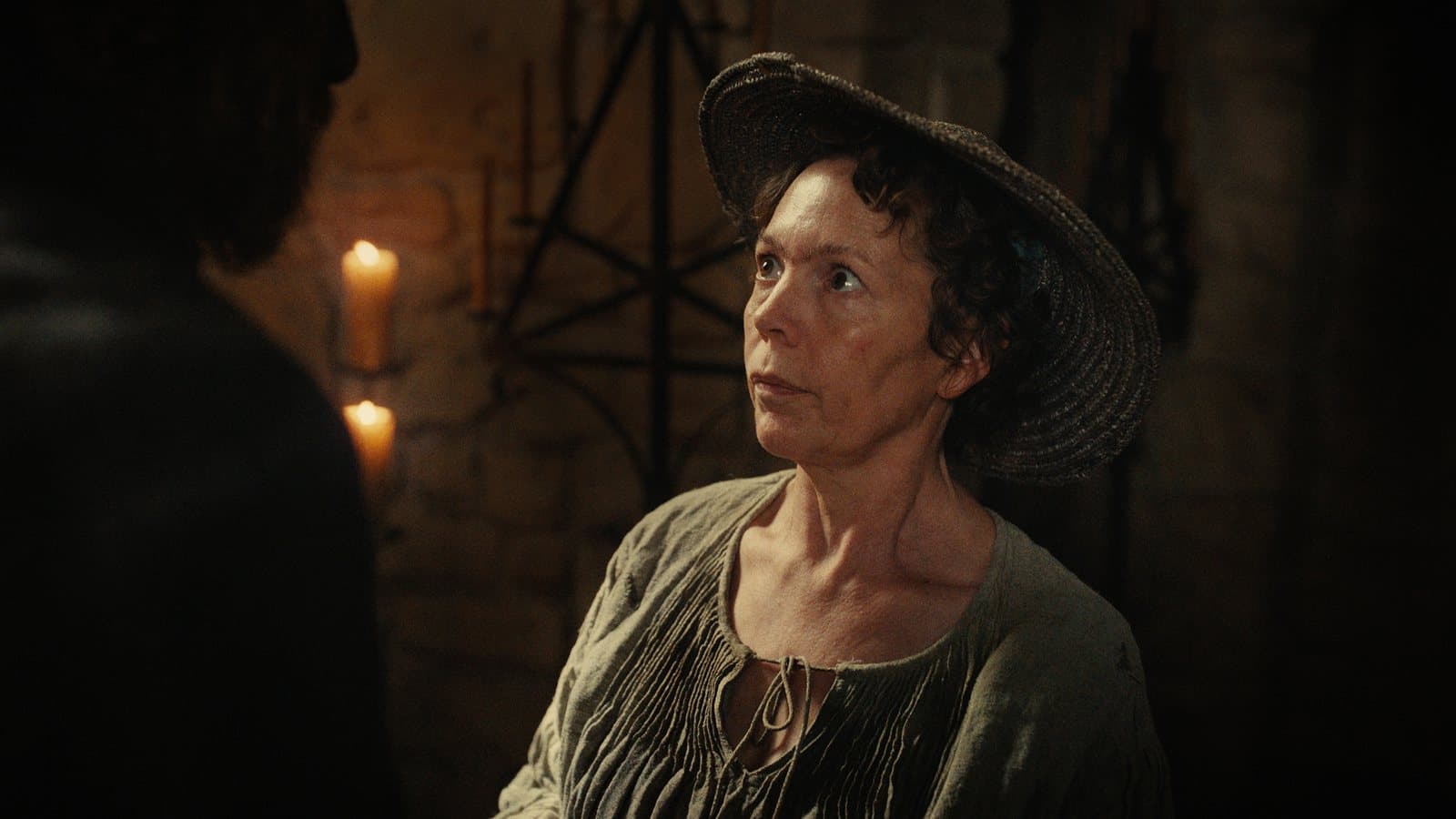
The crew list reads like a deliberate bet on texture. Lol Crawley shot it, Renato Cseh designed it, Andy Neil handled sound. Reviews keep returning to the same two points: the creature reads as a physical object in the room, and the two leads treat the premise as real. Colman plays the Fisherwoman without winking at the audience, and Skarsgård plays the Wicker Husband as a being with an interior life rather than a prop with limbs. Peter Dinklage plays the basketmaker, and the supporting cast (Elizabeth Debicki, Richard E. Grant, Nabhaan Rizwan, Marli Siu, Ella Bruccoleri, Ben Ashenden, Kiell Smith-Bynoe) fills out a village that has to feel small enough for gossip to do damage.
The film is bawdy and rated R, and the 94 percent audience score says the tone landed anyway. It is dirty in the way a folk tale is dirty, and viewers appear to have taken it in that spirit.
Why the review split is narrower than it looks
Almost every notice praises Colman, Skarsgård, and the WETA creature. The disagreement is about whether the material justifies 105 minutes, and that argument tends to fade once a film finds its audience.
The source is Ursula Wills-Jones's 2008 short story "The Wicker Husband," and the length gap is where the second argument starts. IndieWire called it a short story stretched to feature length while praising the leads. The LA Times found the second half skipping emotional beats. Scene Now called the film "carefully woven yet strangely hollow," and Blu-ray.com said the screenplay shows "stretchmarks."
Deadline's Pete Hammond went the other way and called it a "little gem." RogerEbert.com singled out the chemistry between Colman and Skarsgård. The Guardian was cooler. Those notices disagree about shape, not quality.
A 14-page fable runs on compression. It gives a village, a wish, a husband, a consequence, and then stops. A feature has to hold the middle, and the middle is where a story like this either finds another turn or starts repeating itself. The first half of Wicker plays the village comedy: the fisherwoman is ostracised, the commission is absurd, the neighbours are appalled and fascinated in the right proportions. The second half has to convert that premise into jealousy, and jealousy is a slower engine than transgression. Critics who found the film sagging are describing that handover, not the performances.
What $2.5 million buys, and what it does not
The acquisition is the part of the story that will interest people who do not care about the film. Black Bear acquired the film for $2.5 million after the Sundance 2026 premiere. Against that acquisition cost, a $5.75 million opening changes the arithmetic: print and marketing spending is separate and has not been disclosed, but the film does not need to become a blockbuster to justify its release.
The $2.5 million is not the budget
Black Bear acquired the film for $2.5 million after Sundance. It was not the cost of making the film, and the production budget has not been disclosed. Calling Wicker a $2.5 million movie, or comparing the opening gross directly to that figure as a return, gets the economics wrong.
What the number does show is that a mid-budget original with two movie stars, a practical creature, and a festival launch can still get a theatrical release and find an audience. That is the kind of release the industry has spent years describing as endangered. Deadline reported that the film had been popular with female audiences. If that group turns out for Wicker, the lesson is narrower: this specific kind of film still has a route to screens.
Caveats
Some numbers can still move. The $5.75 million is a studio-reported weekend figure, not an audited final, and Sunday holds can shift it by a few hundred thousand dollars in either direction. The aggregate scores are snapshots taken during the opening weekend and will move. And no international opening figures were available at publication, so nothing here should be read as a global result.
The "career record" framing deserves care. Skarsgård's best audience score in the sample available is 94 percent, set by Lee, so Wicker ties it. That is not a record set by a clear margin.
One date needs separating out. A nationwide expansion date of 30 October appears in some coverage, but it is not confirmed in the primary weekend reports. The Dolby and 4DX bookings are dated in Deadline's reporting. The wider expansion is not, and should not be treated as scheduled until Black Bear or an exhibitor says so.
What to watch
The second weekend is the test. A $3,909 per-screen average gives the film a base, and a 94 percent audience score gives it a reason to hold. If the drop is small, the Dolby and 4DX bookings will look less like a second chance and more like a plan that was correct from the start.
The other number to watch is the audience score as it grows past the first hundred ratings. Opening-weekend audiences are self-selecting: they chose the film because the premise appealed. A 94 percent from that group is easier to earn than a 94 percent from the broader audience that arrives in week two. If the figure holds through the expansion, the word-of-mouth case is real. If it slides into the high 70s, the reviews were measuring the same enthusiasts all along.
Black Bear's David Spitz, head of domestic theatrical distribution, gave the weekend its official reading.
“It is fantastic to see that the film is truly resonating with the audiences.” — David Spitz, head of domestic theatrical distribution, Black Bear, via Variety, 25 October 2026.
That is the distributor's reading, and the weekend numbers do not contradict it. Fifth place on a weekend with a $24 million winner is not a headline. A $5.75 million opening on 1,471 screens, for a film bought for $2.5 million, with audiences and critics agreeing for once, is the more useful data point. For one weekend, the endangered mid-budget adult film was a going concern.
Cover image: Official still from Wicker, courtesy of Black Bear Pictures, published by Deadline.
Tags
Frequently asked questions
- How much did Wicker make in its opening weekend?
- Wicker earned $5.75 million from 1,471 North American theatres over the weekend of 23 to 25 October 2026, finishing fifth. That included $620,000 from Thursday previews.
- What are Wicker's Rotten Tomatoes and Metacritic scores?
- Over its opening weekend of 23 to 25 October 2026, Rotten Tomatoes showed 94 percent from critics and 94 percent from audiences, while Metacritic stood at 70 out of 100 from 31 critics, rated generally favorable. Both figures will move as more reviews and ratings arrive.
- Is Wicker based on a book?
- No. It adapts 'The Wicker Husband,' a 2008 short story by Ursula Wills-Jones that runs about 14 pages. The film stretches that material to 105 minutes.
- Who stars in Wicker?
- Olivia Colman plays the Fisherwoman and Alexander Skarsgård plays the Wicker Husband, with Peter Dinklage as the basketmaker, Elizabeth Debicki, Richard E. Grant, Nabhaan Rizwan, Marli Siu, Ella Bruccoleri, Ben Ashenden and Kiell Smith-Bynoe. Alex Huston Fischer and Eleanor Wilson directed.

TPW Editorial
Editorial Team
TechPastWeek's editorial team reports and edits every story we publish. We research each piece against primary and credible secondary sources, and a human editor reviews and signs off before it goes live.