Wildwood Opens at 100% on Rotten Tomatoes as Metacritic Stands at 87
Wildwood opened to 100% on Rotten Tomatoes and 87 on Metacritic. The two mixed notices say more about LAIKA's PG-13 stop-motion epic than the perfect score.

On this page
Key takeaways
- Wildwood opened in wide US release on 23 October 2026 through Fathom Entertainment, after premiering at the BFI London Film Festival on 11 October.
- Rotten Tomatoes recorded 100% from 102 reviews, an average rating of 8.70 out of 10, and a 97% Popcornmeter from more than 250 verified ratings.
- Metacritic had 87 from 36 critic reviews, broken down as 34 positive and 2 mixed; Vulture's 50 was one of them.
- Wildwood is LAIKA's sixth feature and its first PG-13 release, directed by Travis Knight from a screenplay by Chris Butler, and it spent more than six years in production.
- IndieWire reported that 670 of the film's 2,804 shots were augmented by Wētā FX, and that with one negligible exception each LAIKA film has cost more and grossed less than the one before it.
Wildwood opened in wide release in the United States on Friday 23 October 2026 with a perfect score on Rotten Tomatoes: 100% from 102 reviews, an average rating of 8.70 out of 10, and not one review filed as rotten. Metacritic has the same film at 87 from 36 critics, with 34 positive notices, two mixed and none negative. The audience score stood at 97% from more than 250 verified ratings.
Related reading: Nocturne Opens at 100% on Rotten Tomatoes, Then Slips to 83% · Wicker Wins Over Critics and Audiences. Its $5.75 Million Opening Is the Interesting Part..
Both numbers describe a film critics like. They do not describe the same film. A 100% score says no critic came out against Wildwood. An 87 says the critics who came out for it did so with different levels of enthusiasm, and two of them filed reservations serious enough to change how the film reads.
A perfect score is a count, not a grade
Rotten Tomatoes reduces each review to a binary: fresh or rotten. The Tomatometer is the share that landed fresh, which makes 100% a statement about the absence of detractors, not the strength of the praise. A film at 100% from 102 reviews can still contain a B-minus and a 50, and this one does.
The average rating is the better guide to how the batch reads, and 8.70 out of 10 is high. It sits closer to the enthusiastic end than to the polite one. The Popcornmeter, at 97%, points the same way, though it measures ticket buyers who chose the film on its first day.
Metacritic's 87 works differently. It converts each notice to a score out of 100 and averages them, so a lukewarm review pulls the number down instead of merely failing to raise the percentage. Two mixed reviews can pull that average down while leaving the Tomatometer at 100%. The gap reflects a difference in method as much as a difference in opinion.
What the two numbers cover
The scores here are the ones published on 23 October 2026, the film's wide-release day. Rotten Tomatoes had 102 critic reviews and more than 250 verified audience ratings; Metacritic had 36 critic reviews and a user score of 8.5 from 27 ratings. Both sites update as more reviews arrive.
What LAIKA attempted
Wildwood is the studio's sixth feature, after Coraline, ParaNorman, The Boxtrolls, Kubo and the Two Strings and Missing Link, and the first to carry a PG-13 rating. The classification is not decorative. Content descriptors include strong fantasy violence, bloody images, thematic material, language, brief partial nudity and suicide-related material. A studio known for dark children's films has made something that earns the rating in its opening minutes, as Variety noted.
Travis Knight directed from a screenplay by Chris Butler, adapted from the 2011 novel by Colin Meloy and Carson Ellis. Knight produced with Arianne Sutner, Caleb Deschanel shot it and Dario Marianelli wrote the score. Peyton Elizabeth Lee voices Prue McKeel, a Portland teenager whose baby brother is carried off by a murder of crows into the Impassable Wilderness; Jacob Tremblay plays her classmate Curtis, and Carey Mulligan, Mahershala Ali and Angela Bassett are among the voices around them. The wilderness is on the brink of war. Variety describes separate patches of it ruled by Redcoat-styled military coyotes and supersized birds of prey.
The scale is the production story. World of Interiors reports more than six years in production and a Pittock Mansion set modelled on the real 1,500-square-metre house above Portland. Knight told the magazine: “It's by far the biggest world, the most ambitious film, we've ever attempted.” IndieWire counted 142,000 3D-printed face models, 728 hand-moulded trees, more than 715 miles of brass wire and 2,804 shots.
The film had premiered at the BFI London Film Festival on 11 October, twelve days earlier. Fathom Entertainment released it, an unusual route for a film of this size. Runtime listings differ (132 minutes on Wikipedia and Rotten Tomatoes, 2 hours 19 minutes on Metacritic), and the exact count is not worth arguing about. The useful fact is that a long stop-motion film is being asked to compete in wide release with computer-animated features that cost less per minute.
What the enthusiastic reviews see
The notices at the top of the range do not hedge. The Hollywood Reporter called it “both a technical and emotional triumph” and suggested it may be the company's masterpiece; Variety called it a richly textured, transportive fairytale epic. The Playlist and The Irish Times gave it full marks, and RogerEbert.com, TheWrap and Screen Daily landed at 88, 94 and 80.
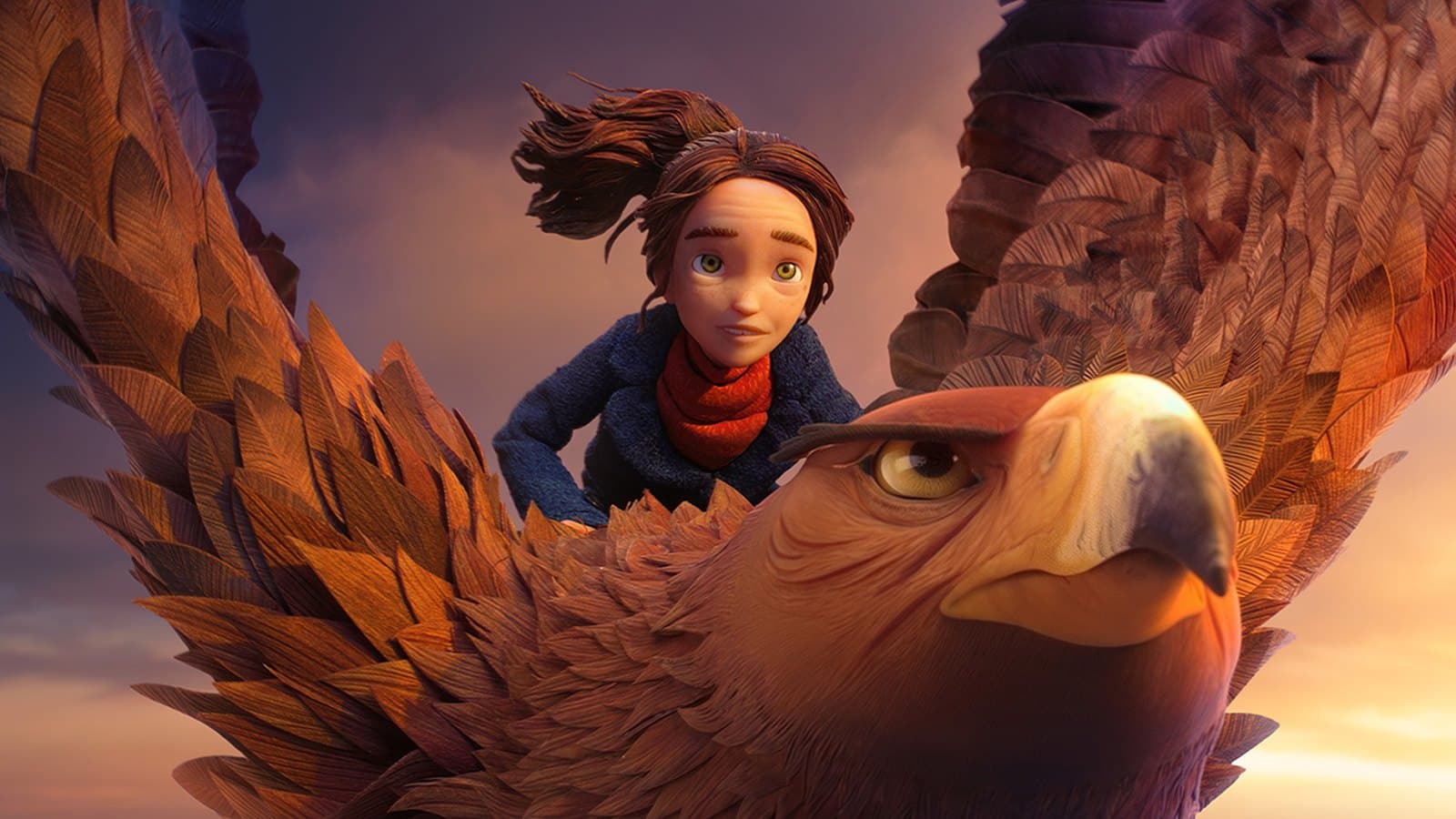
Variety is the most specific about why the craft lands. Its critic describes a golden eagle voiced by Angela Bassett as “a thing of immense wonder, its every feather as painstakingly articulated as the swarming ivy leaves”, and notices the small objects as much as the large ones. The physical detail is dense enough that the world feels inhabited. Caleb Deschanel, the cinematographer, told World of Interiors that on sets measured in feet and inches, “you look through the lens and you're totally convinced you're in a real world.”
The studio frames that labour as a stance. LAIKA calls Wildwood its most ambitious and globally accessible film, made “in an era of automation”, and the Associated Press built a September feature around the same contrast: a handmade studio working while the industry talks about generative models.
Where the two dissenters land
David Ehrlich at IndieWire gave it a B-minus and wrote that “the remarkable time and care that went into Wildwood doesn't prevent it from being the least enchanting of Laika's films.” He is generous about the spectacle and unsparing about the writing. “All the 3D-printed faces in the world can't stop these characters from feeling two-dimensional,” he wrote.
Alison Willmore at Vulture scored it 50. Her complaint is structural: too much story for one film, and not enough space for the connection between Prue's Portland life and the world she enters. She writes that “the familiarity of the fantasy elements and the brusqueness with which they're treated would be forgivable if Wildwood did a better job exploring how the real world connects to the magical side of the story.”
“There's too much here to be effectively explored in a feature, even a 131-minute one.” — Alison Willmore, Vulture
Why craft and story split the reviews
Almost nobody disputes the craft. Ehrlich calls the film “an epic, eye-popping, and almost unfathomably well-crafted celebration of everything that makes Laika special” in the same review that calls it the studio's least enchanting. Willmore describes the sets as moodily autumnal before explaining why the narrative does not hold. The split is over whether the emotional engine matches the visual one.
The voice cast is the other point of agreement. The Hollywood Reporter credited performers who “give varied, complex performances rather than merely delivering the jokey asides permeating so many animated films”, and Variety singles out Bassett's eagle. Ehrlich, who calls the film the studio's least enchanting, still writes that he adored Richard E. Grant's “flamboyantly theatrical” Owl Rex.
The positive notices describe an emotional wallop. The Rotten Tomatoes consensus calls the film “a marvelous technical achievement that packs an emotional wallop” and says it “reaffirms the value of a thoughtful fantasy tale told straight”. The mixed notices describe the same events as crowded and thin where the real world and the magical one touch.
That is a more useful disagreement than a like-or-dislike split. If the appeal is craft, the film appears to deliver at a level few releases this year can match. If the appeal is story, the dissenters describe a specific risk: a long film whose plot moves faster than its characters can. Neither reading is unreasonable, and the score does not choose between them.
Handcraft in an era of automation
The AI-era framing invites a cleaner story than the production supports. IndieWire reports that 670 of the film's 2,804 shots were augmented by Wētā FX and describes the collaboration with the visual-effects house as a new reliance on computer trickery. That does not make the handmade claim false. It means the claim is about proportion.
The Wētā work does not make Wildwood a computer-animated film. It does mean the physical footage was finished digitally. The defensible version of LAIKA's argument is that the physical work is the foundation and the digital work sits on top, which is different from a frame generated from a prompt. The less defensible version, implied by some of the coverage and not stated by the studio, is that nothing digital touched the image. IndieWire's figure does not support that version.
This matters to the commercial question too. IndieWire reports that, with one negligible exception, each LAIKA film has cost more and grossed less than the one before it. No budget for Wildwood has been disclosed, so the size of the bet is unknown. A 100% score does not change that arithmetic.
Caveats
The scores are an opening-day snapshot and will move as more reviews and ratings arrive. The two sites use different samples, 102 reviews against 36, so the gap between 100% and 87 is partly method and partly who filed. Runtime is unsettled across sources, which is why no argument here rests on it. Every verdict quoted is one critic's opinion, attributed by name.
The Oscar conversation has started without nominations: Peter Travers wrote that the animated-feature Oscar “belongs right here”, and a late-October release puts the film at the beginning of a campaign. The volume of craft on screen is not in dispute. Neither is the fact that two experienced critics found the story underneath it wanting.
No opening-weekend figure existed when this was written, so the commercial verdict is still open.
Cover image: A still from Wildwood, courtesy of LAIKA.
Tags
Frequently asked questions
- Is Wildwood really at 100% on Rotten Tomatoes?
- Yes, as of 23 October 2026. Rotten Tomatoes listed 100% from 102 reviews, with an average critic rating of 8.70 out of 10 and no reviews marked rotten. The score can change as more notices are added.
- Why is Metacritic at 87 when Rotten Tomatoes is at 100%?
- The sites measure different things. Rotten Tomatoes reports the share of reviews it counts as fresh, which is a yes-or-no judgment per critic. Metacritic averages scores on a points scale, and its 87 came from 36 reviews, of which 34 were positive and 2 mixed.
- What is Wildwood rated and how long is it?
- It carries a PG-13 rating, the first in LAIKA's history, with content descriptors covering strong fantasy violence, bloody images and suicide-related material. Published runtimes differ: Wikipedia and Rotten Tomatoes list 132 minutes, while Metacritic lists 2 hours 19 minutes.
- Who directed Wildwood and who voices Prue?
- Travis Knight directed from a screenplay by Chris Butler, adapted from the 2011 novel by Colin Meloy and Carson Ellis. Peyton Elizabeth Lee voices Prue McKeel, with Jacob Tremblay as Curtis, Carey Mulligan as Alexandra and Angela Bassett as the eagle known as the General.

TPW Editorial
Editorial Team
TechPastWeek's editorial team reports and edits every story we publish. We research each piece against primary and credible secondary sources, and a human editor reviews and signs off before it goes live.