Nobody Wants This Season 3 Reviews: A Brief 100%, Then 87%
Nobody Wants This season 3 holds 87% on Rotten Tomatoes and 75 on Metacritic after a brief 100% start, with critics split on its focus and its Jewish story.

On this page
Key takeaways
- Nobody Wants This season 3 released all 10 episodes on Netflix on 22 October 2026.
- Rotten Tomatoes showed 87% from 15 reviews on 24 October 2026, after a five-review 100% score that ScreenRant called a series record on release day.
- Metacritic scored the season 75 from eight critics, with six positive, two mixed and none negative.
- The Hollywood Reporter gave the season 60 and argued it tones down its exploration of Judaism, gives Christmas a bigger episode than any Jewish holiday and moves its tension to Morgan and Sasha.
- Netflix has neither renewed the series for a fourth season nor cancelled it, as of 24 October 2026.
Nobody Wants This returned to Netflix on 22 October 2026 with all 10 episodes of its third season, and for two days its Rotten Tomatoes score was the highest the series had recorded. Rotten Tomatoes listed the season at 87% from 15 reviews on 24 October. Metacritic had it at 75 from eight critics: six positive, two mixed, none negative.
Related reading: Lupin Part 4 Debuts at No. 1 as Critics Back a Bigger, Uneven Return · The Diplomat Season 4 Review Roundup: Near-Unanimous Praise and One Precise Dissent.
Neither number is unusual for a well-liked streaming comedy. The season opened at 100%, on five reviews, and did not stay there.
The record lasted two days
On 22 October, ScreenRant reported that the season held a perfect Rotten Tomatoes score from five reviews, all of them Fresh, and called it a series record. The same story said the score could move as more reviews arrived.
It moved. By 24 October, with 15 reviews counted, the season sat at 87%. Season 1 finished with 95% from 56 reviews, and season 2 with 80%, both Rotten Tomatoes figures cited by ScreenRant. Season 3's 87% sits between them, nearer the first than the second, on a sample that will keep growing.
Five reviews is a first impression, not a sample. At that size one negative notice takes the score from 100% to 80%. The early figure told readers that the first critics liked the season. It could not tell them how the season would be received, and ScreenRant said as much at the time.
The two numbers are still good, and they are not in conflict. Rotten Tomatoes counts the share of reviews that are positive. Metacritic averages scores on a 100-point scale. A season can be liked by almost everyone and loved by few, and land on exactly this pair of figures.
What the warm reviews are actually praising
The strongest notices are not cautious. Decider's Hope Sloop called it "the best installment thus far" and "the culmination of phenomenal characters, hilarious writing, and outstanding performances". The Guardian's Jack Seale gave it 4 out of 5, and put the case this way:
"It may have put down roots, but Nobody Wants This knows how to make us fall in love with it all over again." — Jack Seale, The Guardian, 22 October 2026
RogerEbert.com's Cristina Escobar landed at 80 and made the case in one sentence: "In season three, we finally get to see a love that's more than just sexy or even romantic." Collider's Meredith Loftus also gave 80, and framed the season as a recovery: "After a stalling season, Nobody Wants This returns with a satisfying arc that moves its story and characters forward in substantial ways." IndieWire's Kate Erbland came in at 83.
Elsewhere, FandomWire's M.N. Miller gave 9 out of 10 and Mama's Geeky's Tessa Smith called it "Probably the best season yet." TIME's Judy Berman was positive too, arguing that the season all but guarantees Joanne and Noah will live happily ever after. None of that praise calls the season more ambitious. It calls it more certain of the couple at its center.
The praise splits again once you ask what the season is being compared to. Decider and Mama's Geeky treat it as the show's best work. Collider treats it as a recovery from a weaker second year, and that framing carries an implicit admission: the season is good partly because the one before it was not. Both readings support the same score on Rotten Tomatoes, which only asks whether a critic was positive. They imply different things about where the series goes next.
Snapshots from day two
Both figures are from 24 October 2026, two days after release. Rotten Tomatoes had 15 reviews in its sample; Metacritic had eight, of which six were positive and two mixed. Both numbers will move as more reviews are filed.
The dissent splits into two arguments
The negative reviews do not form a bloc, and they are not all about the same thing. USA TODAY's Kelly Lawler gave the season 63 and put the case mildly: "This season is better but it is not the best it could be." Screen Rant's Liz Hersey gave 60 and put it less mildly, writing that the show has "shifted from a watercooler, must-watch to a folding laundry show" and is "missing the sparkiness of season 1". But Why Tho?'s Jason Flatt was harsher at 4.5 out of 10, calling the season "deeply frustrating" and arguing it "does less than ever to actually explore what could be interesting about an interfaith relationship".
Screen Rant and But Why Tho? agree on the substance: the show has stopped examining its own premise, Hersey because it has become something to fold laundry to, Flatt because the interfaith relationship gets less scrutiny than ever. The show, on this reading, is being watched rather than awaited. The Hollywood Reporter's Angie Han makes a related but separate argument, and hers is the one that can be checked against the episodes rather than against a mood.
Han gave the season 60 and wrote that it "can't completely shake the bad habits that have made it nearly as exasperating as it is endearing." Her specific charge is about proportion. THR argues that season 3 tones down the show's exploration of Judaism and Jewish culture, gives Christmas traditions a more elaborate episode than any Jewish holiday receives, and moves the dramatic tension onto Morgan and Sasha instead of the couple the series is named for. Whether that is a loss depends on what you came for. It is at least a description of where the running time went.
Lawler's line is the most useful of the three craft complaints because it concedes that the season works. A 63 is a ceiling argument, not a rejection, and it sits closer to Han's 60 than to Flatt's 4.5 out of 10. The distance between those positions is the difference between a season that disappoints and one that fails. Three of the four dissenters land on the gentler side of that line.
The three craft complaints and Han's argument meet at the same place. If the show's subject was the friction between Joanne's secular life and Noah's religious one, then a season that settles the couple has to replace that friction with something else. Morgan's career and the separation of Sasha and Esther are that something. Screen Rant and But Why Tho? say the replacement is thinner than what it replaced. Han's version is that the replacement costs the show the material it handled best.
What the season does with its people
The premise explains part of that shift. Season 3 opens with Joanne (Kristen Bell) and Noah (Adam Brody) moving in together, and with Joanne starting conversion classes. Sasha (Timothy Simons) and Esther (Jackie Tohn) are separated. Morgan (Justine Lupe) watches her podcasting career take off, which is the thread THR says now carries the show's tension.
The cast around them has grown. Sarah Silverman joins as Rabbi Eden and Andrew Rannells as Sebastian, while Sherry Cola returns as Ashley, alongside Tovah Feldshuh as Bina, Paul Ben-Victor as Ilan, Stephanie Faracy as Lynn and Michael Hitchcock as Henry. Erin Foster created the series. Jenni Konner and Bruce Eric Kaplan are the season 3 showrunners, and the executive producers include Bell, Nora Silver, Steven Levitan, Danielle Stokdyk, Jeff Morton and Oly Obst. 20th Television produces it.
A comedy that finally puts its central couple together has to find friction somewhere else. Moving it to Morgan and Sasha is one answer. The conversion storyline is another, since it puts Joanne in rooms where she is the one who does not know the words. The reviews divide on which of those the season actually committed to, and on how well either replaces the uncertainty of the first two seasons. Collider reads the result as forward movement. THR reads the same movement as a retreat from the material that made season 1 distinctive. Underneath the craft objections sits a question about subject.
Caveats
The scores here are snapshots from 24 October 2026 and will move. Fifteen reviews is workable for a streaming comedy but not large, and Metacritic's eight is smaller. The 100% figure that circulated on release day rested on five reviews and should be read as an opening position rather than a record that was later broken. ScreenRant called it a series record when it stood and noted that it could change, which it did within two days.
Scores are as the outlets reported them, or as Metacritic converted them to its scale, and quotes are as published. Where a critic's argument is contested, it is attributed. THR's reading of how the season handles Judaism and Christmas is THR's reading. Whether a Christmas episode outweighs the Jewish holidays is a claim about proportion, and this piece has not independently timed the episodes.
Netflix has neither renewed the series for a fourth season nor cancelled it, as of 24 October 2026.
What to watch
Two things are worth watching. The first is the score, which at 15 reviews moves several points on a single notice and has not finished settling. The second is what the split predicts about a fourth season, if there is one. If Netflix orders it, the question the reviews have already posed is whether the show keeps the Morgan and Sasha engine that THR says has taken over, or returns to conversion and the interfaith material that But Why Tho? says it has stopped examining.
For now the season has a majority of critics on its side, and an argument about it that concerns the work itself. The 87% may settle somewhere in the 80s as the sample grows. The disagreement will not resolve. Both sides are describing the same decision about where the show spends its time.
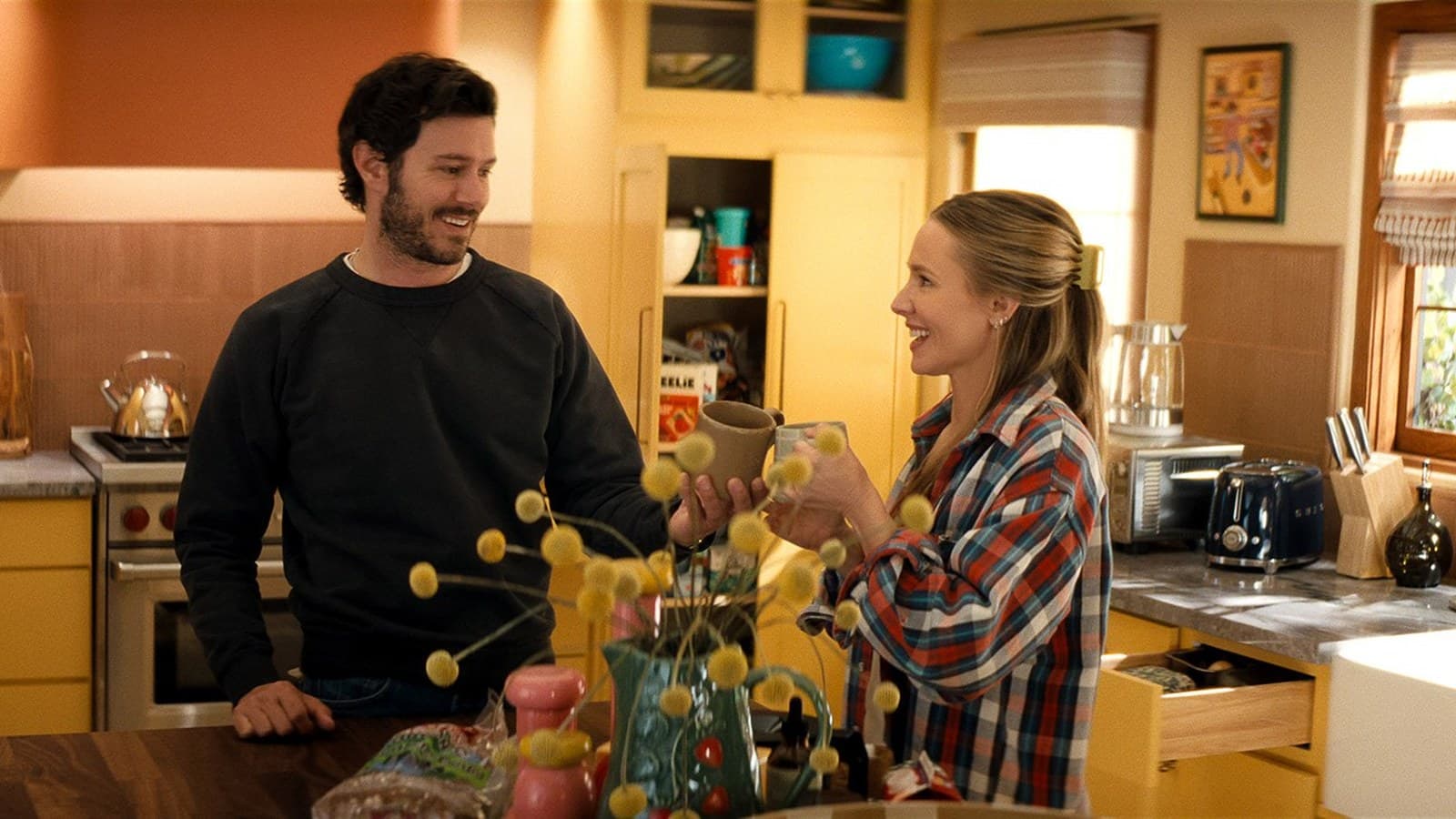
Cover image: official season 3 still of Kristen Bell and Adam Brody, courtesy of Netflix.
Tags
Frequently asked questions
- What are the review scores for Nobody Wants This season 3?
- Rotten Tomatoes showed 87% from 15 reviews on 24 October 2026, and Metacritic showed 75 from eight critics. Both are snapshots taken two days after the 22 October release, and both will move as more reviews are filed.
- Is Nobody Wants This season 3 the final season?
- No. Netflix has neither renewed the series for a fourth season nor cancelled it, as of 24 October 2026. No finale has been announced.
- Why did the 100% Rotten Tomatoes score for season 3 change?
- The 100% figure came from five reviews, all of them positive, on release day. ScreenRant reported it as a series record and noted it could fluctuate. By 24 October, with 15 reviews counted, the score was 87%.
- What do the negative reviews of Nobody Wants This season 3 say?
- They split into two arguments. USA TODAY, Screen Rant and But Why Tho? say the season falls short, with Screen Rant and But Why Tho? arguing it has stopped examining the interfaith relationship, while The Hollywood Reporter argues it has reduced its engagement with Judaism and shifted its dramatic tension to Morgan and Sasha.

TPW Editorial
Editorial Team
TechPastWeek's editorial team reports and edits every story we publish. We research each piece against primary and credible secondary sources, and a human editor reviews and signs off before it goes live.