Nocturne Opens at 100% on Rotten Tomatoes, Then Slips to 83%
Nocturne opened at 100% on Rotten Tomatoes from five reviews, then fell to 83% the same day. What the split says about Apple TV's Lars Kepler thriller.

On this page
Key takeaways
- Nocturne premieres on Apple TV on 30 October 2026 with two episodes, then one new episode each Friday through 25 December.
- Rotten Tomatoes showed 100% from five reviews on 27 October 2026, with an average rating of 7.50/10, according to ScreenRant.
- CBR reported later on 27 October that the score had fallen to 83% as more reviews arrived.
- TIME's Judy Berman praised Zazie Beetz and Stephen Graham but said the characters outside the psychiatric institution are underwritten.
- Critics were given seven of the 10 episodes, TIME reported, so published judgements of the finale are provisional.
Nocturne opened on Rotten Tomatoes at 100% on 27 October 2026, five reviews into its life as an Apple TV drama. By the end of the same day it was at 83%. The show is a 10-episode adaptation of Lars Kepler's Joona Linna novels, with Liev Schreiber as a Philadelphia homicide detective and Zazie Beetz as the FBI agent who goes undercover to reach a serial killer. It premieres on 30 October. The distance between those two percentages is the most useful thing the first day of coverage offers, because it shows how little a launch-day score can carry.
Related reading: Wildwood Opens at 100% on Rotten Tomatoes as Metacritic Stands at 87 · The New Stanford Prison Experiment Review Roundup: Critics Split at 40 on Metacritic.
A Rotten Tomatoes percentage is not an average score. It is the share of counted reviews that the site classifies as positive, which means 100% from five reviews and 100% from 150 reviews are the same number describing different amounts of evidence. ScreenRant reported the five-review figure alongside an average rating of 7.50/10. That average is the more informative detail. Critics were positive, not overwhelmed.
What the 100% actually measured
Five reviews is not a sample anyone would build an argument on, and the site's own page keeps changing as new ones land. CBR reported the fall to 83% on the same day the first figure appeared. Both numbers are snapshots of a sample still being assembled, taken on the same day, and both will move again before the premiere.
The arithmetic explains the swing better than any theory about quality. At five reviews, one negative turns 100% into 80%. The same review inside a sample of 100 would move the number by a single point. A television drama that critics see in stages attracts reviews in stages, so the first day produces a score built from whatever has been filed, not from the season as a whole.
There is a second reason the launch number flatters a show. A five-review 100% is a statement about five people and the outlets that employed them, not about the season. The 83% is a statement about a slightly larger group, and the gap between the two says nothing about which reviews were right.
The case the positive reviews make
The positive reviews agree about where the value sits. CBR's Katie Doll called Stephen Graham the standout and praised what she described as "sublime performances by Schreiber and Beetz". Collider's Charlie Ridgely gave the show 7/10, praised the cast, and noted that some production elements "struggle with their identity". Comic Book Club's Alexander Zalben called Graham's performance "idiosyncratic and magnetic". ScreenRant's Dani Kessel Odom wrote that the villain and the performances "more than make up for the narrative predictability". The Daily Beast's Nick Schager said the series "keeps one watching".
That is a consistent account. Graham, playing the imprisoned serial killer Jurek Walter, is the reason several critics recommend the show. Beetz and Schreiber are close behind. The reservations cluster somewhere else: the story's willingness to follow familiar beats, and the texture of the world outside the hospital where Walter is held.
RogerEbert.com's Brian Tallerico described the first 70% of the season as hitting enough right notes to leave a viewer wanting the ending, which is praise with a hedge built in. It says the show had earned his attention by the point where the episodes stopped, not that it had earned a verdict.
"Hits enough right notes that you'll be eager to hear the end of the composition." — Brian Tallerico, RogerEbert.com, October 2026
A 7.50 average at five reviews fits that description. It is a score for something well made that has not yet been called excellent by anyone in the sample. The 100% headline and the 7.50 average are not in conflict, but they point at different things: unanimity among a handful of critics, and a solid but not exceptional level of enthusiasm.
Where TIME breaks ranks
TIME's Judy Berman is the clearest dissent in the reviews cited here, and her objection is not to the acting. She praised Beetz and Graham. She wrote that the characters outside the institution are underwritten, and that the series lacks the regional specificity that made Mare of Easttown or Task feel rooted in a place.
Her summary judgement is that a slow burn which does not use its fuel is apt to fizzle out. That is an argument about construction rather than performance, and it lines up with Ridgely's note about production elements that cannot decide what they are. The show has a strong central situation, a killer in a secure hospital and an agent placed inside it as a patient, and a wider town that reviewers describe with much less interest.
How much weight that should carry depends on what a viewer wants from a 10-episode crime drama. The positive reviews are not claiming the writing is original. They are claiming the performances and the atmosphere carry the predictable parts. Berman is saying the predictable parts are the show, and the performances cannot cover ten hours of them. Both readings can survive the same seven episodes.
A Swedish detective in western Pennsylvania
The source material is a long-running series of novels. Lars Kepler is the pen name of Alexander and Alexandra Ahndoril, a Swedish husband-and-wife writing team, and the show draws on the Joona Linna novels, particularly Lazarus and The Sandman. The television version keeps the detective's method and moves his life: Joona Linna becomes Jonah Lynn, an ex-soldier turned Philadelphia homicide detective who has moved to a small town in western Pennsylvania for quiet.
The premise arrives with the machinery already running. A boy believed to have been a victim of Jurek Walter turns up alive years after he and his sister disappeared, and the search for the missing girl pulls Lynn back into the case. Saga Bauer goes undercover as a patient in the psychiatric hospital where Walter is held. Lynn goes rogue. Apple's press materials list Bill Camp as Chief Ellison, Rory Culkin as Karl, Chrissy Metz as Ida, Poorna Jagannathan as Quinn, Gary Carr and Landon Valentin as Michael.
Rowan Joffé created the series for television. John Hlavin developed it for television and serves as co-showrunner, writer and executive producer, with Joffé also co-showrunning, writing and executive producing. That split matters for anyone reading the reviews as a statement about the books. Reviewers note changes to the novels, and the relocation from Sweden to Pennsylvania is the largest of them. This article does not treat the series as a faithful adaptation, because the reviews cited here do not. Apple held the world premiere on 20 October 2026, ten days before the first two episodes reach subscribers, and released the trailer in September.
Seven episodes out of ten
The most important limitation sits in TIME's review: seven of the 10 episodes were provided. That means the finale, and whatever the show does with the missing girl and with Walter, was not available to any of the critics quoted above. Every judgement about whether Nocturne sticks the landing is therefore a judgement about the first 70% of a season, which is what Tallerico said in his own review without dressing it up.
The release schedule stretches the gap between critic and viewer. Two episodes arrive on 30 October, then one each Friday through 25 December. A viewer who starts on premiere night will finish on Christmas Day, eight weeks after the reviews were filed. By then the Rotten Tomatoes page will carry late reviews, a full-season average and an audience score, and the 83% will be one number among several.
What the score does and does not say
The 100% and the 83% were both recorded on 27 October 2026, from a sample small enough that one review moves the percentage by several points. Neither is an average rating, and the 7.50/10 average attached to the five-review snapshot is the better guide to how enthusiastic those critics were. No audience score exists before the 30 October premiere.
Television aggregation has a structural problem that film aggregation avoids. A season is reviewed in parts, sometimes by critics who see four episodes, sometimes seven, and the score that forms on day one mixes those partial views with whatever else has been filed. Nocturne's case is cleaner than most, since the split between positive and negative reviews is small and the reasons on each side are easy to state. It is still a score built on incomplete seasons.
The weekly schedule changes what the score will mean. A show released all at once is argued about as a single object; a show released over nine weeks is argued about episode by episode, and each Friday produces a round of reaction that the aggregate does not capture. Nocturne will be judged twice, once by critics on seven episodes and once by viewers on all ten.
Caveats
- The sample is tiny. The 100% came from five reviews and the 83% is a later snapshot from a still-small set. Both will move as late reviews and post-premiere coverage arrive.
- No audience score exists yet. Rotten Tomatoes has no viewer figure before release, so nothing here measures how ordinary subscribers respond.
- Critics saw seven of 10 episodes. TIME's review states the number. Finale judgements are provisional by definition.
- The date is not consistent across databases. Some list 29 October. Apple says 30 October, and this article uses Apple's date.
- Adaptation changes are noted, not catalogued. Reviewers mention differences from the Kepler novels without itemising them, and this article makes no claim about fidelity beyond that.
The first audience score appears after 30 October. The three episodes critics did not see arrive by 25 December.
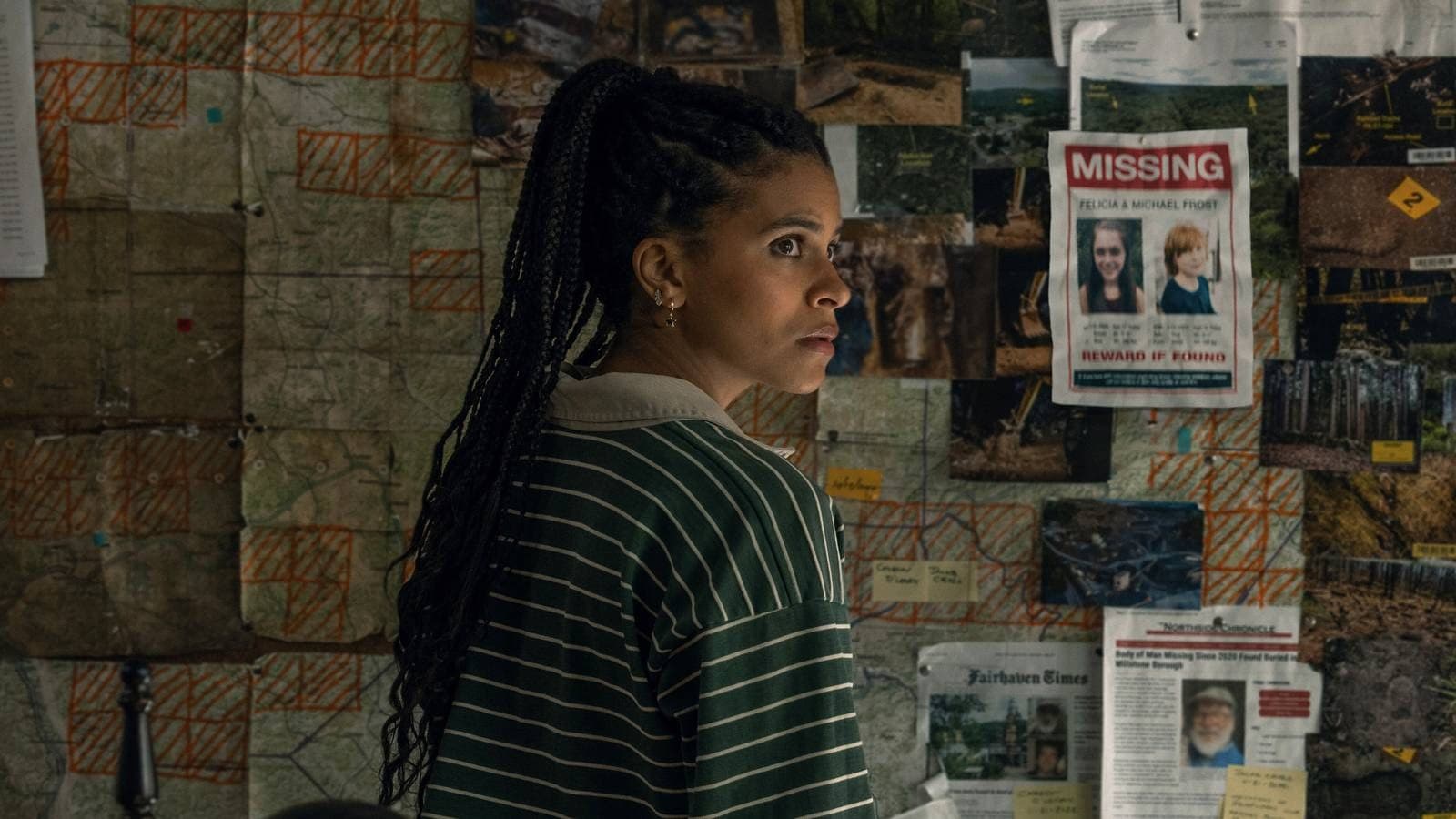
Cover image: Zazie Beetz in Nocturne, courtesy of Apple TV.
Tags
Frequently asked questions
- When does Nocturne premiere on Apple TV?
- It premieres on Friday 30 October 2026 with the first two episodes. New episodes follow every Friday through 25 December 2026. Some databases list 29 October, but Apple's press materials give 30 October.
- Why did Nocturne's Rotten Tomatoes score fall from 100% to 83%?
- The 100% came from only five reviews on 27 October 2026. CBR reported later the same day that the score had dropped to 83% as more reviews were added. A Rotten Tomatoes percentage is the share of positive reviews, so a small sample moves sharply with each new verdict.
- Is Nocturne based on a book?
- Yes. It adapts the Joona Linna novels by Lars Kepler, particularly Lazarus and The Sandman. Kepler is the pen name of the Swedish husband-and-wife writers Alexander and Alexandra Ahndoril, and the series moves the detective from Sweden to western Pennsylvania.
- Did critics see the whole season of Nocturne?
- No. TIME reported that seven of the 10 episodes were provided for review. That leaves the final three episodes, including the ending, outside every published assessment cited here.

TPW Editorial
Editorial Team
TechPastWeek's editorial team reports and edits every story we publish. We research each piece against primary and credible secondary sources, and a human editor reviews and signs off before it goes live.