Anthropic Leases a 2.16-Gigawatt Campus in Queensland, Its First Australian Data Centre
Anthropic leased the first stage of Western Downs Digital Park, a planned 2.16-gigawatt data centre campus near Dalby, Queensland, reported to cost about A$32 billion.

On this page
Anthropic signed its first data centre lease in Australia on September 16, taking capacity at a proposed campus in Queensland's Western Downs that is designed to reach 2.16 gigawatts and is reported to cost about A$32 billion (US$22 billion) at full build-out.
Related reading: SK Hyper Puts the First 5 Gigawatts of Its AI Buildout at $350 Billion · Bell and Saskatchewan Sign MOU to Quadruple AI Data Centre to 1.2 Gigawatts.
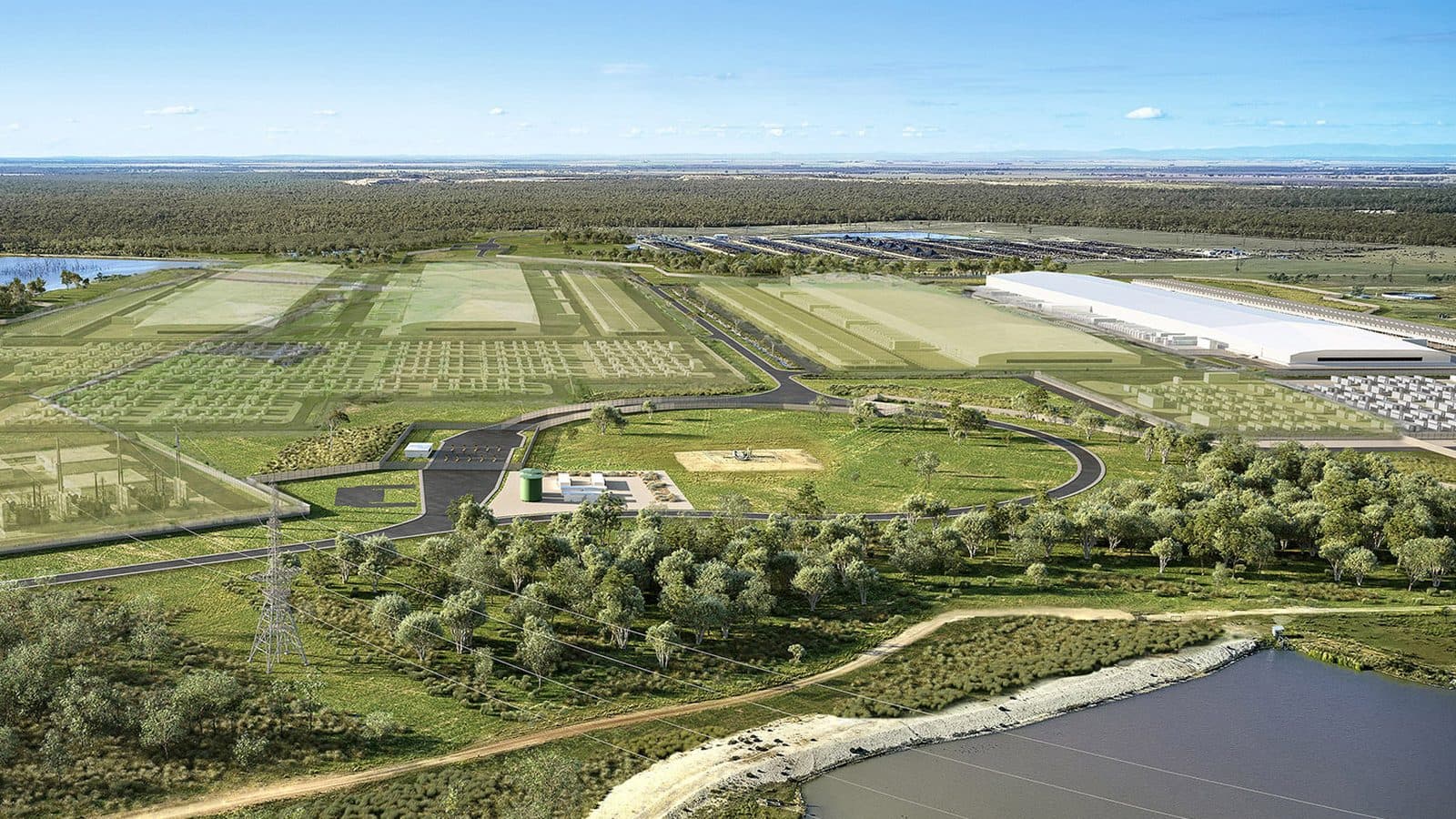
The lease, first reported by Reuters and confirmed in separate coverage by the Australian Financial Review, The Sydney Morning Herald and ABC News, covers capacity at Western Downs Digital Park, described by its developer as a master-planned digital, energy and computing hub. The site is 725.5 hectares of farmland roughly 250 kilometres north-west of Brisbane, near the town of Dalby, and is currently home to a 24,000-head cattle feedlot.
The developer is Zerra DC, a Singapore-based data centre unit of AGP Sustainable Real Assets. On the same day, the Australian property group Dexus disclosed that Australian Data Centres, in which it holds an 85 percent interest, is part of a consortium with Zerra DC and Macquarie Capital that has entered into lease documentation with an Anthropic subsidiary for the first stage of the campus. The lease remains subject to approvals, including the Foreign Investment Review Board and the Western Downs Regional Council, and the parties have not disclosed its value, length or commercial terms.
What is actually being built
The development application, lodged with the council on August 17, sets out a campus of four AI-ready data centre buildings delivered in stages across a four-to-six-year construction programme. Each building is planned at roughly 36,000 square metres and 360 megawatts, with the first phase adding a 540 MVA substation and an on-site battery-backed power conditioning system. Planning documents were prepared by Urbis and the design is by HDR. Dexus said its subsidiary's obligation to fund the first and later stages is still subject to customary approvals, including its own board sign-off, and that Australian Data Centres is raising capital to bring in additional partners.
Zerra DC has said the Kogan site will use 100 percent air-cooled technology rather than the water-based evaporative cooling common in older data centres. The application estimates the finished campus would use about 16.5 kilolitres of water a day. That matters in a region where water use has become a flashpoint for data centre projects. The trade-off is energy: air cooling removes the water draw but generally requires more electricity to move the same amount of heat.
The location was not chosen for the landscape. The plot sits in the heart of Queensland's coal seam gas country, with the Kogan Creek coal plant and the Braemar and Darling Downs gas plants nearby, along with solar farms and a major substation that acts as a junction between south-east Queensland and New South Wales. Zerra says the campus will connect directly to that substation rather than lean on the local distribution network that serves the small surrounding towns.
The energy question
At 2.16 gigawatts of peak capacity, the project would draw roughly as much power as 1.5 million average Australian households. At full build-out it could consume about 47 gigawatt-hours a day, against an average daily Queensland demand of about 170 gigawatt-hours. The state's own energy debate has been running alongside the project: the federal government wants new data centres anchored by new renewable generation, while Queensland's LNP government argued successfully for an "energy-agnostic" approach that leaves the door open to coal and gas.
Anthropic has said it will go to market for a long-term power agreement and stressed that renewable capacity, likely wind or solar, will be added to the grid. The company has also said it will cover the full cost of connecting the site, including any network upgrades. But planning documents indicate the first stage could initially be powered by gas, with three gas plants within about two kilometres of the proposed site, and the renewables that Anthropic is promising are not yet contracted. Queensland Premier David Crisafulli called the deal a "major win" and said companies building in the state had to add generation to the grid.
The 2027 date is optimistic
Anthropic and the developer want the campus to start coming online in 2027, but the development application was only lodged in August 2026, the build is projected to take four to six years, and the plan still needs local council and federal foreign investment approval. The reported timeline depends on approvals landing quickly and on power being available before the grid work that data centres of this size usually require.
Why Anthropic wants it, and why inference matters
Anthropic has told people familiar with the deal that it will use the site for inference, the process of answering Claude queries, rather than for training new models. The distinction is commercially and politically useful. Australia is in the middle of a copyright negotiation between the Albanese government and AI companies, and a facility that does not ingest Australian writing, art or media to train models is a far easier sell than one that does. The country's larger AI debate has an unusual amount of room for a company that can plausibly say it is only serving users rather than mining local content.
The lease also fits a wider build-out. Anthropic is one of a small number of labs trying to lock up power and land at a scale that would have seemed implausible for a software company three years ago, and its competitors have been signing similar deals across the United States, Europe and Asia. For the Australian market, the deal is a signal that the country is now on the shortlist for hyperscale AI infrastructure, helped by cheap land, existing energy assets and a government that has been openly courting the labs.
The backdrop is awkward for a company that has spent much of 2026 arguing for restraint. Anthropic chief executive Dario Amodei published an essay calling on the industry to slow the pace at which it improves model capabilities, a position that drew a public rebuttal from Nvidia's Jensen Huang and a more market-driven counter-argument from Meta's Mark Zuckerberg, as CNBC reported. Building a 2.16-gigawatt campus while advocating a slowdown is not necessarily contradictory, since compute aimed at serving existing users is different from compute aimed at training larger models, but it does put Anthropic's actions and its rhetoric in the same frame.
The cost, and the caveats
Reported cost figures vary. Australian outlets have put the full campus at about A$31.9 billion, while the real estate publication Mingtiandi described an estimated construction cost of A$14.5 billion (US$10.4 billion) for a 1.44-gigawatt campus, a figure that appears to cover the four 360-megawatt buildings rather than the full peak load including cooling and other infrastructure. The lease value itself was not disclosed, so the headline number is a project estimate rather than money Anthropic has committed.
Two other caveats are worth keeping in view. The first is that a lease of a campus that has not been built is a commitment to capacity that may not materialise on schedule, and the Foreign Investment Review Board can attach conditions or reject the deal. The second is that "renewable energy will be added" is an intention, not a contract. Until a power purchase agreement is signed, the campus's early power mix is likely to look a lot like the surrounding grid, which is still built around coal and gas.
The Australian entry in a global land-and-power grab
The deal is Australia's entry in a wider competition for electricity and land. Runaway demand for AI compute has pushed developers toward long-term leases, behind-the-meter generation and, increasingly, the role of energy buyer. In the United States, Amazon, Microsoft and Google have told investors that access to electricity, not chips, is now the binding constraint on expansion, and BloombergNEF has projected that US data centres driven by AI could add roughly 15 billion cubic feet a day of natural gas demand by 2035. Australia offers a different mix: abundant land, existing gas and coal plants, and a growing solar and wind fleet that a company can point to in its energy story. That combination is a large part of why Queensland, rather than a market with cheaper power but slower approvals, became Anthropic's first Australian site.
Anthropic's willingness to sign before approvals are granted also fits how frontier labs now buy compute. Committing to capacity at sites that have not been built has become routine, because the alternative is to wait years for the grid and lose the race to serve users. The risk is that the promised timelines assume a permitting and connection process that has been the slowest part of data centre projects almost everywhere. The four-to-six-year construction estimate is the developer's own, and it sits awkwardly next to the 2027 target.
What to watch
Three things will decide whether this becomes the project its backers describe. The first is the Foreign Investment Review Board decision, which will show how willing Canberra is to fast-track AI infrastructure from a US company against a background of data sovereignty concerns. The second is the Western Downs Regional Council's development approval, which will settle the site's water and community conditions. The third is the power contract. If Anthropic signs a large renewable offtake, the project becomes a template for how AI companies can add generation rather than simply absorb it. If it leans on existing gas, the "we will add energy" promise will look considerably thinner.
Tags

TPW Editorial
Editorial Team
TechPastWeek's editorial team reports and edits every story we publish. We research each piece against primary and credible secondary sources, and a human editor reviews and signs off before it goes live.