Microsoft Plans to Triple Its Data Centres to 38 Gigawatts by 2032
Bloomberg reports Microsoft wants to grow from about 12GW to more than 38GW of data-centre capacity by 2032, a buildout larger than New York State's peak power draw.

On this page
Microsoft plans to more than triple its global data-centre capacity, from roughly 12 gigawatts today to more than 38 gigawatts by 2032, according to a Bloomberg report on September 10 that cited people familiar with the company's internal planning. At 38 gigawatts, the company's fleet would draw more electricity at peak than the entire state of New York, a scale of infrastructure that sits well outside anything utilities have historically planned for.
Related reading: Oracle Sends Force Majeure Notice on $18 Billion New Mexico Stargate Campus · Microsoft Patches a CVSS 10.0 Missing-Authentication Flaw in Azure AI Foundry.
Microsoft has not publicly confirmed the figure. But the direction of travel is not in dispute: the company added about one gigawatt of capacity in its June quarter alone, has said it remains on track to roughly double its total capacity within two years, and told investors repeatedly through 2026 that customer demand continues to exceed available supply. Bloomberg's reporting puts a number on where that trajectory ends. The plan is said to include facilities Microsoft owns or leases but not capacity it rents from so-called neo-cloud providers such as CoreWeave.
The most striking part of the report is why the buildout is happening. This is not a company chasing growth it does not yet have; it is a company trying to catch up with demand it has already contracted for and cannot serve. Bloomberg reported that Microsoft has lost customers to competitors because it could not allocate compute, restricted cloud-streaming time for paying Xbox subscribers, and saw its own developer platform route traffic elsewhere. Cloud Computing News and TechTimes both summarised the report, which described GitHub, the Microsoft-owned code platform, routing AI-agent traffic to Amazon Web Services because Azure lacked room, after suffering nine outages in May 2026 alone.
The shortage is the strategy
For years, the cloud business model rewarded building ahead of demand and filling capacity as it arrived. Microsoft's problem in 2026 is the opposite: it is turning away work because it built too slowly, in part after pausing some data-centre development in early 2025. The company's own chief financial officer said on a July earnings call that when compute is scarce, Microsoft prioritises its first-party products (Copilot and internal AI research) over third-party Azure customers. That means the customers left waiting are the enterprises that signed contracts expecting capacity, a dynamic that hands business to rivals.
The numbers behind the ambition are enormous. Microsoft's capital expenditure reached $41 billion in its fiscal fourth quarter, and the company has guided to about $175 billion for calendar 2026. Its data-centre lease obligations that had not yet commenced stood at $329 billion as of June 30, facilities under construction, in planning or waiting on a grid connection, none of which can serve a customer today. Azure passed $100 billion in annual revenue in fiscal 2026, growing 41 percent, and Microsoft Cloud overall surpassed $214 billion. Demand, in other words, is not the constraint.
That is now the consensus across the industry. The five largest hyperscalers (Amazon, Google, Meta, Microsoft and Oracle) were on track to spend more than $750 billion on capital expenditure in 2026, roughly two-thirds more than the year before, with about three-quarters of it earmarked for AI infrastructure, according to Morgan Stanley analysis cited in the reporting. BloombergNEF estimated that the four largest hyperscalers already control 42 percent of American data-centre capacity.
A target is not a gigawatt
A 38-gigawatt plan is an internal projection, not a commitment met. Building a data centre takes 12 to 18 months; securing a grid connection in the most constrained US markets can take four to seven years. The number that matters is not the ambition but the gigawatts actually energised each year, a figure Microsoft already discloses.
The bottleneck moved to the grid
The constraint on all of this is no longer land or capital. It is electricity, and increasingly the politics of electricity. Microsoft's projected footprint runs directly into a wave of local opposition and state-level restrictions that have hardened through 2026.
In early August, Texas Governor Greg Abbott halted data-centre grid approvals and directed the state's grid operator to audit projects seeking connection to the ERCOT grid before any could proceed, a move his own office said stopped up to 1,800 projects. "Data centers have dug their own grave," Abbott told ABC News, arguing that the industry had failed to win over local communities. New York Governor Kathy Hochul imposed a statewide one-year moratorium on new hyperscale data-centre approvals in July, and Pennsylvania Governor Josh Shapiro added restrictions around the same time. The backlash crosses party lines: a June 2026 Echelon Insights survey found 62 percent of voters opposed a new data centre in their community, a figure that fell only to 58 percent when respondents heard the economic arguments.
Those restrictions apply to precisely the kind of large-scale projects Microsoft needs. The company is already developing a 2-gigawatt campus in Pecos, Texas, described as one of the largest single capacity additions in its history and expected to take five to seven years, and a new cluster it calls East US 3 in Atlanta to relieve pressure on its overcrowded northern-Virginia hub. But grid interconnection queues run four to seven years in dense markets, and transformer lead times run three to five years, so even projects that clear local politics face a long wait before they can draw power.
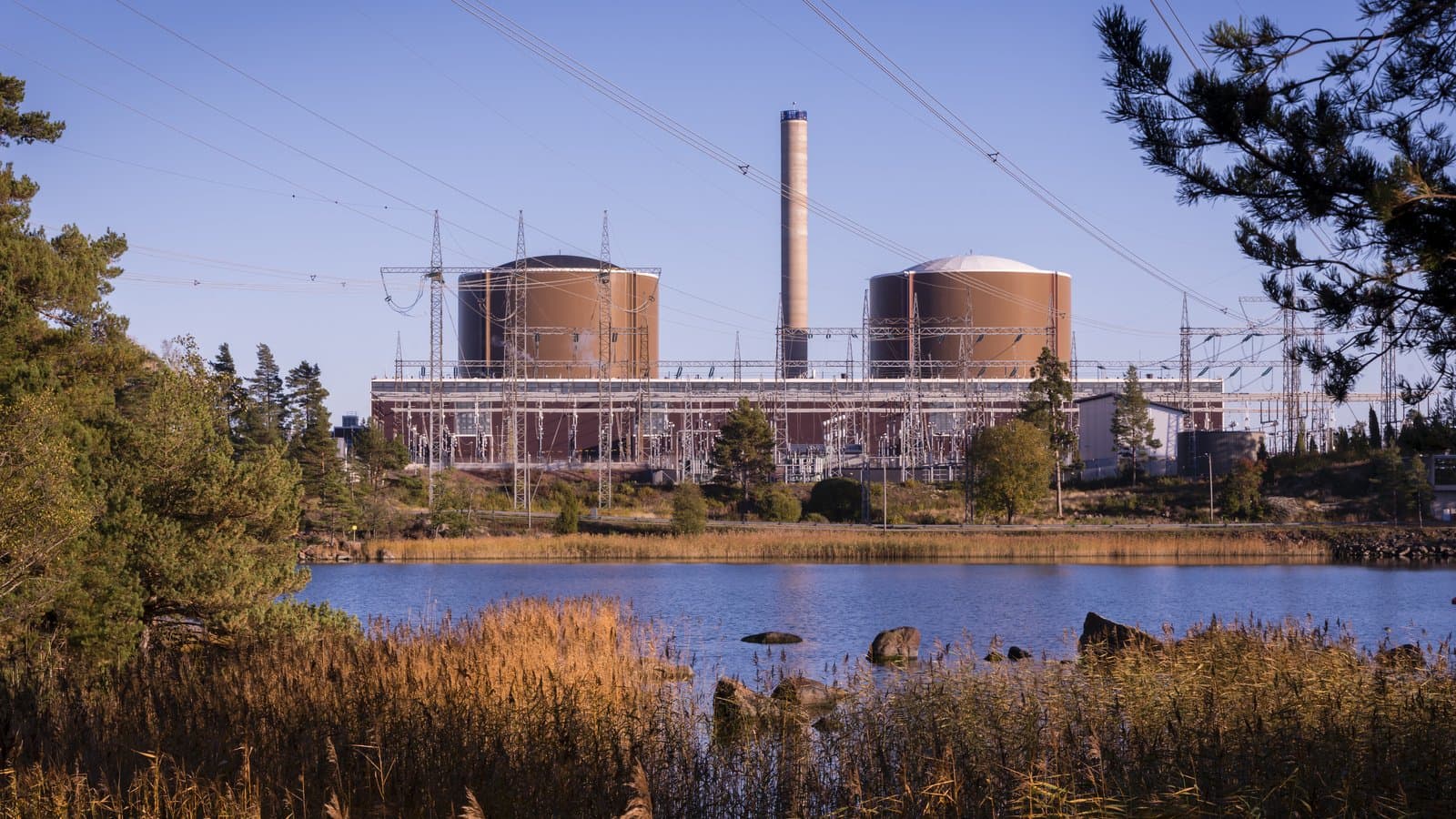
The political pressure has pushed hyperscalers toward locking up their own generation, which is why 2026 has produced a string of nuclear deals, Google's 22-year power purchase agreement for half the output of Finland's Loviisa plant being the most recent and concrete. The pattern is the same everywhere: when you cannot reliably buy power from a congested grid, you contract directly with a generator, and you accept a multi-decade commitment to do it. Microsoft's 38-gigawatt target is simply that dynamic stated at the scale of an entire state's demand.
What it means for everyone else
For enterprises buying cloud, the practical read-through is that compute scarcity is not a temporary condition that will ease next quarter. If the company spending the most on AI infrastructure still cannot meet its own internal demand, allocation and pricing for frontier compute are likely to stay a seller's market well into the decade. Gartner has estimated that 40 percent of AI data centres will be power-constrained by 2027 regardless of planned additions, because demand is growing faster than builders can connect supply.
There is also a financial dimension. The buildout is being financed in a rising-rate environment (the 10-year US Treasury yield sat near 4.8 percent in early September) and the lease obligations Microsoft has already signed are a fixed claim on future cash flow whether or not demand materialises exactly as forecast. The company's capex is enormous relative to its revenue, and every hyperscaler is making the same bet on the same premise: that AI demand compounds for years rather than plateauing.
The case that the buildout is too big
The obvious counterargument is that capacity forecasts have a habit of overshooting. Two forces could blunt the need for 38 gigawatts. The first is efficiency: each generation of accelerators and models does more work per watt, and techniques such as distillation and quantisation let the same task run on less hardware than it did a year earlier. If inference costs fall faster than demand rises, the compute crunch eases without a single new turbine being connected. The second is that demand itself is uncertain. Much of the projected growth assumes AI features keep expanding across every product and that enterprises keep paying for them; if usage plateaus, hyperscalers are left with vast fixed assets and multi-decade power contracts.
Microsoft is plainly betting against that scenario. But it is also hedging in a way that is easy to miss: by prioritising first-party products over third-party customers, it is insulating its own AI roadmap from the shortage at the expense of the cloud business that is supposed to be the growth engine. That is a rational short-term choice and a potentially costly long-term one, because the customers turned away in 2026 may not come back in 2028. Oracle, the rival that has benefited most from the crunch, picked up the Temu contract Microsoft could not serve.
What to watch
The numbers to track are unglamorous. Microsoft's quarterly disclosure of gigawatts added (the June quarter's one gigawatt is the relevant benchmark) will show whether the build rate can be sustained or whether it is already hitting the physical ceiling. Grid interconnection approvals in Texas and New York will show whether the political window reopens; the moratoriums are not permanent, but they are binding while they last. And the three-to-five-year lead times on transformers and turbines are a hard schedule that no amount of capital can compress.
The most useful way to read the 38-gigawatt plan may be as a statement about what Microsoft believes about the next six years of AI, rather than a promise about what it will build. Companies plan against their best case and disclose against their actuals, and the distance between the two is where the interesting story will be. If demand materialises and the grid cooperates, Microsoft's fleet in 2032 could be the foundation of the next decade of its business. If it does not, the leases and power contracts already signed will be a costly reminder that infrastructure bets are expensive to unwind.
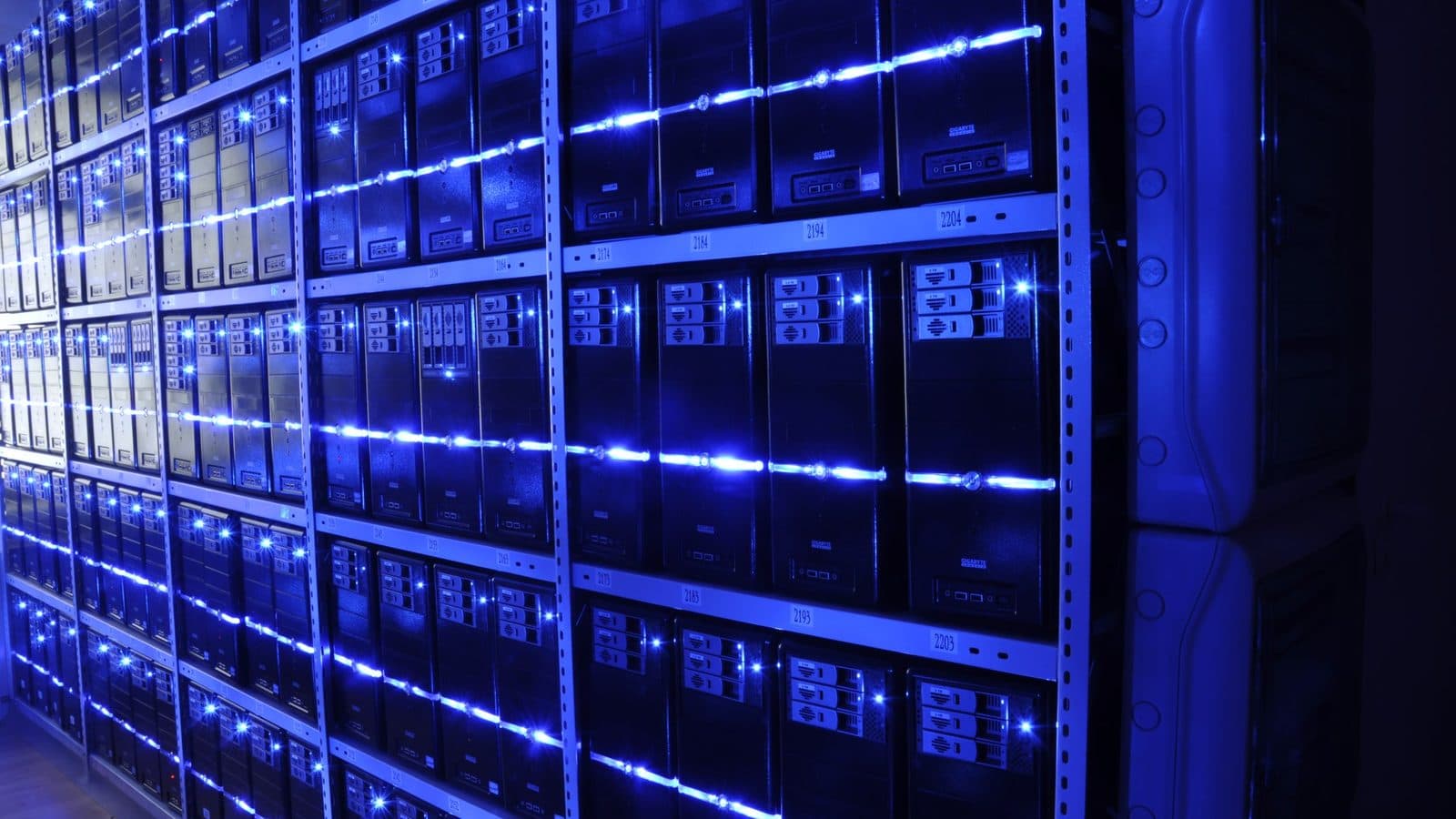
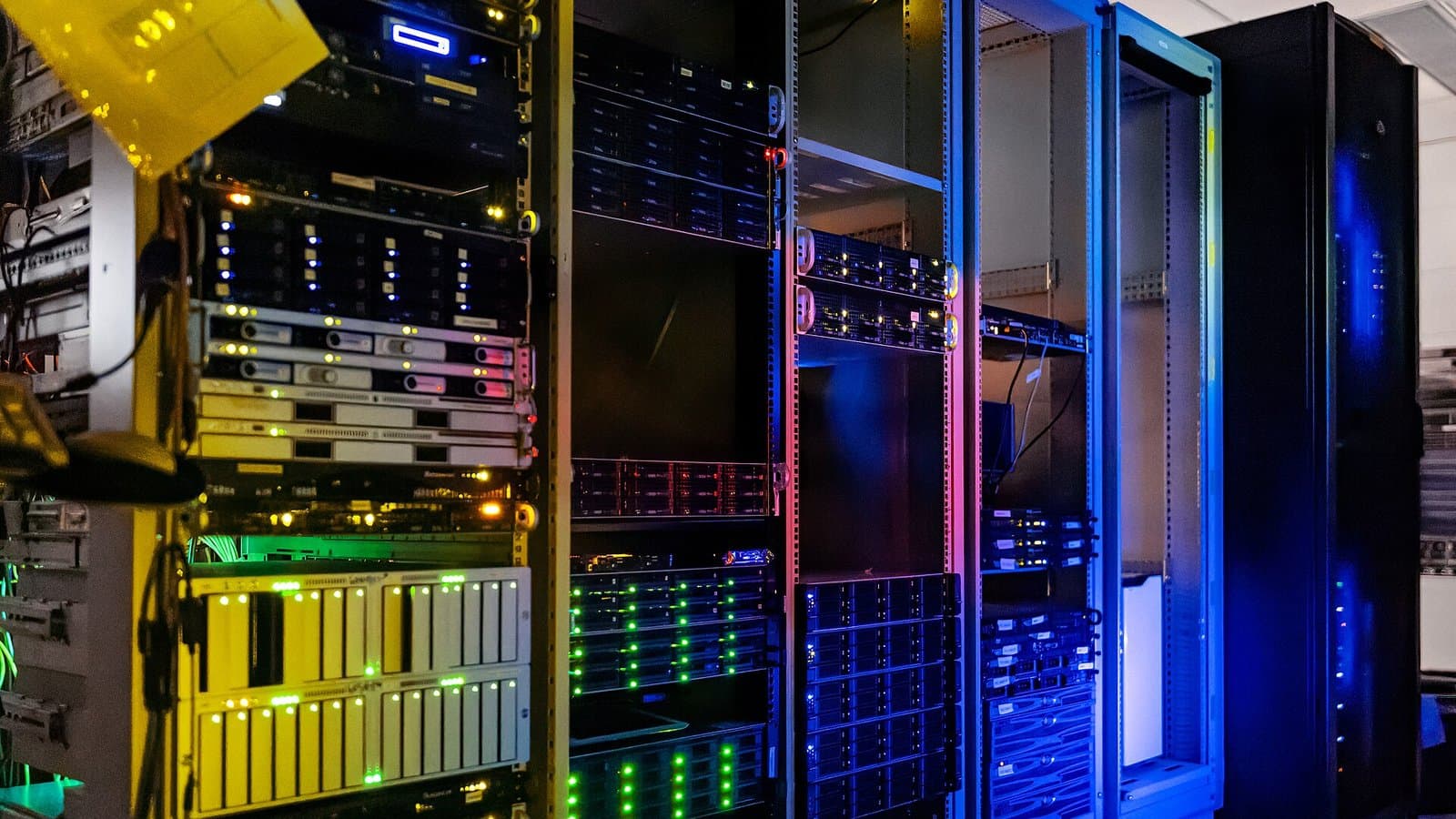
Feature image: NOIRLab HQ server racks by NOIRLab/NSF/AURA/T. Slovinsky, via Wikimedia Commons, CC BY 4.0.
Tags

TPW Editorial
Editorial Team
TechPastWeek's editorial team reports and edits every story we publish. We research each piece against primary and credible secondary sources, and a human editor reviews and signs off before it goes live.