Google Will Spend €13 Billion in Finland, and Buy Nuclear Power for 22 Years
Google's largest-ever European investment adds three Finnish data centres and a 22-year deal for up to half the output of the Loviisa nuclear plant.

On this page
On September 9, 2026, Google said it will invest at least €13 billion (about $15.1 billion) in digital infrastructure in Finland over two years, its largest single investment in Europe. The package funds three new data centres, in Kajaani, Muhos and Vaala, and an expansion of the company's existing site at Hamina, which it has operated since converting a former paper mill there in 2009. The company laid it out in a Google Cloud press release, and Reuters described it as the company's biggest commitment to the continent to date.
Related reading: Oracle Sends Force Majeure Notice on $18 Billion New Mexico Stargate Campus · SK and AWS Push Their Ulsan AI Data Center Toward 900 Megawatts.
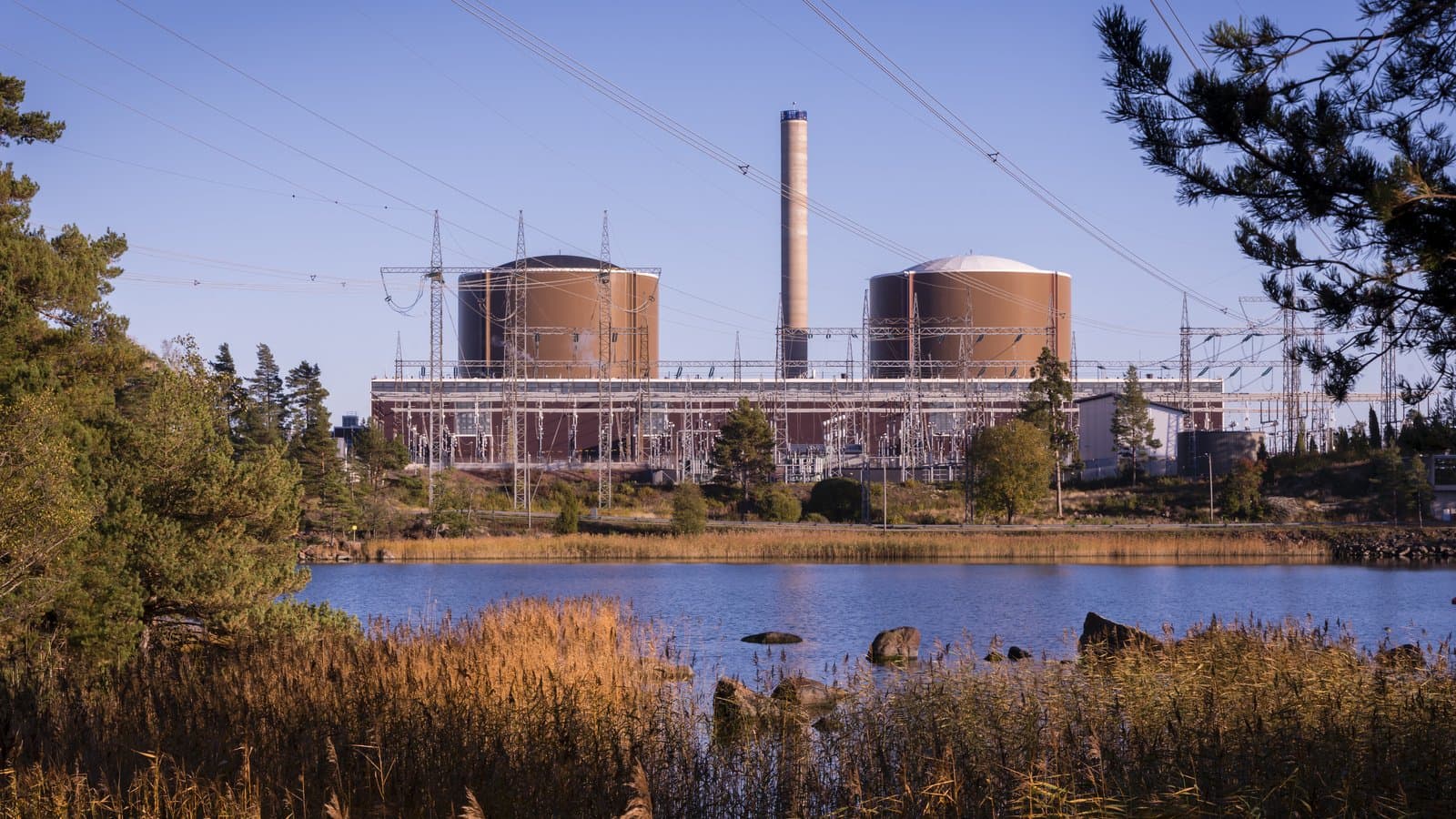
The buildings are not the most consequential part of the announcement. Alongside them, Google signed a 22-year power purchase agreement with the Finnish utility Fortum covering up to half the output of the Loviisa nuclear power station, which supplies roughly 10 percent of Finland's electricity. Deliveries begin at reduced capacity in 2028, reach the full contracted share in 2030 and run through 2049, the BBC reported. Fortum's shares rose about 11 percent on the news, according to CNBC. The deal is a live example of the constraint that now shapes AI infrastructure: the hard limit is increasingly electricity, not land or capital.
What Google is actually buying
The numbers are large in a way that has become routine for hyperscalers, which is itself the story. Google says the investment will contribute an average of €3.6 billion a year to Finland's GDP during the 2027–2028 construction phase and support more than 37,000 jobs nationwide, about 16,000 of them in construction. Once running, the sites are projected to sustain around 7,000 jobs a year, at wages the company says average 24 percent above Finland's median. Google is also putting €31 million into local community funds over four years, €10 million of it earmarked for research and innovation.
Those figures are the company's own and should be read as such; economic-impact estimates of this kind are promotional as well as predictive. But the physical plan is concrete. The three new northern sites were chosen because they sit near existing grid capacity and carbon-free power sources, and Google says it is working with the grid operator Fingrid and the investment-promotion agency Business Finland to place them. The package also includes two onshore wind agreements (with Valorem and Suomen Hyötytuuli) supporting 629 megawatts of new capacity, plus a 94-megawatt battery near Kajaani due to begin operating in late 2027. The data centres are being built heat-recovery ready, a nod to the Nordic practice of piping waste heat into district heating networks.
Why a nuclear contract is the headline
Data centres are electricity-hungry in a way that has reordered utility planning. A large AI campus can draw hundreds of megawatts continuously, and it needs that power with a high utilisation rate, because the accelerators inside are expensive and idle silicon wastes money. Renewables alone struggle to meet that profile without large amounts of storage, and new nuclear plants take a decade or more to permit and build. That leaves existing nuclear plants (and their operators) in an unusually strong bargaining position.
The Loviisa agreement is best understood as a life-extension deal financed by a long-term customer. Fortum has said Google's commitment gives it the economic certainty to invest in extending the plant's operating life and increasing its generating capacity. The plant's reactors are already among the older units in Europe; keeping them running into the 2040s requires capital that a merchant utility would struggle to justify without a buyer locked in for decades. Google, in effect, is de-risking that investment in exchange for a predictable supply of low-carbon electricity.
It is worth being precise about what this is not. Google is not commissioning new nuclear generation, and the deal does not change Finland's supply in the near term, the power already flows to the grid today. What the contract changes is the plant's future: without a buyer like Google, the case for extending Loviisa's life would be weaker, and the capacity it provides might eventually be retired. The AI boom, in this reading, is not only consuming clean power; it is helping finance the retention of generation that might otherwise disappear.
Why Finland, specifically
Finland combines a cold climate (which lowers cooling costs) with a grid that is already largely decarbonised, thanks to nuclear and hydro alongside growing wind. That gives hyperscalers both cheap cooling and a credible path to meeting their own clean-energy targets, which is why the country now hosts a cluster of data-centre projects alongside Google's.
The context: power is the new bottleneck
Google's capital-spending plans have been climbing steeply. In July the company raised its 2026 capital-expenditure forecast to as much as $205 billion, and the Finland commitment is one node in a global build-out in which land, power and grid interconnection are the binding constraints. TechTarget noted that the deal pairs compute expansion with energy procurement precisely because new-generation and transmission infrastructure can take years to develop. The pattern is now familiar across the industry: Microsoft has restarted a reactor at Three Mile Island under a long-term contract; Amazon and others have signed nuclear and geothermal agreements; and Google has previously backed advanced-nuclear and geothermal projects.
The competitive logic is straightforward. If a company can secure firm, low-carbon power at a predictable price, it can plan multi-year AI build-outs that rivals dependent on volatile spot markets cannot. That converts electricity procurement from a back-office function into a strategic weapon. It also concentrates risk: a single utility relationship, a single regulatory regime or a single plant outage can lop a meaningful share off a campus's capacity.
Finland's own market is absorbing a wave of interest. Google's investment arrives on top of an estimated €43 billion of data-centre projects already planned or under way in the country, and industry participants have taken to calling Finland the "Texas of Europe" for the speed at which capacity is being proposed. That comparison to the actual Texas is apt in more than climate: Texas has become the leading US site for AI data centres because it offers abundant land, a deregulated grid and fast interconnection, and it has struggled with the consequences for power prices and reliability. Finland's grid operator is smaller and its market differently structured, but the same tension (between attracting investment and protecting existing ratepayers) is now in play.
The nuclear bargain, and its catch
Long-term contracts for existing reactors have become the hyperscalers' favourite energy instrument, and the reason is arithmetic. New nuclear is capital-intensive and slow: a first-of-a-kind plant can take a decade or more to permit and build. An existing reactor, by contrast, is already licensed, already connected and already producing. A customer that commits to buying its output for two decades effectively converts an uncertain merchant asset into a bankable one, and in exchange gets firm, low-carbon power at a price it can model. Microsoft struck a similar bargain to restart a unit at Three Mile Island, and Amazon has signed nuclear agreements of its own.
The catch is that the power is not new. Loviisa's reactors are already feeding the Finnish grid, so Google's contract does not add a single clean megawatt in the short term; it changes who holds the economic claim on output that other buyers might otherwise have used. Google is adding generation elsewhere in the package (629 megawatts of new onshore wind and the Kajaani battery) but those are intermittent. The firm, round-the-clock portion comes from an asset that already existed.
That has drawn the kind of criticism that now follows almost every large corporate power deal: that data centres are absorbing existing clean electricity and, at the margin, pushing up prices for everyone else. The counter-argument, which Google and Fortum both make, is that without a buyer willing to underwrite a life extension, the plant might eventually retire, removing far more clean capacity than the data centres consume. Which effect dominates depends on details that are not public, the plant's marginal cost, the shape of Finland's supply curve and what would have happened to Loviisa absent the contract. What is clear is that the arrangement transfers long-horizon risk from a utility to a technology company that can spread it across a very large balance sheet.
There is a delivery risk, too. Extending a reactor's life requires regulatory approval and capital work, and nuclear schedules slip. If Loviisa's extension is delayed or curtailed, Google's clean-power accounting would have to lean more heavily on wind, batteries and grid purchases, a less firm mix for a load that never switches off.
A template, or a one-off
The strategic question is whether this becomes the standard hyperscaler playbook or stays a Nordic curiosity. The conditions that make Finland attractive are not universal: a cold climate, a mostly decarbonised grid, available land near transmission, and a utility willing to sign away half a reactor's output for two decades. Few markets offer all four. In the United States, the equivalent deals have revived mothballed plants and, in several cases, attracted scrutiny from regulators worried about cost allocation. In Europe, political support for nuclear varies sharply by country, which limits how far the model can travel.
What is more likely to spread is the structure rather than the fuel: hyperscalers signing long-dated, firm contracts and, where they can, financing the retention or expansion of generation. That makes electricity procurement a competitive advantage for companies with the balance sheet to commit decades ahead, and it raises the barrier to entry for smaller AI firms that must buy power at whatever the market offers. The AI build-out, in other words, is quietly becoming a power-procurement race, and the winners will be the companies that locked in supply before their rivals noticed it was the scarce input. For Europe, the Finland deal is also a test of whether a single member state can capture a meaningful share of AI infrastructure investment by pairing clean power with speed, or whether the capital will keep flowing to the United States, where the grid is bigger but the queues are longer.
What to watch
Three things will determine whether the Finland package becomes a template or an outlier. First, whether other hyperscalers follow with their own long-dated nuclear contracts, or prefer the faster but less firm route of gas, batteries and demand flexibility. Second, whether regulators treat long-term corporate PPAs for existing generation as a competitive market or as a form of pre-emption that crowds out other buyers. And third, whether Loviisa's life extension is approved and delivered on schedule, nuclear projects have a poor record on that score, and a slipping timeline would push Google's clean-power accounting onto other sources.
For now, the announcement says as much about the physics of AI as about Google's strategy. The company's own framing is careful to pair infrastructure with energy. As Alphabet and Google president and chief investment officer Ruth Porat put it, quoted by The Next Web, "Google is proud to deepen our roots in Finland with the company's largest single investment in Europe." The subtext is that the investment only works if the megawatts are there, and Finland, for now, is one of the few places where they are.
Tags

TPW Editorial
Editorial Team
TechPastWeek's editorial team reports and edits every story we publish. We research each piece against primary and credible secondary sources, and a human editor reviews and signs off before it goes live.