Oracle Sends Force Majeure Notice on $18 Billion New Mexico Stargate Campus
Oracle sent a force majeure notice to the developer of Project Jupiter, an $18 billion Stargate AI data center campus in New Mexico, citing power delays.

On this page
Key takeaways
- Oracle sent a force majeure notice on 24 September 2026 to the developer of Project Jupiter, a Stargate AI data center campus in New Mexico, a filing that would let it delay payments if the site misses its planned 2028 start date.
- The developer is a unit of Blue Owl Capital, which owns Stack Infrastructure; Oracle cited potential delays in securing power for the site, a responsibility it holds under the lease.
- An Energy Transfer natural-gas pipeline serving the campus has been delayed nearly six months, to 1 February 2027, after regulators repeatedly denied permits and the route changed, and a separate fuel cell air-quality permit is pending with a 23 November deadline.
- Project Jupiter spans about 1,400 acres, is backed by roughly $18 billion in bank loans, and Blue Owl holds about $3 billion in equity earning a 9 percent yield during construction while Oracle covers debt costs.
- On 26 September 2026, Morgan Stanley warned the move is forcing investors to reassess the financing behind AI infrastructure, as a September 2026 report said about $68 billion in US data center projects have been blocked or delayed.
Oracle has sent a force majeure notice to the developer of Project Jupiter, a Stargate AI data center campus in New Mexico. Bloomberg first reported the notice on 24 September 2026. Reuters reported the same day that the filing would let Oracle delay payments if the facility misses its planned 2028 start date.
Related reading: Oracle's AI Cloud Backlog Hits $664 Billion as Infrastructure Revenue Doubles · SK and AWS Push Their Ulsan AI Data Center Toward 900 Megawatts.
The developer is a unit of Blue Owl Capital, the investment firm that owns Stack Infrastructure. Oracle is not seeking to exit as the campus's main tenant. The notice is a hedge rather than a walkout: it preserves Oracle's right to postpone payment obligations if Project Jupiter does not come online when planned.
Both companies pushed back on the idea that the project is in trouble. Oracle said, "Project Jupiter remains on our planned schedule. We are fully committed to New Mexico and confident in our path forward." Blue Owl said, "this notice does not change the financial commitments to this multi-year project."
Force majeure clauses are common in energy and commodities contracts. They excuse a party from obligations when events outside its control get in the way. Here, the event Oracle pointed to was not a hurricane or a strike. It was the slow work of securing enough electricity for a campus that will need a great deal of it.
Power was always the hard part
Oracle cited potential delays in securing power for the site, a responsibility that falls to Oracle under the lease. That detail matters. The tenant, not the landlord, carries the job of arranging supply for a campus designed to handle 2.45 gigawatts.
Power procurement at that scale is a chain of dependencies. It involves a generation source, a fuel supply, a connection to the grid or an on-site plant, and the permits that allow each piece to operate. A delay anywhere in the chain pushes the whole schedule, and the tenant is the party holding the obligation.
That is why a force majeure claim is available here. A tenant whose payment obligations depend on a facility being ready can argue that the cause of the delay sits outside its control, even when the delay traces back to its own supply responsibility.
A campus of 2.45 gigawatts is not a normal customer for any grid. It needs firm capacity rather than intermittent supply, which is why the design pairs natural-gas fuel cells with a dedicated pipeline instead of relying on the local utility alone. That choice solved one problem and created another dependency: the fuel has to arrive by pipe, on a schedule set by regulators and a midstream operator.
The pipeline, the fuel cells and a November deadline
The campus is meant to run on gas-powered fuel cells from Bloom Energy, which makes a dependable gas supply central to the timeline. The main source of that gas is a pipeline from Energy Transfer. The line has been delayed nearly six months, to 1 February 2027, after regulators repeatedly denied permits for it and the route was changed.
A separate air-quality permit for the fuel cell system is still pending. New Mexico's state environment department faces a 23 November deadline to decide.
Those two items sit at the front of the timeline. Gas has to reach the site before the fuel cells can run, and the fuel cells need an air-quality permit before they can operate at all. The campus is designed around a power source that is not yet fully cleared to switch on.
So the schedule rests on three things moving in sequence: a pipeline that is late, a permit that is undecided, and a power supply that Oracle itself is responsible for delivering. None of them is a construction problem, and none of them can be solved by working weekends.
How Project Jupiter is financed
Project Jupiter spans about 1,400 acres and is backed by roughly $18 billion in bank loans, according to Propmodo. Blue Owl holds about $3 billion in equity in the development. It earns a 9 percent yield on that equity during construction, with Oracle covering debt costs.
That structure explains why the force majeure language matters to both sides. Oracle cannot exit the lease. What it can do is postpone payment obligations if the project stalls. Extending the development-stage rent period delays the start of Blue Owl's higher payments rather than erasing them, which is why Blue Owl's public response was that its financial commitments are unchanged.
For Blue Owl, the equity is exposed to a construction timeline it does not control. For Oracle, the obligation is a long stream of payments on a facility that has to be finished before it produces anything. A notice that shifts the payment schedule is worth real money even if the campus is completed in the end.
The $18 billion in bank loans adds a third set of interests. Lenders priced that debt against a lease with a creditworthy tenant and a 2028 delivery date. Anything that moves the date moves the assumptions behind the loan.
The economics depend on the campus operating. Blue Owl earns its 9 percent yield on equity during construction, and the lease payments step up once the center is running. A force majeure provision would extend the lower development-stage period, pushing back the point at which the larger payments begin. Oracle keeps paying something in the meantime, which is the reason neither company describes the filing as a default.
Why Morgan Stanley saw a template
The filing did not stay a private contract story for long. On 26 September 2026, Morgan Stanley warned that Oracle's move is forcing investors to reassess the contracts and financing structures behind the rapid expansion of AI infrastructure.
The bank's concern is structural. Data center financing leans on long-term leases with highly rated technology tenants, and those leases are what make the debt repayable. When a tenant tests the escape hatches in a lease, lenders and bondholders have to reprice how much protection the contract really offers.
Oracle acted well before the facility was due to deliver, which drew attention to the timing as much as the substance. The question Morgan Stanley raised is whether this stays an isolated dispute or becomes a template. If another large cloud tenant makes a similar move, the financing model that funds these campuses comes under pressure well beyond New Mexico.
That is the link between a pipeline permit in one state and the cost of capital for an industry. AI infrastructure is financed against the assumption that a signed lease means predictable cash flow for decades. A force majeure notice is a reminder that the lease has conditions attached, and that those conditions can be invoked before a shovel is late rather than after.
Stargate's flagship campus and a political backdrop
Project Jupiter is one of the flagship campuses of Stargate, the AI infrastructure initiative from Oracle, OpenAI and SoftBank. It has drawn opposition from residents and environmental groups and has become a political flashpoint ahead of the midterm elections.
The timing ties the contract dispute to a broader argument about who pays for AI infrastructure and who lives next to it. A campus of 1,400 acres that needs gas, water and transmission lines is a local planning decision as much as a corporate one, and those decisions are being made in front of voters.
For Oracle, the political cost and the financial cost are now connected. A project that cannot get its permits on time triggers the lease protection it just invoked, and a project that draws local opposition makes the next permit harder to obtain.
A national buildout running into local limits
Jupiter's friction is part of a wider pattern. The AI data center buildout is running into power constraints and public opposition, and a September 2026 report said about $68 billion in US data center projects have been blocked or delayed, according to TechSpot.
Water and air permits, pipeline routes and grid interconnection queues are the new bottlenecks. They are slower to resolve than a construction schedule, and they involve regulators, utilities and neighbors rather than contractors. A developer can build a shell quickly. It cannot build a power plant, a pipeline and a permit approval on the same clock.
That mismatch is the story behind the Oracle notice. The industry learned to build data centers faster than it learned to secure the resources those data centers need. The gap shows up as a schedule slip, and a schedule slip shows up as a force majeure claim.
The pattern the report describes reaches beyond New Mexico. Projects are colliding with transmission limits and with residents who question how much water and power a campus will consume. Jupiter is one of the largest examples, which is why its contract fight reads as a signal rather than an isolated event.
The force majeure notice is a contract tool, not an exit. Oracle keeps its role as Project Jupiter's main tenant while preserving the right to pay later if power does not arrive on time.
Oracle's numbers and the promise of future capacity
The scrutiny lands on a company spending heavily to build cloud capacity. Oracle reported $7.4 billion in quarterly OCI revenue and a $664 billion remaining performance obligation in its most recent results. Both numbers describe a business selling future compute commitments at a scale that depends on campuses like Jupiter being finished.
That is the tension at the center of the story. A remaining performance obligation is a promise to deliver capacity. If facilities slip, the promise gets harder to keep, and the financing behind the facilities gets more expensive at the same time.
The $664 billion figure is the backlog built from contracts like Oracle's agreement with OpenAI to supply computing capacity, and those contracts assume the buildings exist. When the power supply behind a building slips, the cost of funding it tends to rise, and the confidence behind the backlog tends to fall.
Investors have spent two years pricing AI infrastructure on the assumption that demand is not the risk. The Jupiter notice suggests the risk sits elsewhere: in power, permits and land, and in the contracts that tie payments to a schedule no single party fully controls.
What to watch next
Three dates and decisions will shape the next phase.
- The New Mexico environment department's decision on the fuel cell air-quality permit, due by 23 November.
- The Energy Transfer pipeline's revised target of 1 February 2027, and whether it holds.
- Whether other large tenants follow Oracle in testing lease protections, the scenario Morgan Stanley flagged.
Oracle's public position is that nothing has changed. The force majeure notice says the company wants protection in case it does.
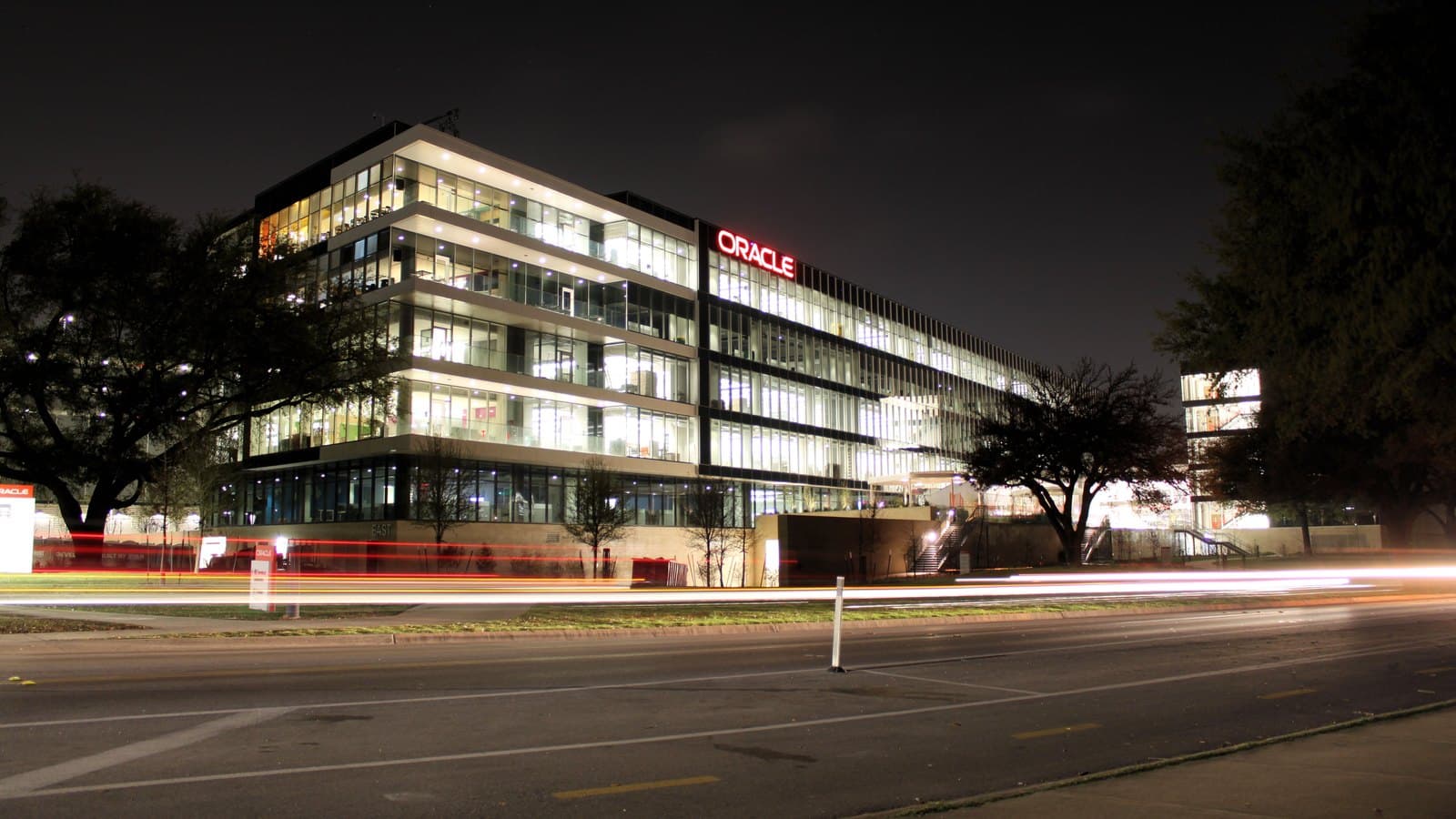
Cover: Oracle's Riverside campus in Austin, Texas. Photo by DronePhotographer via Wikimedia Commons, CC0.
Tags
Frequently asked questions
- What is Project Jupiter?
- Project Jupiter is a Stargate AI data center campus in New Mexico developed by a unit of Blue Owl Capital, which owns Stack Infrastructure. It spans about 1,400 acres, is designed to handle 2.45 gigawatts, and is backed by roughly $18 billion in bank loans.
- Why did Oracle send a force majeure notice?
- Oracle cited potential delays in securing power for the site, a responsibility that falls to Oracle under the lease. The notice would let Oracle delay payments if the facility misses its planned 2028 start date, and Oracle is not seeking to exit as the campus's main tenant.
- Is Oracle leaving Project Jupiter?
- No. Oracle said, "Project Jupiter remains on our planned schedule. We are fully committed to New Mexico and confident in our path forward." It cannot exit the lease, but it is seeking to postpone payment obligations if the project is delayed.
- What did Morgan Stanley say about the notice?
- On 26 September 2026, Morgan Stanley warned that Oracle's move is forcing investors to reassess the contracts and financing structures behind the rapid expansion of AI infrastructure, raising the question of whether it stays an isolated dispute or becomes a template.

TPW Editorial
Editorial Team
TechPastWeek's editorial team reports and edits every story we publish. We research each piece against primary and credible secondary sources, and a human editor reviews and signs off before it goes live.