Oracle's AI Cloud Backlog Hits $664 Billion as Infrastructure Revenue Doubles
Oracle's Q1 FY27 cloud infrastructure revenue doubled to $7.4 billion as its AI contract backlog reached $664 billion, with free cash flow still negative.

On this page
Key takeaways
- Oracle's remaining performance obligation reached $664 billion in Q1 FY27, up $209 billion year over year and more than ten times the company's annual revenue.
- Cloud infrastructure revenue doubled to $7.4 billion, up 121%, and total revenue rose 30% to $19.35 billion, beating analyst estimates.
- Roughly half the backlog is tied to OpenAI, which is unprofitable and must keep raising financing to honour its compute commitments.
- Oracle said it delivered more than 300,000 GPUs in the quarter and added 850 megawatts of data centre capacity, countering the claim that it sells backlog it never delivers.
- Free cash flow was negative $5.4 billion as capital spending hit $28.5 billion, and S&P Global Ratings has already cut Oracle to BBB-, one notch above junk.
Oracle reported fiscal first-quarter results on September 10 that beat expectations on both revenue and profit, and the figure investors seized on sat well below the headline: a remaining performance obligation, or RPO, of $664 billion. The total is more than ten times the company's annual revenue and grew by $209 billion in a single year.
Related reading: Oracle Sends Force Majeure Notice on $18 Billion New Mexico Stargate Campus · AWS Abandons Two Middle East Data Zones After War Damage.
Total revenue for the quarter ended August 31 rose 30% to $19.35 billion, ahead of the roughly $19.14 billion analysts expected. GAAP earnings per share rose 55% to $1.56, and non-GAAP EPS rose 30% to $1.92, against a consensus of $1.74. Net income was $4.68 billion, up from $2.93 billion, or $1.01 per share, a year earlier.
Where the growth is coming from
The composition of the revenue shows how far Oracle has moved from its software roots. Cloud revenue, meaning infrastructure plus applications, rose 62% to $11.6 billion. Cloud Infrastructure revenue, the business that rents out GPUs and data center capacity, more than doubled to $7.4 billion, up 121% and ahead of the $7.09 billion analysts had modeled. Cloud Applications grew 10% to $4.2 billion.
The legacy book moved the other way. Software revenue fell 3% to $5.5 billion, which Oracle attributed to customers continuing to migrate off on-premises products. Cloud now accounts for close to three-fifths of total sales, and infrastructure alone is more than twice the size of the applications business that was once the point of the cloud strategy.
The database business is the enterprise counterweight to raw GPU rental. Database cloud revenue rose 26%, and multicloud database revenue grew 353% year over year. Oracle finished its planned Azure and AWS regional expansion, reaching 70 multicloud database regions and 119 availability zones, and made its interconnect for AWS generally available. The pitch is that enterprises can run Oracle's database next to their applications on whichever hyperscaler they already use, without data transfer charges between OCI and the other clouds. That work carries far better margins than reselling compute, though it remains small next to infrastructure.
The backlog is the story
RPO measures contracted revenue that has not yet been recognized. Oracle's grew $26 billion from the previous quarter and $209 billion from a year earlier, to $664 billion. Oracle said it booked more than $30 billion of additional AI cloud contracts during the quarter, and that demand for AI training and inference "continues to grow faster than supply."
The company also argued that the new contracts are cheap to fund. Because the deals were structured as prepayments, customer-supplied hardware or similar arrangements, Oracle said there is no incremental impact on its plans to raise capital. On the call, co-CEO Clay Magouyrk put it plainly: "We closed more than $30 billion of additional AI contracts in Q1 without requiring additional capital from Oracle."
The concentration is the caveat. S&P Global Ratings estimated in July that roughly half of Oracle's backlog is tied to OpenAI, the startup that has committed to buying enormous quantities of compute while losing money itself. If OpenAI cannot raise the financing to honor those commitments, Oracle would be left holding leases on purpose-built capacity that is difficult to repurpose quickly.
That relationship is the foundation of the whole story. Oracle and OpenAI expanded their Stargate arrangement in July 2025 with plans for up to 4.5 gigawatts of additional capacity, and the Abilene campus runs on Oracle Cloud Infrastructure. The partnership explains both the scale of the backlog and its risk. Oracle's RPO stood at $638 billion at the end of the prior fiscal year, according to S&P, so the more than $30 billion of new contracts booked in Q1 added to an already enormous base rather than creating it. The quarterly increase of $26 billion is the more useful growth signal, because it shows how fast new commitments are still arriving.
Capacity is actually arriving
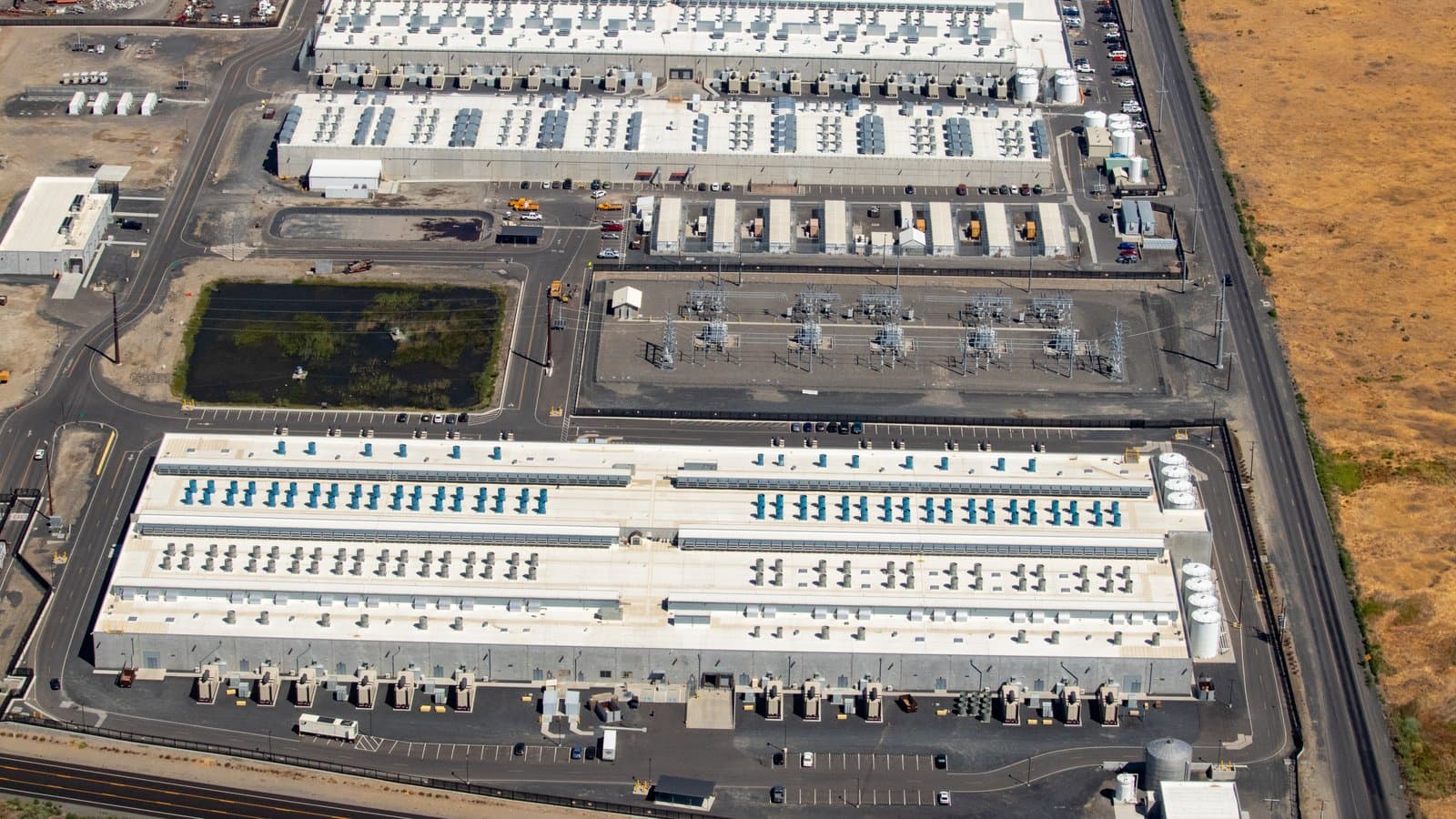
The charge that Oracle sells backlog and never delivers it ran into the quarter's physical numbers. Since the end of the prior quarter, Oracle said it delivered more than 300,000 GPUs to AI cloud customers, almost triple the capacity delivered in the fourth quarter, and added 850 megawatts of data center capacity. The company said the quarter's GPU delivery equaled 73% of everything it delivered in the prior fiscal year.
Magouyrk gave the sharpest datapoint on the earnings call. The Abilene, Texas campus, the flagship site of the Stargate buildout, received 131,000 GPUs in the quarter, 1.9 times the prior-quarter volume. Six of the site's eight buildings, representing 618 megawatts and 75% of its capacity, have been handed over to the customer. Magouyrk also disclosed that OpenAI's recently released GPT-6 Astra model "was trained at our site in Abilene."
The installed base is behaving better than the depreciation skeptics expected. Oracle said GPU utilization was 97.9% in the quarter, and that capacity coming up for renewal was renewed or resold at a 20% premium to its prior contracts, with most of those GPUs four years old or older. If accurate, that undercuts the argument that AI accelerators become stranded assets before they pay for themselves. It is also a management claim about its own fleet rather than an independently audited figure.
The next capacity increment depends on newer hardware. Oracle said Nvidia's Vera Rubin systems are performing better than expected on quality, manufacturing yield and performance, and that it will deliver its first Vera Rubin systems to customers in the second quarter. Magouyrk also said customer acceptance has compressed to about 24 hours, meaning systems arrive ready to run workloads. That operational detail matters at this scale, because it shortens the gap between installing equipment and starting to bill for it.
The cash still leaves faster than it arrives
The buildout's cost is visible in the cash flow statement. Free cash flow was negative $5.4 billion for the quarter, against negative $362 million a year earlier, as capital expenditure jumped to $28.5 billion from $8.5 billion. Operating cash flow, the offsetting good news, reached a record $23.1 billion, up 184%.
That gap is what makes Oracle a different kind of AI story from its larger cloud rivals. Alphabet, Microsoft and Amazon fund data center construction from cash generated by mature advertising, software and retail businesses. Oracle is funding it with equity and debt while its operating cash flow, large in absolute terms, is still dwarfed by what it spends on chips, land, power and buildings. The company now carries about $125 billion of debt.
The ratings agencies have already reacted. S&P Global Ratings cut Oracle to BBB- in July, one notch above junk, citing the spending and warning that the free cash flow deficit could widen to about $42 billion for the fiscal year. Moody's holds a negative outlook. Oracle's bonds have traded closer to speculative-grade yields than to its stated rating, a sign that credit markets are pricing in the possibility of another downgrade.
How Oracle is funding it
The equity component of the plan was already in motion. During the quarter Oracle completed the sale of $20 billion of common stock, before commissions, through the at-the-market program it set up in February. The company also said then that it planned a single investment-grade bond sale early in 2026 and did not expect to issue additional bonds during the calendar year beyond that transaction. That distinction matters to the bull case: the argument is that most of the new AI backlog arrives with a customer already paying for the hardware, so the growth does not have to be financed entirely from Oracle's balance sheet.
Chief financial officer Hilary Maxson told reporters that full-year capital spending guidance was unchanged. Management also said roughly half of the RPO should convert into revenue over the next 36 months, which is the timeline that determines whether the cash deficit closes or compounds.
Even with customer prepayments, the obligations are substantial. Oracle signed roughly $260 billion of data center leases that begin in coming years, according to Reuters, commitments that do not appear as conventional debt but that ratings agencies include when they assess the company's borrowings. S&P also counted $13 billion of unconditional purchase obligations, mostly for data center power. Those figures explain why the debate around Oracle is less about demand, which the backlog makes clear, and more about whether each site earns its cost once power, leases and depreciation are counted.
Guidance and what to watch
For the current quarter, Oracle guided total revenue growth of 30% to 34% and non-GAAP EPS of $1.85 to $1.93. For the full fiscal year it raised its outlook to at least $90 billion of revenue and $8.10 of non-GAAP EPS. Both were slightly above the consensus that preceded the report.
Shares rose about 4% in after-hours trading, a restrained response to a large beat. The stock had fallen 22% this year through the close before the release, weighed down by the cash burn, the credit downgrade and the concentration of the backlog in a single customer. The results tempered those concerns without resolving them, and the market's muted reaction reflects that.
Three things are worth tracking. The first is conversion: how much of the $664 billion backlog actually turns into recognized revenue each quarter, and whether the 36-month schedule holds. The second is the New Mexico site, where a natural gas pipeline that feeds one of Oracle's campuses was reported to be behind schedule; Maxson said nothing known would slow the sites in the fiscal 2027 outlook, and Magouyrk said the company was seeking an air permit. The third is the balance sheet. Oracle has promised to protect its investment-grade rating, and avoiding another downgrade while spending $90 billion to $95 billion a year may require either more equity sales or a slower build than the backlog implies.
The quarter settled one argument. Oracle can source and install AI capacity at a pace few companies can match, and it has the contracts to keep doing it. Whether the cash flows catch up to the commitments, or the commitments outrun the cash, is now the central question in the AI infrastructure trade.
Tags
Frequently asked questions
- What is Oracle's remaining performance obligation?
- RPO is contracted revenue Oracle has not yet recognised. In Q1 FY27 it reached $664 billion, up $209 billion from a year earlier, after Oracle booked more than $30 billion of new AI cloud contracts during the quarter.
- Is Oracle's AI backlog risky?
- S&P Global Ratings estimates roughly half of it is tied to OpenAI, which is unprofitable and must keep raising capital. If OpenAI cannot fund its commitments, Oracle could be left holding leases on purpose-built capacity that is hard to repurpose quickly.
- Why is Oracle's free cash flow negative?
- Capital expenditure jumped to $28.5 billion in the quarter, mostly for GPUs, data centres, land and power, while operating cash flow was $23.1 billion. Free cash flow was negative $5.4 billion, and S&P expects the annual deficit to widen to about $42 billion.

TPW Editorial
Editorial Team
TechPastWeek's editorial team reports and edits every story we publish. We research each piece against primary and credible secondary sources, and a human editor reviews and signs off before it goes live.