AWS Abandons Two Middle East Data Zones After War Damage
Amazon's cloud arm told customers on September 15 that one UAE availability zone and its entire Bahrain region cannot be restored after Iranian strikes.

On this page
Key takeaways
- AWS said on September 15, 2026 that it cannot restore one of its three UAE availability zones or its entire Bahrain cloud region after war damage from Iranian strikes.
- The damage came from drone attacks in March 2026, when two UAE facilities were hit directly and a strike near an AWS site in Bahrain caused physical damage.
- AWS said the Bahrain damage spanned several availability zones and exceeded what its regional and multi-zone design is built to withstand.
- Most customers moved workloads to other regions, but data hosted only in the affected zones is unrecoverable, and AWS has no UAE restoration timeline.
- The episode has turned data centers into wartime targets and complicates the Gulf's plans to become a global AI and cloud hub.
Amazon Web Services told customers on September 15 that it has given up on restoring part of its Middle East footprint. One of its three availability zones in the United Arab Emirates and its entire Bahrain network are unrecoverable after Iranian drone strikes in March, the company said in a status update first reported by Reuters.
Related reading: SK and AWS Push Their Ulsan AI Data Center Toward 900 Megawatts · Ukraine Hits Two Yandex Data Centres, Reaching Russia's AI Compute.
"We have determined that we are unable to restore access to the resources and data hosted exclusively" in the affected UAE zone and in Bahrain, AWS said, according to The National. The company said it reached that conclusion after a thorough assessment and had notified authorities in both Gulf states. "We remain committed to supporting our customers in the UAE and Bahrain," AWS added.
The admission converts a wartime outage into a permanent loss of infrastructure and, for some customers, of data. It also marks a turning point in how the cloud industry has to think about geography, because the damaged sites were not in a marginal market. They were part of the infrastructure underpinning banks, payments, delivery apps and government services across the Gulf.
How the region got here
The strikes came after the United States and Israel began an offensive against Iran on February 28, 2026. In early March, AWS confirmed that two facilities in the UAE were hit directly and that a drone strike near one of its Bahrain facilities caused physical impacts. The company described structural damage, disrupted power delivery and, in some cases, water damage from fire suppression activities.
AWS operates nine data center sites across the Middle East: three each in the UAE, Bahrain and Israel, with three more planned in Saudi Arabia. Its Bahrain region, me-south-1, opened in 2019 as the company's first in the region. The UAE region, me-central-1, followed in 2022. Both were built on the standard cloud design of three availability zones, physically separated clusters that are supposed to keep a service running when one fails.
Bahrain broke that assumption. AWS said the damage there spanned multiple availability zones and "exceeded what our regional and multi-availability zones services are designed to withstand." In other words, the failure model the architecture was built around, the loss of a single zone, did not cover what actually happened. The company said it had "exhausted every option for restoring data and resources that had not been migrated before the region became unavailable."
In the UAE zone, AWS said it is working to replace affected infrastructure and will provide an update on restoration in the coming months. For Bahrain, it pointed to an update in early 2027. Both timelines are unusually vague for a provider that normally publishes granular incident reports, and they leave customers planning around an open-ended hole.
Customers had already started leaving
The practical impact has been cushioned by the fact that the disruption began in March, giving customers months to react. AWS said most affected customers re-established operations in other regions by restoring backups or copying data that remained accessible. Some workloads could not move, because the data lived only in the damaged zones, which is why the word "unrecoverable" matters.
The strikes disrupted far more than AWS's own services. Banks including Emirates NBD, Emirates Islamic, First Abu Dhabi Bank and Abu Dhabi Commercial Bank reported intermittent outages in the days after the attacks, and payments, delivery and enterprise software across the region wobbled. The incident illustrated how much of a modern economy routes through a small number of cloud providers and how concentrated the physical risk can be.
Those providers are also entangled with defense. Reporting in March noted that the US military runs some workloads on AWS, including Anthropic's Claude model for certain intelligence functions, and that dual-use reality makes commercial data centers strategic targets. Iran's Fars News Agency claimed the Bahrain facility had been targeted for that reason, a claim AWS declined to comment on. Analysts quoted by Fortune described the strikes as the first time data centers had been deliberately targeted in a conflict, and predicted they would not be the last.
A cloud map that has to be redrawn
For years, the pitch for regional cloud infrastructure was local latency and data residency. A company in Manama or Dubai could keep data in-country, meet local rules and reach users quickly. The strikes add a security dimension that is harder to engineer around. Physical separation of availability zones protects against equipment failure, power problems and even some natural disasters, but not against a military decision to target the buildings.
That is why the response has included unusual ideas. Reporting on the aftermath noted that the UAE is weighing underground data centers as one way to harden facilities against attack. More broadly, enterprises with Middle East operations are re-examining which workloads can tolerate living in a conflict zone at all, and regulators are facing the reality that data residency rules and physical resilience can pull in opposite directions.
The Gulf's AI ambitions make the stakes higher. The region has attracted enormous investment pledges, including a planned Stargate UAE campus in Abu Dhabi that would be one of the largest AI facilities outside the United States, and Amazon's own $5 billion commitment to an AI hub in Saudi Arabia. Those projects depend on a cloud footprint that customers believe is safe. An unrecoverable region, with a restoration date pushed to 2027 at the earliest, is a difficult data point to explain to boards.
What to watch
The near-term question is what AWS rebuilds and where. The company has not said whether it will replace the lost Bahrain capacity, move it, or treat the Saudi expansion as the region's new center of gravity. A decision to concentrate future capacity in Saudi Arabia and Israel would reshape latency and redundancy for the entire Gulf.
The longer-term question is whether multi-region, multi-provider architecture becomes the default for any company with Middle East exposure. The industry has talked about geographic redundancy for years; the AWS case shows the limit of treating availability zones as the unit of resilience. For customers who lost data, the lesson is already expensive. For everyone else, it is a warning that in a conflict, the cloud has an address.
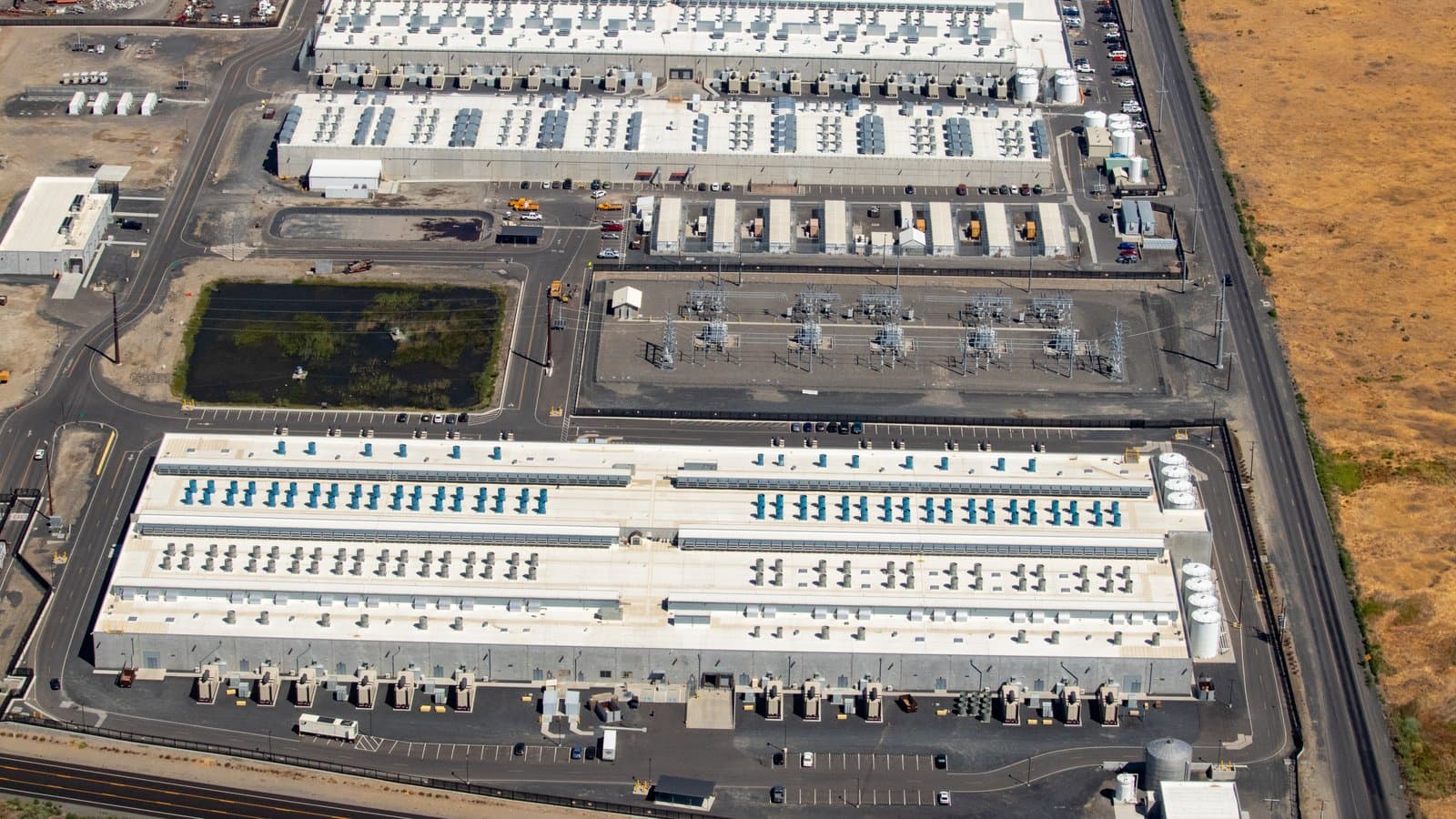
Cover image: an AWS data center campus in the United States, shown as a representative example. Photo by Tedder via Wikimedia Commons, CC BY-SA 4.0. The affected Middle East facilities have no publicly licensed photographs.
Tags
Frequently asked questions
- Which AWS regions are affected?
- AWS said it cannot restore one availability zone in its UAE region, known as me-central-1, and its entire Bahrain network, known as me-south-1. Its Israel region was not named in the update. AWS operates nine data center sites across the Middle East.
- What caused the damage?
- Iranian drone strikes in early March 2026 damaged the facilities. AWS said two UAE sites were directly struck and a strike near one of its Bahrain facilities caused physical impacts. The damage included structural harm, power disruption and water damage from fire suppression.
- Can customers recover their data?
- Data and resources hosted exclusively in the affected UAE zone and in Bahrain cannot be restored. AWS said most customers had already re-established operations elsewhere by restoring backups or copying data that stayed accessible before the regions went offline.
- When will the affected AWS regions return?
- For Bahrain, AWS said it expects an update in early 2027. For the UAE zone, it said it is working to replace affected infrastructure and will provide an update in the coming months. The company has not given a firm restoration date.

TPW Editorial
Editorial Team
TechPastWeek's editorial team reports and edits every story we publish. We research each piece against primary and credible secondary sources, and a human editor reviews and signs off before it goes live.