Ukraine Hits Two Yandex Data Centres, Reaching Russia's AI Compute
Ukrainian drones hit two Yandex data centres on 8 and 9 October 2026, disabling AI-training sites in Ryazan and Kaluga and disrupting Russian services.

On this page
Key takeaways
- Ukrainian drones struck a Yandex data centre at Sasovo in Russia's Ryazan region overnight into October 8, 2026, starting a fire, and hit a second site in the Kaluga region overnight into October 9.
- Yandex said the Sasovo facility stopped operating entirely and that it cannot confirm whether the equipment there can be restored; the Moscow Times reported that two of the three supercomputers used to develop YandexGPT are housed at the site.
- At the Kaluga site, Governor Vladislav Shapsha said infrastructure was hit and nine people were injured, five of them hospitalised; Yandex said several data centre modules were completely disabled.
- Users reported disruptions to Yandex services and to Avito, Ivi, Megafon, Russian Railways and T-Bank after the first strike, according to Meduza.
- Ukraine has not formally claimed the Yandex strikes; President Volodymyr Zelensky said on the evening of October 8 that Ukraine had responded to Russian strikes on Ukrainian data centres, without giving details.
Ukrainian drones hit two Yandex data centres on consecutive nights in early October, knocking out facilities that train the company's flagship AI model and disrupting consumer services across Russia. The first strike, on Yandex's site at Sasovo in the Ryazan region, came overnight into Thursday, October 8, 2026, and started a fire. The second, at a data centre in the Kaluga region southwest of Moscow, followed overnight into Friday, October 9. The two attacks mark an expansion of Ukraine's drone campaign into the computing infrastructure behind Russia's AI industry.
Related reading: Oracle Sends Force Majeure Notice on $18 Billion New Mexico Stargate Campus · Anthropic Commits $11.6 Billion to Akamai for CPU Cloud Capacity.
Yandex runs Russia's most-used search engine and is the country's leading AI developer, roughly what Google is to the West. Its data centres are the machines that turn electricity into YandexGPT, the country's most prominent generative model. The strikes put part of Russia's AI build-out on the same target list as oil refineries, and they extend a war that has already reached the computing infrastructure of both countries.
Two nights, two sites
The Sasovo strike took the facility offline entirely. Yandex said the data centre stopped operating and that it was still assessing the damage, adding it "cannot confirm whether the equipment at our Sasovo data center can be restored," as Meduza reported. The Moscow Times reported that two of the three supercomputers used to develop YandexGPT are housed at Sasovo; Meduza and Reuters describe two supercomputers used to train the model. The outlets give slightly different counts, and Yandex has not published a full inventory of the equipment at the site. What is not in dispute is that the facility was built for training work.
Yandex operates data centres across Russia that carry search, maps, mail, ride-hailing, payments and cloud services. The two targeted sites are not marginal. Sasovo, in the Ryazan region east of Moscow, held training hardware for the company's AI division. The Kaluga facility, to the southwest, is described by Firepoint and Reuters as Yandex's largest of its kind.
The two strikes differ in what they put at risk. Sasovo held the hardware that makes models; Kaluga, the larger site, is closer to the infrastructure that keeps Yandex's daily services online. Yandex has not said which workloads ran at each site or how the failure of one affected the other, so any reading of the operational damage stays provisional. Two nights in a row also says something about the campaign's intent: the first strike did not prompt a pause before the second, and the facilities were tested as a repeatable target.
The Kaluga site was hit the next night. Governor Vladislav Shapsha said infrastructure in the region was struck, with nine people injured and five of them hospitalised, according to Reuters. Yandex later said "several data center modules have been completely disabled" and warned of service disruptions, while saying no employees were injured. The Ukrainian drone maker Firepoint said its FP-1 drones were used in that strike. Video from Euronews showed a fire at the Sasovo site after the first strike, and CNBC reported the incident the same day. The BBC also covered the sequence as it developed.
What users noticed
The damage did not stay inside Yandex. After the first strike, users reported problems with Yandex services and with other sites and apps, among them the classifieds site Avito, the streaming service Ivi, the mobile operator Megafon, Russian Railways and the bank T-Bank, according to Meduza. Put together, those names cover classifieds, video, mobile service, rail bookings and banking, a broad slice of daily life running through a handful of providers. When a small number of platforms carry that much of daily life, an outage at one shows up across services that have nothing to do with each other, which is what the reports after the first strike describe. Yandex has called its data centres the company's "iron heart," saying that every outage disrupts users' plans and that its teams have been working "day and night" to keep services running.
Why a data centre sits on a target list
A data centre is a physical site with power, cooling and network links that cannot be dispersed the way software can. That makes it both valuable and hard to defend, and it is why the same buildings that host civilian search results and payments can also be read as strategic infrastructure. The war has pushed that logic in both directions: Russia has struck Ukrainian data centres, and Ukraine has now answered at facilities that train Russia's AI models.
The training layer is the hard part
Data centres are not interchangeable. A rack that serves web pages can be replaced, moved or rebuilt elsewhere on short notice. A training cluster is a purpose-built machine: thousands of accelerators wired together on custom networks, tuned for jobs that run for weeks, and tied to power and cooling designed around them. When Yandex says it may not be able to restore the equipment at Sasovo, the uncertainty lands on the most expensive and slowest-to-replace layer of its stack.
The distinction between serving and training is the difference between a service and a factory. Serving infrastructure answers queries in milliseconds and can lean on backups and rerouting when a site fails. Training infrastructure is where a model is actually made: the compute runs for long stretches, the hardware is tightly coupled, and a damaged node can idle the rest of a cluster until it is replaced. Yandex has not described the setup at Sasovo, so how much of its training capacity was lost is unknown. Its warning that it cannot confirm the equipment can be restored is the clearest public signal that the loss may be permanent.
YandexGPT is the region's most prominent generative model and the reference point for Russia's generative AI effort. Training capacity is what keeps such a model competitive between releases, and a cluster that trains it is a strategic asset as much as a corporate one. CNBC describes Yandex as Russia's answer to Google, with the country's most-used search engine and its leading AI model. Losing training hardware does not stop Yandex from serving search results, but it complicates the part of the business that is meant to show Russia can build frontier AI on its own.
The company has not said where replacement equipment would come from or how long restoration might take. It also has not said how much of the Sasovo cluster was damaged beyond use, which leaves the practical impact on YandexGPT's development schedule open.
A symmetrical response, without a claimant
Ukraine has not formally claimed the Yandex strikes. Its clearest signal came from President Volodymyr Zelensky in his evening address on October 8, the night between the two attacks and the same day the Sasovo fire was reported.
“You all know they have struck our data centers and are still striking them. We responded. I can't share all the details.” — Volodymyr Zelensky, President of Ukraine, evening address, October 8, 2026
Zelensky framed the response as symmetrical, answering Russian strikes on Ukrainian data centres with strikes on Russian ones. Since late September, Russian attacks have damaged or destroyed data centres belonging to at least eight companies in Ukraine, according to Meduza, and Russia's Defence Ministry has described such strikes as a "forced digital detox."
The pattern now runs both ways. Russia has treated Ukrainian data centres as military infrastructure for weeks. Ukraine's answer has been to treat the same category as a target on the Russian side, and the Yandex sites are among the most prominent examples. For Russia, a war that began with strikes on power grids and refineries has reached the buildings that host its consumer internet and its AI program. Ukraine's campaign has also hit Russian oil refineries, and Zelensky has said he would double down on refinery strikes, CNBC reported on October 3.
Whether the two Yandex strikes change the war's course is a different question from whether they landed. A single night of damage to a training cluster does not erase a model. It does show that the facilities behind Russia's AI ambitions are reachable, and that a country with a large drone program can decide they matter enough to hit.
Caveats
Most of what is known about the damage comes from Yandex's own statements and from Russian regional officials, both of which have an interest in how the incidents are framed. Independent assessment of what was destroyed is not available, and the two-night sequence is reported by outlets working from the same limited access. The claim that Sasovo housed YandexGPT training supercomputers rests on press reporting rather than a company confirmation. Ukraine has not confirmed that it carried out the strikes, only that it responded to attacks on its own data centres. The strikes also unfold alongside active diplomacy, which can change how each side describes them within days.
What to watch
The near-term question is whether Yandex restores the Sasovo site, replaces it, or shrinks its training plans. The company's own language, that it cannot confirm the equipment can be restored, points toward a longer disruption than a normal outage. If Yandex shifts training work to other sites, the immediate effect may be a slowdown rather than a halt; if the Sasovo hardware is a loss, the effect is a delay with no clear end. Either way, YandexGPT's development now depends on how well the company can protect, disperse or replace the buildings that make it. Yandex has given no timeline and no cost estimate for the damage, and neither figure is likely before the assessment it says is still under way.
The wider question is whether data centres become a routine category of wartime target. The week's diplomacy gave no sign of a pause. Ukrainian negotiators including Kyrylo Budanov, Davyd Arakhamia and Rustem Umerov met US envoys Steve Witkoff and Jared Kushner in Miami on October 9 and 10, and Secretary of State Marco Rubio described the war as a "strategic stalemate," according to Meduza. Neither side has given any indication it will stop striking the infrastructure the other depends on, and data centres now sit on that list.
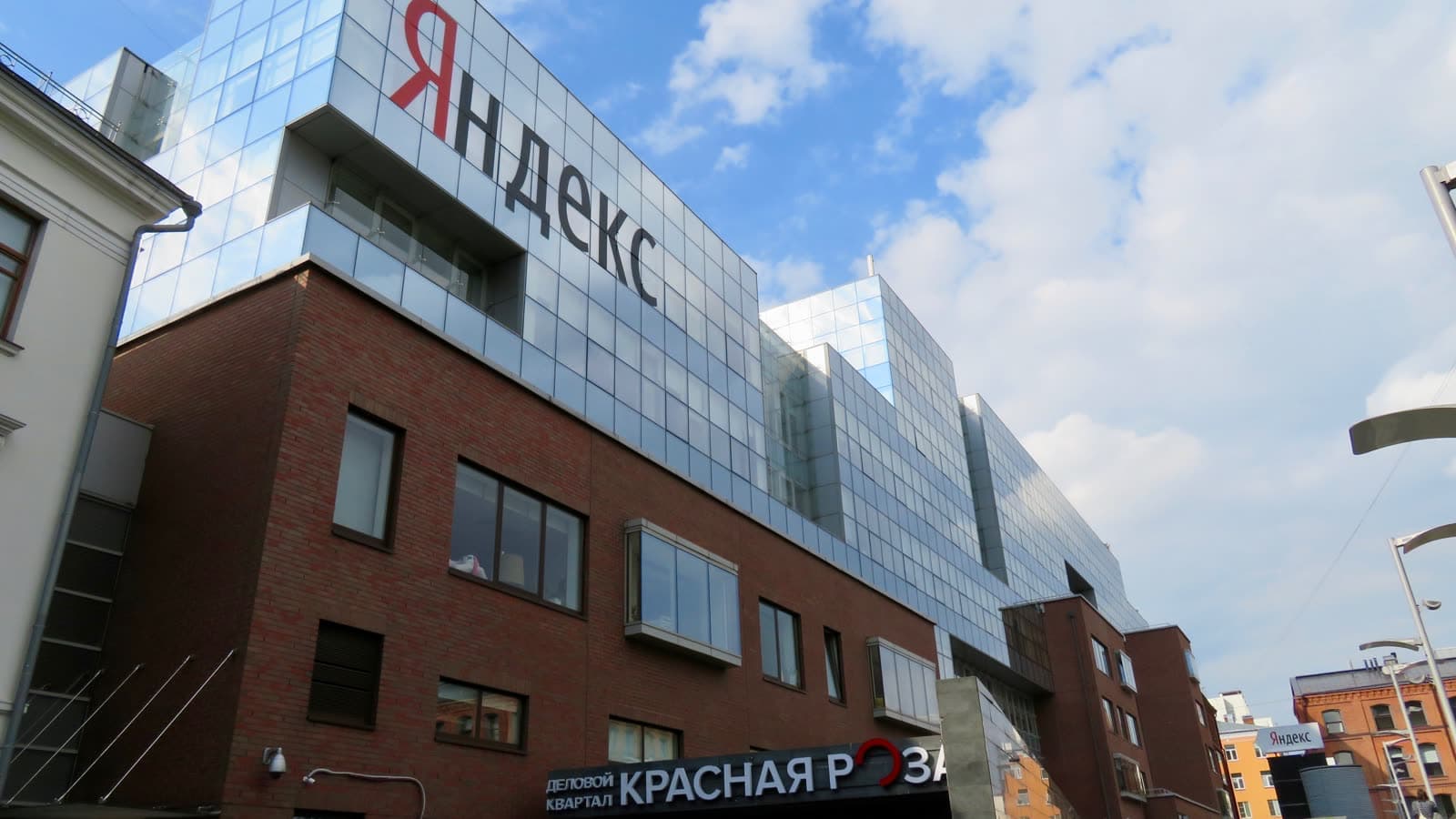
Feature image: Yandex's Moscow headquarters by WikiFido via Wikimedia Commons, CC BY-SA 4.0.
Tags
Frequently asked questions
- What happened to Yandex's data centres in October 2026?
- Ukrainian drones struck a Yandex data centre at Sasovo in Russia's Ryazan region overnight into October 8, 2026, causing a fire, and hit a second facility in the Kaluga region the following night. Yandex said the Sasovo site stopped operating entirely and that several modules at Kaluga were completely disabled.
- Why do the Yandex strikes matter for AI?
- The Sasovo site houses supercomputers used to train YandexGPT, Russia's most prominent generative AI model, according to press reports. Training clusters are slower and more expensive to rebuild than ordinary servers, so damage there affects model development rather than only everyday services.
- Did Ukraine claim responsibility for the Yandex strikes?
- No. Ukraine has not formally claimed the attacks. President Volodymyr Zelensky said in his October 8 evening address that Ukraine had responded to Russian strikes on Ukrainian data centres, but he did not confirm the Yandex sites were the target.
- Which services were affected by the strikes?
- After the first strike, users reported problems with Yandex services and with other sites and apps, including the classifieds site Avito, the streaming service Ivi, the mobile operator Megafon, Russian Railways and the bank T-Bank, according to Meduza.

TPW Editorial
Editorial Team
TechPastWeek's editorial team reports and edits every story we publish. We research each piece against primary and credible secondary sources, and a human editor reviews and signs off before it goes live.