SK Hyper Puts the First 5 Gigawatts of Its AI Buildout at $350 Billion
SK Hyper is in talks with big tech and investors to fund a 15-gigawatt AI data centre plan in South Korea, starting with 5 gigawatts at about $350 billion.

On this page
Key takeaways
- SK Hyper, the AI data centre subsidiary of SK Telecom, is in talks with big tech companies and financial investors to fund a 15-gigawatt buildout in South Korea by 2035.
- Chief executive Chung Suk-keun told Bloomberg TV on 23 October 2026 that the first 5 gigawatts would require about $350 billion (463 trillion won), including servers and other equipment.
- SK Hyper aims to secure its first outside investment by the end of 2026 or early 2027 and to share the project cost with data centre customers and outside investors.
- Korea's data centre market is about 1 gigawatt, according to Chung, so the first phase is roughly five times the size of the domestic market.
- SK Telecom plans to invest up to 750 billion won (about $567 million) in SK Hyper through 2030; SK Hyper was established in July 2026.
SK Hyper, the AI data centre subsidiary of SK Telecom, is in talks with big tech companies and financial investors to fund a 15-gigawatt buildout in South Korea by 2035. The first 5 gigawatts alone would require about $350 billion (463 trillion won), including servers and other equipment, chief executive Chung Suk-keun told Bloomberg TV on 23 October 2026, Bloomberg reported.
Related reading: SK and AWS Push Their Ulsan AI Data Center Toward 900 Megawatts · Anthropic Leases a 2.16-Gigawatt Campus in Queensland, Its First Australian Data Centre.
The figure is an estimate for one phase of the project. It is not a signed contract, a market valuation or a budget the company has committed to spend. No investor has been named, no term sheet has surfaced, and SK Hyper, founded in July 2026, has not said how much of the total it expects to carry on its own balance sheet.
The money is meant to arrive in stages. SK Telecom plans to invest up to 750 billion won, about $567 million, in SK Hyper through 2030, the Business Times reported. That is a small fraction of the $350 billion first phase, so the rest has to come from outside investors and customers.
Korea's data centre market is about 1 gigawatt today, according to Chung, Seoul Economic Daily reported. The first phase is roughly five times that size, so SK Hyper needs demand from outside Korea, including Japan and Taiwan. It is discussing AI inference hubs in Korea with hyperscalers, wants to attract training infrastructure as well, and is exploring packaged offers of compute and models for governments in Asia and the Middle East.
Ulsan anchors a plan that spans three regions
The company has named its first sites. The build starts in Yeongnam, with a 900-megawatt project in Ulsan alongside a previously announced 100-megawatt facility for Amazon Web Services. It wants a cluster of more than 2 gigawatts there. Gigawatt-scale facilities in the Chungcheong and southwestern regions would follow, and SK Hyper is talking to the government about additional sites, MoneyToday reported.
Phased operations begin in 2029 and build to the initial 5 gigawatts. The 15-gigawatt target for 2035 is explicitly contingent on global customer demand, and the company says it will adjust the pace. That leaves six years between the start of operations and the 2035 target to add the remaining 10 gigawatts, a schedule that depends on customers committing before construction starts.
Ulsan carries the early weight. A 900-megawatt campus is large enough to anchor the first phase, and the AWS project in the same city gives SK Hyper a hyperscaler next door. SK Hyper has not named a tenant for the new capacity, and nothing disclosed so far ties the 100-megawatt AWS facility to the 900-megawatt build.
The regional spread adds its own risk. Sites in Yeongnam, Chungcheong and the southwest each need permits, a grid connection and construction crews, and the company has not said how it will run three building programmes at once. SK Hyper's talks with the government about more sites suggest it expects political support to continue. They do not show that the power is available.
The first outside investor matters more than the headline
Chung's funding timetable is tight. SK Hyper aims to secure its first outside investment by the end of 2026 or early 2027, then raise more over the following three to four years. It plans to share the total project cost with data centre customers and outside investors instead of carrying it alone.
Customer money is supposed to cover part of the build. If customers pay for capacity in advance or take a stake in the buildings, SK Hyper turns a speculative build into something closer to build-to-suit, with revenue visible before completion. If they do not, the company carries construction risk on a first phase priced in the hundreds of billions, while investors are questioning the returns on AI infrastructure.
Outside money has to arrive before construction peaks, whether through project debt, infrastructure funds or customer prepayments. SK Hyper has confirmed only that it is talking to investors.
What the $350 billion covers
The figure is SK Hyper's estimate for the first 5 gigawatts, including servers and other equipment. It is not the cost of the full 15-gigawatt plan, and the company has not published a cost for the remaining 10 gigawatts. It is also not a contract value: no customer has signed for the capacity and no investor has agreed to fund it.
Chung also said SK Hyper could begin generating revenue as early as 2027, two years before the first data centres are due to be completed. He did not say what would produce it. Revenue that early would have to come from something other than finished data centre space, and the company has not described the mechanism or attached a number to the target.
Cost per token is the new scoreboard
Chung's argument about competition is the part of the interview that outlasts the funding news.
“Until last year, the key competitive edge was who had secured the most graphics processing units. Now what matters is who can generate tokens at the lowest cost and achieve the highest efficiency.” — Chung Suk-keun, chief executive of SK Hyper, to Bloomberg TV, 23 October 2026
If that is right, nameplate capacity stops being the measure. A 5-gigawatt campus that runs at low utilisation produces expensive tokens, and so does one that pays too much for power or cooling. The shift puts weight on the parts of the business that do not appear in a gigawatt headline: how full the racks are, what the electricity costs, and how quickly the equipment is depreciated. SK Hyper has published none of those figures.
The metric has a definition problem as well. Cost per token depends on the model being served, the hardware generation and the batch size, so two operators can quote very different numbers and both be right. Chung's claim is a direction, not a benchmark, until the company says how it measures the figure.
Chung makes a related argument about sovereignty. Countries and companies, he says, want infrastructure they control at home instead of relying on foreign models. That is a demand case, and it is also a product decision. SK Hyper is exploring packaged offers that combine compute with models for governments in Asia and the Middle East, which would make it a seller of an AI stack as well as floor space.
Selling that stack to a government is a different business from leasing capacity to a hyperscaler. Procurement is slower, data-residency terms are negotiated case by case, and the buyer usually wants a say in which models run on the hardware. SK Hyper has not named a government customer, a model partner or the terms it would offer.
The bubble question sits underneath
The announcement landed in a market that has grown nervous about AI infrastructure. Investors have been asking whether spending on future AI services will justify the trillions going into data centres, the Business Times reported. A $350 billion estimate for 5 gigawatts in a country with a 1-gigawatt market is the kind of number that invites the question.
Chung's answer is procedural. He says SK Hyper will confirm demand with big tech companies and hyperscalers before investing and adjust its plans if demand does not appear. The approach is reasonable, and it has not been tested yet.
His read on the capital markets was more direct. “There is a lot of uncertainty in the capital markets, but AI model developers and service providers can feel customer demand rising sharply,” he said, according to Bloomberg. The demand he cites is a feeling reported by developers and providers, not a signed order book.
Data centres take years to build, and long-lead equipment has to be ordered before the first customer signs. A company that waits for confirmed demand will be slower than one that commits early; a company that commits early carries the risk investors are worried about. SK Hyper is trying to do both, and the first outside investor is where the two meet.
What the numbers do not settle
Several parts of the proposal remain open. The talks are talks: no investor, price or term sheet has been disclosed. The $350 billion is an estimate including equipment, not a contract value. Korea's 1-gigawatt market size is Chung's own figure, not an independent estimate, and the 2027 revenue target is an ambition without a number. The 15-gigawatt goal depends on demand the company has not yet booked.
SK Hyper is easy to confuse with the rest of SK Group. It is a subsidiary of SK Telecom, separate from SK Hynix, the group's memory chip maker, and from SK Telecom's network business. Its exposure is to building and filling large facilities: construction cost, power contracts, utilisation and the pace of AI demand. They are not the memory cycle.
None of this means the project is in trouble. SK Hyper is raising capital, not retrenching, and a 15-gigawatt plan announced in phases is a statement of ambition, not a commitment to spend $350 billion on a fixed schedule.
What to watch
The next signal is the first outside investor. A named backer and a disclosed amount before the end of 2026 would show that the funding plan is moving on schedule. A slip into 2027 would not kill the project, but it would push the rest of the timetable.
The second is the tenant list. SK Hyper's case rests on hyperscalers bringing inference hubs to Korea and on demand from Japan and Taiwan. An anchor customer for the 900-megawatt Ulsan project would answer more than any capacity figure.
The third is whether the money appears in SK Telecom's accounts. A 2027 revenue line, even a small one, would give the timeline a factual anchor and show what the early business actually is. Without it, the plan remains a set of estimates stacked on a 2029 completion date.
The fourth is cost. SK Hyper has not published a price for the 15-gigawatt target, and the first phase is already the largest number the company has put on any part of the plan. What it says about the remaining 10 gigawatts, and when, will show whether 2035 is a build schedule or a direction of travel.
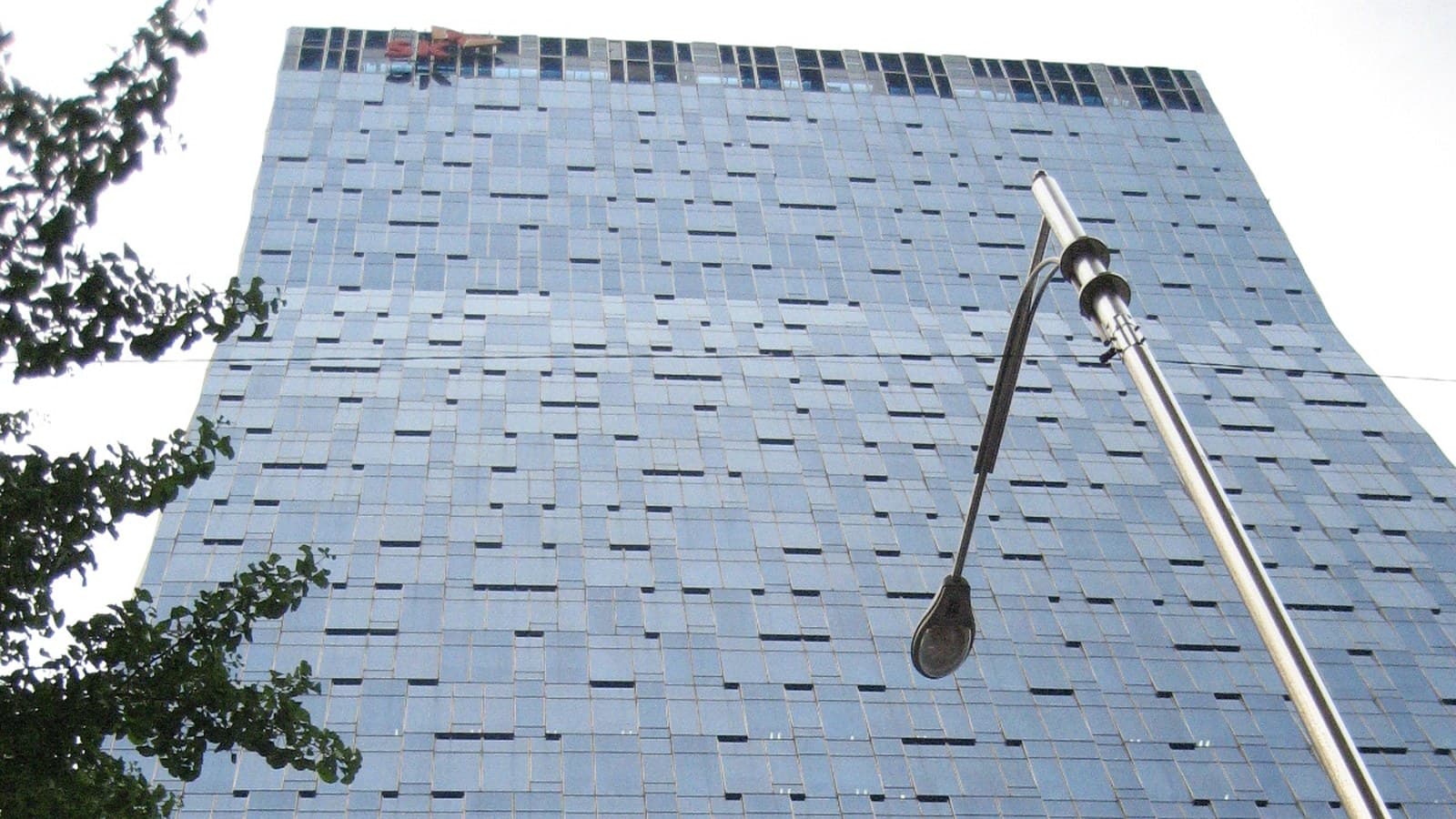
Cover image: the SK Telecom head office in Seoul, photographed by Wikimedia user 星組背番号10, via Wikimedia Commons, CC BY-SA 3.0. The building is SK Telecom's headquarters, not an SK Hyper data centre.
Tags
Frequently asked questions
- How much would SK Hyper's AI data centres cost?
- SK Hyper estimates that the first 5 gigawatts of its planned 15-gigawatt buildout would require about $350 billion (463 trillion won), including servers and other equipment. That is an estimate for one phase, not a signed contract, and the company has not published a cost for the remaining 10 gigawatts.
- Who is paying for the SK Hyper data centres?
- SK Hyper plans to share the cost with data centre customers and outside investors, and aims to secure its first outside investment by the end of 2026 or early 2027. Parent company SK Telecom plans to invest up to 750 billion won (about $567 million) through 2030.
- Where will SK Hyper build its data centres?
- The plan names a 900-megawatt project in Ulsan, alongside a previously announced 100-megawatt facility for Amazon Web Services, a cluster of more than 2 gigawatts in the Yeongnam region, and gigawatt-scale facilities in the Chungcheong and southwestern regions. SK Hyper is also discussing additional sites with the government.
- When will the SK Hyper data centres open?
- Phased operations are due to begin in 2029 and build to the initial 5 gigawatts. SK Hyper says it could generate revenue as early as 2027, and that expansion to 15 gigawatts by 2035 depends on global customer demand.

TPW Editorial
Editorial Team
TechPastWeek's editorial team reports and edits every story we publish. We research each piece against primary and credible secondary sources, and a human editor reviews and signs off before it goes live.