Bell and Saskatchewan Sign MOU to Quadruple AI Data Centre to 1.2 Gigawatts
Bell Canada and Saskatchewan signed an MOU to grow the Bell AI Fabric site near Regina into a 1.2-gigawatt hub with more than $50 billion in planned investment.

On this page
It began in March as a 300-megawatt data centre on the prairie outside Regina. On September 14, Bell Canada and the Government of Saskatchewan said it could become the anchor of a 1.2-gigawatt AI campus, carrying a headline capital figure of more than $50 billion.
Related reading: SK Hyper Puts the First 5 Gigawatts of Its AI Buildout at $350 Billion · Anthropic Leases a 2.16-Gigawatt Campus in Queensland, Its First Australian Data Centre.
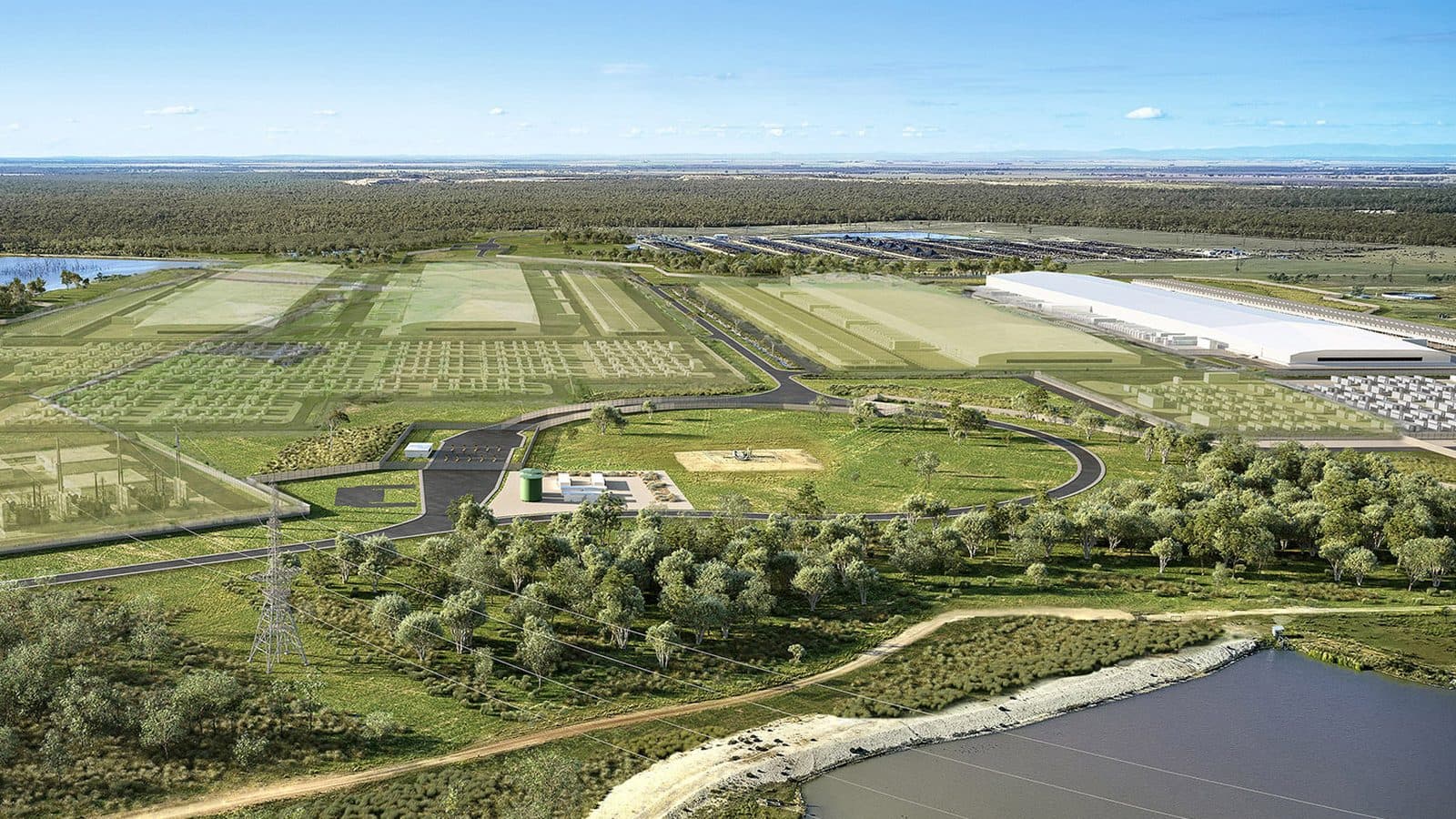
At the Canada Investment Summit in Toronto, Prime Minister Mark Carney, Saskatchewan Premier Scott Moe and Bell chief executive Mirko Bibic announced a non-binding memorandum of understanding to expand the Bell AI Fabric development in the Rural Municipality of Sherwood, just south of the provincial capital. Under the plan, Bell would keep the original 300 megawatts the site draws from the provincial grid and add as much as 900 megawatts of new capacity in phases, power the company intends to supply itself under Saskatchewan's "Bring Your Own Power" principle.
Bell said total capital investment across the full buildout, including data centre buildings, tenant computing hardware and related power generation, could exceed $50 billion. The federal government pegged it at "up to $52.5 billion," and Crown Investments Corporation Minister Jeremy Harrison called it a "$52-billion expansion." All three describe it as the largest capital investment in Saskatchewan's history, while the province's own release went further and called it the single largest private-sector capital investment in Canadian history.
What is actually being built
The project sits on top of a 300-megawatt facility Bell announced in March 2026, a build the company priced at about $1.7 billion in incremental capital, with roughly $1.3 billion to be spent this year. Construction began in Saskatchewan's 2026 building season, and the first capacity is expected online in 2027.
The two anchor tenants are American AI companies. Cerebras is expected to supply wafer-scale inference and training hardware, and CoreWeave will provide compute hosted on Nvidia GPUs, according to Bell's March backgrounder. Bell says a significant portion of the capacity is reserved for Canadian sovereign workloads, meaning data that stays under Canadian chain-of-custody requirements.
For BCE, the build is part of a deliberate pivot. The company has been investing in Bell AI Fabric as a higher-growth business while its traditional telecom earnings slow and it works down $37.5 billion in long-term debt, a figure The Globe and Mail cited alongside the expansion. Bell has said the March project alone should help lift AI-powered solutions revenue toward about $2 billion by 2028, up from an earlier $1.5 billion target. The Saskatchewan announcement is the largest single piece of that strategy so far.
The expansion announced this week would add three more facilities of roughly the same size as the first, The Globe and Mail reported. Bell has treated the $1.7 billion figure as a benchmark for each one, which suggests the company's own share of the build could reach roughly $5 billion. The rest of the $50 billion headline comes from tenant chips and the power plants, not from Bell's balance sheet.
The power question
The single most contested number is how much electricity this consumes. Saskatchewan's total available generation capacity is about 6.1 gigawatts, according to SaskPower's latest annual report, so a 1.2-gigawatt campus would be roughly one fifth of the province's entire grid.
Only the first 300 megawatts come from that grid, through a dedicated industrial feed. The additional 900 megawatts would be generated off-grid by natural gas plants developed for the project, an arrangement that follows the "Bring Your Own Power" rule in Saskatchewan's Data Centre Framework, released in August. The province says the framework is meant to stop new data centres from straining the grid and pushing costs onto households.
Bell says the facilities will use closed-loop cooling that draws no municipal water, and that the site is far from residential areas. A provincial backgrounder on the expansion states that Saskatchewan families and businesses will not pay for the additional power.
The shift to self-supplied gas generation matters for emissions. Saskatchewan's grid is already fossil-heavy: natural gas supplied about 41 percent of its electricity and coal another 21 percent as of mid-2025, according to SaskPower figures cited by The Globe and Mail, with hydro, wind and solar making up most of the rest. The extra 900 megawatts would not improve that mix, because it runs on natural gas built specifically for the site rather than on the grid's existing supply.
The federal context
The Bell-Saskatchewan deal lands inside a larger federal push. Ottawa says it is exploring opportunities that could support up to six gigawatts of new data-centre capacity and more than $100 billion in potential investment across Canada, guided by its Responsible Data Centre Development Principles, which include a commitment that projects do not shift electricity costs onto Canadians.
The jobs number, read carefully
The two governments and the company have each described the employment impact slightly differently.
Bell's release says the full buildout could support 800 to 1,200 construction, engineering and technical jobs, up to 600 permanent operations and management roles, and as many as 3,000 additional offsite and community jobs "based on precedents in other markets." The federal release compresses that into "4,500 high-quality jobs." The province's version lists up to 500 permanent jobs tied to data centre operations and power generation, about 3,000 roles in security, logistics and maintenance, and roughly 100 management positions at a new Bell AI Fabric headquarters in the Regina area.
The discrepancies are framing rather than contradiction. The 4,500 figure counts peak construction and indirect roles that are spread across several years and depend on the build proceeding phase by phase. The permanent, on-site count is closer to 500 or 600. It is also worth separating jobs that Bell creates from jobs its tenants create; the compute hardware is funded and owned by Cerebras and CoreWeave, not Bell.
By creating a path to 1.2 GW of AI capacity in Saskatchewan, Bell AI Fabric will give governments, businesses, researchers and innovators the secure, sovereign foundation they need to deploy AI at scale and compete globally.
Sovereignty and the fine print
The political selling point is data sovereignty. Moe said the project "will also strengthen Canadian data sovereignty by keeping Canadian data here at home, stored by a Canadian company and protected under Canadian rules." Carney framed it as a choice between sending data abroad and building capacity "right here, on Canadian ground, with Canadian power, and Canadian law."
The fine print complicates that story. The MOU is non-binding, and Bell itself says development will proceed in phases "as customer commitments are secured and subject to commercial agreements, permits, approvals, and any relevant environmental assessments." The two anchor tenants are US companies subject to the US CLOUD Act, which can compel American firms to hand over data regardless of where it is stored. A policy analysis in Policy Options argued in April that Saskatchewan disclosed no binding term requiring Cerebras and CoreWeave to stay, no minimum share of capacity reserved for Canadian users, and no performance guarantees. Bell counters that a meaningful slice of compute is reserved for sovereign workloads.
The pushback
The expansion drew immediate criticism from Saskatchewan's opposition New Democrats. Technology and AI critic Brittney Senger said the deal arrived with "absolutely zero public consultation" and listed unanswered questions about where the power will come from, the environmental and water impacts, who gets the jobs and what taxpayers will bear, SaskToday reported.
Those questions have a paper trail. In its September rate decision, the Saskatchewan Rate Review Panel said SaskPower's improved 2026-27 forecast rests partly on anticipated electricity sales from the Bell project, and warned that if the timing or revenue slips, the final 2027 rate increase could land 1.5 to 2.5 percentage points higher than proposed, WestCentralOnline reported. The panel also recommended that AI data-centre customers bear the full costs and risks of serving them. SaskPower has been advancing a roughly $2.6 billion coal life-extension program while seeking rate increases of nearly four percent in both 2026 and 2027, according to the utility's filings and analysis in Policy Options.
Not all of the local response is negative. Bell has an agreement with the George Gordon First Nation covering Indigenous procurement, workforce development and waste-heat reuse, and partnerships with Saskatchewan Polytechnic and the University of Regina. The province approved the expansion under the Data Centre Framework it released in August. The original 300-megawatt project predates that framework and was not subject to it, because it draws power from the grid rather than supplying its own. Roughly 30 other data-centre proposals are now queued for review under the new rules.
That tension, between industrial ambition and existing ratepayers, is not unique to Saskatchewan. Alberta has pushed bring-your-own-generation rules, British Columbia is rationing access through a capped process, Ontario is moving toward a separate rate class for large loads, and Hydro-Québec has proposed a dedicated data-centre tariff.
What to watch
The MOU changes the ceiling of the project, not its certainty. The next real tests are customer commitments beyond the first 300 megawatts, environmental assessments and permits, and whether Bell signs enough tenants to justify building natural gas generation at that scale.
Three things will show whether the $50 billion is more than a projection. Watch whether BCE's direct spending rises materially above the roughly $5 billion implied by its own per-facility benchmark, whether the province publishes the industrial power rate Bell will pay, and whether the United States-based tenants extend commitments long enough to keep the capacity full. Bell's own framing is that the build is phased and customer-led, which is a useful hedge against exactly the risk its critics describe.
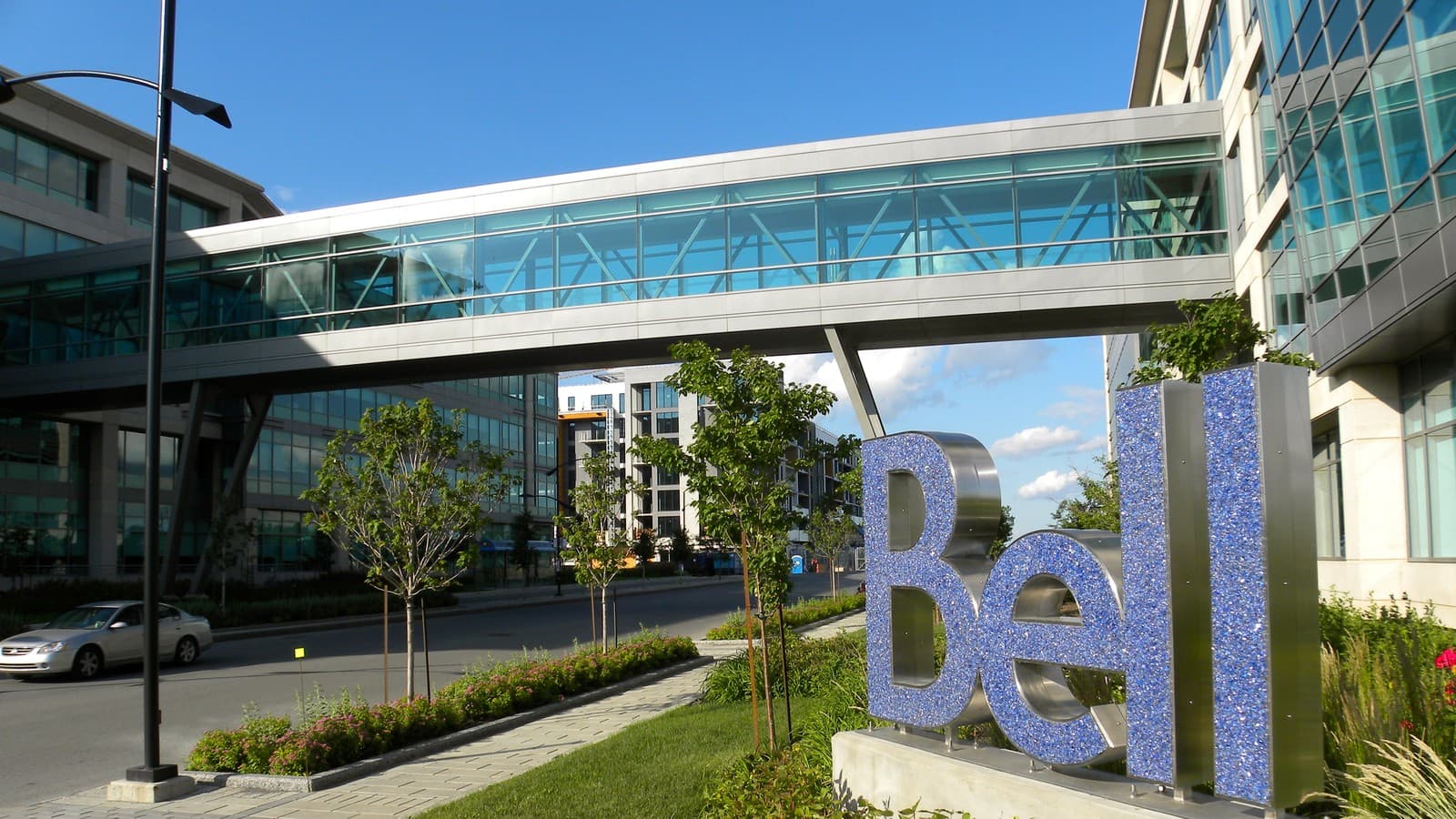
Cover photo: the Bell Canada campus on Montreal's Nuns' Island, photographed by JasonParis and licensed under CC BY 2.0 via Wikimedia Commons.
Tags

TPW Editorial
Editorial Team
TechPastWeek's editorial team reports and edits every story we publish. We research each piece against primary and credible secondary sources, and a human editor reviews and signs off before it goes live.