SK and AWS Push Their Ulsan AI Data Center Toward 900 Megawatts
SK Group's chairman says the Ulsan AI data center it is building with AWS is nearing 900 megawatts, far above the 103-megawatt site it first announced.

On this page
The AI data center that SK Telecom is building with Amazon Web Services in Ulsan, South Korea, is now planned at close to 900 megawatts, SK Group Chairman Chey Tae-won said, a scale far beyond the 103-megawatt facility the two companies announced a little over a year ago. Chey disclosed the figure at the 2026 Ulsan Forum, telling reporters that talks with global technology companies had moved unusually fast and that a formal announcement could follow soon.
Related reading: SK Hyper Puts the First 5 Gigawatts of Its AI Buildout at $350 Billion · Oracle Sends Force Majeure Notice on $18 Billion New Mexico Stargate Campus.
"Ulsan has almost come all the way to 900 megawatts," Chey said, according to the Korea Times. "I think we will be able to announce it soon."
The revision matters because of what it implies about the economics of AI infrastructure. A 900-megawatt campus is roughly the size of a large gas plant's output and, if it were built at once, would sit among the biggest single data-center projects in Asia. It also shows how quickly the ceiling on a project can move: the Ulsan site was sized at 103 megawatts with 60,000 GPUs when the partnership was announced in June 2025, and it has been revised upward at least twice since.
A plan that keeps growing
SK Group and AWS signed their partnership in June 2025 and broke ground that August on a former SK Chemicals site in Ulsan's Mipo National Industrial Complex. The original design called for 60,000 GPUs and 103 megawatts of capacity, delivered in phases: an initial 40 megawatts targeted for November 2027 and full capacity by February 2029. The companies said operations would begin by the end of 2027, and SK put the investment at about 7 trillion won, or roughly $5.2 billion.
By July 2026, SK Telecom had told investors it intended to expand the Ulsan site itself to 1 gigawatt, and to build more than 2 gigawatts of capacity across the wider Gyeongsang region that includes Busan, Ulsan and Daegu. Chey's figure of nearly 900 megawatts sits between the original design and that 1-gigawatt target, suggesting the company is preparing to commit to a far larger build than the one it described at the signing ceremony.
The project is being developed under a national framework that accelerates permits. South Korea designated the Ulsan cluster as national infrastructure under its Act on Promotion of Data Centers for Vitalization of the Digital Economy, which lets it move through approvals faster than an ordinary industrial facility. That matters for a project whose main constraint is not land or chips but electricity and cooling.
Where the power comes from
The Mipo site was chosen with power in mind. It sits next to SK Gas's Ulsan liquefied natural gas combined-cycle plant, a 1,122-megawatt facility capable of supplying the round-the-clock electricity that AI training and inference demand. The data center is also designed to reuse LNG cold energy for cooling, alongside a hybrid cooling system built for racks running between 20 and 40 kilowatts each.
That combination addresses two of the hardest problems in hyperscale construction. AI racks draw far more power per square meter than traditional enterprise servers, and the resulting heat is difficult to remove with air alone. By co-locating with a gas plant and tapping its cold-energy stream, SK can add capacity without waiting for new transmission lines or building the kind of on-site cooling plant that has slowed projects elsewhere.
The land itself was modest: SK Telecom and SK Broadband bought roughly 36,000 square meters from SK Chemicals for 28.3 billion won, about $20.8 million, the sort of price that reflects Ulsan's industrial zoning rather than the premiums paid for data-center sites near major population centers.
A national build-out, not one campus
Ulsan is the first piece of a much larger plan. SK Telecom has said it wants to bring 5 gigawatts of AI data-center capacity online in South Korea in phases beginning in 2029 and to reach 15 gigawatts by 2035. The roadmap calls for 1 gigawatt at Ulsan over the longer term, more than 2 gigawatts across the Gyeongsang region, and a further gigawatt in the southwestern Jeolla region.
To hold those assets, SK Telecom restructured its AI infrastructure business in August 2026, spinning off SK Broadband's data-center division into a new company called SK Horizon. SK Horizon took over 318 megawatts of existing capacity across eight sites, plus the Ulsan project and a facility in Guro. Global investment firm KKR and the IMM Investment-Stonebridge consortium agreed to a combined 3.08 trillion won, about $2.2 billion, of equity in the business. KKR will hold 29 percent and the IMM consortium 20 percent once the deal closes, while SK Telecom keeps 51 percent and management control.
The AWS side of the partnership is equally long-dated. The two companies described a 15-year agreement under which AWS would establish an AI zone in Ulsan and contribute part of the investment, reported at roughly $4 billion, on top of the cloud provider's broader pledge to spend about 7.85 trillion won in South Korea by 2027. AWS already operates a data-center region in Seoul and began building a second in Incheon in late 2023, so Ulsan extends an existing footprint rather than opening a new market.
SK is not building in a vacuum. Korea's government has made AI infrastructure a pillar of its industrial strategy, and SK Telecom has lined up partners well beyond Amazon. It has worked with Nvidia on AI data-center design and with a roster of group affiliates, including SK hynix on memory, SK Gas on power and SK Ecoplant on construction. Rival conglomerates and independent operators are pursuing their own campuses, which means the country's power grid, its supply of GPUs and its pool of data-center engineers will be shared across several large projects at once.
The scale is not unique to Korea either. Microsoft has said it plans to triple its data-center footprint to 38 gigawatts by 2032, and Google has committed to build in Finland and elsewhere. What sets the Ulsan plan apart is the degree to which it is framed as industrial policy as well as a commercial bet: a sovereign AI hub meant to keep computing capacity, and the supply chain around it, inside the country.
The return question
Chey used the same forum to raise a concern that has begun to shadow every announcement of this size. Building capacity is now easier than proving it will earn its cost back, and investors have started to ask how many of the announced gigawatts will actually be financed, powered and filled with paying customers.
"I am worried if we make huge investments, but there is not much return," Chey said, according to Construction Review. He has separately described sustainable business models as the AI industry's next challenge, arguing that growth depends on AI generating profits that can be reinvested.
That tension is visible in the numbers. A 900-megawatt campus can cost tens of billions of dollars once land, power, cooling, networking and GPUs are counted, and the depreciation clock starts long before customers sign. The largest buyers of AI capacity today are a handful of model developers and cloud providers whose own spending plans are being questioned by the same investors funding the build-out.
What to watch
The near-term signal is the formal announcement Chey teased. SK Telecom has not published a revised capacity figure, timeline or cost for the 900-megawatt plan, and the details will show whether the expansion is a committed build, a phased option or a target tied to future demand.
The second is power. Ulsan's advantage rests on a gas plant and cold-energy reuse, but a 900-megawatt load is also a large new source of emissions in a country that has committed to cutting them. How SK accounts for the electricity, and whether it adds renewables or storage to the mix, will shape how the project is received at home.
The third is whether Korea's pipeline is real. SK's 15-gigawatt goal is one of several national plans announced across Asia, Europe and the United States that together far exceed the near-term demand anyone has credibly forecast. The gap between the announced total and what gets built will be the clearest measure of whether AI infrastructure is in a durable expansion or a bubble.
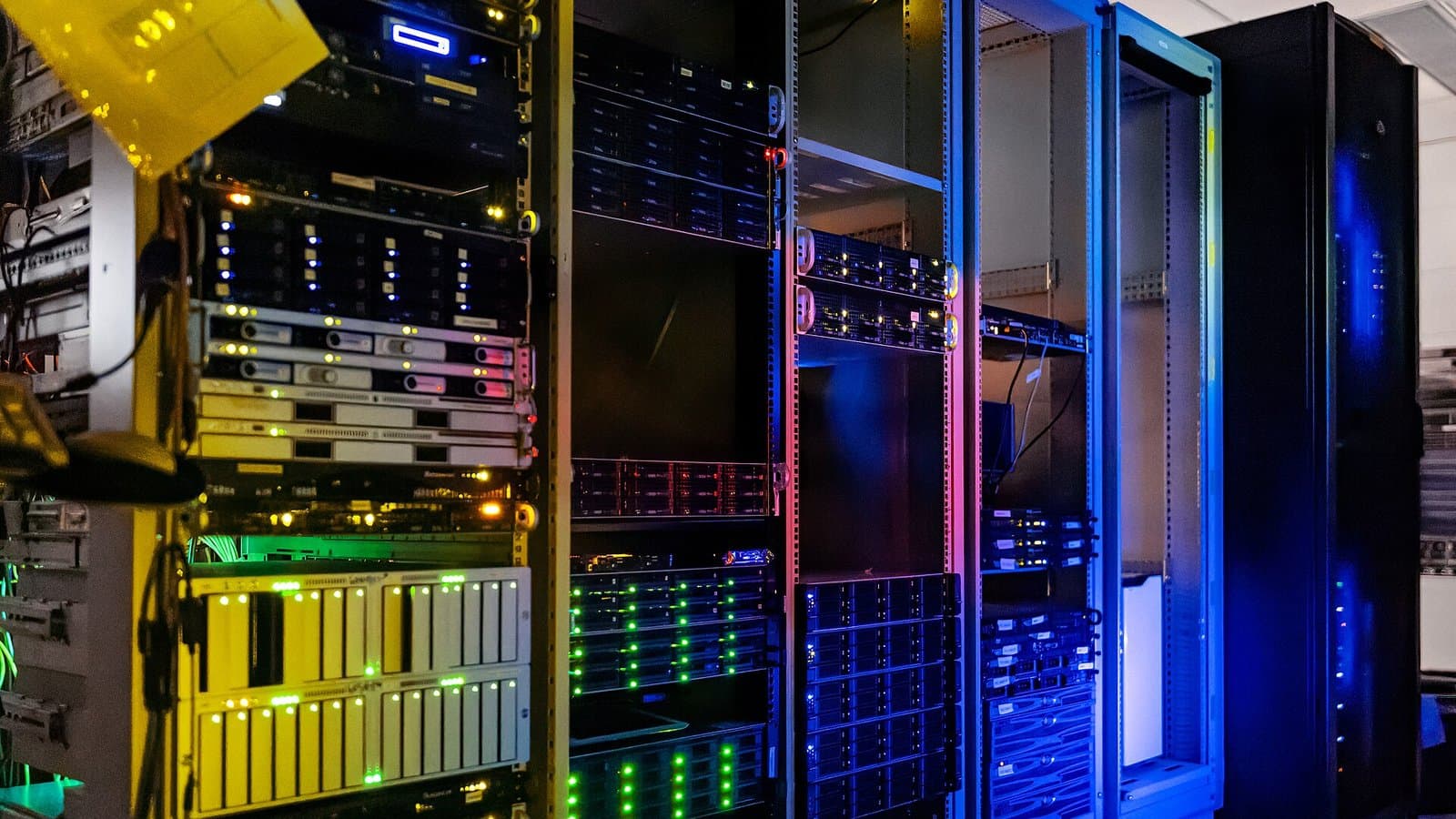
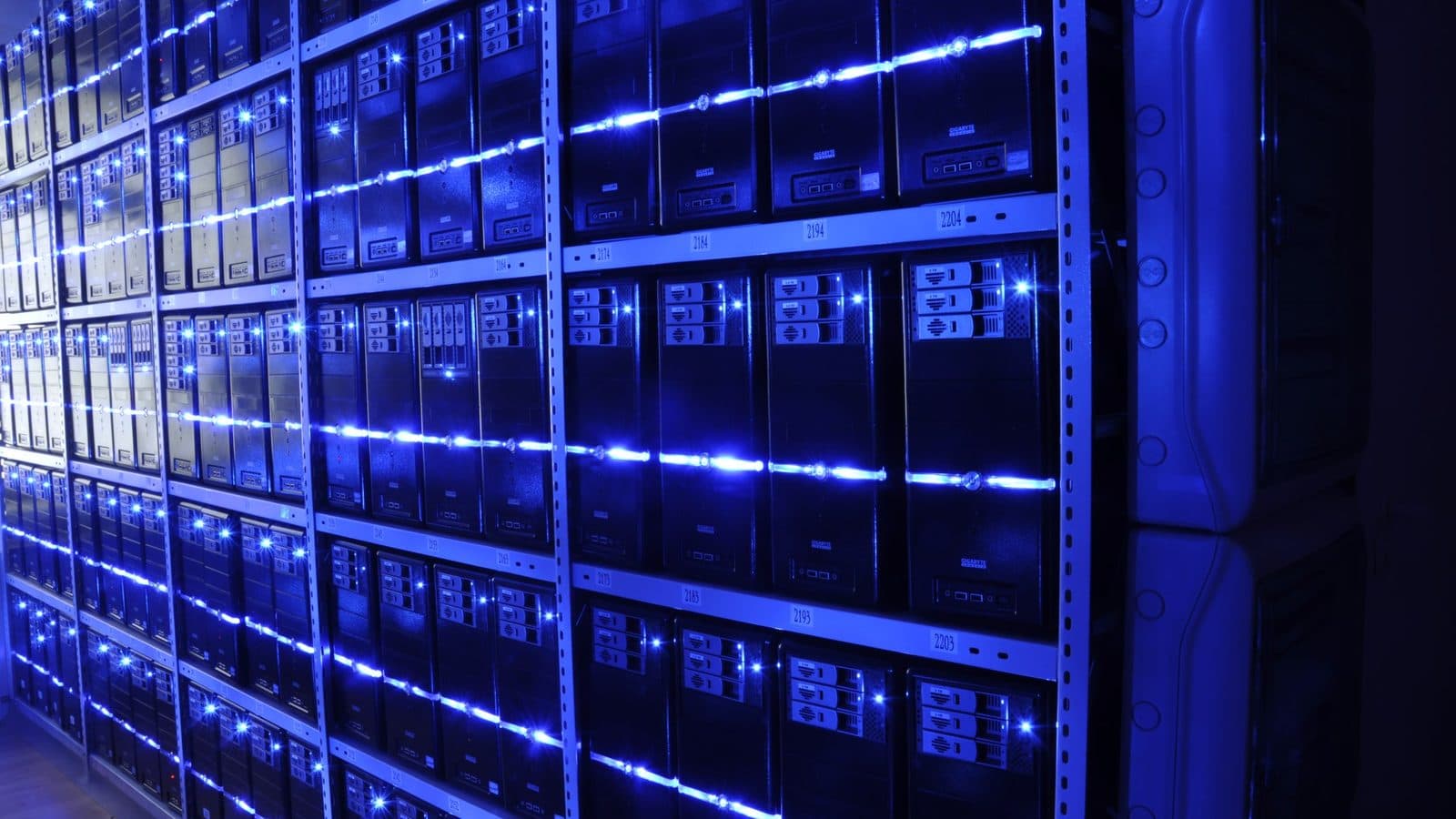
Cover image: server racks in a data center. Photo by BalticServers.com, via Wikimedia Commons, CC BY-SA 3.0. Ulsan's data center is being built in the Mipo National Industrial Complex; the photo illustrates the type of facility, not the Ulsan site itself.
Tags

TPW Editorial
Editorial Team
TechPastWeek's editorial team reports and edits every story we publish. We research each piece against primary and credible secondary sources, and a human editor reviews and signs off before it goes live.