China's 100,000-GPU Bet: JD Cloud and Moore Threads Build a Domestic AI Cluster
JD Cloud and Moore Threads will build a 100,000-GPU cluster on Chinese silicon, the first at that scale from a major domestic cloud. The catch is the software gap.

On this page
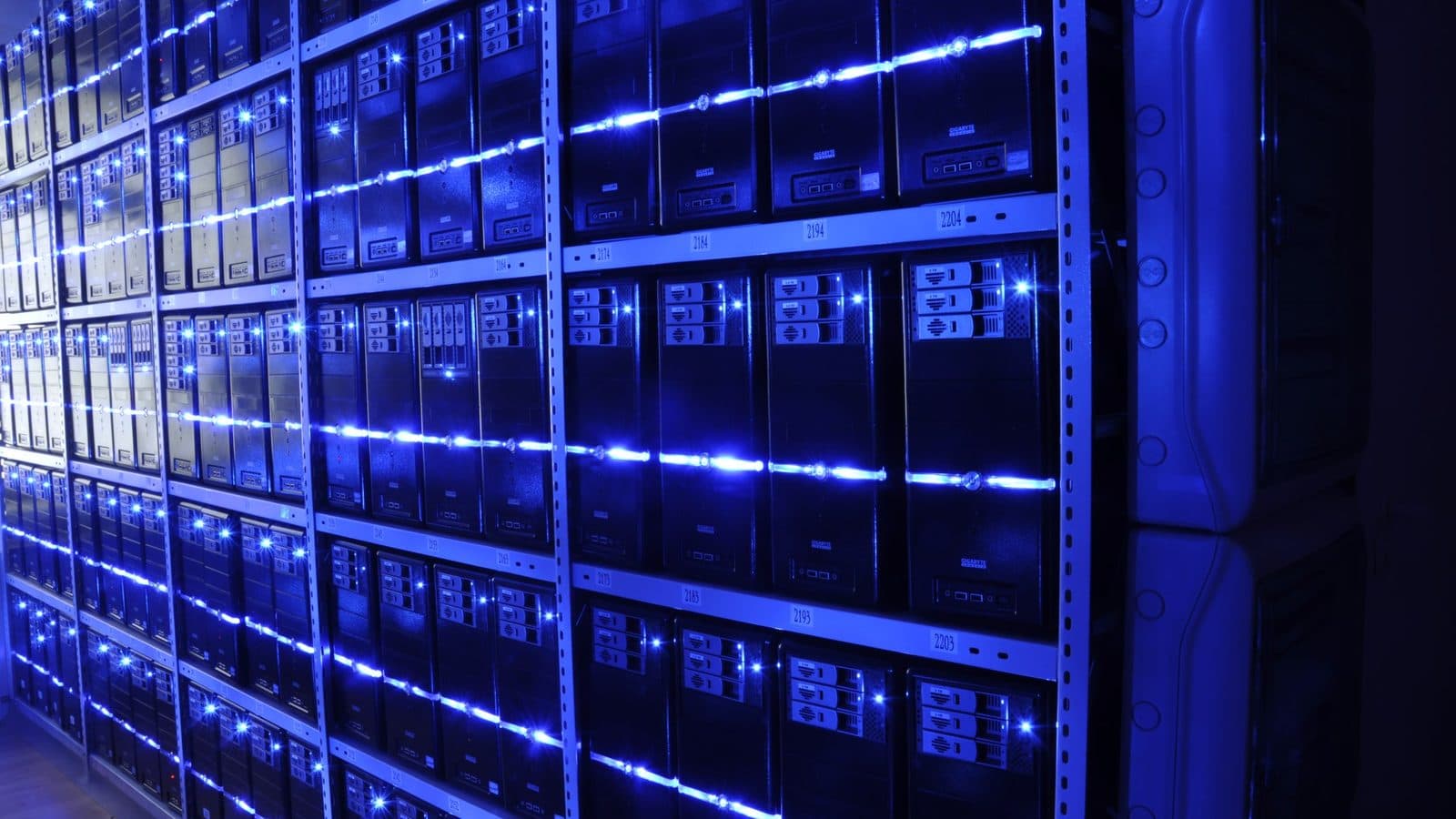
Chinese e-commerce and cloud giant JD has announced plans to build a 100,000-GPU intelligent computing cluster powered entirely by domestic silicon. The project, unveiled at JD's 2026 Global Technology Explorers Conference in Beijing on September 9, pairs JD Cloud with Moore Threads, one of China's most closely watched GPU designers.
Related reading: SK Hyper Puts the First 5 Gigawatts of Its AI Buildout at $350 Billion · Oracle Sends Force Majeure Notice on $18 Billion New Mexico Stargate Campus.
If it ships as described, it would be the first cluster of its kind hosted by a major Chinese AI cloud provider, a milestone in Beijing's long campaign to build an AI stack that does not depend on Nvidia.
What was announced
The headline numbers are simple, and the details are conspicuously thin:
- 100,000 GPUs, using Moore Threads' "full-function" accelerators.
- Workloads: large-scale model training, inference, and embodied intelligence (robotics), the three categories Chinese planners care about most.
- Operator: JD Cloud, with core data centers in Beijing, Guangzhou, Shanghai, and Suqian.
- Track record: the two companies previously partnered on a 10,000-GPU cluster, so this is a tenfold scale-up rather than a cold start.
What JD has not disclosed matters just as much: there is no completion date, no full-cluster benchmark, and no operating deployment. The announcement is a plan, not a running system.
The silicon underneath
Moore Threads' current flagship is the MTT S5000, built on the company's PH100 chip and the "PingHu" architecture. The company claims full-precision support spanning FP8 to FP64, the range that matters for both training and inference. Its older MTT S4000 and S3000 parts round out the lineup.
The vendor's roadmap, shown at its developer conference late last year, points to a next-generation "Huagang" architecture that it says lifts compute density by 50%, improves energy efficiency tenfold, and is explicitly designed to scale to clusters beyond 100,000 GPUs. That is the architecture JD's cluster would ultimately lean on.
Moore Threads is not a hobbyist project. Founded in 2020 by former Nvidia China executive James Zhang Jianzhong, it raised money from the likes of Sequoia China, GGV Capital, and (notably) ByteDance and Tencent, and listed on the Shanghai Stock Exchange in December 2025. It is also on the US Bureau of Industry and Security's Entity List, which restricts its access to advanced Western process technology.
Why this is happening now
The logic is straightforward: US export controls have made high-end Nvidia accelerators increasingly difficult to obtain in China, and Beijing has responded by trying to manufacture its own way out of the problem. Every major Chinese cloud is now under pressure to demonstrate a domestic path for AI compute.
The sovereignty argument
For Chinese planners, the point of a 100,000-GPU domestic cluster is not only performance. It is resilience. A supply chain that can be cut off is a supply chain that can be used as leverage. Domestic silicon, however imperfect, is the insurance policy.
The market data supports the ambition. Chinese analysts project the country's GPU market will exceed 1.3 trillion yuan by 2029, with China's share of the global GPU market climbing from roughly 15.6% in 2024 toward 37.8%. That is a lot of demand looking for a non-Nvidia supplier.
The gap nobody is hiding
Here is where the story gets more complicated, and more honest.
Moore Threads' software stack, MUSA, is the company's attempt to replicate what makes Nvidia genuinely dominant: CUDA. The company even ships a migration tool, MUSIFY, meant to help port CUDA code to its hardware. But partners interviewed by Chinese media were candid that domestic GPUs still trail global leaders by roughly one to two generations in both raw performance and ecosystem maturity.
The pattern echoes Huawei's telecom rise: Western markets may never buy Chinese AI accelerators, but domestic demand and emerging markets could give them enough scale to improve. Whether that is a five-year project or a fifteen-year one is the open question.
The three questions that decide this project:
  1. Can the hardware sustain 100k-GPU training without
     collapsing under interconnect and failure rates?
  2. Can MUSA make porting CUDA workloads cheap enough
     that Chinese developers stop treating it as a tax?
  3. Can the supply chain deliver at scale under sanctions?
The bigger picture
The announcement landed in the same week that Nvidia moved to buy Hugging Face for $12.9 billion and that Nvidia, Equinix, and Together AI expanded enterprise inference infrastructure in the West. The AI buildout is global, and it is bifurcating: one stack anchored in Nvidia and CUDA, and a parallel stack being assembled in China under duress.
JD's 100,000-GPU cluster is the clearest signal yet of where the second stack is heading. It is also a reminder that announcements of this kind are cheap, while shipping clusters at scale is brutally hard.
What to watch
Ignore the 100,000 number for now. Watch for the first independent benchmark on a completed domestic cluster, and watch MUSA's developer adoption. Silicon can be bought; ecosystems have to be earned.
Tags

TPW Editorial
Editorial Team
TechPastWeek's editorial team reports and edits every story we publish. We research each piece against primary and credible secondary sources, and a human editor reviews and signs off before it goes live.