Microsoft Bets on On-Device AI With a $2,599 Surface Laptop Ultra
Microsoft's first Windows event in two years put local AI at the centre, with a $2,599 Surface Laptop Ultra, new agent security tools, and a rebuilt Copilot.


On this page
Key takeaways
- Microsoft held its first major Windows and Surface event in more than two years on October 7, 2026, in San Francisco, with CEO Satya Nadella, Windows and Devices chief Pavan Davuluri and NVIDIA CEO Jensen Huang.
- The 15-inch Surface Laptop Ultra runs NVIDIA's RTX Spark superchip and opened for preorder on October 7 at $2,599, with a mini LED display up to 2,000 nits and about 2.5 times the thermal capacity of existing Surface notebooks.
- The Surface RTX Spark Dev Box, a desktop developer PC, starts at $5,999 and offers up to 128 GB of unified memory.
- Microsoft said its Execution Containers (MXC) reached general availability in Windows 11, giving AI agents an identity and permissions separate from the user's, and that OpenAI and Anthropic are building on the security tools.
- Microsoft framed the day as hybrid intelligence, running AI locally alongside the cloud, with Windows ML runtimes, llama.cpp support, DeepSeek V5 Flash runnable locally at about 60 GB, and an NVIDIA Nemotron model due October 15.
Microsoft held its first major Windows and Surface event in more than two years on October 7, 2026, in San Francisco, and used the stage to argue that the next phase of Windows runs AI on the device as much as in the cloud. CEO Satya Nadella, Windows and Devices chief Pavan Davuluri and NVIDIA CEO Jensen Huang led the presentation, with Huang joining a fireside chat. The hardware carried the headline: a 15-inch Surface Laptop Ultra powered by NVIDIA's RTX Spark superchip, which opened for preorder the same day at $2,599, and a desktop developer machine starting at $5,999. (Engadget, The Verge)
Related reading: Microsoft Borrows $25 Billion as the AI Buildout Moves Onto the Bond Market · Microsoft's Azure Grew 48% and Its 2027 Capex Bill Grew to $170 Billion.
Microsoft pitched the event as a platform moment, not a product refresh. Nadella compared it to the arrival of the Mosaic browser, the early web client that made the internet usable for a general audience. Whether that comparison holds or not, the framing says what Microsoft wants the release remembered for: a Windows built to host agents and local models, not another round of faster laptops.
The Surface Laptop Ultra and the RTX Spark bet
Microsoft's numbers for the Laptop Ultra are specific. The company says the machine has about 2.5 times the thermal capacity of existing Surface notebooks, keeps more than 99 percent of its power on battery, and weighs under 4.5 pounds. Its 15-inch mini LED display reaches up to 2,000 nits. A magnetic "Connect" charging adapter ships with it, though the machine still charges over USB-C. The Verge recorded the $2,599 starting price.
The desktop side is aimed at developers. The Surface RTX Spark Dev Box is a developer PC with preorders from $5,999 and up to 128 GB of unified memory, according to The Verge. Microsoft also showed a "DGX Station for Windows," a workstation-class machine that points at the same audience: people who want to run large models on hardware they own. The laptops and these systems are Arm-based Windows devices, which matters because that is the architecture NVIDIA's RTX Spark platform uses.
The pricing is the part to sit with. At $2,599 and $5,999, these are MacBook Pro-class machines, not mainstream PCs. Microsoft is not trying to put local AI in every home this year. It is building the top of the stack first and letting the rest follow.
Microsoft did not say how long the battery claim holds under sustained local inference, which is the workload these machines are built for. Thermal capacity and battery life under load are different numbers, and the event gave the first without the second.
What hybrid intelligence means in practice
The theme Microsoft gave the day was "hybrid intelligence": AI that runs locally on the device alongside cloud services, instead of only in a remote data centre. The company backed the phrase with a set of runtime and developer announcements. The Verge listed Windows ML runtimes across CPU, GPU and NPU; llama.cpp, the widely used local inference project, coming to Windows ML; GitHub's HydraFusion for local models; and DeepSeek V5 Flash runnable on-device with about 60 GB of memory.
There is a date attached to the model story as well. Microsoft said a new NVIDIA Nemotron model is due October 15, which gives the local-AI pitch something concrete to point at beyond the launch window.
The developer pieces matter most. Windows ML is Microsoft's runtime for running models across whatever silicon a Windows machine has, so an app can call a model without knowing whether it will execute on the CPU, the GPU or the neural engine. Adding llama.cpp, the project behind a large share of local model runners, gives that stack a tool many developers already use. HydraFusion from GitHub points at the same goal from the tooling side: making local models easier to serve and combine. None of it is new research. Microsoft is assembling a working local stack out of parts the open-source and hardware communities built, then shipping it as a Windows feature.
Announced is not the same as shipping
Much of the October 7, 2026 event was roadmap more than product. Preorders for the Surface Laptop Ultra and the RTX Spark Dev Box opened that day, but the local-model stack (Windows ML, llama.cpp support, HydraFusion), the Nemotron model and several Copilot features are announced or coming, not yet in users' hands. Treat availability per feature as a claim until Microsoft confirms it.
Local inference matters to Microsoft for two reasons. Running a model on the device avoids sending every query to a server, which lowers the per-query cost for the company and keeps the data on the machine. It also takes the network out of the loop, which is the difference between an assistant that answers in the moment and one that waits.
Agent security moves into Windows
The most consequential announcement for enterprises may not have been a device at all. Microsoft said its Execution Containers, or MXC, reached general availability in Windows 11. MXC gives AI agents an identity and permissions separate from the user's, so an agent can be granted a narrow set of rights instead of inheriting everything the person can do. Microsoft also pointed to Agent 365 for managing agents across an organization, and said OpenAI and Anthropic are building on these security tools. Developers can integrate agents with MXC now.
That is a direct answer to a problem that has grown with agent adoption. An agent acting on a user's behalf needs credentials to do useful work, and the same access makes it dangerous if it misbehaves. Separating the agent's identity from the user's is the mechanism Microsoft is offering to limit the blast radius. Whether it holds up in practice is open, and general availability is the point at which outsiders can start to test it.
Agent 365 sits one level up. Where MXC governs what an individual agent can touch on a machine, Agent 365 is the management layer for organizations that will run many agents and need to know what each one is doing. Microsoft has been building toward this since it started treating agents as a category of software with their own lifecycle. The October 7, 2026 event was the point at which the security model moved from concept to a shipping Windows component.
The partner list showed how far the bet extends. Perplexity showed its Portable Computer, Meta's Muse is coming to Windows natively with MXC integration, and a native Windows gateway is planned for OpenClaw, The Verge reported. Those are third parties choosing to build on Microsoft's agent plumbing, which is the signal Microsoft would want from the day.
"Windows has been with me for 34 years, looks like it's going to be with me for 34 more." — Jensen Huang, NVIDIA CEO, October 7, 2026
Copilot gets a second act
Microsoft's Copilot assistant was rebuilt as well. The new version adds Home and Code tabs, and Copilot can access local files, take actions on the machine and run local models. There is a Copilot Autopilot tab, a local sandbox, and a path for users to build Windows apps and widgets without programming, The Verge reported. Windows 11 taskbar search will offer thousands of quick actions starting this fall.
The direction is consistent with the rest of the day: push capability down to the device, and give the assistant actions to perform beyond answering questions. It is also the part of the announcement most exposed to Microsoft's track record, because Copilot features have been announced before and landed unevenly.
Local files and local actions are the bigger change. An assistant that can read the documents on a machine and act on them has more utility than one that only talks, and it also has more ways to go wrong. The local sandbox Microsoft described is the guardrail for that, and the no-code app building is the incentive to keep the assistant running. The thousands of quick actions coming to taskbar search extend the same idea to Windows itself.
Caveats
The strongest reason for caution is history. Microsoft's Copilot+ PC push, which promised on-device AI as a reason to buy new laptops, under-delivered before this event. The features arrived late or partial, and the hardware did not sell on the strength of them. That makes the real test of October 7, 2026 not the stage demos but whether agentic Windows lands with the developers and enterprises it is aimed at.
The pricing narrows the audience further. RTX Spark systems are premium machines at MacBook Pro-class prices. A $2,599 laptop and a $5,999 desktop are not mass-market products, and the local-AI story pays off only for people whose work justifies the hardware. For everyone else, the relevant question is what of this reaches ordinary Windows 11 machines, and when.
The architecture is the third caveat. These are Arm-based Windows devices, a category where app compatibility has improved but is not solved. A buyer who depends on a specific x86 tool will want to confirm it runs before ordering, and the local-model stack Microsoft described depends on developers shipping Arm builds for it.
What to watch
Three things will show where this goes. First, whether the local-model pieces arrive on the dates attached to them, including the NVIDIA Nemotron model due October 15, 2026. Second, whether MXC and Agent 365 get real enterprise deployments, since agent security is the claim with the most at stake and the least public evidence so far. Third, whether Copilot's local actions and no-code app building work as shown; those are the features ordinary users will test first.
The gaming aside is worth one line. Microsoft said Gears of War: E-Day runs alongside AI workloads on RTX Spark, and that Call of Duty is coming to RTX Spark systems this year, which puts a second, heavier workload on the same silicon the productivity pitch depends on.
The strategy is clear: build the premium hardware, put the agent and model plumbing underneath Windows, and see whether the developer and enterprise base follows. The under-delivered Copilot+ PC push is the reason to wait for shipping dates before judging the event.
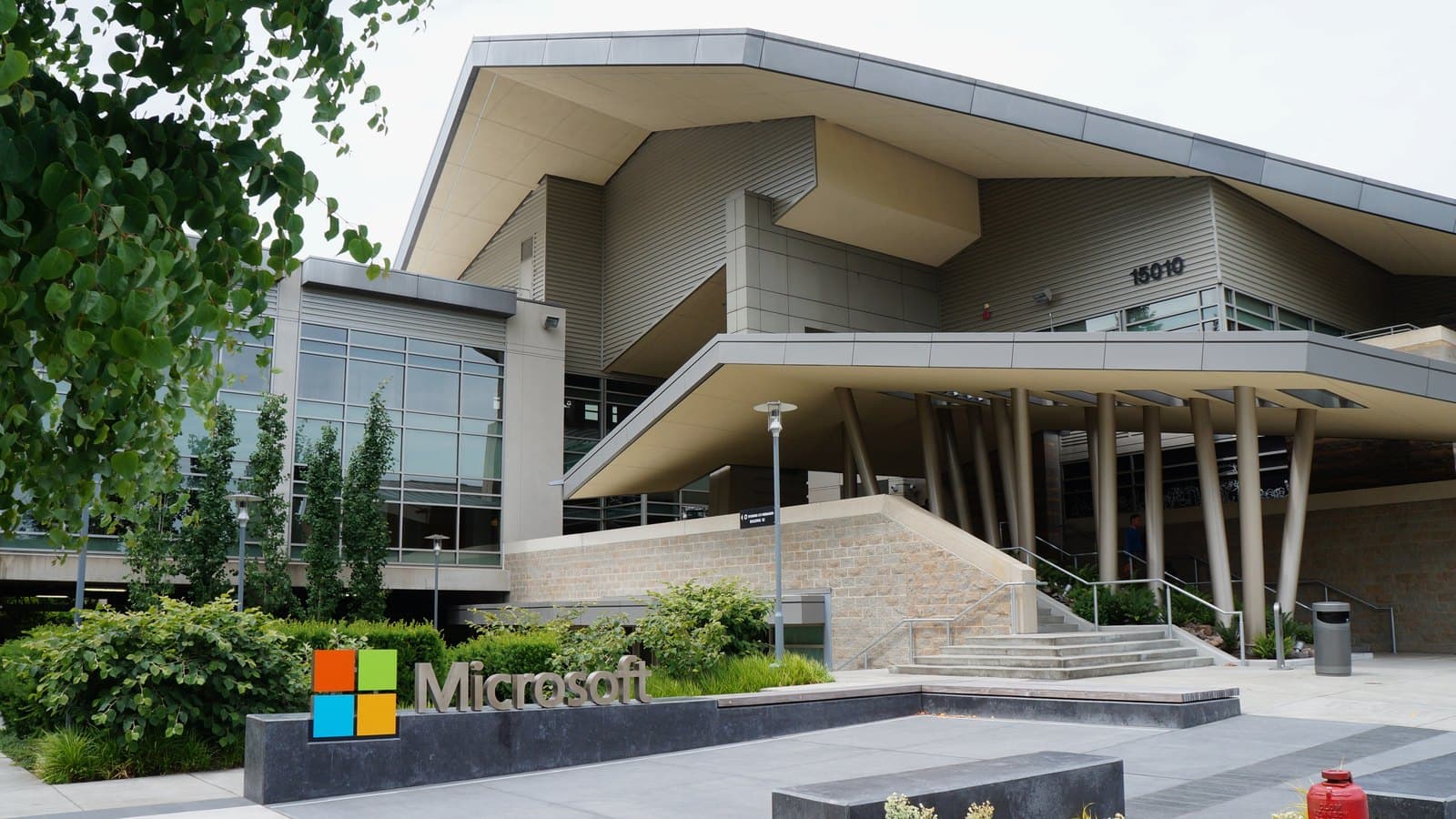
Cover image: Brian Smale and Microsoft, Wikimedia Commons, CC BY-SA 4.0.
Tags
Frequently asked questions
- How much does the Surface Laptop Ultra cost?
- Preorders opened on October 7, 2026 at $2,599 for the 15-inch Surface Laptop Ultra, which runs NVIDIA's RTX Spark superchip. The desktop Surface RTX Spark Dev Box starts at $5,999 with up to 128 GB of unified memory.
- What is Microsoft's hybrid intelligence?
- It is Microsoft's term for running AI locally on the device alongside cloud services, rather than in the cloud alone. At the October 7, 2026 event the company pointed to Windows ML runtimes across CPU, GPU and NPU, llama.cpp coming to Windows ML, and DeepSeek V5 Flash running locally with about 60 GB of memory.
- What are Microsoft Execution Containers?
- Microsoft Execution Containers, or MXC, are Windows 11 tools that give AI agents their own identity and permissions, separate from the user's. Microsoft said MXC reached general availability and that OpenAI and Anthropic are building on the security tools.
- Is the Surface Laptop Ultra a mainstream laptop?
- No. Microsoft has positioned the RTX Spark systems at premium, MacBook Pro-class pricing: the Laptop Ultra starts at $2,599 and the Dev Box at $5,999. Both are Arm-based Windows devices.

TPW Editorial
Editorial Team
TechPastWeek's editorial team reports and edits every story we publish. We research each piece against primary and credible secondary sources, and a human editor reviews and signs off before it goes live.