The Week in Tech: Nvidia Buys the Model Hub, NASA Goes Dark-Hunting
Nvidia's $12.9B Hugging Face deal, a record quarter, NASA's Roman launch, Meta's $18B teen settlement, and more from the week ending Aug. 30, 2026.

On this page
This was a week in which the companies that own the foundations of technology moved to own more of the layers above them. Nvidia, already the supplier of choice for AI computing, agreed to buy the platform where AI models are published and shared. NASA launched a telescope built to survey the dark universe at industrial scale. Meta agreed to pay an extraordinary sum to settle claims about how its products are designed. And in the background, the plumbing that everything runs on (cloud storage, data warehouses, data centres) kept failing in instructive ways.
Related reading: Nvidia Puts $3 Billion Into Meta's Equity Sale and Expands the Muse Partnership · Nvidia Agrees to Buy Hugging Face for $12.9 Billion in a Bid for the Open-Model Layer.
The week ending Sunday, Aug. 30, 2026, did not produce a single clean narrative. It produced a pattern: consolidation and control at the top of the stack, and the steady accumulation of consequences below it. Here is what actually mattered, and what it means.
Nvidia's quarter was the calm before the deal
On Wednesday, Aug. 26, Nvidia reported results for the second quarter of its fiscal 2027 that were, by any ordinary standard, astonishing. Revenue was $96.2 billion, up 18 percent from the previous quarter and 106 percent from a year earlier. Data centre revenue reached $89 billion, more than doubling year over year. Non-GAAP net income was $53.95 billion, or $2.22 per diluted share; GAAP net income was $59.7 billion, or $2.46 per share. Gross margins held at 75 percent.
The guidance was the more consequential number. Nvidia said it expects revenue of $108 billion, plus or minus 2 percent, in the current quarter (a figure that would make it a hundred-billion-dollar-a-quarter company) and that it is not assuming any data centre compute revenue from China. Chief financial officer Colette Kress said on the call that the company expects fiscal 2028 revenue growth of about 70 percent, well above the roughly 44 percent analysts had modelled. Chief executive Jensen Huang, in the release, put it bluntly: "AI has reached its inflection point. It's doing useful work. Its tokens are productive and profitable. Now, compute is revenue."
That framing (tokens as revenue, compute as the product) is the key to understanding everything else Nvidia did this week. The company also said it spent $26 billion on buybacks and dividends in the quarter, and it raised its dividend to 25 cents a share. Its Vera Rubin platform is in full production. And its edge computing business, which includes gaming, contributed just $7.2 billion, a reminder that the consumer business is now a rounding error next to the data centre.
The numbers that matter
Revenue $96.2B, up 106% year over year. Data centre $89B. Net income $53.95B (non-GAAP). Q3 guidance $108B. Fiscal 2028 growth forecast ~70%. No China data centre revenue assumed in guidance.
Nvidia agrees to buy Hugging Face
One day later came the move that reframes Nvidia as a software power. Nvidia has agreed to acquire Hugging Face, the central repository for open-source AI models, for $12.9 billion, according to a report from The Information and subsequent coverage by CNBC. Neither company confirmed the deal by the end of the week, and both declined to comment, but the reporting was consistent: Nvidia agreed to the price after Hugging Face drew interest from another suitor, and the talks were described as advanced.
The strategic logic is easy to state and hard to overstate. Hugging Face is where much of the open-model world lives: developers use it to find weights, datasets, and applications, and its libraries have become the default toolkit for working with them. Nvidia is already a major contributor, having published hundreds of its own open models and datasets on the platform. Buying the hub gives Nvidia direct influence over the layer where models are discovered, benchmarked, and deployed, and, potentially, a front door for selling cloud and inference capacity to the enterprises that pass through it.
The price is the message. Reports suggested that early discussions were framed around a valuation near $7 billion, and that Hugging Face had rebuffed a far smaller Nvidia approach in an earlier year. Its annualised revenue was reported at roughly $150 million. At $12.9 billion, the deal would be one of Nvidia's largest ever and a multiple that reflects strategic scarcity rather than current earnings. For a company whose market value has crossed $5 trillion, it is a rounding error, and a much more consequential statement about where it thinks value will accumulate.
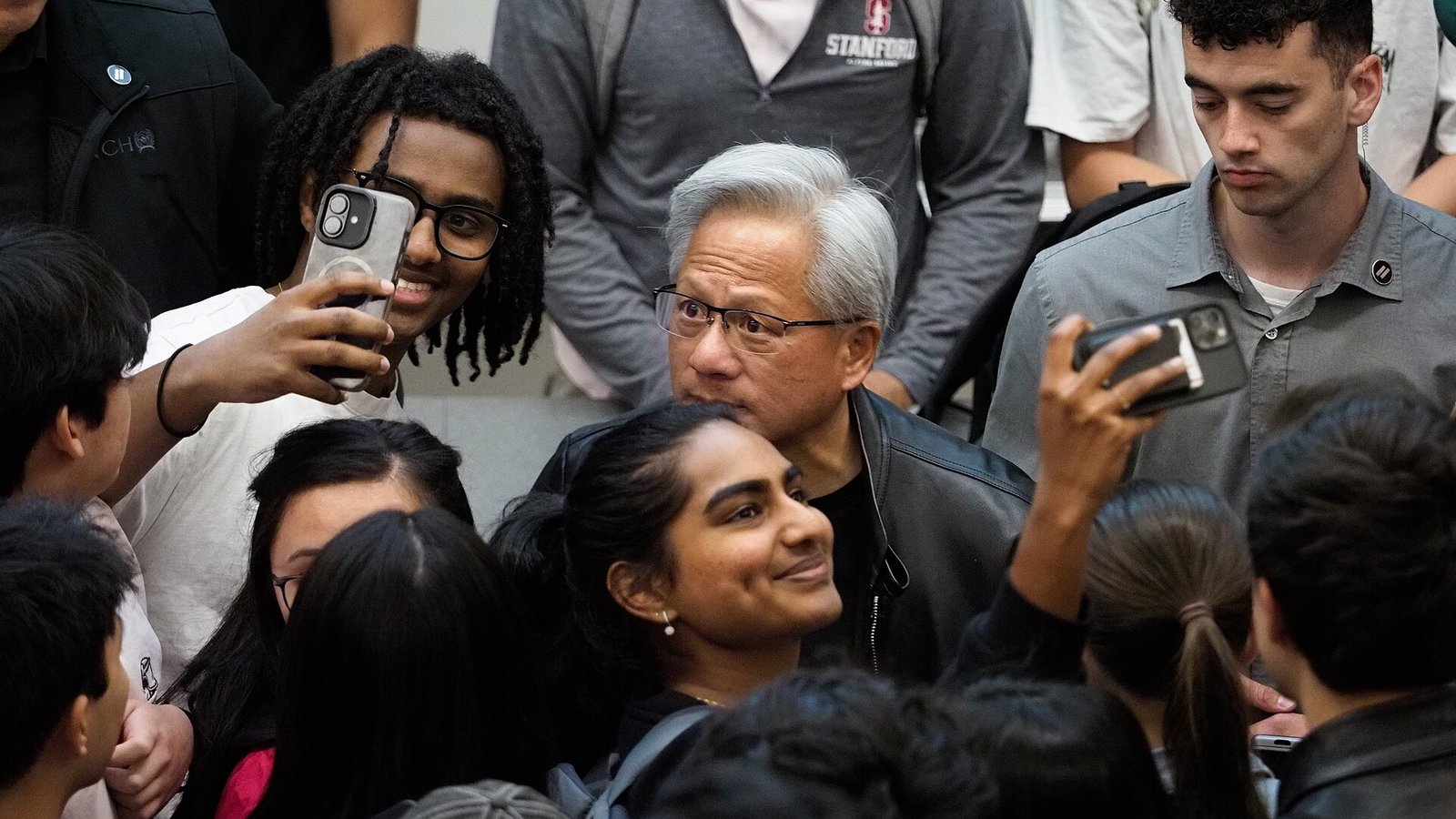
The obvious tension is neutrality. Hugging Face's value rests on being a level playing field for model makers, cloud providers, and chip vendors, including Nvidia's competitors. Its investor list spans the industry, from Salesforce Ventures to Google, Amazon, Intel, and AMD, and each of those backers had an interest in it staying open. The deal will test whether a platform can remain meaningfully neutral when it is owned by the dominant hardware supplier. Expect Nvidia to make commitments about open access and non-discrimination; expect the community and regulators to scrutinise whether those commitments hold.
NASA launches the Roman Space Telescope
At 7:26 a.m. EDT on Sunday, Aug. 30, a SpaceX Falcon Heavy lifted off from Kennedy Space Center carrying NASA's Nancy Grace Roman Space Telescope. The launch went to plan: controllers at Goddard Space Flight Center received telemetry seven minutes after liftoff, the observatory separated from the rocket's second stage 31 minutes in, and the side boosters returned to the launch site for refurbishment. Roman is now on a roughly three-month journey to the second Sun-Earth Lagrange point, about a million miles from Earth, where it will begin its surveys.
Roman is the "super-Hubble" astronomers have wanted for years. Its primary mirror is 2.4 meters across (the same as Hubble's) but its 300-megapixel Wide Field Instrument captures a patch of sky at least 100 times larger per exposure. NASA says the mission will gather data up to 1,000 times faster than Hubble, and that over its five-year primary mission it will produce about 20 petabytes of data. That is more daily volume than any NASA astrophysics mission before it: a 1.4-terabyte-per-day stream that is impractical to download and analyse the old way.
The science targets are dark energy, dark matter, and exoplanets. Roman will map billions of galaxies and use thousands of Type Ia supernovae to reconstruct how the universe's expansion has changed over time. Its microlensing survey of the Milky Way's centre is expected to find more than 1,000 exoplanets, and its transit observations could add around 100,000 more. The mission also carries a coronagraph technology demonstration designed to block starlight and image nearby planets directly.
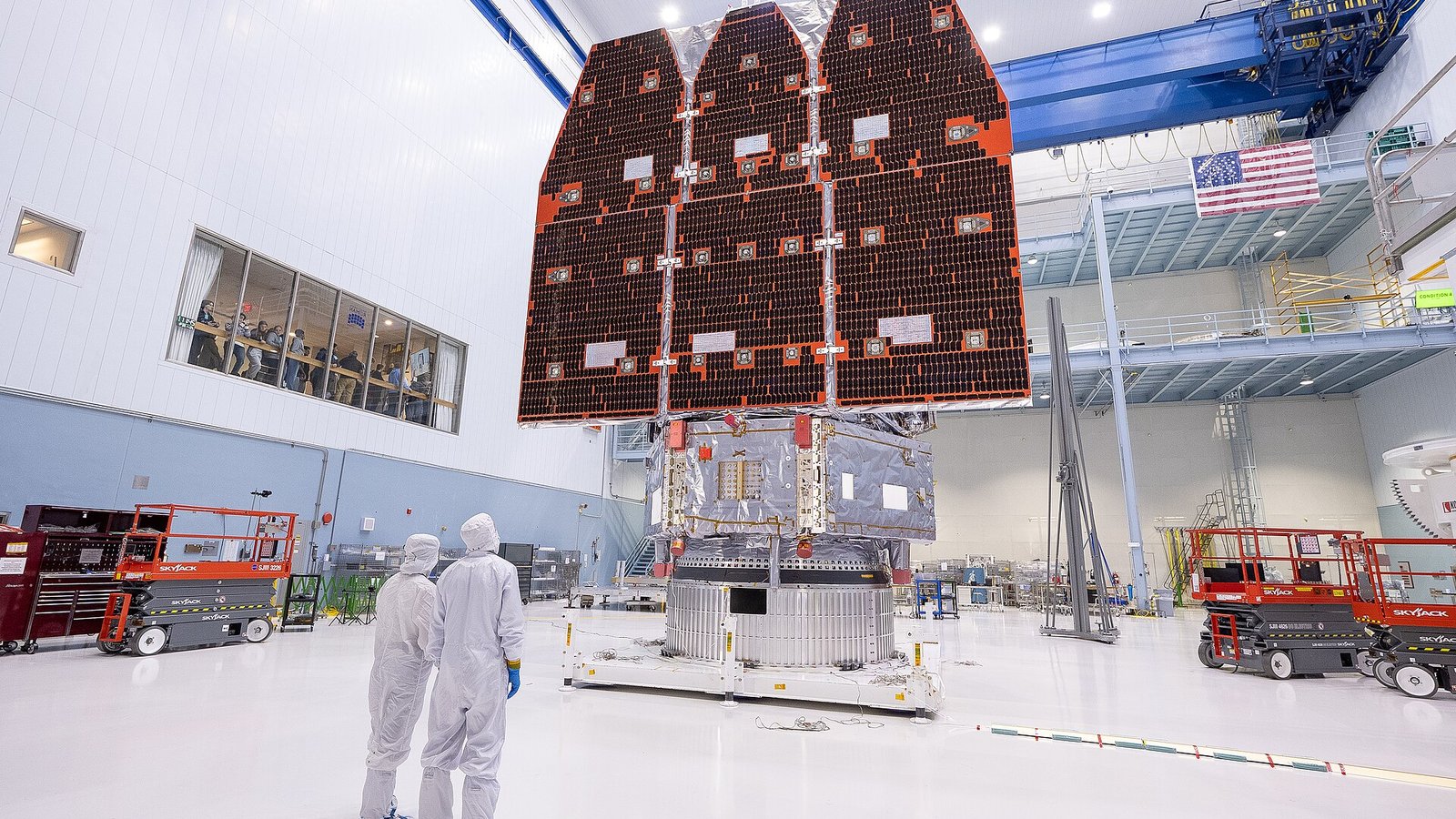
The data challenge is a story in itself. The Space Telescope Science Institute has built a cloud-hosted analysis platform, the Roman Research Nexus, precisely because the archive will be too large to cart around. All the data will be non-proprietary, and researchers will be expected to work where the data lives. It is a cultural shift for a field built on local pipelines, and a preview of how big-science infrastructure is changing: the bottleneck is no longer the instrument, but the software and bandwidth needed to make sense of what it sends back.
Why it took so long
Roman survived years of budget pressure under its former name, WFIRST, and arrived at the pad roughly nine months ahead of its original schedule, a rarity for a flagship mission. It is named for NASA's first chief of astronomy, the driving force behind the agency's Great Observatories program.
McKesson confirms a breach as ShinyHunters claims 284 million records
From the cosmos to the clinic. Healthcare distribution giant McKesson disclosed a cybersecurity incident in an SEC filing after the ShinyHunters extortion group claimed it had stolen 284 million patient records. McKesson said it discovered the intrusion on Aug. 25 and that it involved "unauthorized access to certain third-party applications and the exfiltration of certain data," affecting a subset of customers in its Oncology & Multispecialty and Medical-Surgical business units.
The attack, as described by ShinyHunters to reporters, was a familiar and effective script: voice phishing to compromise employees, followed by takeover of Okta single-sign-on accounts, then data exfiltration from Salesforce and Snowflake environments. The group said it took about a terabyte over four days and demanded roughly $55 million; McKesson reportedly did not respond within the group's deadline. The one important caveat is that 284 million is a count of raw records, not unique patients, ShinyHunters itself said it had not analysed the data closely enough to know how many people are affected. McKesson says its investigation is early, that it has reasonable assurance of no ongoing activity, and that customers need not take action.
The incident fits a pattern that has now run through healthcare for more than a year: identity-layer compromises, cloud data warehouses as the exit, and publication-based extortion rather than ransomware encryption. The victim list attributed to ShinyHunters and groups using similar tactics has grown to include major device makers and claims processors. The lesson regulators keep drawing is the same one defenders keep repeating: phishing-resistant authentication and tight governance of cloud data platforms are no longer optional for anyone holding health data at scale.
GTA VI turns a game reveal into a Netflix event
Rockstar Games premiered Grand Theft Auto VI: An Extended Look on Netflix on Thursday, Aug. 27, a first-of-its-kind partnership that put a 26-minute presentation in front of subscribers six hours before it hit YouTube and the GTA VI website. The footage was captured entirely from in-game PlayStation 5 gameplay and showed both protagonists, Jason and Lucia, in extended sequences: robberies, driving, a refined carjacking system, survival mechanics closer to Red Dead Redemption 2, and the return of character switching, now driven by proximity rather than a hard camera cut.
The event landed days after a leaker operating as "CyberLeek" posted more than a dozen gameplay clips, some of which appeared to come from a playable build. Rockstar, which had initially issued takedown notices, acknowledged on Aug. 26 that the clips were real and called the leaks "heartbreaking for our team," adding: "this is obviously not how we intended for you to see the game after all this time." The studio also said the game is nearly finished. The Netflix date had already been announced on Aug. 6, so the leak did not set the schedule, but it changed the mood, and it raised the stakes for the official reveal.
The numbers were enormous. Reporting put the extended look at 31.1 million views within four days, and Netflix's own listing placed it among its most-watched content, filed as a movie. The premiere was popular enough to reportedly cause a major Twitch outage, and GamesBeat reported that Netflix viewership spiked by roughly 35 percent for the event. GTA VI launches Nov. 19 on PlayStation 5 and Xbox Series X|S, with pre-orders open since June. The bigger cultural shift is that a game reveal now belongs on a streaming service's homepage, and that the streamer is happy to have it there.
Meta agrees to pay up to $18 billion over teen safety
Meta agreed to pay up to $18 billion and to change how Facebook and Instagram treat teenage users, settling a landmark multistate lawsuit that alleged it deliberately designed addictive products that harmed young people's mental health. The deal ended a federal trial in Oakland and resolved claims brought by nearly every state. Roughly $17 billion goes to a coalition of 29 states that sued in 2023, with the remainder settling claims from other states and territories. Payments will be spread over a decade.
The platform commitments are concrete. Teens will get a default two-hour daily time limit that only a parent can lift; a default block on access between midnight and 6 a.m.; muted notifications during school hours; like and reaction counts hidden by default; and a block on "extreme makeup" filters. Meta will also give teens the option of a non-algorithmic feed and says it will invest in stronger age-assurance technology. An independent auditor will assess compliance for five years.
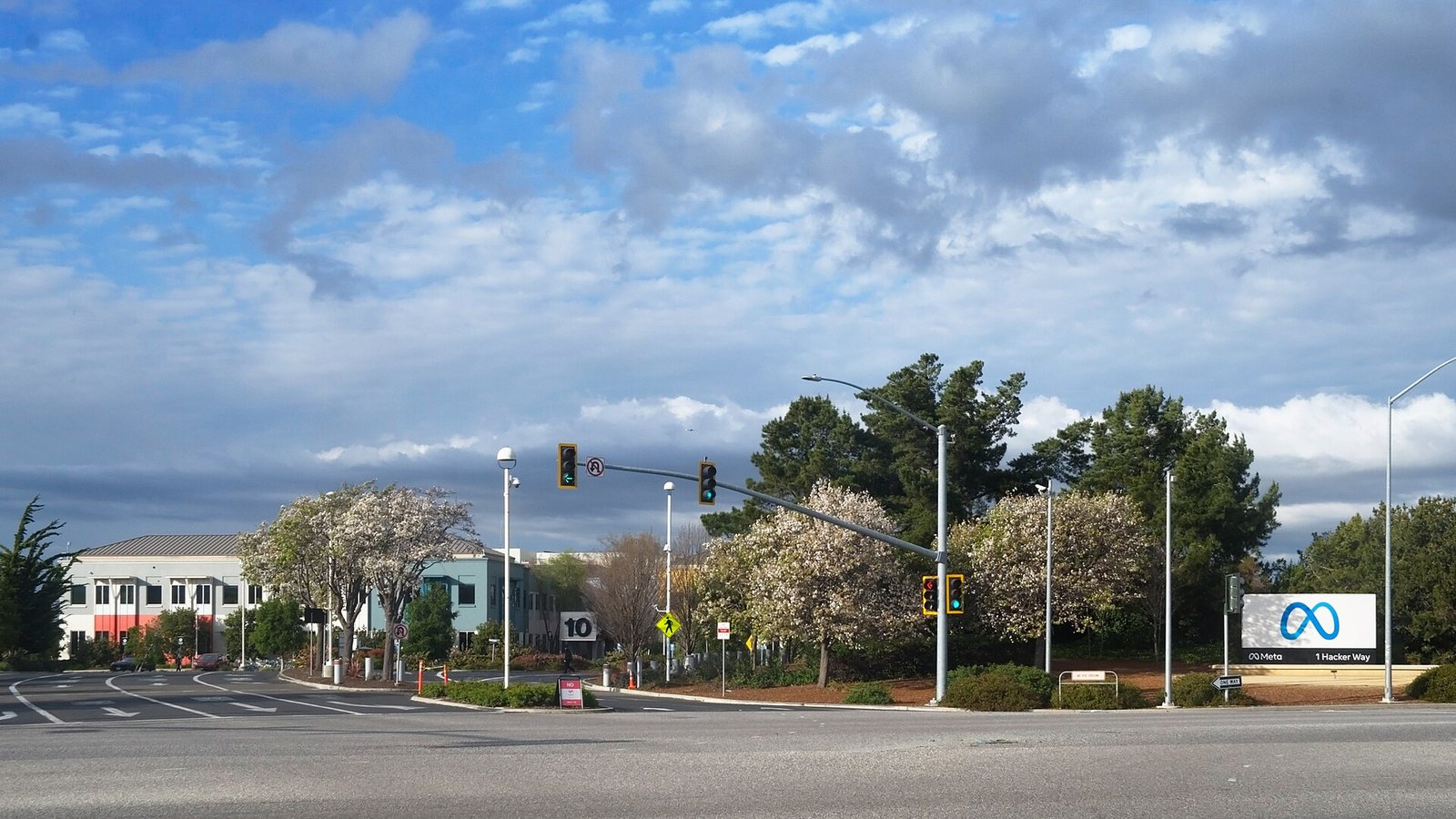
Two features of the deal deserve attention. First, about 30 percent of the money (roughly $5.3 billion) is contingent on TikTok and YouTube adopting comparable protections and paying matching sums, a remarkable attempt by Meta to turn its own settlement into an industry standard. Second, the settlement's critics note that its most powerful lever for reducing compulsive use (a non-algorithmic feed) remains an opt-in setting for teens rather than a default, and that the underlying engagement-optimised design is largely untouched. New Mexico and Florida are not part of the deal; New Mexico had already won its own case, and Florida's attorney general argued the settlement was too lenient.
Apple refreshes the Mac mini and Mac Studio with M6 and M5 Ultra
On Aug. 25, Apple introduced the M6 chip in a new Mac mini and the M5 Ultra in a new Mac Studio, its first hardware update to those desktops in well over a year. The M6 is Apple's first 2-nanometer part and its first 12-core CPU, with two "super" cores, four performance cores, and six efficiency cores, plus a 12-core GPU with Neural Accelerators and a dual 16-core Neural Engine. The Mac mini starts at $899, with an M5 Pro configuration at $1,699.
The M5 Ultra is the bigger statement. It uses Apple's UltraFusion interconnect to join two dual-die M5 Max chips into a quad-die design, with up to a 36-core CPU, an 80-core GPU, a 32-core Neural Engine, and up to 512GB of unified memory at 1.2TB/s of bandwidth. The Mac Studio starts at $2,499 with an M5 Max and $5,499 with an M5 Ultra. Pre-orders opened Aug. 25; shipping begins Sept. 22, with the highest-memory configurations slipping to late October.
The context is a memory and component shortage that has pushed prices up across the Mac line all year. Apple is not alone: Nvidia warned in the same week that memory costs are raising consumer GPU prices, and its edge computing segment cited "slower consumer PC sales that were tempered by elevated memory and systems prices." The AI boom is consuming so much high-bandwidth memory and DRAM that it is now visibly reshaping the consumer market, a theme worth watching into the next product cycle.
The open-model race: Tencent ships Hy4
The Hugging Face deal was not the only open-model news. On Aug. 28, Tencent released and open-sourced Hy4 preview, a mixture-of-experts model with 770 billion total parameters and 49 billion active per token, and a context window exceeding one million tokens. Tencent positioned it for long-horizon software engineering, document-heavy office work, and scientific research, and said it is available through Tencent Cloud and OpenRouter as well as its own products.
Tencent's internal evaluation is notable for its honesty about being internal: a blind test with 163 in-house experts rating 203 engineering tasks put Hy4 preview at 2.99 out of 4.00, slightly ahead of Z.ai's GLM-5.3 (2.92) and Moonshot's Kimi K3 (2.94). The company also described an early "recursive self-improvement loop," in which the model proposed approaches, ran experiments, and fed results into the next round, claiming a 31.8 percent improvement in end-to-end throughput. Those are vendor numbers and should be treated as such, but the broader point stands: Chinese labs continue to release frontier-class open models at a pace that keeps the open-weight ecosystem strategically relevant, and that is part of what makes owning its central hub so valuable to Nvidia.
AWS buys DuckLabs, and DuckDB stays open
In a smaller but revealing deal, Amazon Web Services agreed to acquire DuckLabs, the Amsterdam company behind the in-process analytics database DuckDB, announced Aug. 26. The terms were not disclosed. Crucially, DuckDB and its related projects (DuckLake and Quack) will remain open source under the MIT licence, stewarded by the independent, non-profit DuckDB Foundation, and the team will stay in Amsterdam. AWS said it wants to make its native analytics faster and simpler, and DuckDB's ability to query data in place, including directly against S3, fits that goal.
The deal is a neat counterpoint to the Nvidia–Hugging Face story. Both involve a large platform company acquiring the steward of a critical open-source layer. The difference is governance: DuckDB's project is explicitly separated from the corporate entity, with a foundation in charge of the roadmap. If Nvidia wants to reassure the open-model community, that is one template it could study.
Starship's next flight clears a key hurdle
SpaceX completed a 33-engine static fire of its Super Heavy booster at Starbase on Aug. 28, the final major ground test before Starship's Flight 14. The booster, Booster 21, fired all 33 Raptor engines in a 15-second test. Its upper stage, Ship 41, had already completed a six-engine, 60-second static fire on Aug. 21 and a single-engine deorbit-burn demonstration earlier in the month.
Flight 14 is expected to be the first Starship test to reach orbit, and SpaceX has said it plans to attempt catching the upper stage with the launch tower's arms. Air-traffic planning data has pointed to a no-earlier-than date around mid-September, though SpaceX has not announced a firm target. Each flight has carried increasingly ambitious objectives; this one would mark the transition from suborbital testing toward operational missions, including Starlink deployment.
When infrastructure fails: Proton and Cronos
Two incidents this week offered reminders that the digital economy is more fragile than its redundancy promises suggest.
On Aug. 27, Proton suffered a global outage after a cooling failure in its Frankfurt data centre. Temperatures in the server room rose from about 21.8°C to 51.9°C in under half an hour, with some probes reporting 60°C air. The heat killed servers and networking gear, including both the primary and backup switch on a rack holding primary database copies, defeating automatic failover. Proton said no user data was lost and services were largely restored within hours, but chief executive Andy Yen was blunt: "We fucked up, and will do better." The company also noted that rising server power density (driven by higher-power CPUs and GPUs for AI) made the room go critical far faster than it once would have.
Separately, the Cronos blockchain executed a rare and controversial response to a hack. After an attacker manipulated the TONIC token on the Tectonic lending protocol and borrowed about $120.4 million on Aug. 30, validators halted the network and rolled it back to block 90,896,188, erasing 10,961 blocks, nearly two hours of settled transactions, including ones unrelated to the attack. The rollback restored roughly $111.2 million in affected balances, but about $9.19 million had already left the network and remains unrecovered. Cronos resumed producing blocks about 11 hours after the attack. The episode revived a long-running debate about whether a blockchain's finality is truly final when validators can rewind history after the fact.
Also worth noting
- ASUS opened pre-orders on Aug. 25 for the ROG Xbox Ally X20, a 20th-anniversary Windows handheld with a 7.4-inch OLED screen, an AMD Ryzen AI Z2 Extreme chip, and an 80Wh battery. It starts at $1,299 standalone, or $2,499 in a bundle with AR glasses and accessories, and ships Oct. 15.
- Nvidia's consumer-GPU segment is being squeezed by memory prices, a squeeze the company flagged alongside its earnings, a reminder that the AI build-out has costs that reach beyond data centres.
- The week's pattern in AI was unmistakable: the leading hardware vendor moving to own the model-distribution layer, a Chinese lab shipping another frontier open model, and a cloud giant buying the steward of a beloved open-source database. The common thread is that open ecosystems are becoming acquisition targets, and the question of who stewards them is becoming as important as what they can do.
The throughline
If there is a single story for the week ending Aug. 30, it is that the companies at the base of the technology stack are reaching upward. Nvidia supplies the chips, funds the labs, and now reportedly wants to own the place where models are shared. AWS runs the cloud and just bought the company behind a database that lets customers query data in place. Meta owns the dominant social platforms and just agreed to pay billions to change how they treat young users. Each move is different, but they share a logic: control of the layer below is no longer enough; the layer above is where the durable advantage lives.
That is a demanding environment for smaller players and open communities. It is also why governance questions that once felt academic (who controls a model hub, who stewards a database, who can roll back a chain) now have direct commercial consequences. The technical decisions and the structural ones have converged.
What to watch next week
- Nvidia and Hugging Face: official confirmation, terms, retention, and any neutrality commitments. The community's reaction to a single-owner model hub will be as telling as the price.
- Roman's commissioning: the telescope faces about three months of deployments and calibrations before science begins. Early anomalies, if any, will matter more than the launch's smoothness.
- The McKesson fallout: whether "no action required" holds, how many individuals are ultimately notified, and whether regulators open inquiries.
- Starship Flight 14: a firm launch date, and whether SpaceX actually attempts the tower catch.
- Meta's settlement: whether TikTok and YouTube move toward matching protections, which would trigger the remaining $5.3 billion, and how the independent audit is structured.
The broader question is whether the consolidation at the top of the stack accelerates or meets resistance, from regulators, from developers, and from the communities that make open ecosystems worth owning in the first place.
Tags

TPW Editorial
Editorial Team
TechPastWeek's editorial team reports and edits every story we publish. We research each piece against primary and credible secondary sources, and a human editor reviews and signs off before it goes live.