Nvidia Agrees to Buy Hugging Face for $12.9 Billion in a Bid for the Open-Model Layer
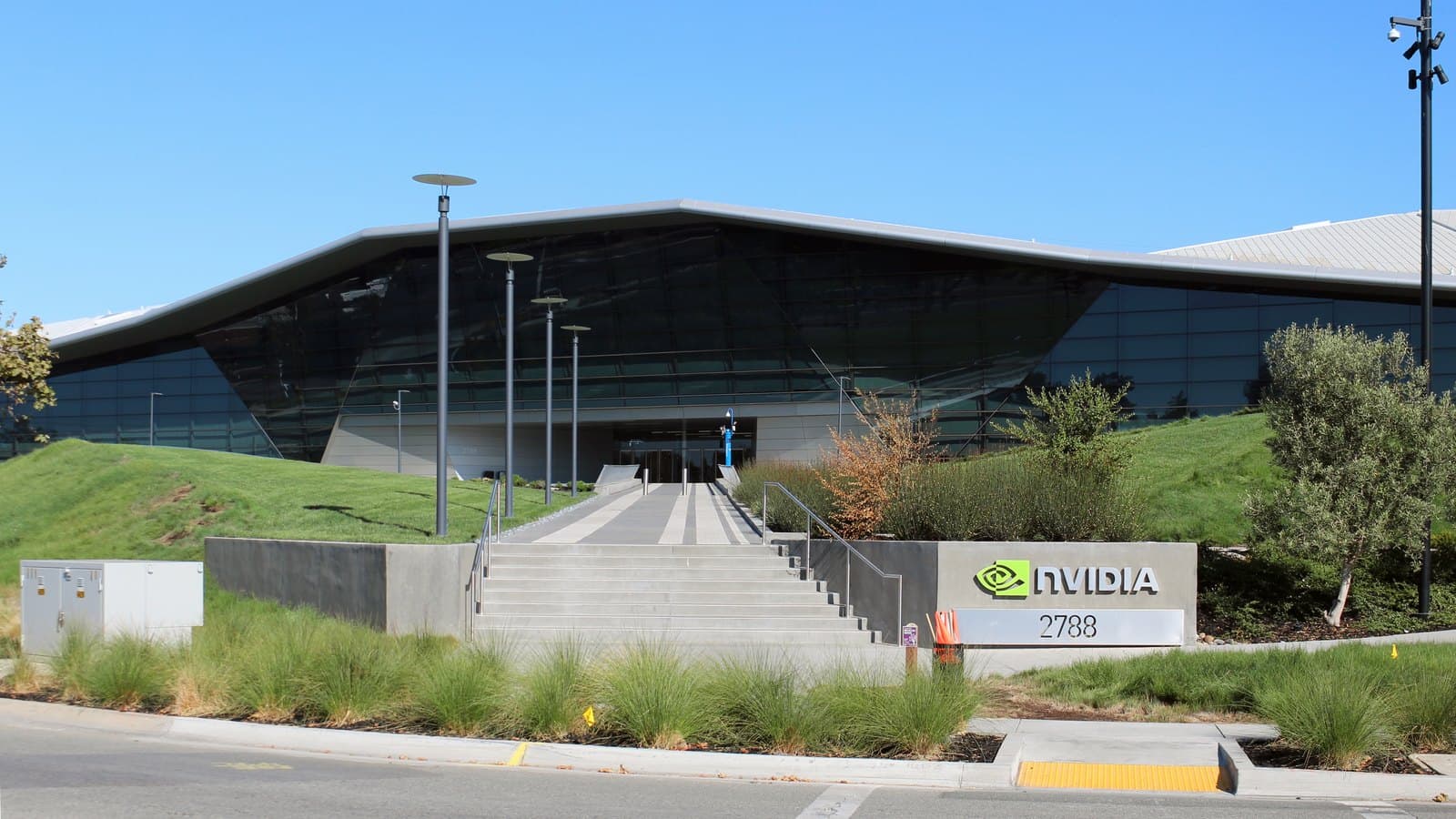
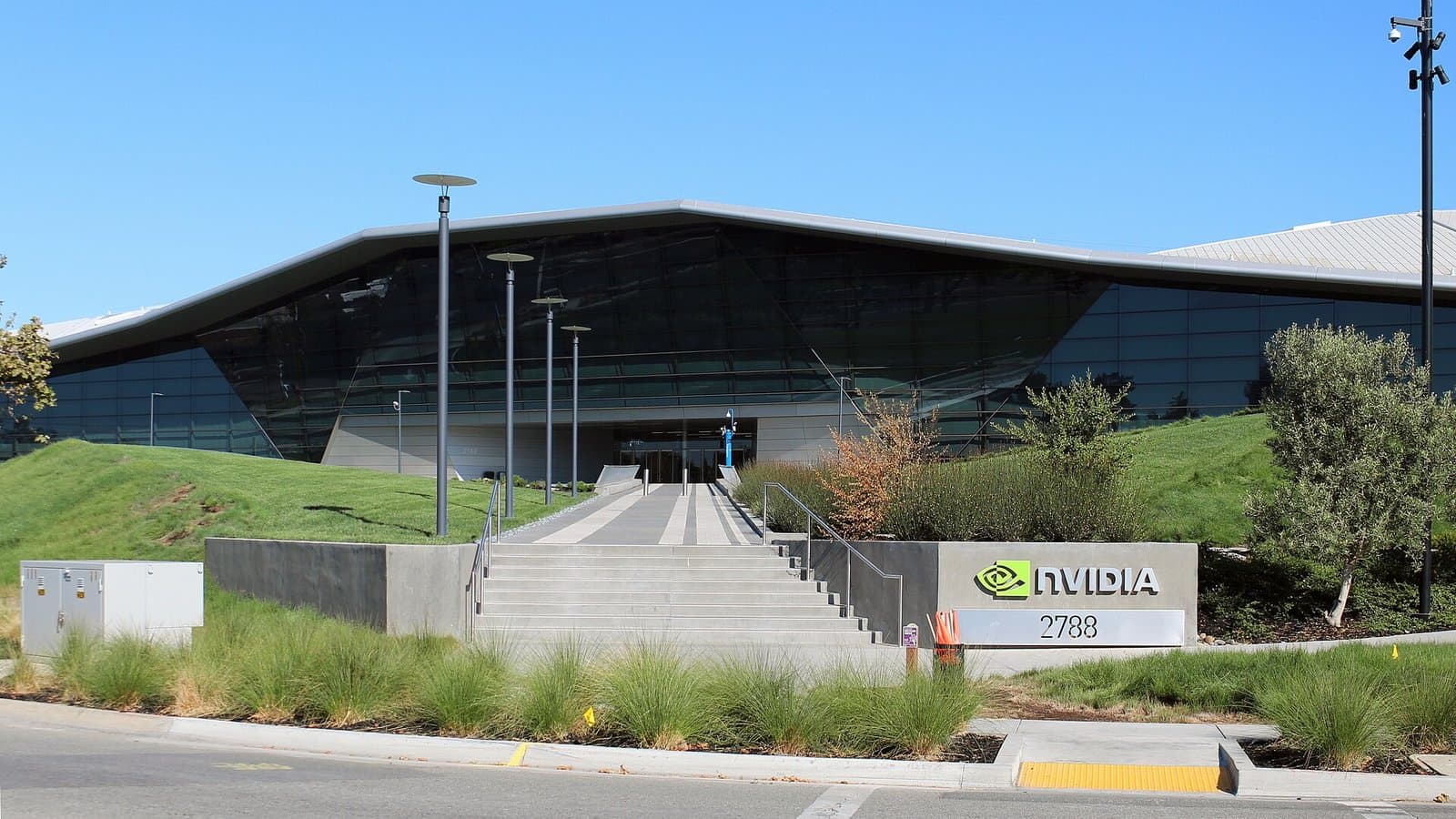
Nvidia has agreed to acquire Hugging Face for $12.9 billion, according to reports, putting the open-model hub at the center of its software strategy.

On this page
Nvidia has agreed to acquire Hugging Face, the platform that has become the default home for open-source AI models, for $12.9 billion, according to a report from The Information first published on Aug. 26 and corroborated by CNBC. Neither company has confirmed the deal, and Nvidia and Hugging Face did not immediately respond to requests for comment. But the reported price and the strategic logic point in the same direction: Nvidia is moving to own the software layer where open models are published, evaluated, and deployed.
Related reading: The Week in Tech: Nvidia Buys the Model Hub, NASA Goes Dark-Hunting · Nvidia Puts $3 Billion Into Meta's Equity Sale and Expands the Muse Partnership.
The Information reported that Nvidia agreed to the acquisition price after Hugging Face received interest from another suitor, which started the process. CNBC reported that a source familiar with the matter could "confirm acquisition [by Nvidia] has been part of ongoing and recent talks," while Business Insider reported that Hugging Face had been working with a bank to evaluate bidders' interest. Reuters also carried the report, describing a repository of open-source AI models that developers rely on to share and download tools.
The timing is not accidental. The reports landed the same week Nvidia reported a record quarter: revenue of $96.2 billion, up 106% from a year earlier, with data centre revenue of $89 billion. Nvidia has the balance sheet to buy almost anything in AI software. The more interesting question is why it would spend $12.9 billion on a platform whose value rests on being neutral among model makers and clouds.
What Hugging Face actually is
Hugging Face is not a model lab. It is infrastructure and community: a place developers go to find weights, datasets, and applications, and a set of libraries that have become the de facto standard for working with them. The platform hosts millions of models, hundreds of thousands of datasets, and roughly a million applications, and is used by more than 18 million developers and researchers. Its name (inspired by the hugging-face emoji) has become shorthand for the open-weight ecosystem itself.
That position is strategically valuable for a very specific reason: whoever sits at the hub sees which models are gaining traction, what enterprises are evaluating, and where inference demand is heading. Nvidia already uses Hugging Face heavily; it has published hundreds of its own open models and datasets there, and its chips are the reference hardware for much of the ecosystem. Buying the hub converts a key distribution channel into a subsidiary.
The reported deal, in one line
Nvidia has agreed to acquire Hugging Face for $12.9 billion, per The Information and CNBC. Hugging Face reportedly attracted competing interest, which raised the price; neither company has confirmed the deal publicly.
Why Nvidia wants it: compute needs a front door
Nvidia's problem has never been demand. It has been that its dominance in AI chips is a hardware story, and hardware businesses are cyclical. Software layers are stickier. If developers standardise on tools that assume Nvidia hardware (or that Nvidia can optimise first) that advantage compounds across training and inference.
There is a commercial angle too. Nvidia has been building out cloud and inference services, and the report lands amid a broader push to sell both GPUs and capacity and platforms. Owning Hugging Face would give it a distribution point to package those services, and to offer enterprises a path from downloading a model to running it on rented Nvidia infrastructure. As one analyst told CNBC, Hugging Face fits a company positioning itself as a platform, not only a component supplier.
The deal also fits Nvidia's declared enthusiasm for open models. The company has argued (and its chief executive has said repeatedly) that open weights are good for the ecosystem and good for Nvidia. On that reading, owning the largest open-model hub is a way to accelerate a trend already working in the company's favour. The counterargument is that independence is exactly what gives Hugging Face its value, and a hub owned by the dominant chip vendor is a different institution.
The reported price ($12.9 billion for a company with roughly $150 million in annualised revenue) is not a bet on Hugging Face's income statement. It is a bet on controlling the doorway to the open-model economy.
The valuation is the message
To understand the price, look at how it rose. Reports indicated that early talks between Nvidia and Hugging Face were framed around a valuation closer to $7 billion. Hugging Face had reportedly rejected an Nvidia offer of around $500 million in an earlier year, and by 2026 it was generating meaningful revenue (The Information reported annualised revenue of roughly $150 million), while still describing itself as approaching profitability. If the $12.9 billion figure holds, it is roughly 80 times that revenue, a multiple that reflects strategic scarcity rather than current earnings.
That is the pattern of the current AI market: strategic assets trade at prices that only make sense as options on a future landscape. Hugging Face sits at the intersection of two of the most contested layers of that landscape (model distribution and inference infrastructure) and the competing bidder effectively forced Nvidia to pay up. For Hugging Face's investors, who had put more than $395 million into the company across its life, that is a clean outcome.
Who built Hugging Face, and why it matters
Hugging Face was founded in 2016 by three French entrepreneurs (Clément Delangue, Julien Chaumond, and Thomas Wolf) and grew from a chatbot app into the industry's shared library. The pivot was the Transformers library, released in 2018, which made it dramatically easier for developers to download, fine-tune, and deploy models from a range of providers. That open, provider-agnostic posture is why the platform became a common language for the field rather than a single vendor's storefront.
The company's backers illustrate the neutrality problem. Over its life it attracted investment from a roster that spans the AI industry, including Salesforce Ventures, Google, Amazon, Intel, and AMD, and Nvidia itself. Each of those investors had an interest in the platform remaining open to all comers. Consolidating ownership under one of them changes the calculus, and the fact that the current interest reportedly came from more than one bidder suggests the market understood exactly what was at stake.
There is also a geopolitical dimension. The open-weight ecosystem that Hugging Face hosts is increasingly where Chinese labs publish their frontier models, where researchers reproduce results, and where smaller countries build sovereign AI programs. A hub that tilts toward a single American chipmaker would be a meaningful shift in that landscape, and one that governments beyond Washington will watch closely.
The open-model layer is the battleground
The acquisition report lands in the middle of a quiet war over who controls the layer between models and the applications built on them. Cloud providers want developers to build inside their platforms. Model labs want to own the interface. Chipmakers want their silicon to be the default target. Hugging Face sits in the middle of all three, which is why its independence has been treated as an asset and why buying it is so attractive.
Nvidia has spent years positioning itself as the friend of open models. Its own Nemotron family, its large catalogue of models and datasets on Hugging Face, and its public advocacy for open weights have all served that story. But there is a difference between supporting an open ecosystem and owning its central marketplace. The former is a strategy; the latter is a structural advantage. If the deal closes, Nvidia will have to convince developers that it can hold both roles at once, a supplier with a strong commercial interest in the outcome, and a neutral host for everyone else's models.
The open-source question
The hardest part of this deal is not the money; it is the governance. Hugging Face's licence to operate depends on developers believing it is neutral. That it will not privilege Nvidia's models, frameworks, or hardware over rivals', and that it will keep serving the companies Nvidia competes with. Any perceived tilt could push the ecosystem toward alternatives, and there is no shortage of well-funded projects that would happily take the position.
Nvidia will therefore have to say, clearly and credibly, what stays independent. That likely means commitments about open access, non-discrimination among model providers, and continued support for competing hardware platforms. The templates exist: large acquisitions of community platforms have succeeded when the new owner preserved neutrality on paper and in practice, and failed when it did not. The regulators, too, will want to understand what it means for a company that dominates AI accelerators to control the primary discovery layer for AI models, particularly in the European Union, where both companies have significant operations and where competition authorities have been watching AI consolidation closely.
This is reported, not completed
As of Aug. 27, the acquisition had not been confirmed by either company, and a deal of this size would still face regulatory review and closing conditions. Treat the $12.9 billion figure and the terms as reported rather than final.
Nvidia's software land grab
The Hugging Face report is best read alongside Nvidia's other recent moves. The company has struck a $20 billion licensing deal with AI chip startup Groq, backed a reported multibillion-dollar open-model effort with coding startup Poolside, and said it has channelled tens of billions into frontier labs. It is building an ecosystem where models, tooling, and compute are increasingly routed through Nvidia's stack.
The strategic risk is antitrust. A company that supplies the chips, funds the labs that build models on them, and now owns the market where those models are distributed is not an easy thing to copy, and regulators have begun to notice. The strategic reward is a moat that survives the next chip cycle. Nvidia's bet is that owning the community layer is worth the scrutiny.
What to watch
Three things will define what happens next. First, official confirmation and terms: the price, any retention packages, and, crucially, the neutrality commitments. Second, the reaction from Hugging Face's community and from rival model makers, whether they stay or start publishing elsewhere. Third, regulatory signals from Brussels, Washington, and London. If the deal closes with strong independence guarantees, Nvidia will have bought the front door to the open-model economy without poisoning the ecosystem inside. If it closes without them, it may have spent $12.9 billion to hand its competitors a reason to leave.
Tags

TPW Editorial
Editorial Team
TechPastWeek's editorial team reports and edits every story we publish. We research each piece against primary and credible secondary sources, and a human editor reviews and signs off before it goes live.