Google's Pixel 11 Makes On-Device AI the Whole Point
Google unveiled the Pixel 11 lineup and Pixel Watch 5 with the Tensor G6 chip and a more proactive Gemini, betting the whole platform on local, on-device AI.

On this page
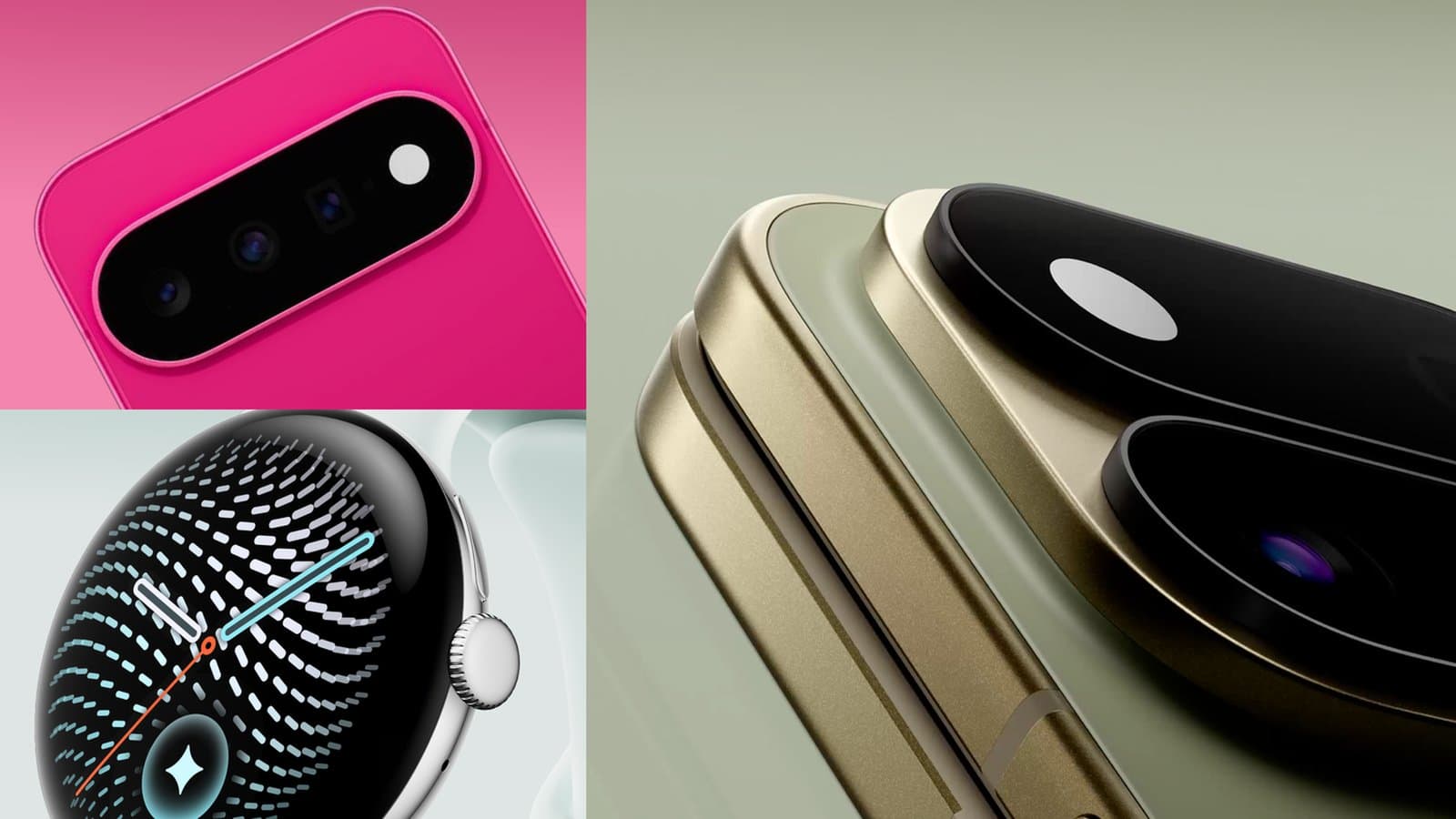
Google unveiled the Pixel 11 family on August 12 at its annual Made by Google event, and the message was less about megapixels than about where the intelligence runs. The new Pixel 11, Pixel 11 Pro, Pixel 11 Pro XL and Pixel 11 Pro Fold (joined by the Pixel Watch 5 and Google's first tracker, the Pixel Tag) are built around a single silicon story: Tensor G6, the chip Google says makes on-device AI fast enough to be useful rather than a demo.
Related reading: Alphabet's Free Cash Flow Hit -$9 Billion and the Stock Had Its Worst Day · Google Gives Its CC Agent a Family Account and a Permission Model.
The hardware, by Google's own framing, is a refinement. The bigger bet is architectural. By pairing a substantially faster neural accelerator with a new on-device Gemini Nano model, Google is trying to move the default place where a phone's "intelligence" lives from a data center back onto the device in your hand.
What Google announced
The lineup is now four phones rather than three: the standard Pixel 11, the Pixel 11 Pro and Pixel 11 Pro XL, and the Pixel 11 Pro Fold. All four run Tensor G6. The base phone starts at $899, the Pro at $1,099 and the Pro XL at $1,299; the Pro Fold starts at $1,899 (Google). Pre-orders opened August 12, and the phones reach shelves on August 20.
Google also filled out the ecosystem. The Pixel Watch 5 continues the company's wearable line, and the Pixel Tag is Google's answer to the Bluetooth trackers that competitors have sold for years, a small but telling expansion of the devices that feed context into Google's assistant.
Tensor G6, by the numbers
Google says the new chip delivers 50% more TPU compute and up to 3.5× faster on-device AI while using up to 3.5× less energy for those workloads. The CPU brings 25% faster web browsing and 15% quicker app launches. A new image signal processor enables faster Night Sight and expanded zoom, 30× Super Zoom across the line, up to 120× on the Pro XL. The Titan M3 security coprocessor adds post-quantum cryptography.
The cameras get a genuine upgrade on the main sensor: a 48-megapixel unit that Google says offers 56% more light sensitivity, which should matter most in low light. The Pro models add a 5× telephoto with the new zoom range. The Pro Fold gets the same main sensor, a lighter 239-gram body, thinner bezels, a 3,600-nit peak display and an IP68 durability rating, though reviewers noted it is now noticeably heavier and thicker than Samsung's latest book-style foldables.
Gemini Intelligence: proactive, not only responsive
The software story is where Google is placing its real bet. The Pixel 11 line is positioned around what Google calls Gemini Intelligence: an assistant that acts before being asked, surfacing flight information in a messaging thread, automating multi-step tasks, and coordinating across apps.
That shift from responsive chatbot to proactive agent is the defining platform race of 2026, and it changes what a phone's silicon needs to do. A model that runs constantly in the background (watching context, deciding when to interrupt, handling sensitive data) cannot afford to round-trip every decision to a server. Latency, cost and privacy all push toward local inference, which is precisely the case Google is making for Tensor G6.
The math is compelling on paper: if on-device tasks are 3.5 times faster and use 3.5 times less energy, features that were previously too slow or too battery-hungry to ship become viable. Google's new Live Translate, which dubs video and audio in real time, is a showcase. It works on the device because the chip can now sustain that workload.
There is also a security argument. Google pairs the G6 with Titan M3 and post-quantum cryptography, and keeping sensitive context local removes a category of exposure that cloud assistants inherently carry. For a company that has spent years on the defensive about data practices, "it never leaves your phone" is a useful message.
The hardware is deliberately iterative
The reviews that landed alongside the launch were, for the most part, measured. The Verge called the changes "a little new hardware and a lot of software." TechCrunch noted that the lineup offers fewer hardware changes but much more Gemini. Engadget was sharper about the Pro Fold specifically, arguing that Google is "coasting" on foldables while Samsung iterates.
That critique is fair on its own terms, but it may be missing the strategic point. Google does not need to win a spec-sheet war with Samsung or Apple in 2026; it needs to establish that Gemini-powered, on-device intelligence is a reason to buy a phone. The Pixel line has always been the vehicle for Google's platform ambitions rather than a volume business, and this generation is unusually clear about that.
Google is not selling a phone that happens to have AI. It is selling an AI that happens to come in a phone.
The risk in that framing is that it makes the hardware feel like an accessory. Reviewers who handle phones for a living notice when a device is merely good enough, and the Pro Fold's weight and thickness relative to Samsung's Z Fold 8 line drew more criticism than Google probably wanted.
Prices and the memory-cost question
The price increases are modest but real, $100 more for the Pro Fold and similar bumps across the line. Analysts and reviewers have pointed to a cost pressure that is unusual for phones: memory. As AI data centers absorb an ever-larger share of global DRAM and HBM production, the price of the storage inside a phone rises. The Verge's hands-on and TechRadar both connected the Pixel price bump to rising memory costs, the same dynamic that is reshaping the economics of every device that needs RAM.
That is an important context for the whole industry. The AI boom does not only affect AI products; it raises the input costs for ordinary consumer electronics. Google, which is simultaneously one of the largest buyers of AI compute and a phone maker, is exposed on both sides.
The foldable is the weak link
If there is a hardware story Google would rather not talk about, it is the Pixel 11 Pro Fold. At 10.1mm thick and 239 grams, it is heavier and bulkier than Samsung's Z Fold 8 (201g) and Z Fold 8 Ultra (215g), even after a 10% weight reduction from last year. Its battery capacity actually shrank, from roughly 5,015mAh to about 4,806mAh, which reviewers read as a consequence of the slimmer chassis and the new camera island.
Google's counterarguments are durability and software. The Pro Fold carries an IP68 rating that Samsung's foldables cannot match, a composite back Google says is nearly impossible to crack, and Bezels thin enough to make it the company's most polished foldable to date. It also benefits from the family-wide software features (the floating-window "bubbles" system, Magic Capture, Camera Looks and a Creator Suite with a built-in teleprompter) that make a large foldable genuinely more useful.
The problem is that those features are not exclusive to the Fold, and the Fold is the most expensive device in the lineup. In a year when Samsung shipped two new book-style foldables, Google's foldable feels like it is standing still on the dimensions buyers actually notice in a store. That does not sink the Pixel 11 launch, but it hands the premium foldable conversation to a competitor.
What Tensor G6 means beyond the phone
Tensor G6 matters outside the Pixel, too, because it is a test case for whether on-device AI can become a platform rather than a feature. If Google can demonstrate a phone that reliably runs capable models locally, the same silicon logic flows into tablets, watches, laptops and eventually the Android ecosystem at large.
That is also why the Pixel Watch 5 and Pixel Tag matter more than their spec sheets suggest. Proactive assistance is only as good as the context it can see, and context comes from every device a person wears or carries. Google is not really selling four phones and a watch; it is assembling the sensor network that makes Gemini Intelligence useful.
Why this is a platform play
Step back and the Pixel 11 launch reads as a three-part strategy.
First, build a chip that can run useful models locally. Tensor G6 is the enabling layer; without it, the proactive-assistant pitch is just marketing.
Second, ship an assistant that does something users can feel. Google's bet is that "it saves me time" beats "it has a better camera" as a purchase driver, eventually, if not immediately.
Third, own the default. Whoever supplies the assistant that people actually use becomes the layer through which searches, purchases and tasks flow. That is worth far more to Google than any individual phone sale.
The competitive read
Apple and Samsung are pursuing the same on-device AI logic, but from different starting points: Apple with its own silicon and a privacy-first posture, Samsung with a broader device ecosystem and a more aggressive foldable lineup. Google's advantage is the model itself, Gemini is its own, and it can tune silicon, software and cloud together in a way that is hard for partners to replicate.
Caveats and what to watch
Three things temper the launch narrative.
First, "proactive" assistants are hard to get right. An agent that interrupts at the wrong moment, or acts on stale context, is worse than a passive one. The gap between a polished demo and a feature people leave switched on is where most assistant launches have failed, and Google has not fully escaped that history.
Second, on-device models are still less capable than their cloud counterparts. Tensor G6 narrows the gap for a specific class of tasks, but the most demanding requests will still route to Google's servers, which means the privacy and latency benefits are partial rather than absolute.
Third, review-unit performance and retail performance can diverge. The 3.5× figures are Google's own; independent testing over the coming weeks will show how they hold up under real workloads and thermal constraints.
What to watch is not the benchmark chart. It is whether people keep Gemini Intelligence enabled after the novelty fades. If proactive assistance becomes something users rely on, Google will have turned a chip upgrade into a durable platform advantage. If it becomes another setting people turn off, the Pixel 11 will be remembered as a competent phone in a generation of competent phones, and the AI platform war will continue on someone else's terms.
Tags

TPW Editorial
Editorial Team
TechPastWeek's editorial team reports and edits every story we publish. We research each piece against primary and credible secondary sources, and a human editor reviews and signs off before it goes live.