Microsoft Borrows $25 Billion as the AI Buildout Moves Onto the Bond Market
Microsoft priced $25bn of bonds on 29 October, its first US dollar sale since 2017. Orders reached $115bn as the AI buildout moved onto credit markets.

On this page
Key takeaways
- Microsoft priced $25bn of senior unsecured notes on 29 October 2026, its first US dollar bond sale since 2017, when it raised $17bn.
- The deal has ten tranches maturing between 2028 and 2066, with fixed coupons from 4.85% to 6.35%. It is expected to close on 4 November.
- Orders reached $115bn, about 4.6 times the deal size, according to 24/7 Wall St. The 2066 bond priced at 1.05 percentage points over Treasuries.
- Microsoft says the proceeds are for general corporate purposes, which may include capital expenditure, buybacks, acquisitions and debt repayment. None of the money is earmarked for AI.
- The company spent $45.2bn on capital expenditure and finance leases in the September quarter, and expects more than $50bn in the December quarter and about $170bn for calendar 2027.
Microsoft did something on 29 October that it had not done since 2017. It sold US dollar bonds. The company priced $25bn of senior unsecured notes in ten tranches, with maturities running from 2028 to 2066 and fixed coupons from 4.85% to 6.35%. The deal is expected to close on 4 November. Microsoft disclosed the pricing in a two-paragraph release that said the money would go to "general corporate purposes."
Related reading: Microsoft's Azure Grew 48% and Its 2027 Capex Bill Grew to $170 Billion · Alphabet's Free Cash Flow Hit -$9 Billion and the Stock Had Its Worst Day.
That phrase is doing a lot of work. Microsoft is one of the most cash-rich companies in the world, with $64.5bn in cash and short-term investments and long-term debt of $31.1bn before the sale, according to 24/7 Wall St. It borrowed because the AI buildout has grown larger than the cash flow it wants to devote to it, and because the bond market was willing to lend on unusually good terms.
The order book made that clear. Investors placed $115bn of orders for a $25bn deal, about 4.6 times the size, 24/7 Wall St reported. The longest tranche, due in 2066, priced at 1.05 percentage points over Treasuries, about 0.3 points tighter than initial guidance. For a company with triple-A credit ratings, that is close to the cheapest long-term money available anywhere.
The deal, tranche by tranche
Microsoft split the sale into two floating-rate notes and eight fixed-rate notes. The floating tranches are $1bn due in 2028 and $1bn due in 2029. The fixed tranches are:
- $2bn of 4.85% notes due 2028.
- $3.25bn of 5.00% notes due 2029.
- $3.25bn of 5.20% notes due 2031.
- $2.5bn of 5.35% notes due 2033.
- $4bn of 5.55% notes due 2036.
- $2bn of 6.15% notes due 2046.
- $4bn of 6.25% notes due 2056.
- $2bn of 6.35% notes due 2066.
The coupons are a snapshot of where long-term corporate borrowing sits in late 2026. A 40-year Microsoft bond yielding 6.35% is not cheap in absolute terms, but it is cheap relative to what weaker AI borrowers pay. The spread between Microsoft and the rest of the market is the story.
J.P. Morgan, UBS and Wells Fargo led the deal, with Barclays, BNP Paribas, Bank of America, Citigroup, Goldman Sachs, HSBC, Morgan Stanley and RBC as joint book-running managers. A long list of co-managers, including several minority- and veteran-owned firms, rounded out the syndicate.
The proceeds are not earmarked for AI
Microsoft's release lists working capital, capital expenditure, share repurchases, acquisitions and repayment of existing debt as possible uses. That is broader than "AI data centers." The company can legally spend the money on any of those things, and investors are buying the credit, not a project bond.
Why a cash-rich company borrowed
The balance sheet explains the decision better than the press release. Microsoft ended the September quarter with $64.5bn in cash and short-term investments and $31.1bn of long-term debt. It could have funded the quarter's capital spending from cash. It chose to borrow part of it instead.
The reason is the shape of the spending curve. Microsoft reported $45.2bn of capital expenditure and finance leases in the quarter ended 30 September, up about 30% from a year earlier, according to CNBC. Cash paid for property and equipment was $39.4bn, lower than the headline figure because finance leases are counted as capex before cash changes hands.
The forward guidance is steeper. CFO Amy Hood said Microsoft expects more than $50bn of capex and finance leases in the December quarter, and about $170bn for calendar 2027. The company has blamed some of the increase on delays in third-party capacity deliveries, which pushed spending from the September quarter into the second half of the fiscal year.
Borrowing lets Microsoft keep its cash for buybacks and construction while spreading the cost of the buildout over decades. It also locks in fixed rates before the next wave of hyperscaler issuance arrives. Hood said on the earnings call that Microsoft had "lots of options to be able to tap the financing markets when they make sense and they're attractive," according to 24/7 Wall St. The bond sale was the company taking one of those options.
We still have demand that exceeds supply.
The AI capex curve
The numbers behind the bond sale are the same numbers that have defined the AI trade all year. Microsoft's revenue rose 19% to $92.28bn in the September quarter, and Azure revenue rose 48% to $33.17bn, ahead of the company's own 44% to 45% forecast. Net income was $36.63bn, or $4.92 per share, and adjusted earnings per share were $4.89 against a $4.73 consensus.
The cash flow is moving in the other direction. Free cash flow fell 27% to $18.63bn. That is still positive, which makes Microsoft an outlier among the largest cloud providers. Alphabet reported more than $9bn of negative free cash flow in the same quarter, Amazon's trailing free cash flow was negative $42.4bn, and Meta's cash flow turned negative earlier in the year. Microsoft is spending heavily and still generating cash. It is also spending more than it used to, and the gap is widening.
About 75% of Microsoft's capital expenditure is now tied to short-lived assets such as CPUs and GPUs, up from about 66% in the previous three quarters and half a year earlier. That mix matters for the credit story. A data center building lasts decades. A GPU does not. The more of the buildout that goes into short-lived equipment, the faster the company has to earn a return before the asset is obsolete.
Hood said the spending is aimed at demand that exceeds supply. "We still have demand that exceeds supply," she said on the call, according to CNBC. That is the bull case for the debt: Microsoft is borrowing to buy equipment that customers have already said they want. The bear case is that the demand is a forecast, and the equipment is a fixed cost.
What the bond market is pricing
The credit market's answer is in the spreads. Microsoft's five-year credit default swaps sat at about 54 basis points, compared with 116 for Meta and 275 for Oracle, according to 24/7 Wall St. Lenders see Microsoft as the safest of the AI spenders, and they are willing to lend it 40-year money at a smaller premium than they charge the others.
The ranking reflects balance sheets more than AI. Microsoft has a triple-A rating, a large recurring software business and positive free cash flow. Oracle has more leverage and a backlog concentrated in a handful of AI customers. Meta has negative free cash flow and a large equity buyback. The market is pricing the difference between a company that can fund the buildout from cash and one that cannot.
The comparison with Alphabet is instructive. Alphabet sold $25bn of bonds in August, and its 40-year paper trades near 1.33 points over Treasuries. Microsoft's 2066 bond priced at 1.05 points over, tighter than Alphabet's. The market is treating Microsoft as the better credit even though both are building at a similar scale. That spread is the reward for a more conservative balance sheet and a longer record of cash generation.
The broader issuance wave is large. Hyperscalers and data-center developers have issued more than $313bn of investment-grade bonds globally in 2026, according to 24/7 Wall St. The money is flowing beyond chips into power, cooling, networking and real estate. The AI buildout has become a credit story about the infrastructure underneath the equity story.
What to watch
The first test is the December quarter. Microsoft guided revenue to $96bn to $97.1bn and Azure growth to 49% to 50% at constant currency. It also guided capex above $50bn. If Azure lands at the top of the range while capex stays near the guide, the bond sale looks well timed. If Azure misses and capex overshoots, the market will start asking whether the debt is funding demand or building ahead of it.
The second is the next bond sale. Microsoft has now shown that it can raise $25bn in a single deal at tight spreads. If it comes back to the market in 2027, the size and pricing will tell investors how the credit story is evolving. A larger deal at a wider spread would be a warning. A smaller deal at a similar spread would be confirmation that the buildout is being funded cheaply.
The third is the rating. Microsoft's triple-A status is the foundation of its cost of capital. A downgrade is unlikely in the near term, but repeated large bond sales and a rising capex bill are the kind of combination that ratings agencies watch. The company has room to borrow. The question is how much room it wants to use.
Caveats
- The use of proceeds is stated intent. Microsoft is not required to spend the money on AI infrastructure.
- The capex figures include finance leases. Cash paid for property and equipment was $39.4bn, below the $45.2bn headline.
- The $170bn figure is a plan. It is company guidance, not committed spending.
- The order book and spread details come from press reports. Microsoft's release confirms the tranches and coupons, not the $115bn order book.
- The CDS and stock prices are snapshots. They move daily.
- Microsoft's free cash flow is still positive. The 27% decline is a comparison with a year-earlier quarter, not a sign of distress.
- The AI demand case is a forecast. Hood's "demand exceeds supply" line describes current orders, not guaranteed revenue.
The bond sale is a small event in Microsoft's capital structure. Its terms are a large signal about the AI cycle. The richest companies in the sector are now borrowing to build. The terms they get will shape how quickly the buildout continues, and which companies can afford to stay in it.
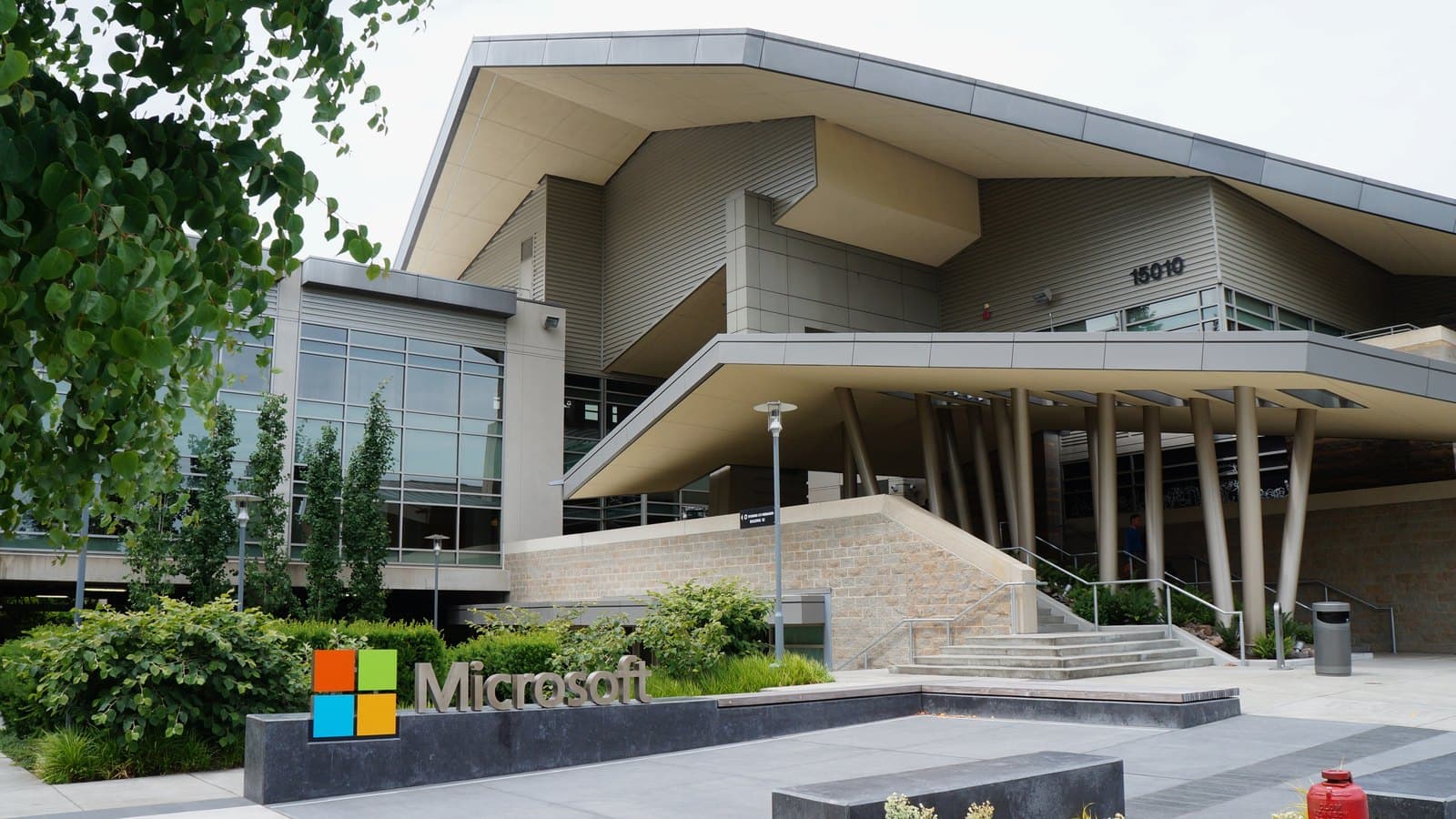
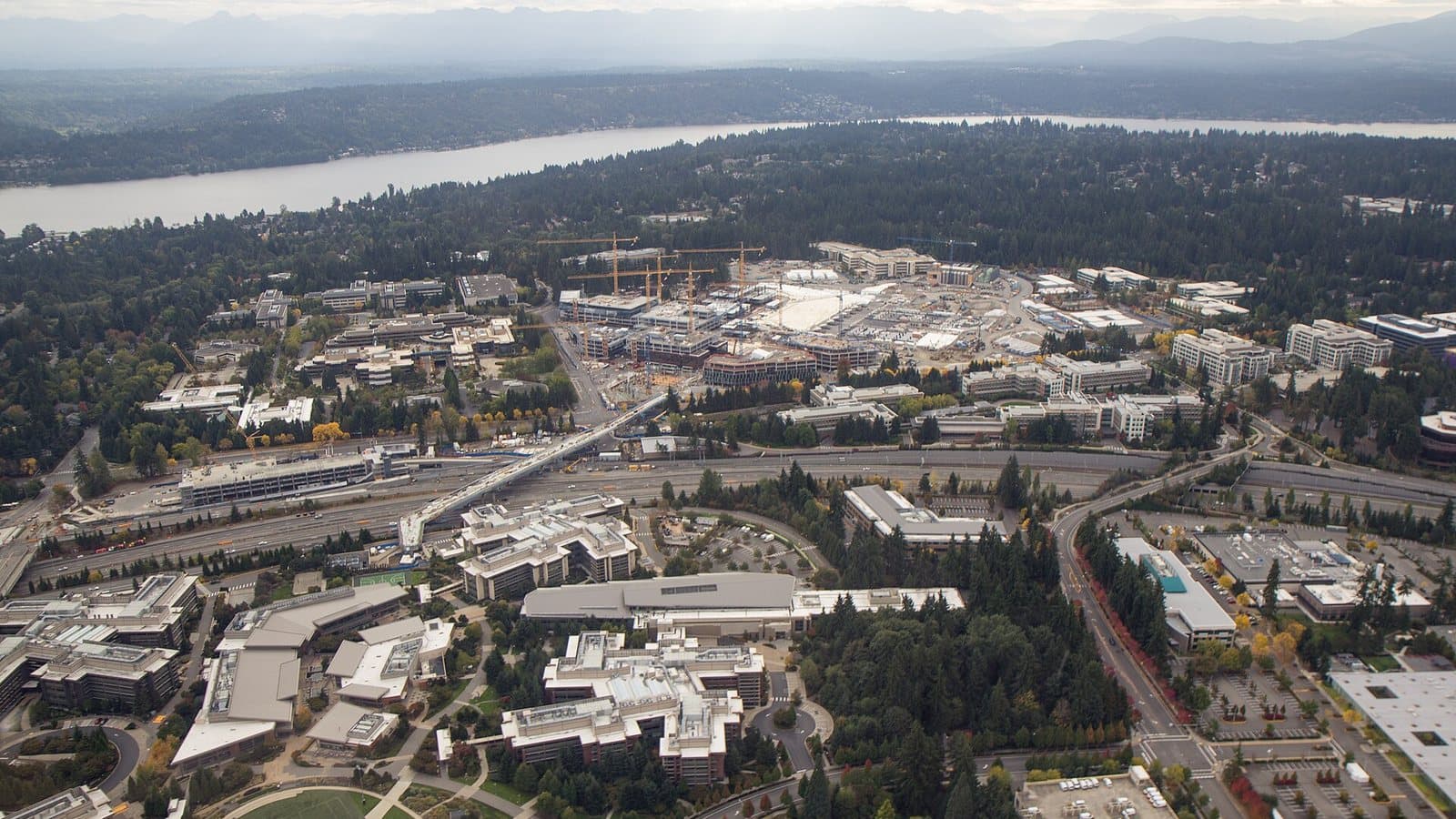
Cover: Aerial view of Microsoft's Redmond campus in Washington state. Photograph by Atomic Taco, CC BY-SA 2.0, via Wikimedia Commons, cropped 16:9.
Tags
Frequently asked questions
- Why did Microsoft sell $25 billion of bonds?
- Microsoft said the proceeds are for general corporate purposes, including working capital, capital expenditure, share repurchases, acquisitions and repayment of existing debt. The company is funding a large AI data-center buildout while keeping its cash for other uses. The offering is not formally earmarked for AI.
- When did Microsoft last sell US dollar bonds?
- Microsoft's previous US dollar bond sale was in 2017, when it raised $17bn. It has issued debt in other currencies since then, but it was the last major hyperscaler to tap the US dollar bond market for the current AI buildout.
- How big is Microsoft's capital spending?
- Microsoft reported $45.2bn of capital expenditure and finance leases for the quarter ended 30 September 2026. It guided to more than $50bn in the December quarter and about $170bn for calendar 2027. About 75% of the spending is tied to short-lived assets such as CPUs and GPUs.
- Does Microsoft still have positive free cash flow?
- Yes. Microsoft reported $18.63bn of free cash flow in the September quarter, down 27% from a year earlier. That makes it an exception among the largest cloud providers: Alphabet, Amazon and Meta have all reported negative free cash flow in recent quarters as their AI spending rose.

TPW Editorial
Editorial Team
TechPastWeek's editorial team reports and edits every story we publish. We research each piece against primary and credible secondary sources, and a human editor reviews and signs off before it goes live.