Nvidia Puts $3 Billion Into Meta's Equity Sale and Expands the Muse Partnership
Nvidia will invest $3 billion in Meta's $95 billion equity offering and widen their Muse partnership, with AMD adding $1 billion to the same share sale.

On this page
Key takeaways
- Nvidia said on 26 October 2026 that it will invest $3 billion in Meta's equity offering and expand the two companies' partnership on Meta's Muse models.
- AMD announced a $1 billion investment in the same offering a day later, for $4 billion combined against the up to $5 billion Meta said Nvidia, AMD and Broadcom might buy.
- Meta plans to raise $95 billion, made up of $35 billion in underwritten public offerings and $60 billion through an at-the-market programme.
- The first $25 billion tranche priced at $625 a share and was about five times oversubscribed, Bloomberg reported, with the 15 largest investors taking roughly 70% of it.
- The technology side of the deal covers Vera Rubin GPUs, Vera CPUs, Spectrum-X Ethernet and BlueField-4 networking, plus joint work on Muse training and inference.
Nvidia said on 26 October that it will invest $3 billion in Meta's equity offering and expand a partnership that runs from Meta's Muse models down to the networking inside Meta's data centres. Meta is raising $95 billion in new shares, and the first chip supplier to sign up for a slice of the sale is also the company selling Meta the accelerators that fill those buildings. AMD followed a day later with a $1 billion commitment, CNBC reported, which brings the two pledges to $4 billion.
Related reading: Meta's Free Cash Flow Turned Negative for the First Time Since 2012 · Meta's Muse Is a Personal AI Agent That Wants Your Passwords and Your Purchases.
Meta's announcement on Monday had put the potential interest at up to $5 billion from Nvidia, AMD and Broadcom together. Two of the three have now committed. Nvidia's release presents the share purchase as one part of a wider collaboration, and Reuters reported the investment alongside the Muse agreement, treating the two as a single move by a supplier to deepen its ties with a very large customer.
The share sale is the bigger number
Meta said on 26 October that it intends to raise $95 billion, split between $35 billion of underwritten public equity offerings and $60 billion sold through an at-the-market programme, CNBC reported. The first $25 billion tranche priced at $625 a share and the book was about five times covered, according to Bloomberg, which cited people familiar with the sale. More than half of the shares went to long-only funds and existing holders, and the 15 largest investors took about 70% of the offering, Quartz reported.
The oversubscription matters for anyone reading the Nvidia headline as a rescue. Meta did not need the chipmaker's money to get the deal done; the book closed with demand far beyond the shares on offer. Nvidia's $3 billion and AMD's $1 billion are a small part of a raise that outside investors were already queuing for, and they give the two suppliers a stake in the customer whose orders fill their own books.
The structure also shows what Meta is paying for. An underwritten block is priced in one go, so the company accepts whatever discount the banks need to move the shares. The at-the-market portion carries no such discount but takes months to sell, and the proceeds arrive in pieces that depend on the share price at the time. A company facing a short funding gap would have reason to lean on the first method alone.
Two ways to sell $95 billion of stock
The $35 billion portion is an underwritten offering: banks buy the shares and resell them at a fixed price, which is how the $25 billion tranche came to be priced at $625. The $60 billion at-the-market programme works differently. Shares are sold gradually through a sales agent at whatever the market will pay, so the company raises money over time without announcing a single discounted block. Only the first $25 billion has been priced so far.
The size of the plan has shifted in the retelling. DatacenterDynamics and The Information have both described a $97.5 billion offering. Meta's own figure is $95 billion, and the difference is not explained in the company's statement. The $95 billion is the number to use until Meta files something that says otherwise.
What Nvidia gets for its $3 billion
The technology agreement is specific. Meta will expand its deployment of Nvidia Vera Rubin GPUs and Vera CPUs, along with Spectrum-X Ethernet and BlueField-4 networking, for the next generation of AI agents. The two companies will work together to optimise Muse training and inference on that stack, and they are considering Nvidia OpenShell, which is built for safe agent deployment, and Nvidia Sentry, which monitors what deployed agents do.
The list goes further than a GPU order. Meta has its own accelerator programme, the MTIA line, designed with Broadcom and manufactured by TSMC. A commitment to Spectrum-X and BlueField-4 at this scale, attached to a $3 billion share purchase, suggests the split between in-house and purchased infrastructure is being redrawn for the agent era rather than settled in Meta's favour.
OpenShell and Sentry are still only under consideration. Both address what happens after an agent is deployed: whether it can be contained, and whether its actions can be watched. Meta has shipped an agent that reads mail, books travel and spends money, and guardrails for that kind of software are a procurement decision as much as an engineering one. Nvidia is now part of that decision.
The investment is proposed, not completed. Nvidia's release says it is subject to closing conditions, and neither company has said what those conditions are.
Muse is the product both sides need to work
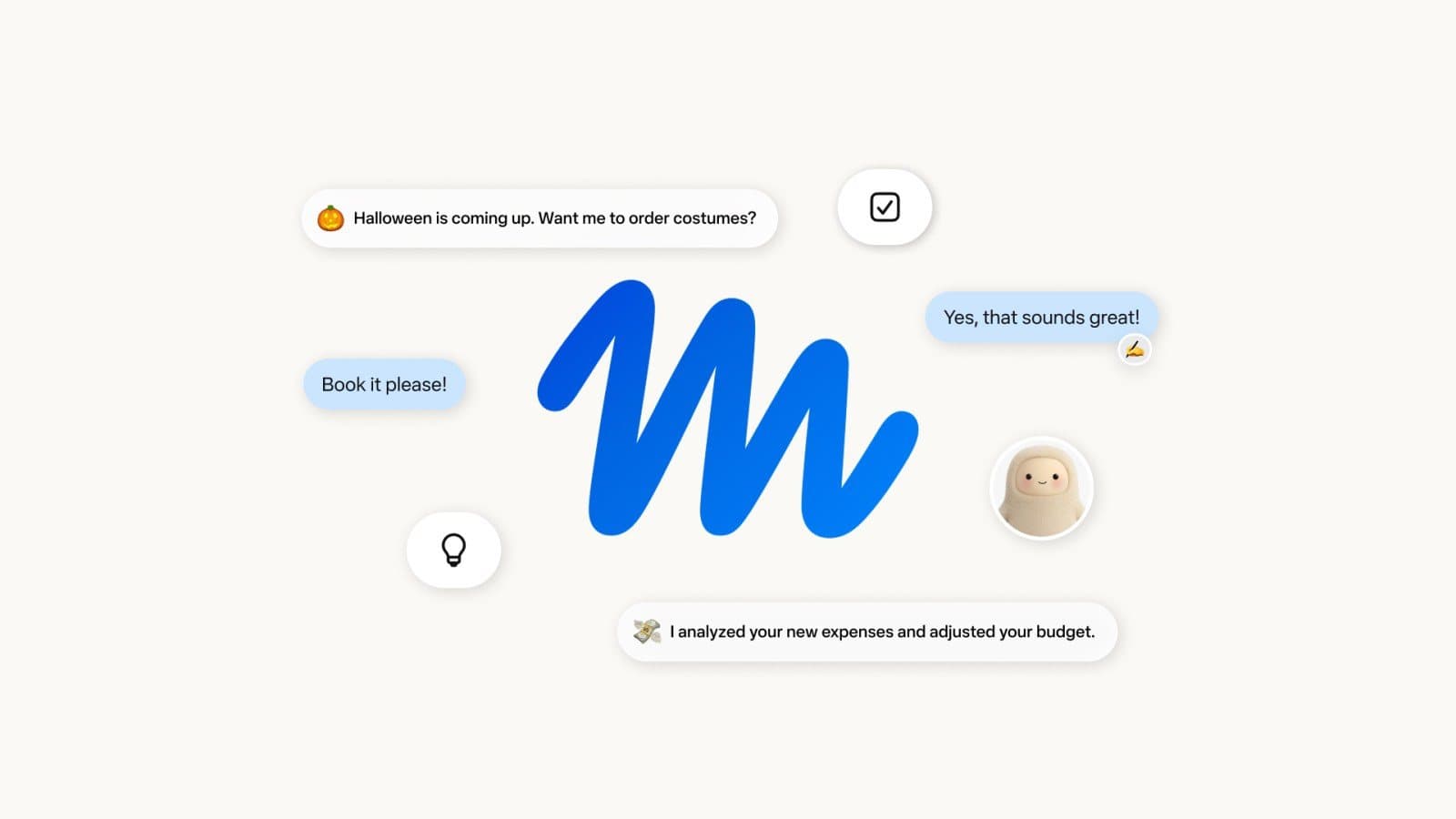
Muse is Meta's personal AI agent and model family, launched in September 2026. Nvidia's release says the models have delivered “frontier-level benchmark performance and surging consumer downloads since launch.” That is a company claim, and the figures behind it have not been independently verified.
“Muse is how we bring personal superintelligence to everyone. We're excited to keep working with NVIDIA to deliver the best personal agents and frontier models for billions of people.” — Mark Zuckerberg, Meta chief executive, Nvidia announcement, 26 October 2026
Jensen Huang's framing in the same release was about the category rather than the deal. AI agents, he said, “represent a new computing paradigm.” He described that paradigm as software that understands goals, reasons, uses tools and gets work done on the user's behalf. The commercial logic follows from that description: an agent that runs continuously, calls tools and holds context needs inference capacity in a way a chat window does not, and a custom training chip does not address that demand directly.
Meta's own numbers point the same way. The company reported third-quarter 2026 revenue of $64.60 billion on 21 October, up 26%, alongside capital expenditure of $34.91 billion and full-year capex guidance of $135-145 billion. Free cash flow was -$2.12 billion for the quarter.
Why the money looks like it is moving in a circle
Nvidia is putting money into a company that buys its products. The pattern is not new for Nvidia in 2026. It has taken stakes in OpenAI, Anthropic, Intel and xAI, and Dealroom data cited by CNBC counts 121 investment rounds involving Nvidia this year, against 13 in 2022. AMD has gone from two rounds in 2022 to 25 in 2026, and said in July that it would invest up to $5 billion in Anthropic.
If a supplier funds its customers, part of the revenue it later reports is money it supplied. That does not make the revenue fake; the chips are real, the invoices are real and the depreciation lands on the customer's books. But it does make the growth harder to read from the outside, because the same dollar can appear as an investment outflow and, some quarters later, as a sale. Whether that is what is happening here is not something either company has addressed, and neither has disclosed a purchase commitment tied to the $3 billion.
The market's first reaction was muted. On 27 October, AMD rose 3%, Nvidia was flat and Meta fell 1%, CNBC reported. None of the three moves was large, which suggests investors did not read the announcements as a repricing of either company.
The capex bill behind the raise
Meta's shift to equity is the part of this that will outlast the headlines. The company had been funding its buildout from operating cash flow and from debt. The $95 billion plan moves a large share of the financing onto shareholders. It was announced five days after Meta reported a quarter in which capital expenditure exceeded operating cash flow.
The sum is roughly two-thirds of the $135-145 billion Meta expects to spend on capital projects this year, on the company's own guidance. That comparison has a limit. Equity raised in the fourth quarter of 2026 can fund spending that stretches into 2027, and Meta has not said which projects the money is meant to cover. But it does show the scale of what the share sale is for: a second funding leg under a programme that had been running on one.
Meta has not said how much of the $95 billion will go to Nvidia rather than to Broadcom, AMD, its own silicon teams or land, power and construction. That breakdown would be the most useful disclosure in the package, and Meta has not given it.
Caveats
- Nvidia's $3 billion is proposed and subject to closing conditions. AMD's $1 billion is an announced commitment, not a completed purchase.
- Meta's $95 billion is a fundraising plan, not capital in hand. Only the $25 billion tranche has priced.
- The five-times oversubscription and the allocation percentages come from Bloomberg's sources, not from Meta. Meta has not confirmed them.
- The $97.5 billion total reported by DatacenterDynamics and The Information is a press figure. Meta's stated plan is $95 billion.
- Muse's benchmark and download claims are statements by Nvidia and Meta. No independent testing is cited.
- Meta's capex range is company guidance, and the company has not broken the figure down by supplier.
What to watch
Three things will decide whether this deal reads differently in a year. The first is closing: Nvidia's investment and AMD's both depend on conditions neither company has spelled out, and a delay would raise the question of whether the commitment is as firm as it sounds.
The second is Broadcom. Meta named three potential buyers of up to $5 billion in shares and only two have moved. Broadcom supplies a significant share of Meta's custom accelerator work, and its decision to join or stay out will be read as a signal about which supplier relationships Meta intends to deepen.
The third is the rest of the raise. The $60 billion at-the-market programme will be sold into the market over months, and each tranche will meet whatever price the market offers, and the shares fell 1% on 27 October. If Meta completes the programme at prices near $625, the financing question is largely answered for this buildout. If it slows the sales, the capex guidance becomes the thing to watch, because the spending plan was written on the assumption that the money would be there.
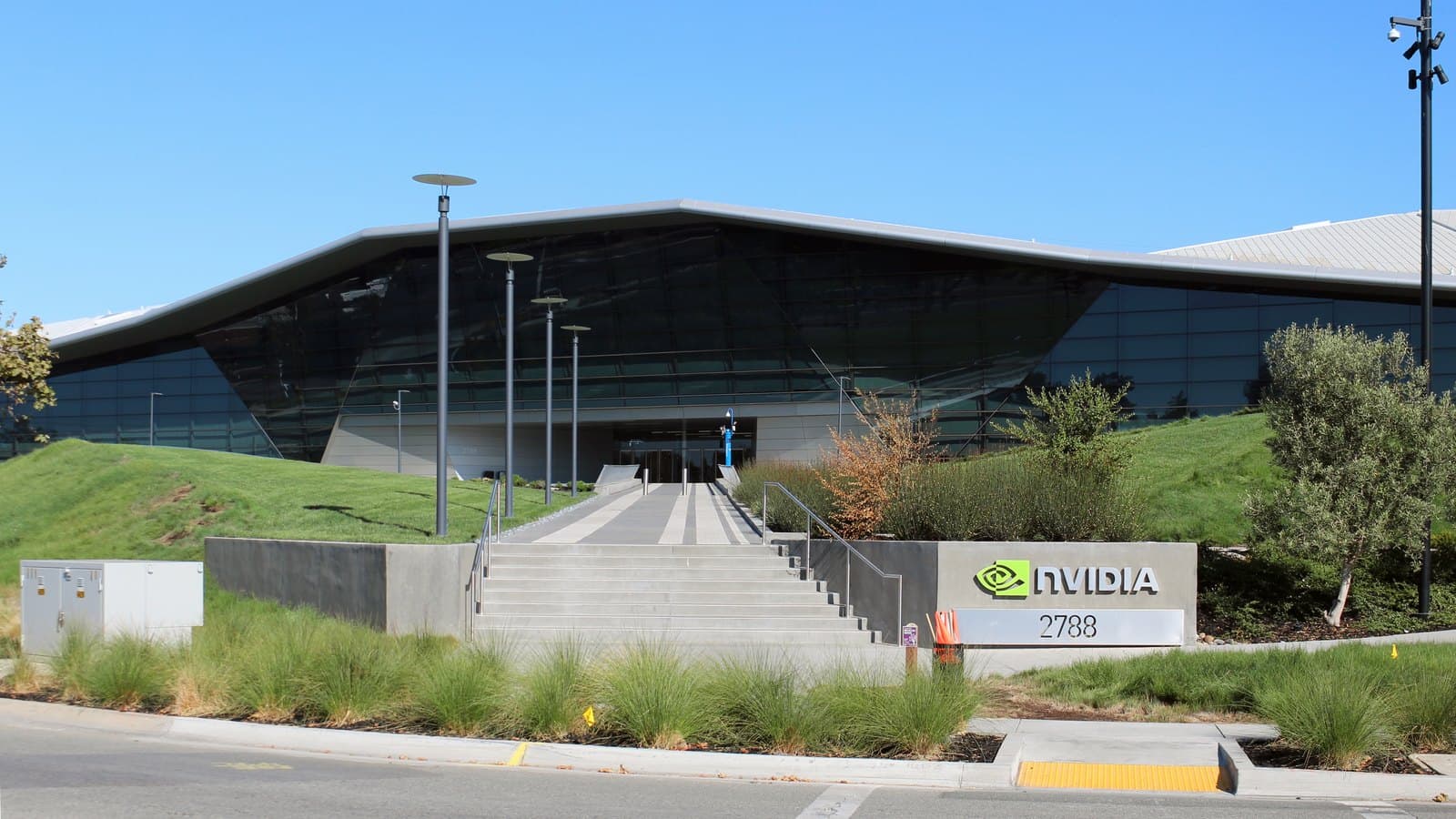
Cover image: "NVIDIA Headquarters" by Coolcaesar, CC BY-SA 4.0, via Wikimedia Commons.
Tags
Frequently asked questions
- How much is Nvidia investing in Meta?
- Nvidia said on 26 October 2026 that it will invest $3 billion in Meta's equity offering. The investment is proposed and subject to closing conditions, and AMD announced a further $1 billion commitment the following day.
- How much money is Meta raising?
- Meta plans to raise $95 billion: $35 billion through underwritten public equity offerings and $60 billion through an at-the-market programme. Only the first $25 billion tranche has priced, at $625 a share, and some later reports put the total at $97.5 billion.
- What does the Nvidia and Meta Muse partnership cover?
- Meta will expand its deployment of Nvidia Vera Rubin GPUs, Vera CPUs, Spectrum-X Ethernet and BlueField-4 networking for AI agents, and the two companies will optimise Muse training and inference. They are also considering Nvidia OpenShell for safe agent deployment and Nvidia Sentry for agent monitoring.
- Is Nvidia paying Meta to buy its chips?
- The two announcements are separate: an equity investment and a technology partnership. Neither company has disclosed a hardware purchase commitment tied to the $3 billion, and Meta has not broken down how much of its $95 billion raise will go to Nvidia rather than other suppliers.

TPW Editorial
Editorial Team
TechPastWeek's editorial team reports and edits every story we publish. We research each piece against primary and credible secondary sources, and a human editor reviews and signs off before it goes live.