Microsoft's Azure Grew 48% and Its 2027 Capex Bill Grew to $170 Billion
Microsoft beat estimates with $92.28bn revenue and 48% Azure growth, then guided calendar 2027 capex to $170bn as free cash flow fell 27% year on year.

On this page
Key takeaways
- Microsoft reported $92.28bn in revenue for the quarter ended 30 September 2026, up 19% year on year and above the $90.69bn LSEG consensus.
- Azure revenue was $33.17bn, up 48%, the first quarter Microsoft disclosed the figure in dollars; it is now the company's biggest single business.
- Capital expenditure including finance leases reached $45.2bn, and Microsoft guided calendar 2027 capex to $170bn, with 75% of current spend on short-lived assets such as GPUs.
- Free cash flow fell 27% to $18.63bn, though Microsoft still expects positive free cash flow through fiscal 2027.
- Devices and Consumer revenue fell 3% to $15.48bn, with Windows OEM and devices down 22% and overall Xbox revenue down 2%.
Microsoft reported $92.28bn in revenue for the quarter ended 30 September 2026, up 19% from a year earlier, with Azure at $33.17bn and growing 48%. The numbers arrived on 28 October after the US market closed, and the press release put revenue above the $90.69bn LSEG consensus. Adjusted earnings per share were $4.89 against $4.73 expected.
Related reading: Microsoft Borrows $25 Billion as the AI Buildout Moves Onto the Bond Market · Alphabet's Free Cash Flow Hit -$9 Billion and the Stock Had Its Worst Day.
The income statement was the easy part. Net income was $36.63bn, or $4.92 per diluted share, against $27.75bn and $3.72 a year earlier. Adjusted EPS excludes a loss of roughly $200m on Microsoft's OpenAI investment. The spending is harder to read: $45.2bn of capital expenditure in the quarter, more than $50bn guided for the December quarter, and $170bn for calendar 2027.
A quarter can beat on revenue and still leave the year's cash flow question open. Microsoft's answer to that question is now measured in tens of billions per quarter, and the first set of numbers under a new reporting structure makes the trade easier to see.
This was the first quarter under the two-segment structure Microsoft announced before the print, and the old three-segment split is gone after 11 years. Agents and Infra produced $76.8bn, up almost 25% and 83% of total revenue, against a StreetAccount consensus of $75.63bn. The segment holds Azure, Microsoft 365 commercial and consumer, server products, industry solutions and support services.
Devices and Consumer produced $15.48bn, down 3%, against a $15.05bn consensus. That segment carries Windows, Xbox, Surface, search and advertising, which is where the quarter's weakness sits. It beat the consensus and still shrank, a combination that says more about how low the bar had been set than about the health of the consumer business.
The reorganisation has an accounting cost for anyone reading trends. Segment-level year-on-year comparisons are distorted because the categories themselves changed, and Microsoft's prior disclosures were built around the old boundaries. Company-level figures remain comparable, but anyone comparing segments year on year is comparing two different sets of categories.
Azure, now measured in dollars
Azure's $33.17bn was the first dollar figure Microsoft has published for the business. It beat the StreetAccount consensus of $32.32bn and grew 48%, up from 42% in the June quarter. On any reading, Azure is now Microsoft's largest single business, and it is the number that carries the investment case.
The guidance went further than the results. Microsoft told investors to expect 49% to 50% growth at constant currency in the December quarter, against a 45.1% consensus. Guidance above the beat is the part of an earnings report that shapes the next three months, and it landed with capex already rising.
Microsoft Cloud, the broader measure that includes Azure and the commercial cloud services around it, reached $63.9bn, up 30% and almost 70% of total revenue. Microsoft 365 commercial cloud grew 18%, and the consumer cloud grew 17% with subscriber growth of 7%. Those are steady numbers next to Azure's 48%, and they matter because they fund the spending. The company does not break out how much of Azure's growth comes from AI workloads, so the 48% covers both AI and conventional cloud demand.
The capex number to argue about
Capital expenditure including finance leases was $45.2bn, up about 30% year on year and below the $50.67bn StreetAccount consensus, CNBC reported. The forward guidance pointed the other way. Microsoft guided the December quarter above $50bn and put calendar 2027 capex at $170bn, a figure large enough to change how the company's cash flow reads for the next two years.
The mix inside that spending is the detail that matters. About 75% is now tied to short-lived assets such as Intel CPUs and Nvidia GPUs, up from roughly 66% in the prior three quarters and about half a year earlier. Chips have shorter useful lives than buildings, so a higher share of short-lived assets pulls depreciation forward and brings the replacement cycle closer. It also means the $170bn buys capacity that has to be refreshed sooner than a data center shell does.
Microsoft said some third-party capacity deliveries slipped from the first quarter into the second half, mainly from GPU-as-a-service providers. That timing note sits next to a capex figure that came in below consensus and a December guide above it.
Capex is not one number
The $45.2bn includes finance leases, so it is not the same as clean cash capital expenditure and should not be compared directly with a cash flow statement line. The $170bn is a calendar 2027 plan, not a signed commitment, and Microsoft can revise it.
The 27% cash flow decline is mostly capex
Free cash flow was $18.63bn, down 27% from a year earlier. Microsoft still expects positive free cash flow through fiscal 2027, which separates it from two of its largest peers. Alphabet reported more than $9bn of negative free cash flow in its September quarter, and Meta reported negative free cash flow the week before Microsoft's print.
The 27% decline is mostly a capex effect rather than an operating problem. Revenue and net income rose; the cash left over after investment fell because the investment got bigger. That is a different thing from a decline in what the business earns, and Microsoft's guidance keeps free cash flow positive through the fiscal year.
"We still have demand that exceeds supply." — Amy Hood, Microsoft chief financial officer, Q1 fiscal 2027 results
Microsoft's argument is that the capacity will be used. It has guided Azure growth up, not down, and says demand exceeds supply. The capex plan is a bet that the constraint is capacity rather than appetite. A 49% to 50% guide for December is a strong statement of confidence in the near term. The $170bn is a statement about the next two years, and it is harder to test quarter by quarter.
The businesses that shrank
Windows OEM and devices revenue fell 22%. Microsoft attributed the drop to the prior year's Windows 10 end-of-support benefit, OEM inventory drawdowns and a weaker PC market. Amy Hood told analysts to expect Windows OEM down in the mid 30s next quarter, with declines continuing through fiscal 2027, The Verge reported. A 22% decline followed by a mid-30s guide is a contraction Microsoft expects to run through the year.
Xbox was weaker in the same pattern. Hardware revenue fell 14%, content and services fell 2%, and overall Xbox revenue fell 2%. Microsoft has not updated its Game Pass subscriber count since 34 million in February 2024, which leaves the service's growth outside the reported numbers. Hardware declines in a console generation's later years are normal; the absence of a subscriber update makes it harder to tell how much of the content and services dip is cyclical.
The cost side moved in the same quarter. Microsoft cut 4,800 jobs during the period and announced a voluntary exit offer on 26 October to up to 60,000 employees, a figure that counts eligible staff rather than departures. It also created an AI implementation unit and announced a Copilot super app. Microsoft has not presented the job cuts and the capex plan as two halves of one decision, and the reporting does not establish that link. They are, however, on the same ledger.
Copilot numbers without a denominator
Microsoft 365 Copilot users rose 50% from the previous quarter. The company did not disclose paid seats, so the growth rate has no visible base. Hood said the E7 bundle, which packages Copilot with other services, has millions of seats. The paid-seat count, which would show how much of that use is billed, is not in the disclosure.
Satya Nadella used the call to describe where the model economics are heading. He said the goal for Microsoft's first-party models is capabilities comparable to leading models within three to six months of release "at a fraction of the training cost". He also said that as more capable models run locally, Microsoft sees an opportunity "to make more intelligence effectively unmetered". Both lines point at the same strategy: push inference onto devices and Windows, where the marginal cost of a query falls, and charge for the platform rather than the token.
That strategy explains the language about the PC. Nadella described the goal of making "every PC a secure agent box", which ties the client business to the AI business in a way the old segment structure obscured. It also explains why the consumer side gets attention even while it shrinks. A Windows installed base is distribution for local models, and local models are how Microsoft gets to unmetered intelligence.
Caveats
- Azure's 48% is company-reported and mixed. It includes AI and non-AI workloads, and Microsoft does not break out AI revenue, so the growth rate cannot be decomposed from the outside.
- Capex includes finance leases. The $45.2bn is not directly comparable to clean cash capex, and the $170bn is a calendar 2027 plan rather than a commitment.
- Segment comparisons are new. The two-segment structure took effect this quarter, so year-on-year segment growth is affected by the reorganisation.
- Free cash flow is still positive. The 27% decline is mainly capex, not operating weakness, and Microsoft expects positive free cash flow through fiscal 2027.
- The stock move is an after-hours snapshot. Shares rose about 4% in extended trading on 28 October.
- The 60,000 figure counts eligible staff. It is the size of the voluntary exit offer, not the number of people who will leave.
The plan meets its first test in December
Microsoft guided December quarter revenue to $96bn to $97.1bn, about 18.8% growth at the midpoint, against an LSEG consensus of $95.60bn. It guided Azure to 49% to 50% growth at constant currency and capex above $50bn. The three numbers belong to one question: the first two describe the return, the third its cost.
At the September quarter's rate, free cash flow runs at roughly $74bn a year against a $170bn capex plan for calendar 2027. The two figures are not measured the same way, since one deducts cash capex and the other includes finance leases, so the comparison is a scale check rather than a forecast.
The market has watched the spending rise without rewarding it much. As of Wednesday's close, Microsoft shares were up about 10% this year against 13% for the S&P 500.
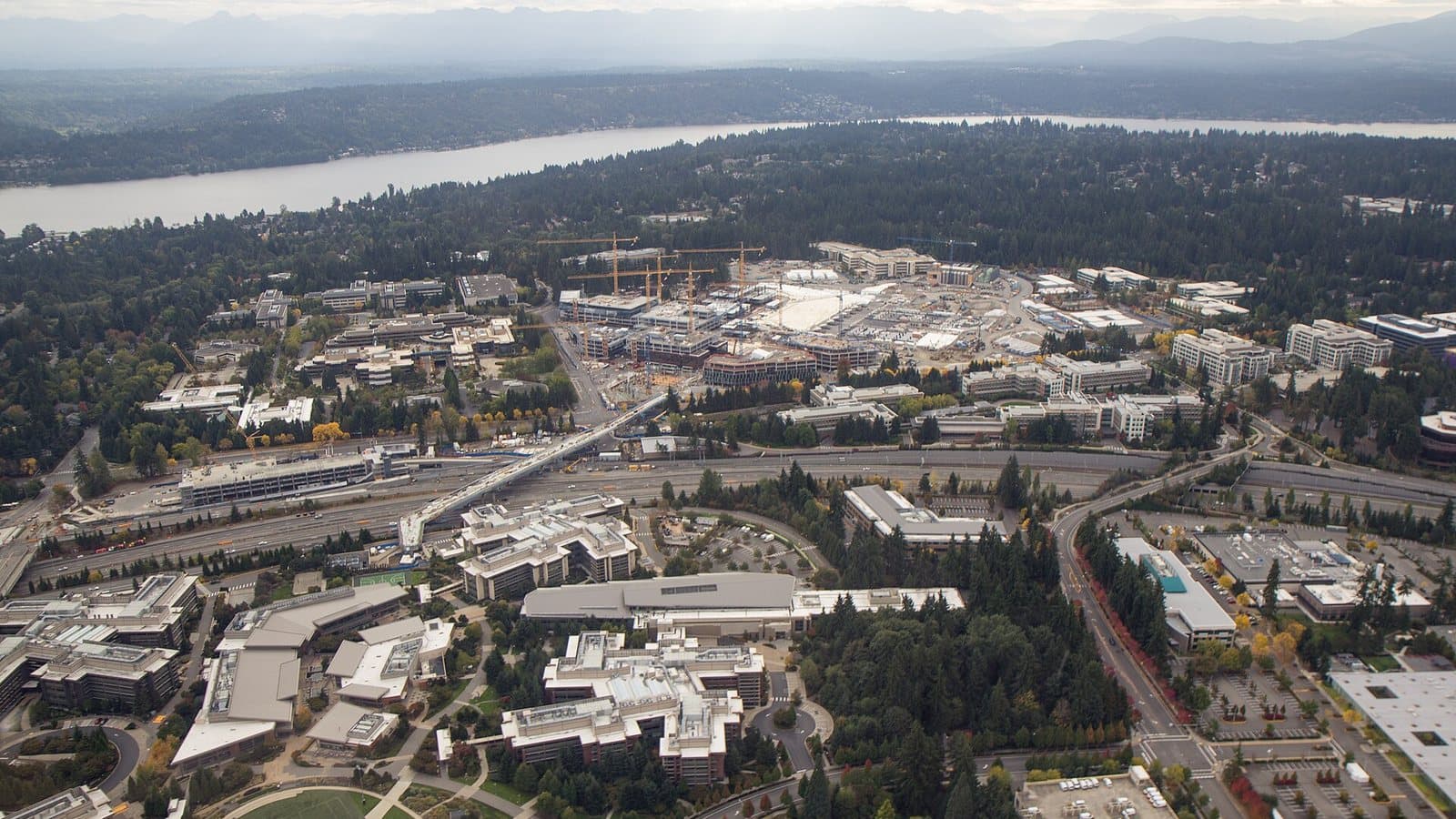
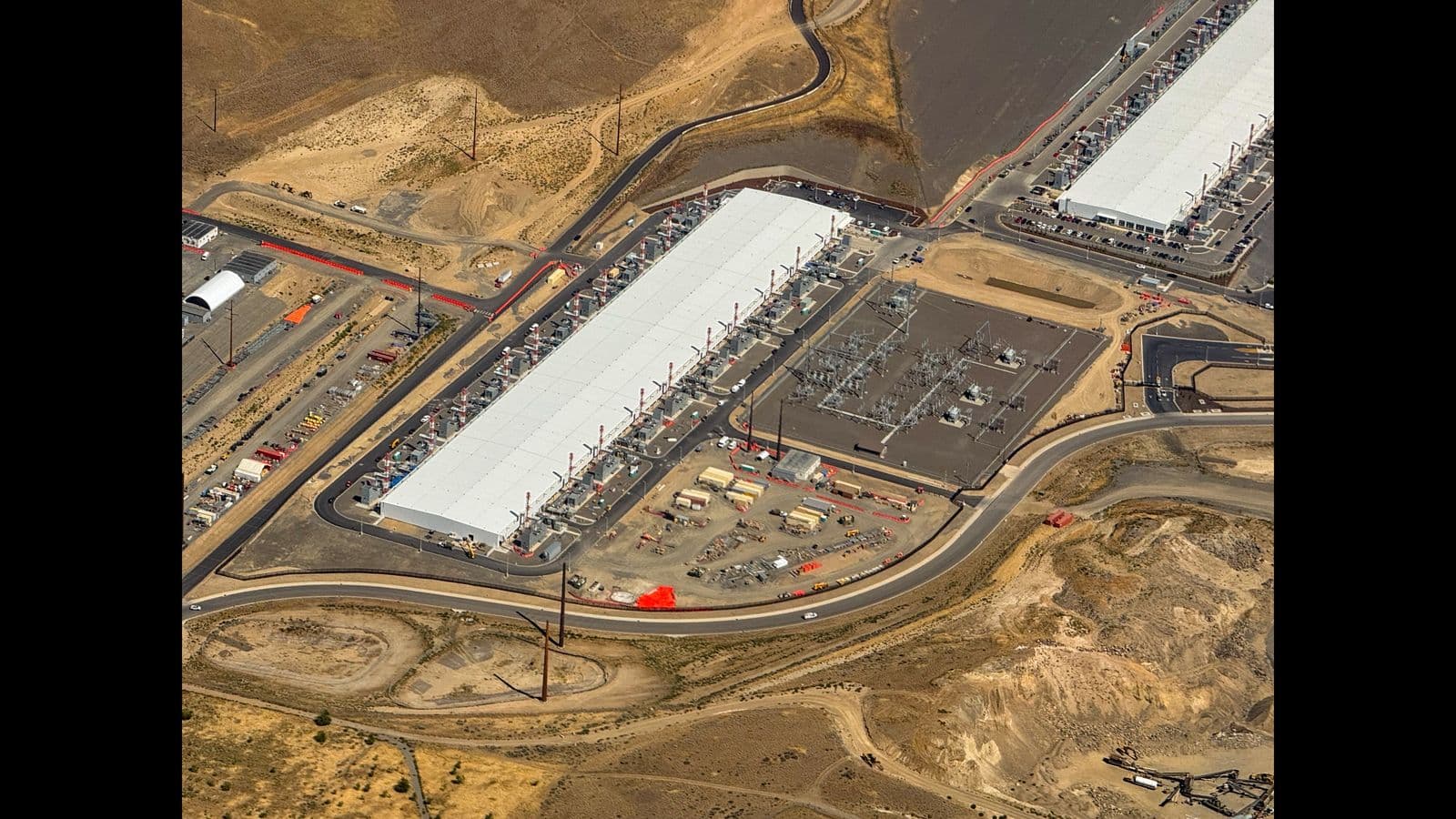
Cover image: "Wenatchee washington azure datacenter aerial 1.jpg" by Tedder, CC BY 4.0, via Wikimedia Commons.
Tags
Frequently asked questions
- What were Microsoft's results for Q1 fiscal 2027?
- Revenue was $92.28bn, up 19% year on year, against an LSEG consensus of $90.69bn. Net income was $36.63bn, or $4.92 per diluted share, and adjusted earnings per share were $4.89 versus $4.73 expected.
- Why did Microsoft change its reporting segments?
- Q1 fiscal 2027 was the first quarter under two segments, Agents and Infra and Devices and Consumer, replacing a three-segment structure that had been in place for 11 years. Agents and Infra generated $76.8bn, or 83% of revenue, while Devices and Consumer generated $15.48bn.
- How much is Microsoft spending on data centers and chips?
- Capital expenditure including finance leases was $45.2bn in the September quarter, and Microsoft guided the December quarter above $50bn. It also put calendar 2027 capex at $170bn, a plan rather than a commitment, and said about 75% of current spend goes to short-lived assets such as Intel CPUs and Nvidia GPUs.
- Did Microsoft's free cash flow turn negative?
- No. Free cash flow was $18.63bn, down 27% year on year, and Microsoft said it still expects positive free cash flow through fiscal 2027. The decline reflects higher capital spending rather than a fall in revenue or net income.

TPW Editorial
Editorial Team
TechPastWeek's editorial team reports and edits every story we publish. We research each piece against primary and credible secondary sources, and a human editor reviews and signs off before it goes live.