Apple Ships Siri AI, Its Rebuilt Assistant, in Beta and Without the EU
Apple released iOS 27, macOS Golden Gate and the rest of its 2027 software, led by a rebuilt Siri powered by Apple Foundation Models built with Google Gemini.


On this page
Apple released the next generation of Apple Intelligence on 14 September, switching on a rebuilt Siri that answers open questions from the web, reads what is on a user's screen and acts inside third-party apps. The launch arrived with iOS 27, iPadOS 27, macOS 27 Golden Gate, watchOS 27 and visionOS 27, and it marked the most substantial overhaul of Apple's assistant since the feature was introduced more than a decade ago.
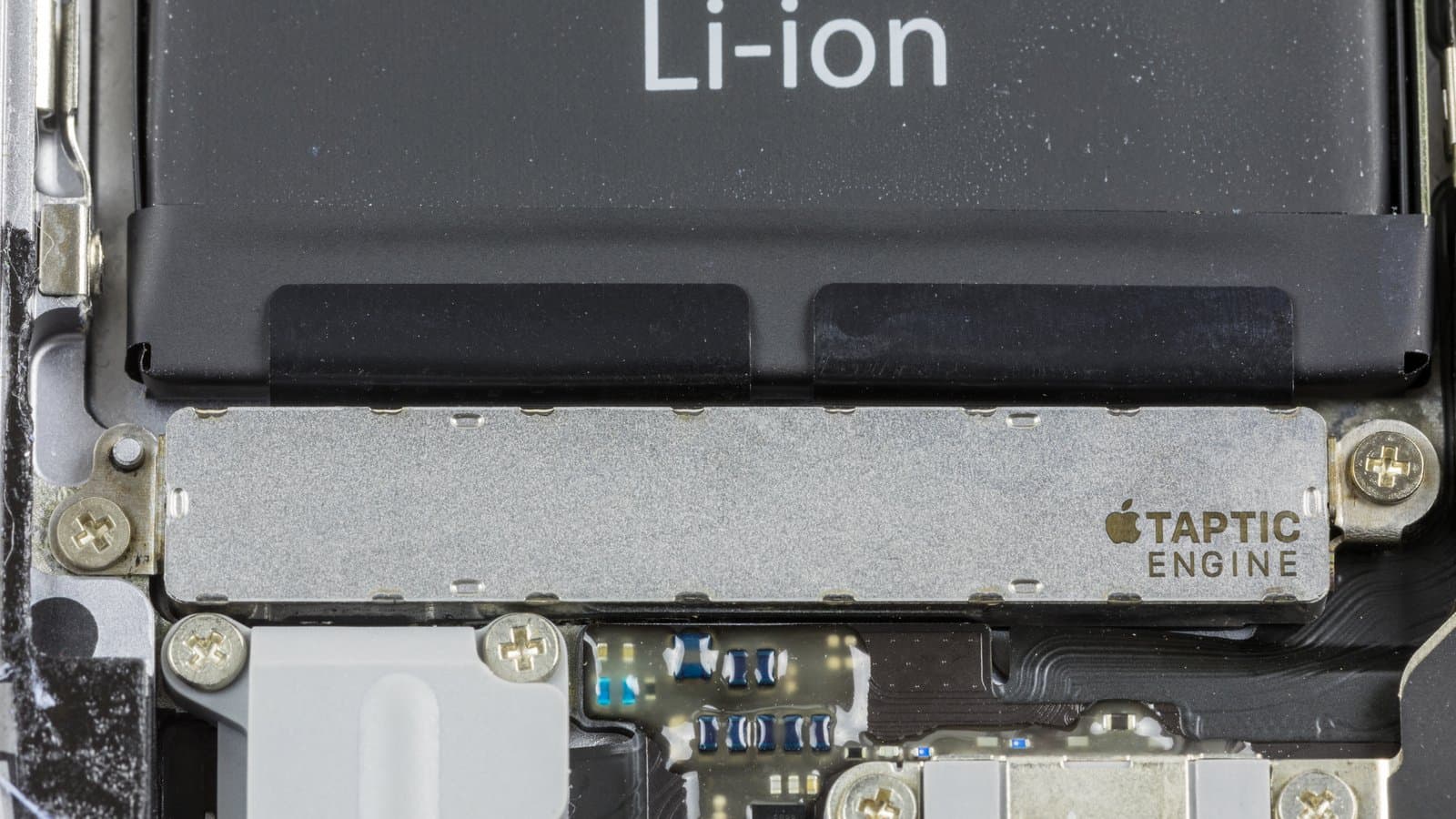
Related reading: A San Diego Jury Says Apple Owes Taction $5.7 Billion Over Haptic Patents · Tim Cook Steps Down as Apple CEO as John Ternus Takes Over.
The company described Siri AI as "an entirely new version of Siri" with personal context understanding, broad world knowledge, onscreen awareness and systemwide app actions. It is rolling out in beta in English, with French, Japanese, Korean, Portuguese and Spanish support to follow next month.
Two details define the release. The first is that the assistant is not a single product but a layer Apple has threaded through its operating systems, from a dedicated Siri app with conversation history synced over iCloud to a Spotlight integration on the Mac. The second is that two of the world's largest consumer markets are excluded on day one: Siri AI will not initially be available in the European Union on iOS, iPadOS or watchOS, and neither Siri AI nor the other new Apple Intelligence features will appear in China while the company works through regulatory requirements.
What the assistant can do
Siri AI rests on four capabilities Apple has been promising since 2024. Personal context lets the assistant search across a user's own messages, emails and photos, so a request about a past trip can surface booking emails and photographs together. Broad world knowledge means Siri draws on web sources rather than redirecting to a search results page. Onscreen awareness lets it answer questions about whatever is displayed, and act on the content, such as turning a message about an event into a calendar entry. Systemwide app actions extend the assistant into applications Apple does not own.
A dedicated app now holds the conversations, with pinned threads, searchable history and suggested prompts, syncing privately through iCloud so a chat started on a Mac can be resumed on a phone. On the Mac, Siri is built into Spotlight, and a Visual Intelligence shortcut, Command-Shift-Space, lets a user select a window and ask about it.
Third-party reach is partial at launch. Texting through WhatsApp and playing a title in Audible work now. Drafting email in Microsoft Outlook, searching an assignment in Notability and adding a restaurant in Tripsy are listed as coming.
The models underneath
The rebuild runs on the next generation of Apple Foundation Models, which Apple says were custom-built in collaboration with Google and its Gemini models. Some run on the device, and the more demanding ones run on servers using Private Cloud Compute, Apple's architecture for handling requests without retaining user data.
Ars Technica reported the model lineup: on device, AFM 3 Core with 3 billion parameters, and AFM 3 Core Advanced, a 20-billion-parameter model that uses a sparse architecture and activates only 1 to 4 billion parameters per request. On Apple's servers sit AFM 3 Cloud, an image model called ADM 3 Cloud, and AFM 3 Cloud Pro.
Apple's most advanced on-device model, which powers the expressive voices and improved dictation, is limited to a handful of devices: the iPhone Air, the iPhone 17 Pro and Pro Max, the new iPhone 18 Pro and Pro Max, and the foldable iPhone Duo. On the rest of the supported hardware, Siri AI still works, but without the newer on-device capability.
The Gemini arrangement was confirmed jointly in January 2026 and detailed at WWDC in June, where it drew scrutiny over concentration, given Google's parallel ownership of Android and Chrome. In a market where the leading assistant platforms are controlled by a small number of companies, Apple's decision to license a competitor's model for its own foundation layer is a notable strategic admission: building a frontier model from scratch was slower than partnering for one.
Devices, limits and what is still missing
Siri AI requires an Apple Intelligence-capable device: an iPhone 16 or later or an iPhone 15 Pro, an iPad mini with A17 Pro, an iPad with an M-series chip, a Mac with Apple silicon, an Apple Vision Pro, or an Apple Watch Series 9 or later. macOS Golden Gate drops Intel Macs entirely and is the last macOS release to support Rosetta for Intel applications, closing a transition that began in 2020.
Apple says usage limits will apply, and it has signalled that expanded access to some features will carry a fee in the future. That is consistent with the company's broader effort to turn services into a larger share of revenue, and it also reflects the cost of running inference on cloud infrastructure.
Several features are staged for later. Audio Intelligence on the Apple Watch Series 12 and Ultra 4, including Live Rewind and Siri Recap, is coming in beta late in 2026, in English and the United States first, and requires an iPhone 16 or newer. Image Playground now generates photorealistic images, with support for the SynthID watermarking standard to follow. The redesigned Health app arrives later this year, as does Labs, a $119 blood-test service run through Quest Diagnostics.
The EU and China gap
The most consequential omission is geographic. Apple attributes the European delay to its effort to find a path that preserves user privacy and security, but the practical effect is that users in the bloc will not have the feature that defines the 2027 software cycle. The Digital Markets Act and the General Data Protection Regulation have both complicated how large platforms can deploy AI features in Europe, and Apple is not the first company to stagger a rollout rather than accept conditions it considers incompatible with its architecture.
China's absence is a separate regulatory problem. Apple Intelligence as a whole supports sixteen device languages, including simplified and traditional Chinese, but the features themselves have not been cleared for the market.
Two years late, and why it took so long
The gap between promise and delivery defines this release as much as the features do. Apple announced a revamped Siri at WWDC in June 2024, demonstrating personal context and on-screen awareness, and said the features would arrive with the following year's software. They did not. The company delayed the overhaul into 2025, then again, and the assistant that shipped in the interim was widely judged to have fallen behind ChatGPT, Gemini and Amazon's Alexa+.
The delay was not only a matter of engineering. Apple's bet was that it could build capable assistant models in-house, and that bet proved slower than the company expected. The eventual solution, a partnership with Google, was confirmed in January 2026 and detailed at WWDC in June. It is a striking arrangement for a company that spent a decade arguing that vertical integration produces better products. Apple now depends on a rival's model for the foundation layer of the feature it has made central to its software.
The cautious rollout reflects that history. Calling Siri AI a beta, limiting the most advanced on-device features to the newest phones, and excluding Europe over regulatory concerns all reduce the risk of repeating 2024's overpromising. The trade-off is that a large share of buyers cannot use the feature the company is marketing.
The competitive landscape
Apple is entering a contest that moved quickly in its absence. ChatGPT has become a default destination for AI questions, and Google's Gemini is embedded across Android and Workspace. Amazon has rebuilt Alexa around a large model, and Samsung and other Android makers have leaned on Google's stack for their own assistants. Meta's Muse and OpenAI's agent products are pushing into the territory of doing tasks rather than answering questions.
Apple's differentiator is the operating system. No third-party assistant can read a user's messages, email and photos the way Siri can, and none can act across native apps with the same permissions. That access is precisely why the feature sits between privacy advocates and regulators, and why every capability is framed around on-device processing and Private Cloud Compute. If Apple can convince users that the personal context is worth the trust, the integration becomes a moat. If it cannot, the assistant remains a competent also-ran with an audience it cannot fully serve.
Why it matters
The release is Apple's answer to a question investors have asked for three years: how does the company compete in assistants when it does not own a frontier model? Its answer is to build the integration instead. By putting Siri inside the operating system, giving it access to personal data that third-party assistants cannot reach, and relying on partners for the model layer, Apple is betting that distribution and privacy architecture matter more than model leadership.
That bet is not without risk. Regulators in Europe have already shown a willingness to constrain how gatekeeper platforms handle AI, and the gap between Apple's on-device story and its cloud dependencies will draw scrutiny. Users for whom the assistant proves unreliable in beta will not distinguish between a model problem and an integration problem.
Still, the rollout puts a capable assistant in front of a user base no competitor can match, and it does so without Apple having to win the model race. For a company that has spent the last two years being described as behind in AI, shipping the integration, even in beta and even with two large markets excluded, is a meaningful change in position.
Tags

TPW Editorial
Editorial Team
TechPastWeek's editorial team reports and edits every story we publish. We research each piece against primary and credible secondary sources, and a human editor reviews and signs off before it goes live.