Amazon Brings Alexa+ to India With Hindi Support and a ₹2,000 Monthly Price
Amazon launched Alexa+ in India on September 16 in early access with Hindi and Hinglish support, free at first and then ₹2,000 a month without Prime.

On this page
Amazon launched Alexa+, its generative-AI rebuild of the Alexa voice assistant, in India on September 16, 2026, opening an early-access period that is free for everyone and will stay free for full Prime members after it ends. Customers on Prime Lite, Prime Shopping Edition, or no Prime plan at all will face a standalone price of ₹2,000 a month.
Related reading: Amazon's AWS Grew 39% While Free Cash Flow Fell to -$42.4 Billion · Amazon in Advanced Talks to Buy AI Startup Decart for About $7 Billion.
The company is pitching the update around how Indians actually speak. Alexa+ launches with support for English, Hindi and Hinglish, including code-switching inside a single sentence, and Amazon says more Indian languages will follow. Customers can check eligibility at amazon.in/alexaplus, or get immediate access by buying a new eligible Echo or Fire TV device. Amazon says 99% of Echo devices already in Indian homes can run the new assistant, with pre-2018 hardware among the exceptions.
What changes with Alexa+
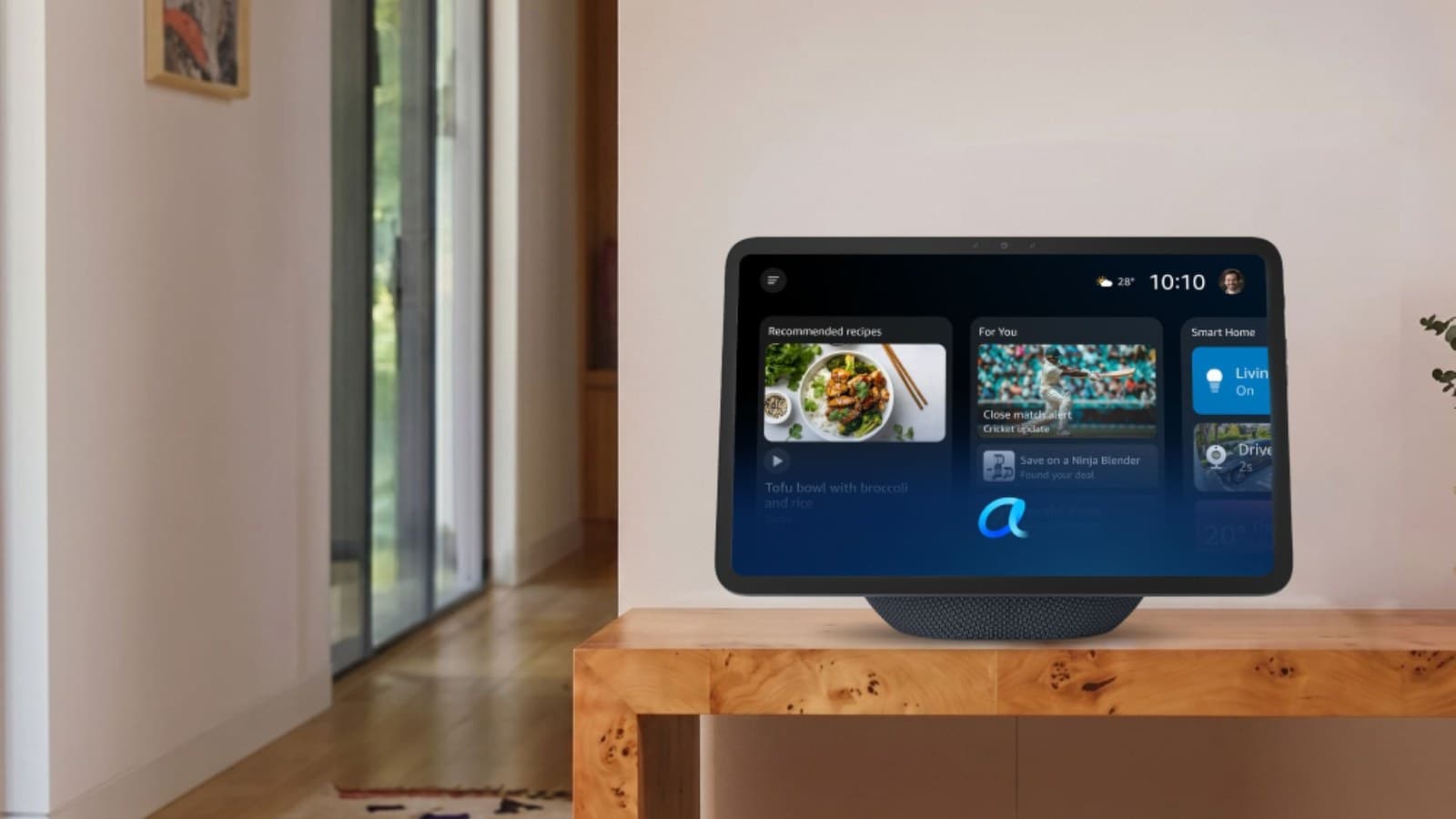
The first shift is conversational. Users no longer need to repeat the wake word for each follow-up, can switch topics mid-conversation, and can carry a conversation across devices, so a question started on an Echo Show in the kitchen can continue in the Alexa app or on a Fire TV with context intact.
Under the hood, Amazon says Alexa+ runs on Amazon Bedrock and routes requests across more than 70 large language models from its own portfolio and others, including Anthropic's, choosing a model based on the task. "It's not an update. It's an entire new technology," Michele Butti, vice president for Alexa International, said at the India launch, according to CNBC TV18.
The second shift is that Alexa is meant to finish tasks, not just answer. Amazon's own launch post, written by India country manager Teena Sidana, lists music selection, gift ordering, smart-home control and drafting an email to a child's school. The assistant can set up smart-home routines by voice, control devices from brands including Atomberg, Qubo, Dreame and Wipro, pull step-by-step recipes from Sanjeev Kapoor Recipes, and play music through Amazon Music, Spotify, Apple Music, JioSaavn and Prime Video.
The pricing, and the Prime math
The rollout follows the model Amazon used in the United States, where Alexa+ costs $19.99 a month and is free for Prime members. India's headline number, ₹2,000 a month, is in the same range as that US subscription, but the local comparison is starker.
Amazon sells full Prime in India at ₹1,499 a year, Prime Lite at ₹799 a year, and Prime Shopping Edition at ₹399 a year. A year of standalone Alexa+ at ₹2,000 a month would cost ₹24,000, roughly sixteen times the price of a year of full Prime, as Gadgets Now noted. For anyone eligible for full Prime, the standalone subscription is hard to justify on published prices, and the design looks less like a mass-market offer than a push toward the full membership.
There is a second wrinkle. Amazon says Alexa+ access will not auto-renew for Prime Lite, Prime Shopping Edition and non-Prime customers once early access ends, so those users must actively choose a plan rather than slide into one. Early access itself has no announced end date, which leaves the paid decision somewhere in the future. Amazon has used that window before: the US rollout ran through a long early-access phase before the company opened the service to everyone and made it a Prime benefit.
Built for India, not translated for it
Amazon is leaning on localisation as the differentiator. The launch material highlights phrases with no clean English equivalent, such as "dhai baje" for half past two and "ek paav" for 250 grams, plus relationship terms including bhanja, bhateeji, jethani and devar. It also claims tuning for Bollywood, cricket and festival references, and for the way Indian households mix languages. Sidana said around half of Alexa customers already switch between two languages while using the device.
The company says the work was done locally, by teams in Bengaluru, Hyderabad, Pune and Chennai, covering speech recognition tuned to Indian home acoustics and language models built for code-mixed Hinglish. That detail matters because voice recognition for Indian accents has been a weak point for globally trained systems. Independent benchmarks have found large gaps between models trained on Indian speech and those trained mostly on English, particularly for code-switched speech.
The scale of the existing base helps explain the investment. Indian customers interacted with Alexa about nine billion times in the past 12 months, including roughly 1.1 billion smart-home interactions, 42 million shopping interactions and more than 420 million music streams, according to figures Amazon shared with Fortune India. Amazon says that in markets where Alexa+ has launched, customers who switch to it shop about three times as often and cook about five times as often through the assistant, and hold more than twice as many conversations.
What is live, and what is coming
The gap between the demo and the shipping product is worth tracking. Amazon lists restaurant and food delivery reservations through EazyDiner, Swiggy and District by Zomato, travel planning and booking through MakeMyTrip and TripAdvisor, and home services through Home Triangle as coming soon, not available today. Voice grocery ordering through Amazon Now is also described as a future capability, and UPI-based payments are expected later.
What ships now is the conversational layer, smart-home control, music and media playback, and shopping support such as building lists, tracking Amazon.in orders, flagging price drops and summarising reviews. New hardware purpose-built for the assistant is on sale alongside it: the Echo Show 8, Echo Show 11, Echo Dot Max and Echo Studio, which Amazon says add processing power, memory and edge computing to support the heavier model workload.
Amazon is also answering the privacy question that follows any always-listening assistant that now remembers more. It points to the Alexa Privacy dashboard, where users can review their interactions, hear what the device captured, manage shared attachments and change how long voice recordings are kept. That is a control surface, not a new guarantee, but it is the company's stated line on transparency.
The competitive frame
Google is the obvious comparison in India, and the picture is mixed. Gemini is widely available on Android phones and its app supports a long list of Indian languages, including Bengali, Gujarati, Kannada, Malayalam, Marathi, Tamil, Telugu and Urdu. But Google's dedicated Gemini for Home voice assistant is not currently listed as available in India on Google's own support pages, which leaves a gap in the living room that Amazon is moving to fill first.
The advantage is real but bounded. Google can connect an assistant to Search, Gmail, Maps, YouTube and Android at a depth Amazon cannot match, and Gemini already sits on hundreds of millions of Indian phones. Amazon's counter is placement: Echo speakers and displays live in kitchens, bedrooms and living rooms rather than on a personal screen, and Alexa already has years of voice usage in those rooms. The contest is less about which model is smarter and more about which assistant is dependable across the surfaces people already own.
Siri, meanwhile, is in the middle of its own conversational overhaul but remains tied to Apple hardware, which limits its reach in a market where Android dominates. India's domestic voice-AI startups are also building for the same multilingual demand, and several have raised money to target it.
What to watch
Three things will determine whether Alexa+ lands in India. The first is execution on the transactional features, because a reservation that fails or a grocery order that misreads a quantity will cost trust faster than a clever conversation can build it. The second is whether Amazon attaches a date to the next set of Indian languages, since English, Hindi and Hinglish cover a fraction of the country's speakers. The third is price behaviour after early access, because the value case for an existing Echo household is strong at zero marginal cost through Prime and much weaker at ₹2,000 a month on its own.
For Amazon, the more interesting number may be internal. The company has said success will be measured not by devices sold but by how many tasks customers choose to hand to the assistant. That makes Alexa+ a bet on habit, and habits in voice are built one dependable errand at a time.
The three plans to know
Amazon sells Prime in India on three tiers relevant here: full Prime at ₹1,499 a year (which includes Alexa+ after early access), Prime Lite at ₹799 a year, and Prime Shopping Edition at ₹399 a year. Only full Prime carries Alexa+; the other two, and non-Prime customers, would need the ₹2,000 monthly subscription or an upgrade to full Prime.
Tags

TPW Editorial
Editorial Team
TechPastWeek's editorial team reports and edits every story we publish. We research each piece against primary and credible secondary sources, and a human editor reviews and signs off before it goes live.