Google Gives Its CC Agent a Family Account and a Permission Model
Google Labs turned its CC assistant into a shared agent for households, with its own Google account, opt-in data sharing for up to six people and delegated paperwork.

On this page
Key takeaways
- Google Labs introduced a family version of its CC agent on September 17, 2026, designed for up to six people in a household.
- CC now has its own Google account, giving the agent a distinct identity and its own permission boundaries.
- Each member chooses what to share; CC cannot search inboxes on its own and will not send anything outside the group without approval.
- The agent can pre-fill permission slips, build shopping lists and meal plans, and manage a shared Calendar and Tasks list.
- The experiment is limited to US users aged 18 and older with personal Google accounts.
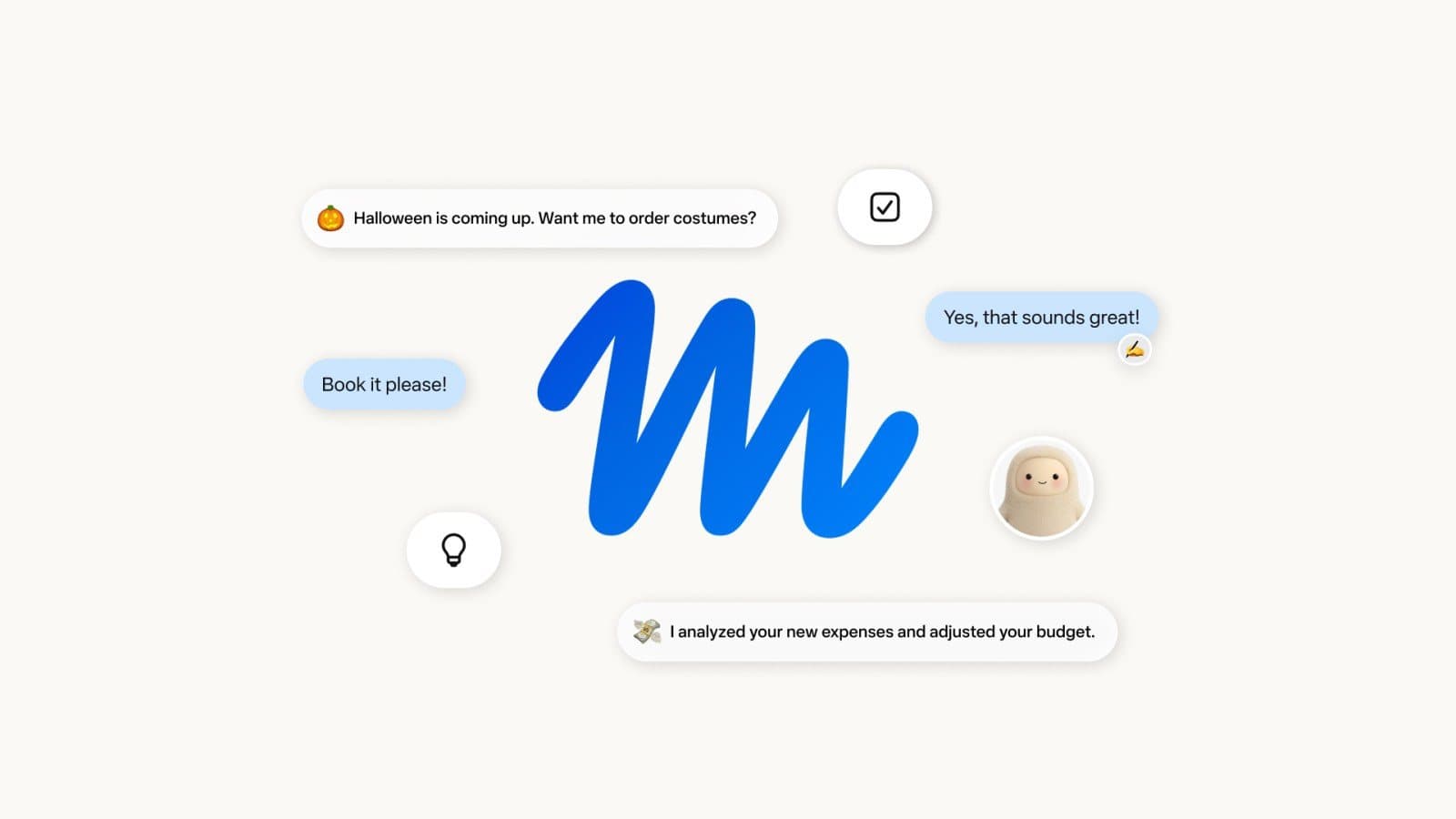
Google Labs introduced a family version of CC, its experimental AI assistant, on September 17. The relaunch turns what began as a personal daily briefing tool into a shared agent that up to six household members can use together, and it gives the agent something unusual for a consumer product: its own Google account.
Related reading: Google Opens Its Smart Home to Any AI Agent With Home MCP · Meta's Muse Is a Personal AI Agent That Wants Your Passwords and Your Purchases.
That design choice is the most consequential part. Most assistants act as an extension of a single user's identity, inheriting that person's access and blurring the line between what the human did and what the AI did. CC instead exists as a separate account with its own permissions, so a calendar change or a filled-in form can be attributed to the agent rather than to whoever happens to own the inbox it read. Google says this gives the agent a clear identity and a clearer set of limits.
The company framed the launch as a response to early testers. Household logistics, Google argues, are usually split across several people's accounts, and information about school schedules, sports practices and appointments ends up trapped in one person's inbox. CC is meant to pull the shared pieces into one place.
How sharing works
Each member chooses what to share. A parent can designate certain senders, such as a school or a swim center, as always available to CC, forward a one-off email, or drop a photo of a birthday invitation into a Google Chat window with the agent. A shared Google Drive folder works the same way. Google says members get a private weekly list of new senders they can choose to include, which keeps the decision visible rather than buried in a settings menu.
Once connected, CC sends a shared "Your Day Ahead" brief each morning that lists who needs to be where and what the agent completed the day before. It connects to Calendar and Tasks and keeps a shared list updated automatically. It also separates what belongs to the household, such as a standing grocery list, from what belongs to one member, such as dietary preferences.
The more ambitious part is delegated work. CC can pre-fill activity registration PDFs and permission slips, draft school supply lists, build a weekly meal plan, calculate drive times between back-to-back activities using the Maps API, and create shared Docs or Sheets. When it lacks a detail, it asks, and it stores the answer in a group memory for next time.
The privacy line to watch is what "permission" means in practice. Google says CC will not act or share outside the group without approval. That is the right default, but a broad instruction like "handle the school paperwork" is harder to audit than a specific one. The clearer the request, the more meaningful the approval.
What Google says CC cannot do
Google has fenced the agent in several ways. CC cannot add or remove family members. It cannot search anyone's inbox on its own, only read what has been shared with it. It responds only to group members and will not send anything to an address outside the group without confirmation. Access can be revoked, and the agent runs on its own isolated cloud computer, which Google says is powered by its Gemini models and its Antigravity agentic framework. Ars Technica reported that the current model behind it is Gemini 3.8 Flash.
The setup is an evolution of an experiment Google first showed in December 2025. That early CC became Daily Brief in the Gemini app in May 2026, offering a personal summary of a user's day. The family version is a bigger step because it introduces shared memory and multi-user permissions, two of the features that make enterprise agent deployments hard and that consumer products have mostly avoided.
Why a family agent is a strategic move
The consumer AI market has shifted from chat to action over the past year. Google's Home MCP, opened to third-party agents in September, lets outside assistants read and control smart-home devices. Meta's Muse can act on a Mac. The competition is now about which assistant is allowed to do real work in the background, because the assistant that manages your calendar and your forms is much harder to replace than the one that answers questions.
A family agent attacks a specific stronghold. Household coordination is a genuine, recurring pain, and the data needed to solve it already lives in Google's products for a large share of users. Gmail, Calendar, Tasks and Drive give CC context that a startup would struggle to assemble. That is Google's structural advantage, and it explains why the company is willing to run a product that touches sensitive school and health information.
It also raises the stakes on trust. An agent that reads a child's school emails and fills out permission slips is handling data that users will scrutinize hard, and it operates in a category where a single high-profile failure would set the whole idea back. Google's decision to launch in the US only, for adults with personal accounts, reads as a deliberate limit on the blast radius.
A crowded agent race
CC is arriving into the most competitive product category in tech. Every major platform is trying to turn a chat assistant into something that acts. Meta's Muse can operate applications on a Mac and rolled out scheduling features this week. Amazon has pushed Alexa Plus into more markets. Microsoft and OpenAI are both building agent surfaces on top of their models. The prize is the default assistant that users hand their calendar, inbox and tasks to, because once an assistant holds that position it becomes very hard to displace.
Google's advantage in that race is distribution and context. CC does not have to convince a household to migrate to a new app. It plugs into the Gmail, Calendar, Drive and Chat accounts those people already use, and the family version leans on the fact that the necessary data is already in one provider's systems. A startup would have to persuade users to connect each service separately and trust it with the aggregation. Google can offer the same capability with fewer clicks.
That is also why the permission model is being emphasized so heavily. Google knows that the limiting factor for consumer agents is not capability but trust, and that a single misuse of school or medical information could poison the category. By giving CC its own account, making sharing opt-in per person, and blocking actions outside the group without approval, the company is trying to get ahead of the objections that will define the next phase of the market. Whether those controls are strong enough is exactly what regulators and privacy advocates will test.
The competitive pressure also explains the timing. Google Home MCP opened to third-party agents in mid-September, and CC followed days later. The company is racing to establish its platforms as the place where agents live before rivals normalize a different arrangement. A household that adopts CC is, in effect, choosing the Google stack for its agentic layer, and that choice is stickier than a downloaded app.
The open questions
Three things are unresolved. First, cost. Running an always-on agent per household, on an isolated cloud instance, is expensive, and Ars noted that CC is not tied to Google's paid subscriptions. How Google pays for it, and whether it eventually sits behind a subscription, will shape how widely it spreads. The company has also not shipped a new Pro-tier Gemini model since early 2026 despite signaling one at its developer conference, which matters if CC is expected to handle complex multi-step logistics.
Second, memory governance. Shared memory is what makes the agent useful, and it is also the hardest thing to audit. Users need to know what was remembered, which member supplied it, when it expires and how to remove something incorrect or sensitive. Google has not detailed how those controls work.
Third, expansion. The family version is US-only, English, and restricted to personal accounts. Europe, where data-protection rules are stricter and questions about what leaves the home are sharper, has no date. Google's willingness to ship first in the US and wait elsewhere is a pattern that regulators on both sides of the Atlantic have noticed.
For now, CC is a Labs experiment with a waitlist, and the interesting question is not whether it works in a demo. It is whether households hand an AI their shared logistics on a permanent basis, and whether Google can run that service cheaply and safely enough to keep it on. The agent having its own account is the right first step. The harder work is everything that follows.
Cover: The Google sign at the company's Mountain View headquarters, by Dietmar Rabich (CC BY-SA 4.0) via Wikimedia Commons, cropped 16:9.
Tags
Frequently asked questions
- What is Google's CC?
- CC is a Google Labs experiment that began as a personal assistant, became the Daily Brief in the Gemini app, and was relaunched on September 17, 2026 as a shared AI agent for families. It manages shared schedules and tasks and can complete some paperwork on a household's behalf.
- How many people can use one CC agent?
- Up to six family members can share a single CC agent. Each member decides individually what to share with it, and the agent has its own Google account rather than borrowing a user's identity.
- Is CC available in Europe?
- No. As of its September 2026 launch, the family version of CC is available only in the United States to users aged 18 and older with personal Google accounts. Google has not announced a date for other markets.

TPW Editorial
Editorial Team
TechPastWeek's editorial team reports and edits every story we publish. We research each piece against primary and credible secondary sources, and a human editor reviews and signs off before it goes live.