FBI Arrests OpenAI Employee Accused of Planting a Hidden Recording Device
OpenAI found a hidden recorder in an executive conference room, reported it to the FBI, fired an employee, and saw him charged with surreptitious interception.


On this page
Key takeaways
- OpenAI discovered a hidden recording device in an executive conference room at a San Francisco office and reported it to the FBI, the company said on October 13, 2026.
- Federal prosecutors charged Saudi national Abdulrahman Alfozan, who joined OpenAI in July 2025 and worked on its product team, with using an electronic device to intercept oral communications. The charge carries up to five years in prison.
- Alfozan was fired and arrested on October 9, 2026, about a week after OpenAI found the device, which had been inserted into a USB port on the back of a television.
- Days before his arrest, the criminal complaint says he left an unattended bag holding another recording device similar to the one in the conference room, according to the Associated Press.
- OpenAI said it has no indications that the individual inappropriately accessed or exfiltrated model weights, source code, or customer data.
OpenAI employees found a hidden audio recorder plugged into the back of a television in an executive conference room at one of the company's San Francisco offices. OpenAI reported the device to the FBI, and about a week later, on October 9, it fired the employee whom federal prosecutors now accuse of planting it. The company described the episode on October 13, the same day the Justice Department announced the arrest of Abdulrahman Alfozan, a Saudi national who joined OpenAI in July 2025 and worked on its product team. Prosecutors with the U.S. Attorney's Office for the Northern District of California charged him with using an electronic device to intercept oral communications, an offense that carries up to five years in prison if he is convicted, TechCrunch reported.
Related reading: Report Says US Officials Concluded a Megaspeed Executive Close to Jensen Huang Was a Chinese Intelligence Asset · Microsoft's October 2026 Patch Tuesday Sets a Record With 1,407 Fixes.
The incident has the shape of an ordinary workplace security case. The FBI is treating it as a counterintelligence problem, which is a different kind of matter. OpenAI sits near the center of the American effort to build frontier "super intelligence," and the bureau is now framing an alleged bug in its offices that way. FBI Director Kash Patel said the scheme was intended to "capture sensitive communications about the company's super intelligence technology," according to TechCrunch. That description, and the speed of the response, set the case apart from a routine corporate surveillance complaint.
What the charging documents and company statements describe
The public record so far is a mix of a criminal complaint, an OpenAI statement, and reporting from several outlets. The details that matter:
- The discovery. OpenAI found the recording device in a conference room and reported it to the FBI, the company said in its post on X. It went public with the account on October 13.
- The suspect. Alfozan, a Saudi national, joined the company in July 2025 and worked on the product team, an OpenAI spokesperson, Nate Evans, confirmed in reporting by TechCrunch. He was fired and arrested on October 9, roughly a week after the device was found.
- The charge. Prosecutors charged him with using an electronic device to intercept oral communications, in effect covertly recording voice without consent. The statutory maximum is five years in prison, with a $250,000 fine reported by CBS News.
- The device. It was inserted into a USB port on the back of a television in the office, per TechCrunch and Bloomberg Tech. OpenAI said it used its internal AI models to work out what the "sophisticated" device was.
- The evidence in the room. Prosecutors say Alfozan was caught looking behind the television where the device sat, and where OpenAI had placed a camera, TechCrunch reported.
- A second device. Days before his arrest, according to the criminal complaint, Alfozan left an unattended bag in a different room. OpenAI personnel opened it and found his wallet, identification, and another recording device similar to the one in the conference room, the Associated Press reported.
The access detail is what makes it a security story
The conference room was not open to the whole company. It could be reserved only by executives and their assistants, and Alfozan, a product-team employee, did not have access to it, CNET reported. The same reporting describes the room as a frequent setting for discussions of proprietary research and for meetings with government and industry officials.
That combination is why the case carries more weight than its size suggests. A recording device in a general collaboration space would be a privacy incident. A recording device in a room reserved for executive and external discussions, placed by someone without booking rights, moves it toward the category of targeting: access control defeated or bypassed, a specific room chosen, and, per the complaint, a second device found in the employee's belongings. OpenAI said it has evidence that Alfozan planned to place additional surveillance bugs.
One detail stands out for what it says about how AI companies now operate. OpenAI told reporters it leaned on its own internal AI models to inspect and understand the device. Companies in this sector run unusually deep internal security programs, in part because their most valuable assets are digital, and the tools they ship are now part of the tooling they use to defend themselves.
Why the FBI is calling this counterintelligence
The bureau's public framing places the case inside U.S. national security policy: the American lead in frontier AI is a strategic asset worth protecting from foreign collection. U.S. intelligence and security officials have described espionage aimed at AI labs as a national security threat, and the case lands amid a wider push in Washington to treat "super intelligence," often shortened to SI, as a matter of state. The Justice Department has directed staff to use that language, and the Trump administration has issued a super-intelligence executive order.
The terminology shift carries practical weight. Naming frontier AI as SI and describing collection against it as counterintelligence changes which agencies take the lead, how cases are prioritized, and where resources go. It also tells labs that the government treats their internal security as a shared national interest, which can bring closer information-sharing in one direction and more scrutiny of how well they protect what they hold in the other.
Patel's public statement, issued through the Justice Department, makes the counterintelligence priority explicit:
"Protecting American SI innovation is essential to safeguarding our nation's economic strength and national security, and the FBI views that mission as one of our highest counterintelligence priorities." — FBI Director Kash Patel, October 2026
OpenAI: no sign of data theft so far
OpenAI said it has no indications that the individual inappropriately accessed or exfiltrated model weights, source code, or customer data. That statement covers the company's own review to date; it is not a finding by investigators.
Why AI labs are collection targets
The assets inside a frontier lab are unusually concentrated. Model weights, training code, unpublished research, and the details of government and industry partnerships can be valuable to competitors and to states alike, and much of that value sits behind ordinary office doors as well as digital controls. A hidden recorder in a meeting room is about the physical and human side of that surface, the part firewalls and access tokens do not cover.
The internal-AI-inspection detail is a small window into how labs are responding. Security teams increasingly use the same models the company sells to triage anomalies, summarize device behavior, and speed up investigation, which can shorten the gap between detection and understanding. It also raises its own questions about trust and verification, since a company's account of a device it examined itself is not the same as an independent forensic finding.
Physical surveillance is the rarer half of insider risk. Most high-profile leaks from technology companies run through digital access: a departing employee copying files, a contractor abusing credentials, or a social-engineering campaign against a support desk. A planted recorder implies a longer, in-person operation and a different kind of failure, one that facilities controls, badge logs, and attentive staff are meant to catch. The account in the complaint, in which staff noticed the employee near the television and later opened an unattended bag, reads like that human layer working as designed.
The case may also push the rest of the industry to revisit physical security, which a fast-growing sector often treats as secondary to digital controls. Expect other labs to look again at who can book which rooms, how visitors and bagged items are handled, and how quickly a suspicious object is escalated. The cost of those measures is low next to the research the company is trying to protect.
What is not established
Several important things remain open, and the language around this case should stay careful.
- The charge is an allegation. A criminal complaint is a set of accusations, not a conviction. Alfozan is presumed innocent unless proven guilty, and neither he nor his attorney had commented publicly when the initial reports were published. His lawyer had not responded to requests for comment.
- Motive is unknown. The complaint does not establish why the device was allegedly placed, and it does not identify a foreign state link beyond Alfozan's nationality. Nationality alone is not evidence of a state connection, and it should not be treated as one.
- The device's sophistication is the company's characterization. OpenAI described the device as containing "advanced encryption, audio monitoring capabilities, and a mechanism for transferring data designed to evade monitoring," per TechCrunch. It is unclear how technically distinct the device is from ordinary recorders, and the company's account has not been independently verified.
- The fine figure should be attributed. The $250,000 maximum comes from CBS News reporting; treat it as the reported statutory maximum rather than a confirmed outcome.
- No confirmed data loss. OpenAI's statement that it saw no signs of improper access to weights, code, or customer data is the company's own position at this stage, not an investigative conclusion.
What to watch
- The October 19 court appearance. Alfozan was expected to face a judge that day, per CBS News and the AP. Any statements there will sharpen the picture.
- Whether prosecutors add charges or describe a motive. An expanded charging document, or the absence of one, would be the clearest signal about how the government reads the case.
- How OpenAI describes its internal review. The company has been specific about what it did not find. Further detail on what the device recorded, if anything, would matter.
- Industry ripple effects. Whether other AI labs disclose changes to physical security and room-access rules is a useful proxy for how seriously the sector reads the warning.
Everything public so far is either the government's charging document or OpenAI's account of its own review.
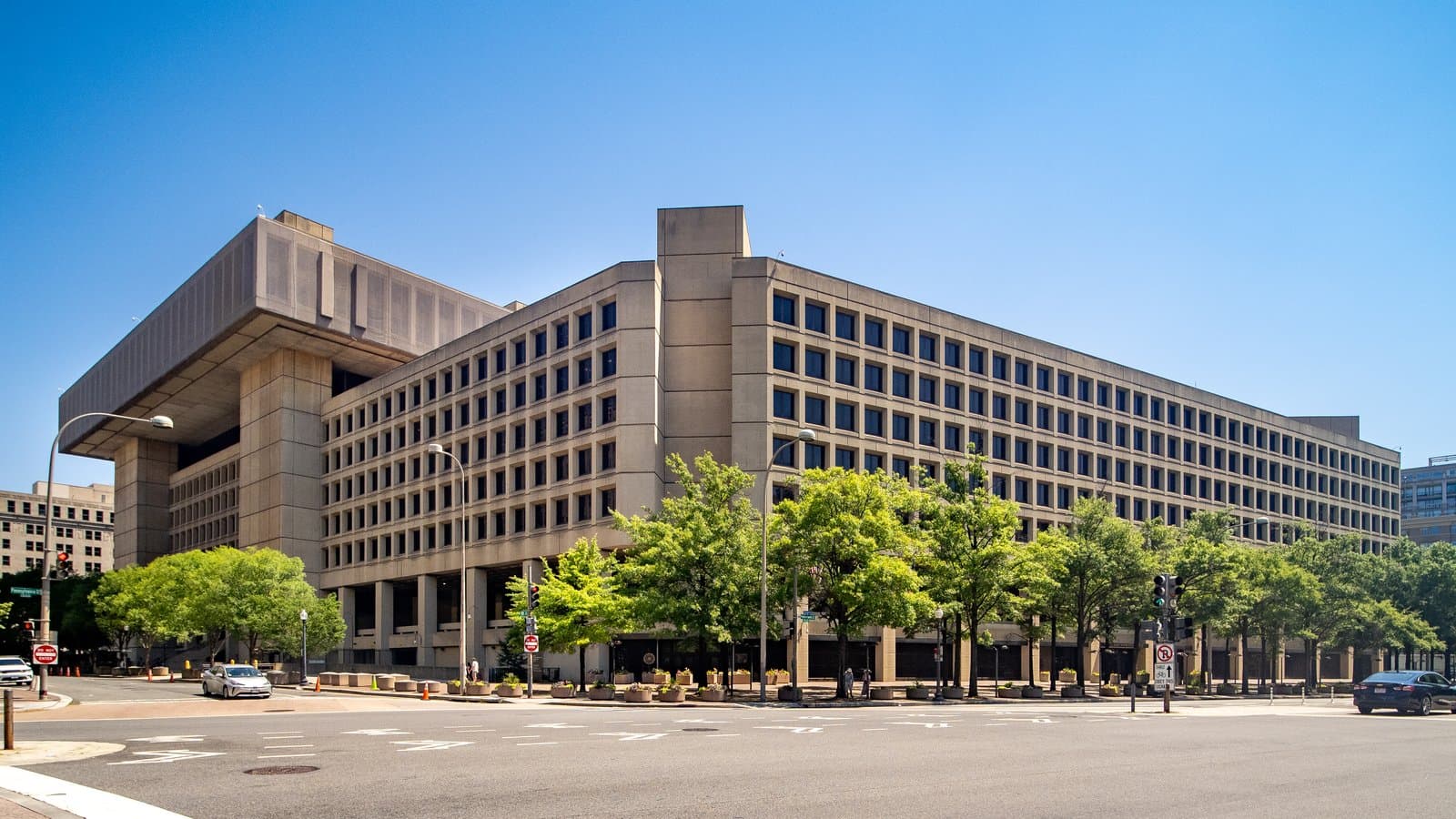
Cover image: FBI Headquarters - J. Edgar Hoover Building (53840035941).jpg by ajay_suresh via Wikimedia Commons, CC BY 2.0.
Tags
Frequently asked questions
- What was the OpenAI employee accused of?
- Abdulrahman Alfozan, a Saudi national who joined OpenAI in July 2025, was charged with using an electronic device to intercept oral communications, meaning covertly recording voice without consent. Prosecutors accuse him of planting a hidden recording device in an executive conference room. He faces up to five years in prison if convicted.
- Where was the recording device found at OpenAI?
- OpenAI has said the device was inserted into a USB port on the back of a television in an executive conference room at one of its San Francisco offices. The room could be reserved only by executives and their assistants, and Alfozan did not have that access.
- Did the OpenAI recording device leak model weights or customer data?
- OpenAI said it has, at this time, no indications that the individual inappropriately accessed or exfiltrated model weights, source code, or customer data. The case is still at the charging stage.
- When does Abdulrahman Alfozan appear in court?
- He was expected to face a judge on October 19, 2026, according to CBS News and the Associated Press. His lawyer had not responded to requests for comment when those reports were published.

TPW Editorial
Editorial Team
TechPastWeek's editorial team reports and edits every story we publish. We research each piece against primary and credible secondary sources, and a human editor reviews and signs off before it goes live.