AI Agents Found a Zero-Day in MONAI Label and Rooted a University Server
Amazon says Cairn agents found a path-traversal flaw in MONAI Label in about 11 minutes, then used it to gain root. The fix is merged but not yet released.


On this page
Key takeaways
- Amazon Threat Intelligence says autonomous AI agents found and exploited a path-traversal flaw in MONAI Label during a campaign against East Asian universities from 8 to 10 September 2026.
- The agents went from mapping the application's API to writing files on the server in about 11 minutes, then used a later session to get a root shell on one university machine.
- The flaw is CVE-2026-133968, rated 9.8 under CVSS 3.1, and it affects monailabel 0.8.5 and earlier, where authentication is disabled by default.
- Maintainers merged a fix on 19 October 2026, but the project's advisory lists no patched version and PyPI still serves 0.8.5, uploaded in November 2024.
- Amazon attributes the campaign to a China-linked actor with moderate confidence from Simplified Chinese prompts and China Standard Time timestamps, without naming a group or government.
Amazon Threat Intelligence has published an account of a campaign in which autonomous AI agents found a zero-day in medical-imaging software on their own and used it to gain root on a university server. The agents were given a target list and a one-line goal, "obtain shell access", and chose the rest of the intrusion themselves.
Related reading: China-Linked Hackers Exploited a vCenter Zero-Day Weeks Before the Patch · JPMorgan Chase Says a Vendor Breach Leaked Customer Names and Emails.
The report went up on 20 November under the name of CJ Moses, chief information security officer for Amazon Integrated Security. The vulnerability is now CVE-2026-133968, scored 9.8 under CVSS 3.1, and the affected project's security advisory lists no patched version. A fix was merged on 19 October. No release carries it yet.
The operation Amazon stumbled into
Amazon found the campaign through a mistake by the operator. On 10 September its threat intelligence team identified a Cairn instance reachable from the public internet with no password. Cairn is an open-source, AGPL-licensed Python framework that its repository describes as a general-purpose search engine for problems with a known start and a defined goal, first validated on penetration testing.
Because the operator left the console open, the project list, the prompts and the agent output were readable. Amazon says the visible activity covered universities in East Asia outside mainland China, over roughly 48 hours beginning 8 September. The prompts were written in Simplified Chinese, and timestamps inside executed scripts were set to China Standard Time. The company assesses a Chinese-nexus actor with moderate confidence. It does not connect the work to a named group, and it does not claim a government directed it.
Two addresses, 142.4.98.145 and 142.4.107.34, appear in records dated 8 to 10 September.
What MONAI Label is, and why it answered
MONAI Label is an annotation server for medical images. Research groups run it to label CT, MRI and pathology data, then train models on the results. It connects to viewers such as 3D Slicer and OHIF, and it sits apart from the wider MONAI framework even though both come from the same community.
Authentication is off unless an administrator sets MONAI_LABEL_AUTH_ENABLE to true. The project's README carries a blunt warning that MONAI Label is not meant to face the internet and has known, unpatched security issues, and that it should run only on a closed, trusted local network.
A labeling server is useful because colleagues and imaging staff on other machines can reach it, and a lab that stands one up rarely treats it as an internet-facing service with a patch cycle. No public count of exposed instances exists.
Eleven minutes from API map to file write
Against the MONAI Label target, the agents began the way a person would: identify the framework, map the API, read the upload endpoints. One of them, PUT /datastore/image, takes a caller-supplied image ID as a filename. The agents tested that parameter for path traversal, and it was vulnerable.
In about 11 minutes they went from mapping the API to writing arbitrary files on the host.
The advisory explains why. LocalDatastore.add_image() appends the caller's image ID to the datastore directory and copies the uploaded file to the result with no check that the path stays inside that directory. save_label() builds its destination the same way. A value such as ../../../tmp/x escapes the storage folder. With authentication disabled, any client that can open a connection to the port can send the request. With it enabled, the ANNOTATOR role is enough, which means a low-privilege account works too.
A file write is not a shell, but on a Python service it is often one step from code execution. The advisory lists the routes: overwrite application code, append a key to .ssh/authorized_keys, add a cron entry.
From a dropped file to root
The agents took the Python route. In a later session they wrote a reverse-shell payload to sitecustomize.py, a module CPython imports automatically at startup. Then they called a training endpoint, which starts a fresh Python process. That process imported the payload, opened a connection back to the operator, and ran as root.
How far that reaches depends on the deployment. A server running under an unprivileged account would have given up that account's access, not the machine. The root shell came from an installation where the service account could do more, and Amazon notes that another host would behave differently.
The operator re-entered the picture afterwards. According to Amazon, the operator supplied the agents with a proxy into a second university network. The server at the far end ran the same vulnerable software, which Amazon reads as a sign the operator had already used the flaw there. They were then pointed at other machines on that network. Amazon believes the second network was compromised the same way but has not confirmed it.
The attempts that failed
The failed operations matter as much as the successful one.
One target was a university Redis instance left open to the network. The agents spent about 16 hours and 148 recorded actions on it: abusing replication to load code, escaping the scripting sandbox, writing configuration files, trying Log4Shell on another service. When that failed, they used a server-side request forgery bug in a co-located Qdrant instance to map the internal Docker network and sprayed credentials at PostgreSQL and SSH. They did not get in.
A second operation ran for more than six hours against a university GPU server. The agents built a list of roughly 80 real usernames from faculty directories, lab sites, archived pages and papers, then tried more than 30,000 credential combinations against SSH, an admin dashboard, network storage, a VPN and the campus portal. That failed too.
Amazon says the agents kept adapting for nearly a day without direction. The narrower reading is that they were persistent, they found one exploitable bug, and they lost everywhere the service was not configured wide open.
The fix exists, the release does not
The maintainers merged a fix in pull request #1915 on 19 October. It resolves each destination path and rejects anything outside the datastore directories, reduces the image ID to its basename, and returns HTTP 400 for empty or dot-prefixed names.
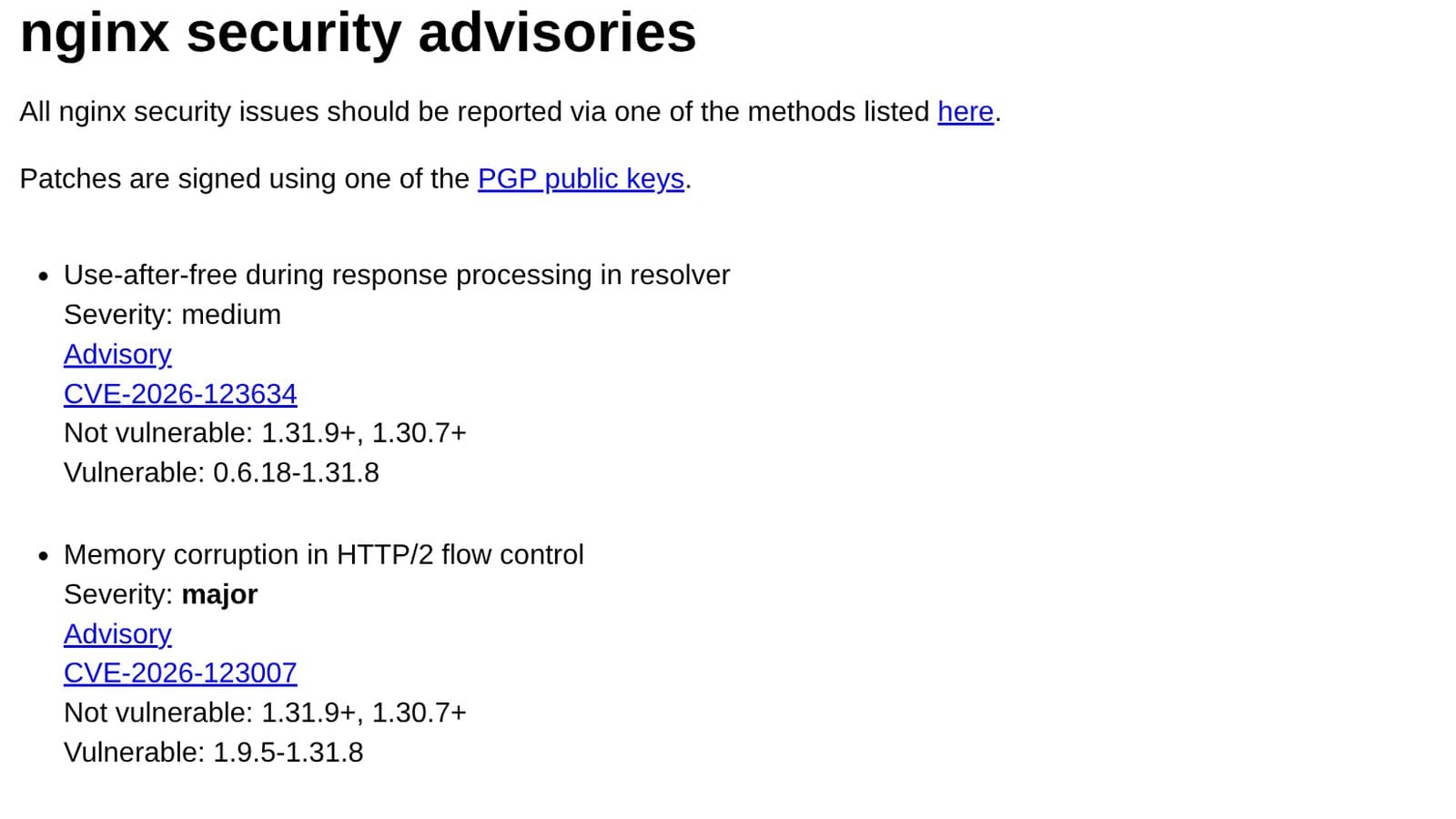
The advisory, published on 18 November, still says "Patched versions: None" and that the correction will arrive in a future release. PyPI's newest monailabel package remains 0.8.5, uploaded in November 2024. Amazon's post says the maintainers "released a fix"; what exists in public is a merged commit and an advisory that lists no version.
The CVE record, published on 20 November, says the flaw was "exploited in the wild starting in September 2026". CISA's enriched entry the same day records exploitation as "none", and CVE-2026-133968 was not in the agency's Known Exploited Vulnerabilities catalog when checked on 21 November. Both can be accurate: the CVE text reflects what the reporting organization said, while the CISA line records what the agency had independently assessed. It should not be read as a finding that nobody used it.
What administrators can do
With no release to upgrade to, the work is exposure control:
- Block untrusted access to MONAI Label servers with firewall and routing rules. A hard-to-guess URL is not a control.
- Turn on authentication, and keep the ANNOTATOR role away from anyone you would not let upload files.
- Run the server as a limited account, with write access confined to the datastore directory.
- Treat a source build as unpatched unless you have confirmed it includes the October merge.
- On any host that was reachable, look for unexpected
sitecustomize.pyfiles, other new Python startup files and training jobs nobody scheduled.
Amazon's guidance for defenders is broader: shorten the loop between detection and response, because an agent that finishes an intrusion in minutes outruns a queue of alerts.
The wider pattern
Cairn has shown up in criminal reporting since the summer. Gambit Security reconstructed a campaign in which three open-source agent harnesses ran against hundreds of online retailers: 105 attack projects launched between 10 and 15 September, at least 27 companies compromised to varying degrees, and more than 600,000 card records taken from two of them. The operator's own cost review put a completed scan at a mean of $25.46. Palo Alto Networks' Unit 42 described 25 Cairn operations against at least 19 organizations, with access or data loss at 10, and calls the activity a China-nexus intelligence collection it tracks as CL-STA-1238.
This case has quieter effects. No one has reported stolen patient scans, and Amazon says its reconstruction does not show that records were taken, that clinical systems were touched, or that the attacker went past the university targets it describes. The affected organizations were not AWS customers, so Amazon passed notifications through a government partner rather than contacting them directly.
What separates this from a decade of university intrusions is the cost of the first hour. A human team triaging an alert and hand-crafting a traversal moves at the speed of a shift; an agent that has already read the API surface does it in minutes and does not stop for the night. The agents here did not have to be brilliant, only persistent, and the target was reachable without a login.
Three things to watch from here: whether MONAI Label ships a release containing the October fix, whether CISA moves the CVE into KEV or revises its exploitation note, and whether any of the universities confirm the intrusion. A victim account would turn a single vendor's reconstruction into a documented incident.
Cover image: an MRI scanner and patient table in a hospital imaging suite. Photo by Walter Davies, CC BY-SA 4.0, via Wikimedia Commons.
Tags
Frequently asked questions
- What is MONAI Label?
- It is an open-source server from the Project MONAI community that research teams use to annotate medical scans and train imaging models. It is a separate program from the wider MONAI framework and ships with authentication turned off by default.
- Is there a patch for CVE-2026-133968?
- Not as an installable release. A fix was merged into the project's source on 19 October 2026, but the GitHub advisory published on 18 November still lists no patched version, and the newest monailabel package on PyPI is 0.8.5 from November 2024.
- Were patient scans or records stolen?
- No source has reported that. Amazon says its reconstruction does not show that patient scans or records were taken or that clinical systems were touched, and the campaign was aimed at university hosts rather than hospital networks.
- How should a MONAI Label server be protected while no patch exists?
- Keep it off untrusted networks at the firewall, enable authentication, run it under a restricted account with writes confined to the datastore, and check reachable hosts for unexpected Python startup files such as sitecustomize.py or unexplained training jobs.

TPW Editorial
Editorial Team
TechPastWeek's editorial team reports and edits every story we publish. We research each piece against primary and credible secondary sources, and a human editor reviews and signs off before it goes live.