JPMorgan Chase Says a Vendor Breach Leaked Customer Names and Emails
Chase says third-party marketing vendors were attacked and the leak is unrelated to Monday's outage. Visa and Mastercard report similar vendor incidents.

On this page
Key takeaways
- JPMorgan Chase confirmed on 19 November that third-party vendors were attacked and that marketing data including some customer names and email addresses was accessed.
- Cybernews counted about 16,000 Chase customer email addresses in a 502KB dump published by the n0n ransomware gang after a 48-hour deadline, and linked the records to the invitation-only Reserve card program.
- Visa and Mastercard confirmed exposures at third-party providers; both said card numbers and their payment networks were not affected.
- Chase says the breach has no connection to Monday's outage, which it attributes to a software bug in on-premises hardware systems.
- Chase has not named the vendors, confirmed the customer count or said when the intrusion was discovered.
JPMorgan Chase confirmed on 19 November that third-party vendors used by the bank were the target of a cyberattack, and that the attackers reached marketing data that may include customer names and email addresses. The bank said the incident did not disrupt its services and had no connection to the outage that stopped some Chase customers completing transactions on Monday.
Related reading: AI Agents Found a Zero-Day in MONAI Label and Rooted a University Server · China-Linked Hackers Exploited a vCenter Zero-Day Weeks Before the Patch.
The statement, posted on Chase's account on X, followed a Cybernews report that a ransomware group had published files it says came from the bank. The group, which calls itself n0n, released the data after a 48-hour ransom deadline expired. Cybernews said its researchers counted roughly 16,000 customer email addresses in the dump.
Chase has not confirmed that number, named the vendors, or said when it found the intrusion. That leaves the public record resting on a leak-site claim, a researcher's count and a short bank statement.
The bank confirmed the breach and little else
The statement is short. "We have learned that third parties who provide services to the firm were the target of a cyber attack," it reads. "Based on our investigation so far, we believe the attackers accessed certain marketing data held by those vendors, which may include some customer names and email addresses."
The bank said it would contact affected customers directly and offer support, including complimentary credit monitoring, where appropriate. It also closed off the obvious question about Monday. "There is no disruption to our services," the statement adds. "There is no connection to service disruption some customers experienced earlier this week."
Nothing in the statement identifies the vendors, the number of customers, the date of discovery or the country where the data was held.
The files point to the Reserve card
Cybernews examined a 502KB dataset and found roughly 16,000 customer email addresses, phone numbers in some cases, and JPMorgan Chase account identifiers, along with more than 100 addresses belonging to bank employees. The publication said the records appear to relate to the bank's invitation-only Reserve card program, which it describes as requiring a minimum of $10 million in managed assets.
The gang's own description is larger. n0n claimed the haul included engagement data from a premium Reserve program covering hundreds of thousands of marketing campaign interactions across tens of thousands of unique cardholder addresses, plus a member directory with membership categories and postal codes, and branded marketing emails with their subject lines and sender addresses intact.
Which version is right is unresolved. A 502KB file is small for a bank the size of JPMorgan Chase. That could mean the vendor held a narrow marketing list rather than customer records, or that the gang published a sample and kept the rest. Cybernews said it could not tell whether the release was a sample or the full haul.
Visa and Mastercard describe the same kind of incident
Visa had already confirmed its own exposure on 17 November, and Mastercard followed on the afternoon of 19 November. Both pointed away from their own networks.
Visa told Cybernews its systems "were not involved and were not impacted" and that there was "no indication that payment data such as card numbers have been affected." The company said the incident came from a third-party provider in the Asia-Pacific region. Cybernews counted more than 6,000 premium Visa customers in the leaked data, tied to dining and loyalty programs across South Korea, India, Singapore, Malaysia, the Philippines, Australia, Thailand and Vietnam. The records include names, email addresses, phone numbers, the messaging apps people used, and booking details with dates and addresses.
Mastercard said a third-party provider exposed "a limited amount of information from a subset of cardholders enrolled in a specific benefit program," and that there was "no impact to the Mastercard payment network or the ability for people to use their cards." It said the exposure had been contained and that its teams were working with the provider to support affected cardholders.
The Mastercard file is the least convincing of the three. It runs to about 280KB and roughly 2,000 entries, and Cybernews's researchers described the records as poorly formatted, with details from different people merged into single rows. Aras Nazarovas, a senior researcher at Cybernews, said the material may be test data rather than real customer information.
One vendor, three card networks
Cybernews reported that the datasets share file structures and formatting, which points to a single compromised vendor rather than separate intrusions at three card networks. Nazarovas said the same.
None of the companies has named the provider, which leaves the shared-vendor explanation unconfirmed. Marketing and loyalty platforms sit close to customer lists and far from payment processing. A vendor that runs email campaigns and booking programs for premium cardholders in several markets would explain the overlap: the same kind of campaign spreadsheet, the same booking records and the same member directory turning up under three brand names.
Why an email list still matters
No card numbers, passwords or Social Security numbers have been reported in any of the three datasets. That limits the immediate financial risk, and Nazarovas said the regulatory exposure probably looks limited too, because most breach-notification laws are triggered by a credential, a Social Security number or a financial account number rather than an email address on its own.
The combination is still useful to a criminal. A name, an email, a phone number and a membership tier tell a scammer who is worth the effort. The Reserve program's entry threshold turns a mailing list into a directory of wealthy households, which is why Nazarovas described the affected customers as lucrative targets for phishing and social engineering.
The 124 employee addresses carry a different risk. Employee directories support help-desk impersonation, credential stuffing and business email compromise, and a single compromised staff account can open a path that customer data alone does not. Cybernews also reported that the JPMorgan files include account identifiers, a field worth watching when notification letters go out.
Monday's outage was a separate failure
Chase customers began reporting problems reaching accounts, balances, transfers and wire transfers on Monday morning. By 2 p.m. ET, Downdetector had logged nearly 4,800 reports for Chase, more than for any other bank, CBS News reported. The Guardian recorded similar complaints at Bank of America, Wells Fargo, US Bank and Truist, along with delays at Zelle.
Chase attributed the disruption to a software bug in on-premises hardware systems. "This is not a systemic issue," the bank told Cybernews. "Other banks may have been impacted by slowness in transactions only to the extent that they were a party to a transaction with us."
The other institutions described it the same way. Bank of America said its systems operated normally. US Bank said it was not directly affected but that customers sending or receiving Zelle payments with another institution might see delays. Early Warning Services, which operates Zelle, said the network was fully operational and that problems at member banks could slow individual payments.
Downdetector data cited by CBS showed service back to normal early on Tuesday. No root-cause report has been published.
What to watch
Notification filings. If Chase notifies state attorneys general, as most large breaches require, the filing will carry a customer count and a list of exposed data fields. Those documents are public in most states and tend to be more specific than a post on X.
The vendor's name. Three card programs, one apparent platform and no public attribution is an unusual combination. Identifying the provider would explain the shared formatting and move scrutiny to a company that has not been named.
n0n's next claim. The gang first appeared in mid-September. SOCRadar found its Python file server exposed online, associated with a location in Sweden, and reported that it relies heavily on generative AI to build scanning and reconnaissance scripts. Its victim list already includes claims against Samsung, Walmart, Starbucks and Expedia, where it published more than 500MB of data. Leak-site claims are marketing as much as evidence, and the weakness of the Mastercard file shows why each one needs checking.
Caveats
The customer count is Cybernews's, not JPMorgan Chase's. The bank has not confirmed the figure, the program involved, the vendors or the date of discovery, and the authenticity and completeness of the published files have not been independently verified.
Chase's explanation of Monday's outage is the bank's own account. No regulator or outside auditor has published a cause, and the company has not explained what the hardware bug was or how it affected transactions with other banks.
Nothing published so far connects the breach to the outage beyond the calendar. Chase denies a link. Researchers have not reported evidence either way, and the timing alone does not establish one.
Mastercard's data may be test records. Visa's 6,000 figure and JPMorgan's 16,000 are researcher counts from files whose origin has not been established.
Both investigations are still open, and none of the three companies has published a timeline.
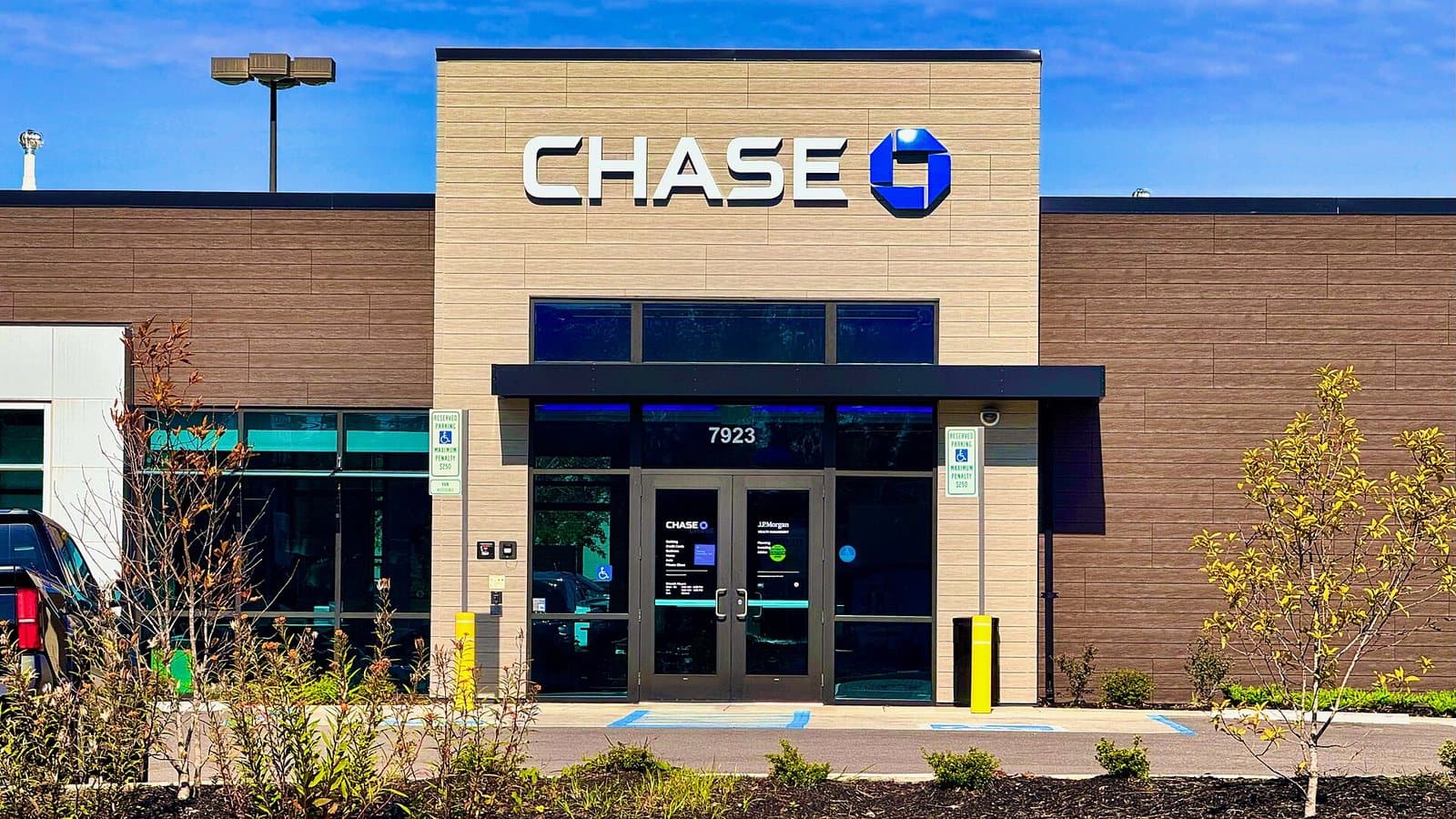
Cover: a Chase bank branch in Knoxville, Tennessee. Photo by Harrison Keely, CC BY 4.0, via Wikimedia Commons.
Tags
Frequently asked questions
- Was the JPMorgan Chase data breach connected to this week's banking outage?
- No, according to Chase. The bank said the vendor breach caused no disruption to its services and had no connection to the outage that slowed transactions on Monday, which it attributed to a software bug.
- What customer data was exposed in the JPMorgan Chase breach?
- Cybernews found about 16,000 customer email addresses, phone numbers in some cases, account identifiers and more than 100 employee email addresses in the published files. Chase said the data was marketing information held by vendors and may include names and email addresses. No card numbers or passwords have been reported.
- Which JPMorgan Chase customers are affected?
- The leaked records appear to relate to the bank's invitation-only Reserve card program, according to Cybernews. Chase has not confirmed which program or how many customers are affected, and says it will contact affected customers directly.
- Did Visa and Mastercard also suffer a breach?
- Both confirmed incidents at third-party providers. Visa said its systems and card numbers were not affected, and Mastercard said a limited amount of information from a subset of cardholders in a benefit program was exposed. Neither company named the provider.

TPW Editorial
Editorial Team
TechPastWeek's editorial team reports and edits every story we publish. We research each piece against primary and credible secondary sources, and a human editor reviews and signs off before it goes live.