Google Puts Gemini 4 Carbon on General Sale, With the Cyber Build Still Gated
Google opened Gemini 4 Carbon to paying developers and consumers on 10 November 2026, at $2 per million input tokens, with the cyber build still gated.


On this page
Key takeaways
- Google made Gemini 4 Carbon available to paying developers, enterprises, scientists and consumers on 10 November 2026, thirteen days after its gated Fairwind launch.
- The introductory API price is $2 per million input tokens and $10 per million output tokens until 30 November 2026, rising to $4 and $20 on 1 December.
- Google reports an Artificial Analysis Intelligence Index v5.0 score of 59 for Carbon, against 50 for Gemini 4 Argon.
- Carbon scored 61.2% on FrontierSWE 2, below GPT-6 Astra at 65.5% and Claude Opus 5.5 at 62.3% in Google's own comparison table.
- The specialised cyber configuration remains gated behind Fairwind applications, and Carbon is excluded from the Gemini API free tier.
Google put Gemini 4 Carbon on general sale on 10 November 2026, thirteen days after the model first appeared inside a gated cybersecurity programme. Paying developers can reach it through the Gemini API. Enterprises get it in Gemini for business, Google Antigravity and CodeMender. Consumers on Google AI Ultra get it in the Gemini app, Antigravity and AI Mode in Search. The introductory API price is $2 per million input tokens and $10 per million output tokens, the same rates Google set for Gemini 4 Argon. The cyber-specific configuration that made Carbon newsworthy in October stays behind the Fairwind application process.
Related reading: Anthropic's Claude Duet Works in the Background, and Asks Before It Acts · An Anthropic Mathematician Says Claude Found a Riemann Hypothesis Proof.
What changed on 10 November
Google announced Carbon on 28 October and gave it two weeks with a subset of cybersecurity defenders. What changed on 10 November is who can buy it. The launch post sets out four routes in:
- Developers get Carbon in the paid tier of the Gemini API, in Google AI Studio and in Android Studio.
- Enterprises get it through Gemini for business, in the API model dropdown, in Antigravity and in CodeMender.
- Consumers with Google AI Ultra get it in Antigravity, the Gemini app and AI Mode in Search.
- Scientists in Google's 10,000-scientist programme get Carbon and Argon in Antigravity's highest usage tier, free for six months, with rolling onboarding and limits on eligibility, capacity and selection.
Two gaps sit in that list. Carbon is excluded from the Gemini API free tier, so a developer cannot test it at length without paying. The specialised cyber configuration stays behind Fairwind applications, so the capability that dominated the October announcement is still not generally purchasable.
For a team already on Argon, the move is a model-ID change rather than a schema change, though Google's documentation warns that output limits and client timeouts may need adjusting. A model that thinks for longer will hit limits tuned for its predecessor.
Argon went to Fairwind on 30 September and reached paying developers on 13 October, thirteen days later. Carbon repeated the pattern to the day, which puts two frontier models on the same paid tier inside six weeks.
The introductory price is Argon's price, and it ends on 30 November
The published API pricing is simple enough to state in full:
- $2 per million input tokens and $10 per million output tokens until 30 November 2026.
- $4 per million input tokens and $20 per million output tokens from 1 December 2026.
- Every processed token is billed, including thinking tokens and specified internal grounding instructions and declarations.
The introductory rate is Argon's rate, held for three weeks, after which Carbon costs twice its introductory rate per token. Google has not said whether Argon stays on sale at its old price.
The more useful number is cost per task, and the token count makes it unpredictable. Google's developer docs state that Carbon generally spends more thinking tokens per turn than Argon, which raises token use and latency. A model that thinks longer can still be cheaper per finished job if it needs fewer attempts, and more expensive if the extra reasoning is wasted.
Google says Carbon ranks first on CursorBench 4.0, Perplexity's WANDR and Zapier's AutomationBench at less than half the cost per task of the next best external model. On the Multimodal Knowledge Agent benchmark, built with Artificial Analysis, Carbon places second at less than one sixth the average cost per task of the top model. Both claims come from Google or its partners, and both describe a configuration a customer may not reproduce.
The token bill has a second multiplier. Google also previewed /swarm in Antigravity, where one prompt becomes a team of agents. A coordinator creates specialised workers in isolated Git worktrees so their edits do not collide, adversarial verifiers run tests and challenge changes, and the agents coordinate through a shared append-only message board. Idle agents can wait without consuming tokens, but Google's own warning is blunt: parallel multi-agent systems consume quota much faster than standard chat. Google reports five weeks of internal testing on multi-package migrations and architectural redesigns, without publishing what those runs cost.
What the benchmarks show, and who ran them
The headline number is 59 on the Artificial Analysis Intelligence Index v5.0, against 50 for Argon. On GraphWalks, which tests long-context work between 256,000 and 1 million tokens, Carbon scores 96.2% against 84.2%. A twelve-point gain there changes which documents fit in one request.
FrontierSWE 2 tells a narrower story. Carbon scores 61.2%, up from Argon's 55.0%, and behind GPT-6 Astra at 65.5% and Claude Opus 5.5 at 62.3% as listed in Google's comparison. So the model improves on its predecessor without leading the field on software engineering. The gap to Astra is 4.3 points, and the ordering comes from a table Google assembled, not from a shared harness that all three vendors ran.
The model card fills in the shape of the product: text, image, audio and video input with text output, up to 1 million tokens shared across input, reasoning and output, a knowledge cutoff of March 2026, and three thinking levels with medium as the default. It also lists hallucinations, possible slowness and timeouts, and greater token consumption at higher thinking levels. Two of those limitations, slowness and token consumption, are the ones a buyer will meet first.
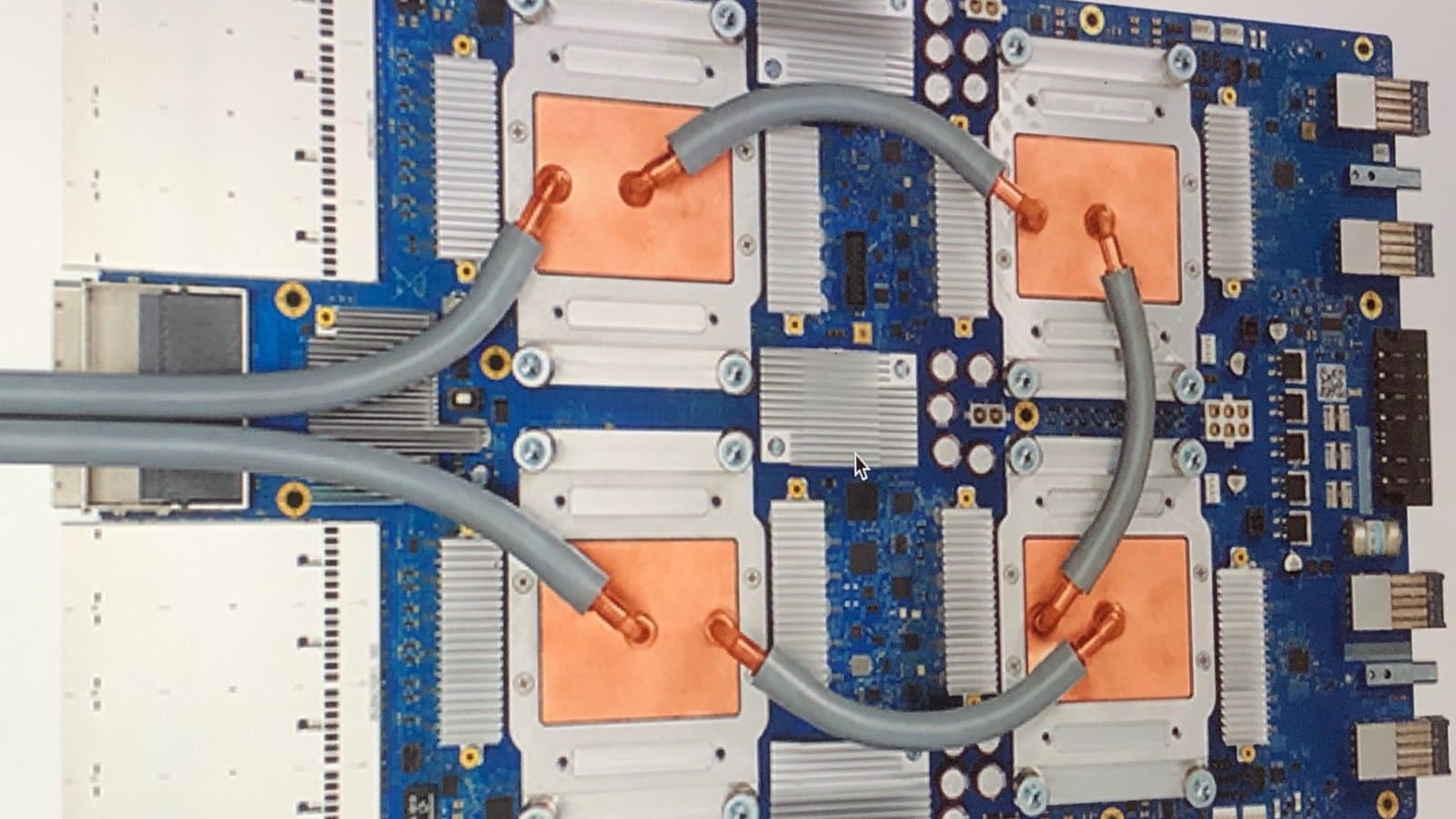
The hardware side moved the same week. Google announced a confidential TPU and a dual-chip 8i Max on 9 November, covered here, neither with a price or a shipping date. Whatever the silicon does to Google's unit costs, the customer price on 1 December is set.
The cyber configuration is still behind a gate
Fairwind is the part of the launch that did not generalise. Google says Carbon leads on SEC-bench Pro for finding flaws, ExploitGym for exploiting them and CWE-bench v1 for patching. Secondary coverage lists 88.2%, 54.8% and 71.0% for those tests, though the launch coverage does not attach a harness description to each figure.
On Project Fortify, an internal benchmark, Google reports 100% recall on scanning and 95% precision on triage, with a relative improvement of more than 25% over Argon's recall on open-source repository testing. Wiz's Scan for Good found zero-days in two major SaaS providers in under two hours using Carbon. Google Cloud Vulnerability Research used the model to prove that two bugs in popular open-source software were exploitable, and withheld details pending disclosure.
The safety numbers cut both ways. In simulated cyberattack environments, Carbon blocked 99% of attack trajectories from Google's adaptive red-teaming agent, with a per-attempt breach rate of 0.8% against 3.1% on Argon. Gray Swan's automated cyberattack test put query success at 2.17% against 9.86% on Argon. On indirect prompt injection, Gray Swan measured 0% attack success, while Google's own safety report says such attacks remain possible.
On 25 high-severity tasks, with 200 attempts at each objective, the per-objective success rate was still 40%. A low per-attempt rate multiplied by enough attempts produces a high chance of eventual success, which is operational friction rather than elimination. Google says Carbon did not cross its material-capability-change threshold relative to Argon, and its safety report carries one caveat forward.
Carbon cannot be ruled out from reaching Cyber Uplift Level 1 without safeguards outside the model, according to Google's safety report.
That sentence explains the gate better than any benchmark. General availability covers a model whose offensive use is mediated by product controls. Removing the application process for the cyber configuration would remove the control that Google's own risk assessment depends on. The comparison with OpenAI's GPT-6 Cyber, which went to vetted Daybreak Red members, is instructive: two vendors, two gated cyber releases, and no agreed public standard for what a gate should require.
The agentic honesty results may matter most to enterprise buyers. On a 375-task benchmark, Carbon passed 92% against 70% for Argon. It declined to fill in missing experimental data 98% of the time and flagged methodological flaws 68% of the time. For a model asked to summarise research or audit a report, those behaviours matter more than a coding score. Trajectory Labs reported zero new universal jailbreaks across 132 hours and more than 13,000 requests.
What the launch does not establish
What Google has not published
Every benchmark figure in the Carbon launch is Google's own or comes from a partner. None of it is an independent audit, and the “#1” claims depend on the benchmark version and the configuration tested. Google published no user, revenue or adoption figures. The 10,000-scientist programme is an application scheme with eligibility, capacity and selection limits, not guaranteed access. The model card lists a March 2026 knowledge cutoff, hallucinations, slowness and timeouts. And the cyber configuration remains gated, so general availability does not mean the offensive-risk controls were removed.
The absence of adoption data is the largest hole. Google has not said how many developers moved from Argon, how many Ultra subscribers used Carbon in the first week, or what either group spent. Without that, the cost-per-task claims stay predictions.
Benchmark provenance matters for a second reason. The FrontierSWE 2 table places Carbon behind two competitor models, which suggests Google is not simply picking tests it wins. It is still picking the tests, and the partners who supplied the others have commercial relationships with Google.
What to watch
The price change on 1 December is the first real test. A doubling at list, on top of higher token use per turn, will show up in invoices within days, and switching back to Argon or a competitor is a model-ID change in the other direction. If enterprises stay, the cost-per-task argument holds. If they leave, the introductory price was doing more work than the benchmark table.
Independent evaluation is the second. The Intelligence Index and GraphWalks are reproducible in principle, and outside researchers can reach the model through the API. Whether anyone publishes a result that matches Google's numbers, including the long-context gain, will decide how much the 59 is worth.
Fairwind is the third. Any widening of the cyber configuration, or a decision to keep it closed indefinitely, sets the precedent for how frontier cyber capability is sold. Regulators have not said whether a gated model counts as controlled access or as a commercial release with paperwork.
Google has shipped the model, named the price and published a safety case with an explicit residual risk. Whether the economics survive real workloads is a question for December. Google has not said when the cyber configuration will be released more widely.
Cover image: official Google key art for Gemini 4 Carbon, cropped to the crystal, courtesy of Google.
Tags
Frequently asked questions
- How much does Gemini 4 Carbon cost?
- Google charges $2 per million input tokens and $10 per million output tokens until 30 November 2026. From 1 December 2026 the rate doubles to $4 input and $20 output per million tokens. Thinking tokens and specified internal grounding instructions are billed as well, and the model is not available on the API free tier.
- Is Gemini 4 Carbon available to everyone?
- It is available to paying developers through the Gemini API, to enterprises through Gemini for business, Antigravity and CodeMender, and to Google AI Ultra subscribers in the Gemini app and AI Mode in Search. It is not on the free tier, and the specialised cyber configuration still requires a Fairwind application.
- What is Gemini 4 Carbon's knowledge cutoff?
- The model card lists a knowledge cutoff of March 2026. Carbon accepts text, image, audio and video input and returns text, with up to 1 million tokens shared across input, reasoning and output.
- How does Gemini 4 Carbon compare with Gemini 4 Argon?
- Google reports 59 on the Artificial Analysis Intelligence Index v5.0 for Carbon against 50 for Argon, and 96.2% on GraphWalks long-context testing against 84.2%. The developer docs also say Carbon generally spends more thinking tokens per turn, which can raise the cost of a task even when the price per token is unchanged.

TPW Editorial
Editorial Team
TechPastWeek's editorial team reports and edits every story we publish. We research each piece against primary and credible secondary sources, and a human editor reviews and signs off before it goes live.