OpenAI Wants Perplexity to Set the Speed Limit for Frontier AI
OpenAI published internal perplexity scores for its models and asked rivals to accept shared limits on pretraining progress, gated by better monitoring.

On this page
Key takeaways
- OpenAI chief scientist Jakub Pachocki published "Perplexity and Intelligence" on 22 November 2026, disclosing internal log-perplexity scores for OpenAI models.
- The essay puts GPT-3.5 at about 0.99 log-perplexity, GPT-4 at about 0.91, and says a model near 0.76 began producing what it calls groundbreaking results in mathematics.
- Pachocki proposes common limits across frontier labs, based on perplexity and other measurements, that developers would not cross until monitoring improves, such as a successor to chain-of-thought monitors.
- He warns that AI-driven advances in pretraining research could arrive as soon as 2027, faster than alignment and monitoring research can keep up.
- OpenAI acknowledges that perplexity is hard to compare across labs, does not capture reasoning gains, and has an unknown floor.
OpenAI's chief scientist published a proposal on Sunday for a shared speed limit on frontier AI development, built on a measurement OpenAI is now making public: how well its models predict the next token.
Related reading: Anthropic's Claude Duet Works in the Background, and Asks Before It Acts · The Week in Tech: The Buildout Meets the Market.
Jakub Pachocki's essay, "Perplexity and Intelligence," appeared on OpenAI's site on 22 November 2026 and was promoted on X shortly after 17:00 UTC. It does two things at once. It releases internal log-perplexity scores for OpenAI's models from GPT-3.5 onward, and it asks rival labs to treat that number as part of a common safety standard, with limits that companies would not cross until monitoring catches up.
The proposal is voluntary. It has no enforcement mechanism, no named group to verify the numbers, and no commitment from any other lab. But it moves a debate that has mostly run through essays and conference talks onto a specific metric, and it puts OpenAI's own pretraining curve on the record.
What OpenAI disclosed
Perplexity measures how well a model predicts the next token on average. A lower score means the model is less surprised by text it has not seen. Researchers usually work with the logarithm of perplexity, also called cross-entropy loss, because it is easier to plot and compare.
Pachocki reports the figures on a fixed snapshot of OpenAI's internal codebase, a held-out dataset the company has used since GPT-3.5. On that scale, GPT-3.5 sits at about 0.99 log-perplexity and GPT-4 at about 0.91. The current generation is below 0.8. A model at roughly 0.76, he writes, began producing "groundbreaking results" on open mathematics problems.
"Once we upgraded to a model of log-perplexity ~0.76, it started producing groundbreaking results," Pachocki writes. "For many of us that have previously worked in mathematics and adjacent fields, seeing the resolutions to questions we've long thought about coming out of the model one after another in a single Slack thread felt deeply surreal."
He expects more of the same. "Extrapolating from recent progress, we should expect further transformative capabilities as we enter the ~0.68-0.7 log-perplexity window," he writes. "I don't know what those capabilities will be, and we may not be testing for them today."
The essay includes a chart that plots the decline from GPT-3.5 through the GPT-6 family. OpenAI's current public model is GPT-6.2 Astra.
Why prediction quality became the argument
Pachocki's case rests on a simple idea: a language model is a compressor, and a better compressor is a more capable model. Pretraining builds that compressor. Prompting, fine-tuning and reinforcement learning elicit what it can do, but the underlying capacity comes from prediction.
The theory is old. The claim that the curve has become predictable enough to govern is new. Pachocki walks through the capability jumps attached to earlier scores. GPT-2 could write coherent paragraphs. GPT-3 could learn from a few examples in context. GPT-3.5, at about 0.99, could hold a fluent conversation. GPT-4, at about 0.91, could use chain-of-thought reasoning well enough to justify building reasoning models around it.
Below 0.8, he says, came capabilities in cybersecurity and mathematics that were not obvious in advance. The essay treats those as emergent properties of the same underlying process, which is why a single number can, in his view, say something useful about risk.
The proposal follows two OpenAI publications from the same week. A research acceleration report on 18 November said internal coding agents completed 46% of tasks estimated at two to four hours of human work, up from 23% in March. It also said documented safety and alignment workweeks rose 77% from January to September. And it said pretraining researchers described developing ideas in conversation with Codex for GPT-6.2 Astra.
In September, Pachocki published "An Alien Mind," which argued that no lab had solved alignment and monitoring well enough to keep scaling at maximum speed indefinitely. The new essay turns that general warning into a proposed instrument.
The proposal: a limit tied to monitoring
Pachocki asks frontier developers to agree on shared norms for evaluating powerful models and red-teaming their safety cases before first use. He then proposes "common limits, based on perplexity and other measurements, that developers are committed to not crossing until our ability to understand and monitor AI behavior achieves a certain concrete milestone (such as the development of a successor to CoT monitors)."
Under the proposal, a developer that crosses a measurement threshold must first show that its ability to inspect the model has improved to a defined level. The limit sets a gate, not a pause on training or a cap on compute. Pachocki says he hopes this becomes a framework for setting successive limits, not a one-off number.
He also concedes the weaknesses in public. Perplexity is difficult to compare across labs because developers use different datasets and data mixtures. It does not map directly to a task anyone cares about. It does not capture gains from chain-of-thought reasoning, which can raise capability without lowering perplexity. And nobody knows the entropy floor of the data, so the meaning of a given improvement changes as the number gets lower.
"Perplexity has stood the test of time as a metric many research teams have put a lot of effort into optimizing, and it continues to deliver consistent gains on general intelligence," he writes. "I believe it can play an important role in standardizing how we talk about AI progress."
The 2027 warning
The sharpest part of the essay concerns speed.
Pachocki argues that AI is already contributing to AI development, and that the most consequential contribution may come in algorithmic research on pretraining rather than in writing code or running experiments. That work is experimental, but it is also the kind of research where a small insight can unlock years of progress.
"As soon as 2027 we could conceivably see a similar avalanche of fundamental pretraining advancements," he writes. He adds that AI will probably help alignment and monitoring too, but not fast enough to keep pace with a sudden acceleration in pretraining.
That claim is a forecast. It is also the reason the essay exists. If progress in pretraining can jump, and if the jump is visible in a metric, then a limit tied to that metric could buy time for monitoring to catch up.
The competitive context
OpenAI is not the first frontier lab to call for pacing. Anthropic chief executive Dario Amodei published "We Must Pace the Frontier" in September, calling for frontier companies to slow the rate of capability improvement and proposing embedded third-party evaluators with employee-like access. Anthropic committed unilaterally to that step and asked governments to require rivals to match it.
The two proposals overlap but are not the same. Amodei's plan is built around institutions and verification: evaluators inside labs, then coordination among democratic governments, then talks with authoritarian ones. Pachocki's plan is built around a measurement that labs could publish and compare. One asks who watches the lab. The other asks what number the lab reports.
The timing is awkward for a purely technical reading. OpenAI's essay lands three days after Anthropic's shares began trading in the largest IPO on record. OpenAI is a private company, but it competes for capital, talent and public trust with Anthropic and Google. A call for shared limits is also a claim about which lab is acting responsibly.
Pachocki addresses that directly. He says publishing the numbers "gives competitors a clearer picture of where we stand," but that the concern is outweighed by the urgency of shared safety measures. The essay does not say whether OpenAI would accept a limit that constrained its own next model, or who would decide when the monitoring milestone had been met.
What the reaction showed
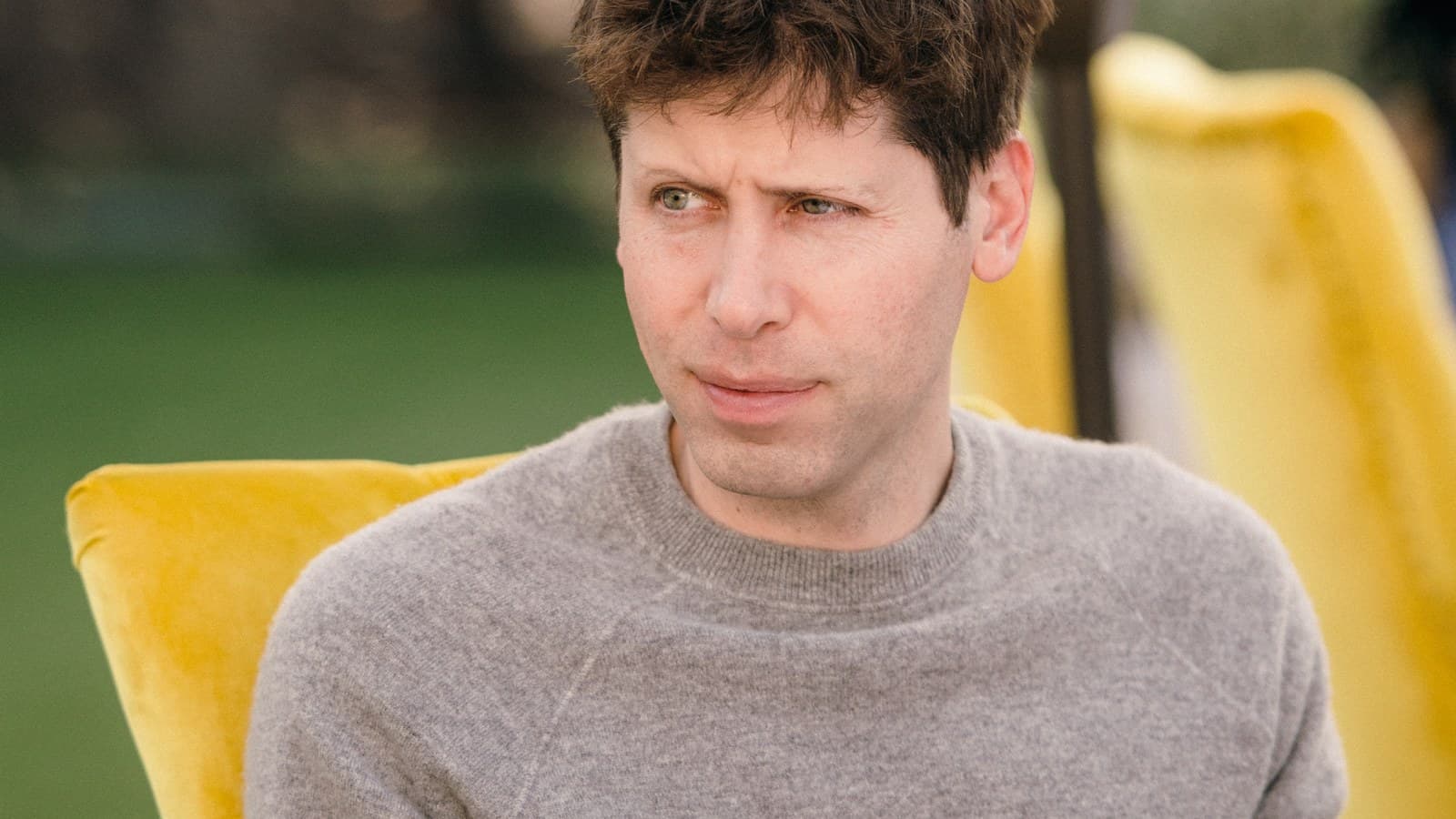
Sam Altman, OpenAI's chief executive, called the essay "the most important thing OpenAI has published in awhile" and said he hoped labs could agree on common limits. Noam Brown, an OpenAI research scientist, framed the disclosure as a public-interest argument: "AI is a transformative technology that will affect everyone, so everyone deserves to know the trajectory of progress, including for internal models."
Outside OpenAI, the obvious objection is that any single metric becomes a target once labs are judged by it. Perplexity also depends heavily on compute, data and tokenisation choices, so a headline score can flatter one lab and penalise another.
The essay's own caveats concede most of that. A lab that trains on a different data mixture can report a better perplexity without building a more capable model. A lab that invests in post-training and reasoning can raise capability without moving the pretraining number much. A shared limit based on a number also invites optimisation of the number rather than the capability.
Caveats
The scores in the essay are OpenAI's own, measured on OpenAI's internal dataset and not independently audited. The claim that a model near 0.76 log-perplexity produced groundbreaking mathematics is the company's account; the underlying results have not been verified here. The proposal is voluntary and no other lab has signed it.
What would make it real
A shared limit needs three things the essay does not yet provide: a common evaluation set, an independent body to hold and audit it, and a consequence for crossing the line.
Pachocki acknowledges the first. He says labs use different datasets, and that a transparency commitment could produce "transferable ways to compare the quality of different base models." He does not name the body that would run the comparison. He does not describe a penalty. He does not say how a lab that declines to publish its curve would be treated.
The closest precedent is the evaluation industry that has grown around frontier models. METR and a handful of academic groups already test models before release, often under agreements that let the lab review findings before publication. Those arrangements have produced useful evidence, but they depend on lab cooperation and do not set a binding ceiling on training.
A perplexity limit would be easier to measure than a capability limit and harder to fake than a benchmark score, at least in principle. It would also be narrower. Perplexity says little about an agent's tendency to pursue goals it was not given, or about a model's willingness to deceive an evaluator. Those are the behaviours that safety cases are supposed to catch.
What to watch
The first test is whether any other lab publishes a comparable curve. A single company's number is a disclosure. Two or three comparable numbers would be the start of a standard.
The second is whether governments pick it up. The essay sits alongside a broader policy push for transparency and third-party evaluation, including the frontier safety blueprint OpenAI published this year. A voluntary metric can become a regulatory one quickly if lawmakers adopt it.
The third is OpenAI's own next release. The essay says current models sit below 0.8 and that the next threshold is 0.68 to 0.7. How OpenAI handles the model that approaches it, and whether it publishes a new point on the curve when that model ships, will say more about the proposal's seriousness than the essay does.
For now, the document is a bid to make a technical measurement the common language of AI pacing. The labs it addresses have not agreed to be measured, and the metric it chooses cannot see everything that matters.
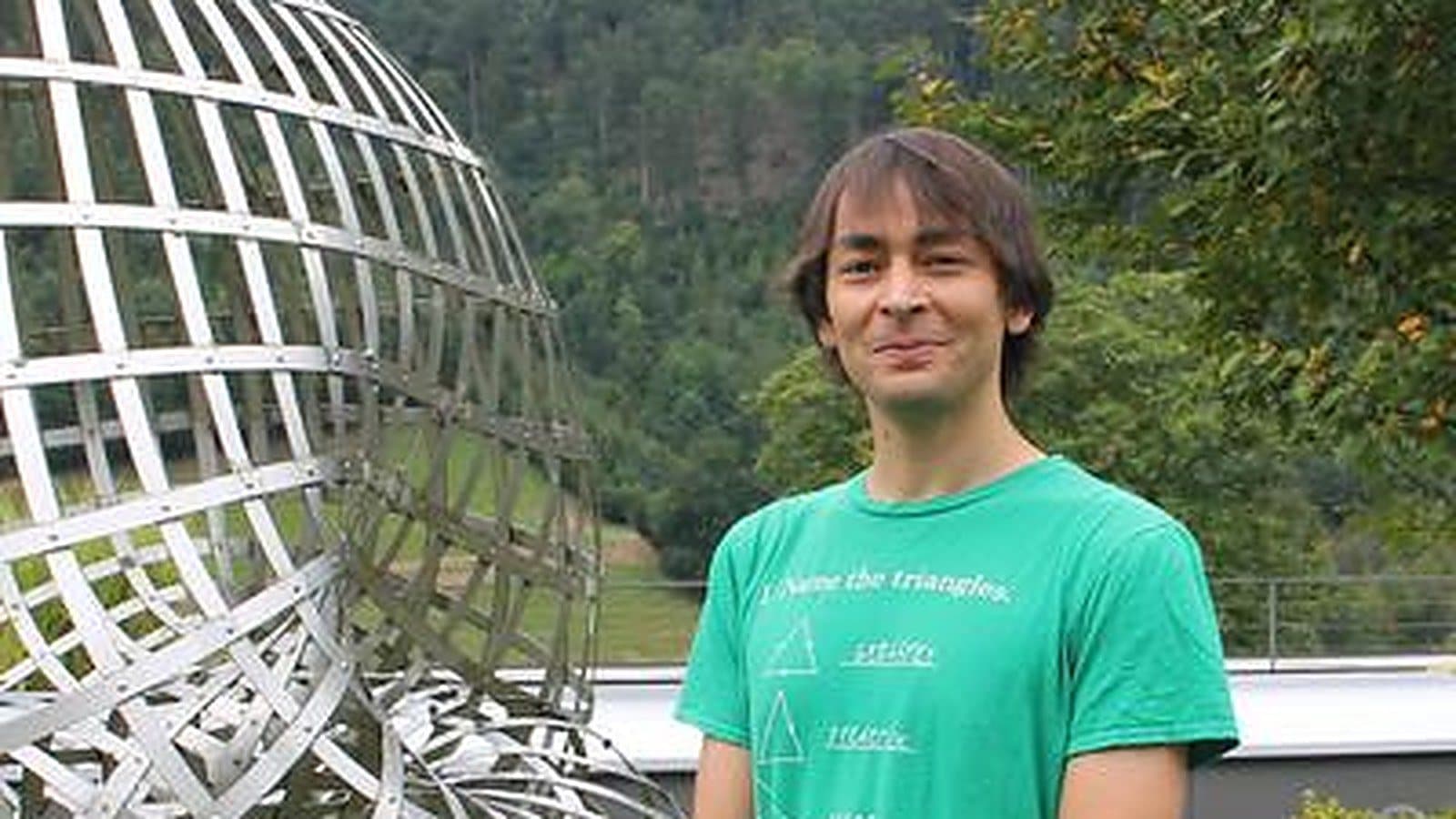
Cover image: Jakub Pachocki, OpenAI's chief scientist, at the International Collegiate Programming Contest world finals in Warsaw in 2012. Photo by ICPCNews, CC BY 2.0, via Wikimedia Commons.
Tags
Frequently asked questions
- What is perplexity in AI?
- Perplexity measures how well a language model predicts the next token in a sequence. Lower perplexity means better prediction. Researchers often track its logarithm, called cross-entropy loss, which is the number OpenAI published.
- What limits does OpenAI propose?
- Pachocki proposes that frontier developers agree on shared evaluation standards and on common limits, based on perplexity and other measurements, that they will not cross until AI behaviour can be understood and monitored to a defined standard.
- Is this the same as the Perplexity search company?
- No. Perplexity here is a statistical measure of prediction quality. It is unrelated to Perplexity AI, the search and answer engine company.
- Have other AI labs agreed to the proposal?
- None had publicly endorsed it when the essay was published. Anthropic has made a related pacing proposal, built around embedded third-party evaluators, but it does not use perplexity as its limit.

TPW Editorial
Editorial Team
TechPastWeek's editorial team reports and edits every story we publish. We research each piece against primary and credible secondary sources, and a human editor reviews and signs off before it goes live.