The Week in Tech: The Buildout Meets the Market
Anthropic priced an $81.3 billion IPO, Nvidia reported without Jensen Huang, GTA VI sold $3.79 billion on day one, and vendor breaches reached Uber and Chase


On this page
Key takeaways
- Nvidia reported $115.8 billion in revenue for the quarter ended 25 October 2026, up 103%, and guided to about $130 billion for the January quarter in its first results since Jensen Huang resigned as chief executive.
- Anthropic priced its IPO at $83 a share on 18 November, above its $70 to $78 range, selling 980 million shares for about $81.3 billion and a fully diluted valuation of about $1.5 trillion.
- Rockstar said Grand Theft Auto VI generated $3.79 billion in day-one retail sales on 32.5 million units sold before release; the figure is gross retail spending, not Take-Two's net bookings.
- A breach at the AI cloud provider Fireworks AI exposed data at Uber, Notion and Cursor, while Broadcom patched a vCenter flaw that a suspected China-linked group had exploited since early September.
- The FBI is investigating an apparent breach of its National Crime Information Center database, and the USDA took some payment applications offline after a separate security incident. No attacker has been named.
Anthropic sold $81.3 billion of stock on Wednesday, Nvidia reported $115.8 billion of quarterly revenue on Tuesday, and Rockstar said Grand Theft Auto VI took $3.79 billion in retail sales in a single day. The figures are not comparable, and the comparison is still the useful one. Each was a private claim turned into a public count, and each came with a qualification that changes what the count means.
Related reading: Anthropic's Claude Duet Works in the Background, and Asks Before It Acts · An Anthropic Mathematician Says Claude Found a Riemann Hypothesis Proof.
The same week produced a different kind of disclosure. Uber told 149,346 drivers that their licence numbers had been stolen from a vendor. Broadcom patched a vCenter flaw that a suspected Chinese group had used since early September. CNN reported that the FBI was investigating an apparent breach of the database that links police departments across the country. None of those numbers was published by choice.
The common ground is the intermediary. The AI buildout, the game business and the security of both now depend on a short list of companies that sit between the customer and the thing the customer thinks they bought: a model host, a marketing vendor, a virtualization layer, a payment system. In the week of 16 November, the market priced those intermediaries, the regulators tried to reach them, and the attackers went through them.
Nvidia's quarter without its founder
Nvidia reported $115.8 billion in revenue for the quarter ended 25 October, a 103% increase from a year earlier and $7.8 billion above the middle of its own forecast. It was the first earnings release since Jensen Huang resigned as chief executive on 12 November, and the company did not wait for a permanent successor to answer the demand question. Revenue rose 20% from the previous quarter. Data Center sales reached $107.6 billion, up 110%, and accounted for 93% of the total. The smaller Edge Computing segment, which covers graphics cards, workstations, cars and robots, brought in $8.2 billion, up 42%.
Nvidia earned $2.70 a diluted share on standard accounting rules, or $2.68 adjusted, against a consensus of about $2.48. Gross margin was 74.8%, down slightly from 75.0%. The guidance was the part that moved the stock: about $130 billion for the quarter through January, plus or minus 3%, against the $125.2 billion analysts expected. That quarter has 14 weeks rather than 13 because fiscal 2027 is a 53-week year. Even after allowing for the extra week, the guide implies growth of roughly 91% from the $68.1 billion reported a year earlier. Gross margin is expected to fall to 71% to 72%, and the guidance reflects pressure from memory prices that Kress flagged in August.
The commercial story of the quarter was the switch from Blackwell to Vera Rubin. Nvidia said it began shipping the Vera Rubin NVL72 rack system and called it the fastest product ramp in company history. CoreWeave, Google Cloud, Microsoft Azure, Oracle Cloud Infrastructure and Nebius are among the first operators. The company also announced general availability of Vera Rubin systems and Vera CPUs on Oracle Cloud Infrastructure and of Google Cloud's Vera Rubin-powered A5X instances, and said Meta would expand its deployment of Vera Rubin, Vera CPUs, Spectrum-X networking and BlueField-4 to train and run its Muse models. The MLPerf results published the day before earnings gave the launch a benchmark narrative, though those numbers come from Nvidia and its partners.
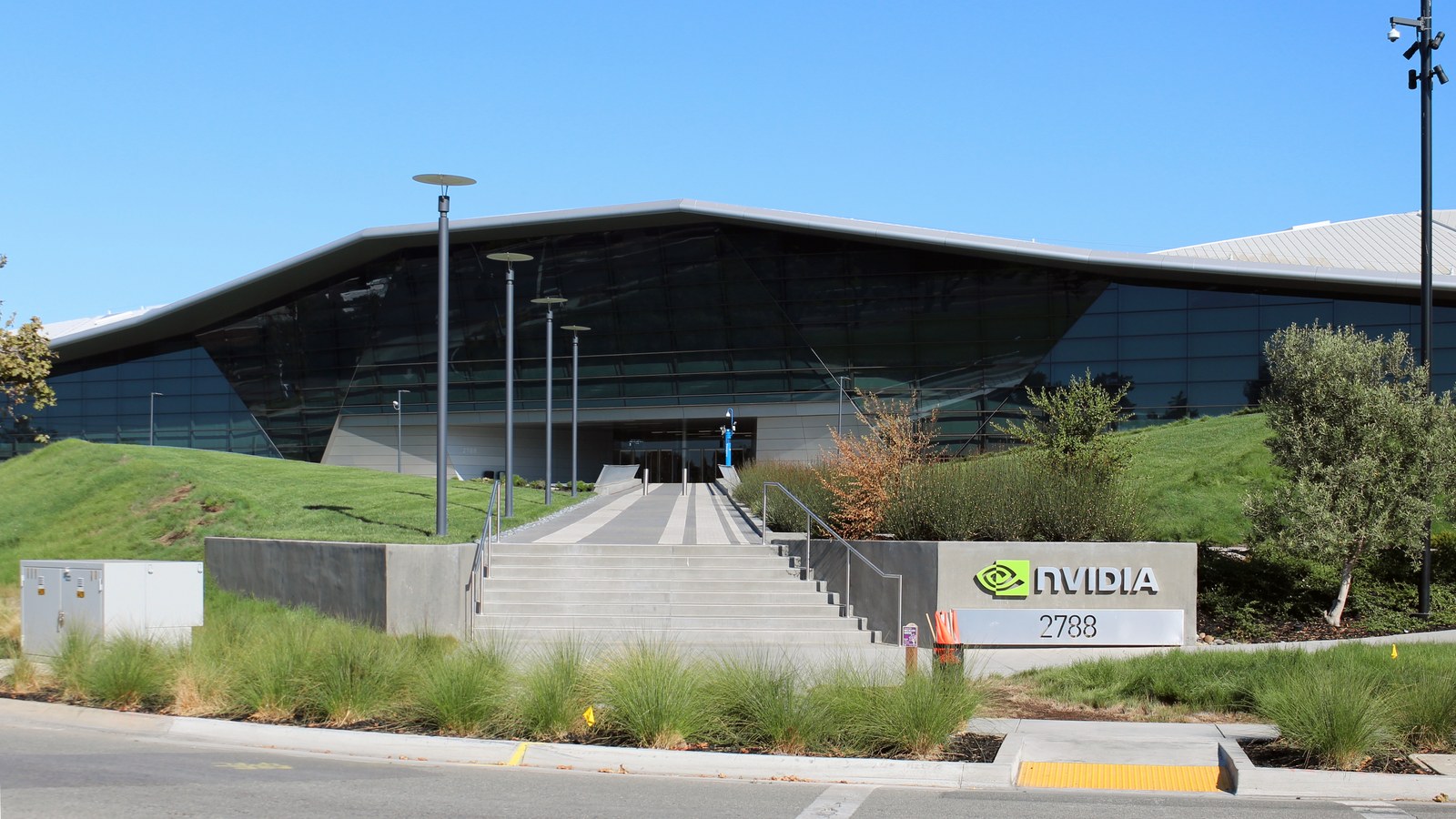
The quarter settles the demand argument for another three months. It does not settle the governance argument. On 19 November, California's attorney general served an investigative subpoena on Nvidia asking whether advanced chips or confidential information reached China and whether the company misled investors about the risk. No charges have been filed. Nvidia has not responded publicly. Huang is due to testify before congressional committees on 1 December. The shares fell about 22% over nine trading days and hit a one-year low on 19 November, the same day the subpoena became public. They had closed at $155.46 after the earnings release two days earlier.
A company can post record revenue and still trade at a discount to its own numbers if investors cannot price the people running it. Nvidia's guidance excludes Data Center compute revenue from China, an assumption it has kept all fiscal year, and the export rule published on 16 November narrows the routes by which those chips can reach Chinese customers even when the hardware sits outside China. That leaves two questions open. The first is how long the Vera Rubin ramp can outrun memory costs. The second is who will be chief executive when the answer arrives.
Anthropic's price, and the demand behind it
Anthropic priced its initial public offering at $83 a share on 18 November, above the $70 to $78 range it had marketed for a week, and raised the size of the deal to 980 million Class A shares. The company sold 956,351,354 shares itself and 23,648,646 on behalf of selling stockholders, for about $81.34 billion in gross proceeds before fees. At that price it carries a fully diluted valuation of about $1.5 trillion, up from $965 billion in its private round in May. Trading began on Nasdaq under the ticker ANT on 19 November, and the offering was expected to close on 20 November.
The deal grew in two stages. The share count rose from 825 million to 980 million, and the price was set above the marketed range. CNBC reported that institutional demand reached about $400 billion and retail demand approached $100 billion, citing people familiar with the order book. Those are indications of interest, not binding orders. Anthropic also granted the underwriters a 30-day option to buy up to 147 million additional shares, which at the offer price would add about $12.2 billion and take the gross total to roughly $93.5 billion. Whether the deal ends up the largest IPO on record depends on that option and on how each deal is counted: SpaceX raised $75 billion in its base offering in June and disclosed $85.7 billion after its overallotment.
What public investors bought is a business with extraordinary growth and a very large bill. Anthropic said its annualised revenue run rate reached about $81 billion at 31 October, up $10 billion from 30 September. Revenue for the first nine months of 2026 was $33.24 billion, against $2.55 billion a year earlier. More than 11,900 customers pay at least $100,000 a year, more than 1,900 pay at least $1 million and about 250 pay at least $10 million. The company reported a net loss of $104.04 billion for the nine months, most of it from a change in the fair value of convertible notes and derivative liabilities, against an operating loss of about $1.3 billion. It has committed to $895.4 billion in computing capacity, according to CNBC's reading of the amended S-1.
The pricing answers one question and postpones another. It says that public investors, at least for a day, were willing to buy an $81.3 billion technology offering, a week after the sector's most important supplier lost its chief executive and while AI stocks were selling off. It does not say the $1.5 trillion is right. The public float is small relative to the fully diluted share count, the $26 billion private placement with Nvidia, Microsoft, Google, AMD, Broadcom, Micron and TSMC has no lockup, and the first weeks of trading will show how many holders want to stay. The pricing documents describe demand. They do not describe conviction.
The models kept shipping
Alibaba released Qwen4-Max on 16 November with a 2.4 trillion parameter backbone, 71 billion parameters active per token, a one-million-token context and API prices of $1.50 per million input tokens and $4.50 per million output. It also kept the weights closed. The Qwen family had been one of the most prominent arguments that open models could keep pace with closed frontier systems. Qwen4-Max does not make that argument. Alibaba will host the model, price it and keep the files.
OpenAI's announcement was about who gets to look. On 16 November it signed agreements with Apollo Research, METR, Transluce and Goodfire for a first phase of embedded safety assessments. The assessors get access to model checkpoints, source code, training and evaluation data, monitoring systems and researchers, and they work on site at OpenAI's offices. OpenAI can redact confidential information before publication and request delays for security or safety reasons, while a board committee receives unredacted reports. METR will assess OpenAI's largest reinforcement-learning run to date. The arrangements give outside researchers more access than most labs have offered. They also put the terms in contracts rather than law, which is the gap the evaluators themselves have said they want closed.
GTA VI's $3.79 billion day
Grand Theft Auto VI went on sale on 19 November. By the time the review embargo lifted it held a Metacritic score of 99 from 167 reviews, at the top of the site's all-time list. Streams Charts recorded 6.38 million concurrent viewers 90 minutes after the New Zealand unlock, more than three times the previous record of 1.74 million. GamesIndustry.biz reported more than 17 million pre-orders and more than $1.6 billion in revenue before the global launch. The game is capped at 30fps on every console, including the PS5 Pro; Rockstar says the console is not powerful enough for a 40fps or 60fps mode. PlayStation Network login failures accompanied the launch, and no PC version has been announced.
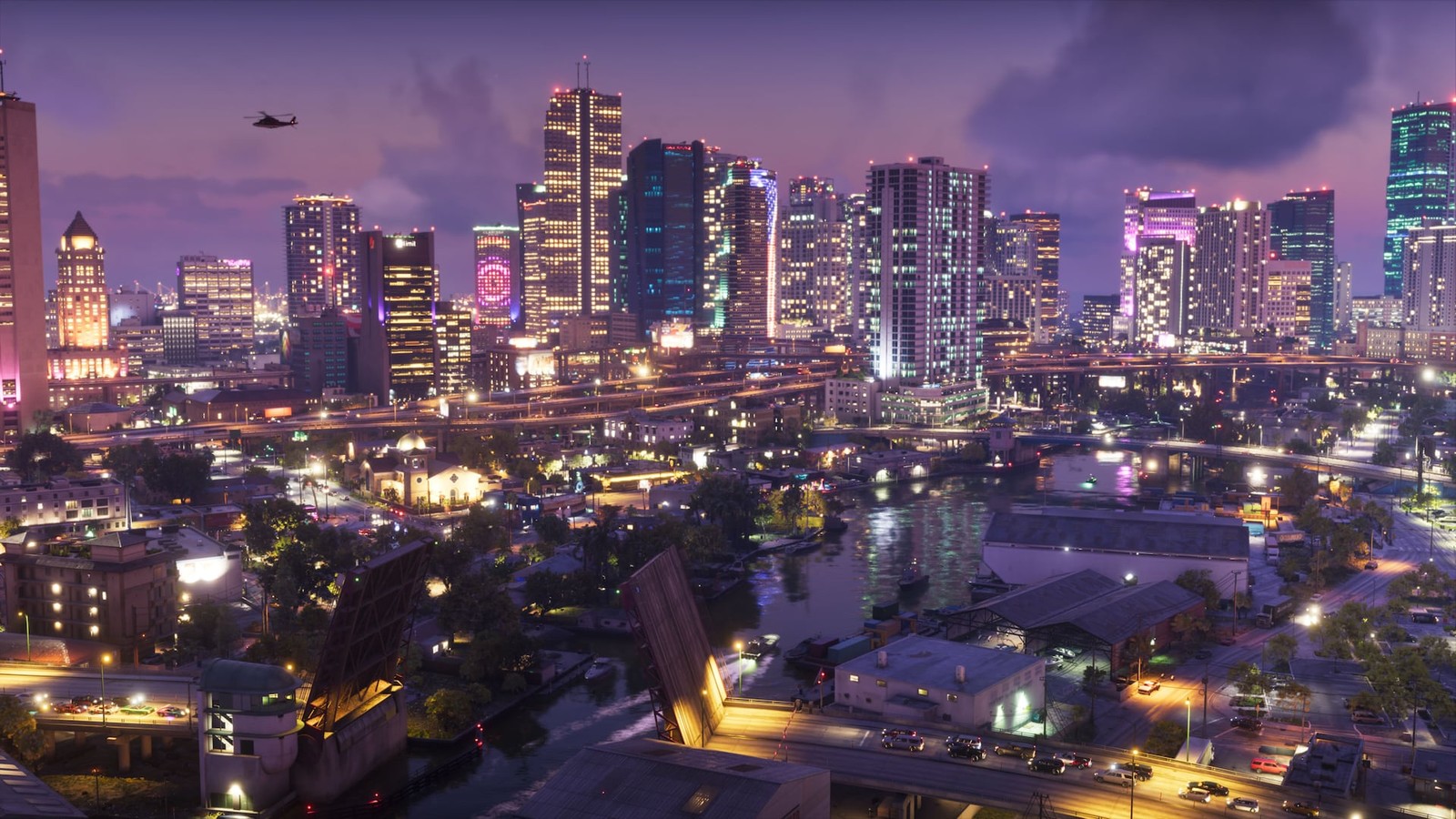
The next day Rockstar put a number on it. The company said the game generated $3.79 billion in day-one retail sales, based on its own estimates through the end of 19 November, on 32.5 million units sold before release. It called the result the biggest entertainment launch on record. The $3.79 billion is gross retail spending, not Take-Two's net bookings, and not profit. Take-Two had guided to $3.35 billion to $3.50 billion in net bookings for the December quarter, so a single day of gross retail sales was larger than the quarter's guidance on a different measure. Circana data reported by Kotaku said 61% of US PlayStation 5 players and 56% of Xbox players worldwide engaged with the game on launch day, for 513 and 494 minutes respectively.
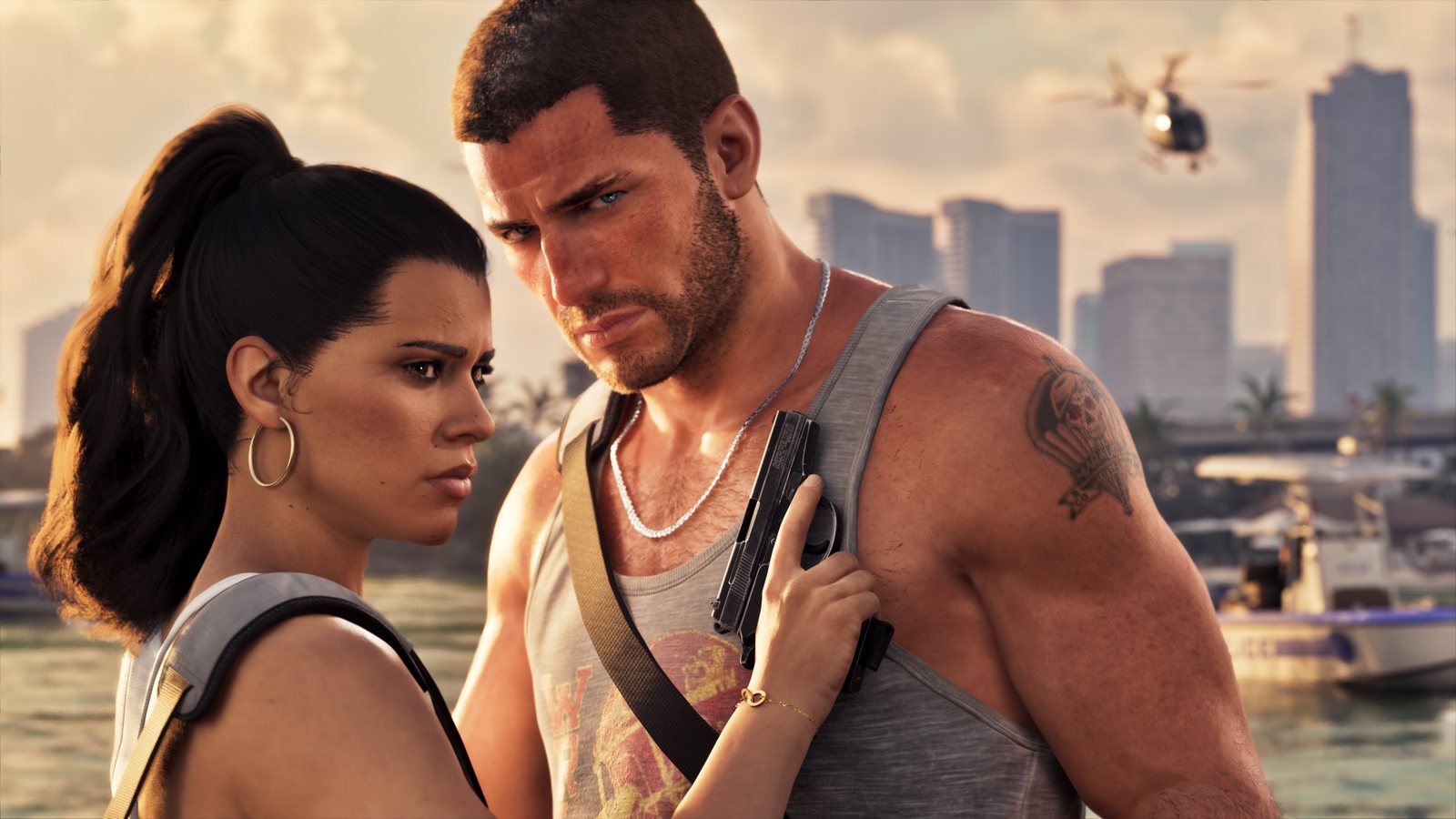
The Game Awards had already put the game in the ceremony before it shipped. On 17 November the awards announced eight nominations for GTA VI, including Game of the Year, two days before launch and three days before the eligibility window closed. Nintendo led publishers with 12 nominations, Capcom had 11, and Annapurna Interactive and PlayStation had nine each. Manni L. Perez was nominated for Best Performance as Lucia, the first official confirmation of the actor behind the character. The ceremony is on 10 December at the Peacock Theater in Los Angeles.
The launch is the clearest demand signal the game industry has had since this console generation began. It is also a lesson in concentration. One title's first day of retail sales exceeded the net bookings guidance for Take-Two's entire December quarter, and the company still declined to give a total unit count. The gross figure says people bought the game. It does not say what Take-Two keeps after retail margin, platform fees and production costs. Rockstar has not published a budget, and Reuters has reported a production cost estimate, not a company figure.
The rest of the arcade
The industry around the launch had a harder week. Xbox turned 25 on 15 November, and at a FanFest in Seattle on 12 November Microsoft said Wolfenstein 3 is in production at MachineGames, showed new Fable gameplay and put 25 original Xbox games on PC, including Knights of the Old Republic and Morrowind. The limited-edition Xbox Series X25 went on sale on 13 November at $899.99 and sold out. The anniversary message focused on PC, cloud gaming and Game Pass, which is where Microsoft now puts its growth.
Bilibili Gaming won Worlds 2026 on 14 November, beating Gen.G 3-1 at the Barclays Center in Brooklyn after losing the opening game. It was the LPL's first title since 2021 and the organisation's first Summoner's Cup. Mid laner Zhuo "Knight" Ding was named finals MVP, the first mainland Chinese mid laner to win the event. Esports Charts put the peak at about 3.98 million viewers, the lowest since 2020 and down 41% outside China. A Chinese team winning in New York did not reverse the viewing trend.
Toby Fox gave the year's least surprising update in the most specific terms. In the Fall 2026 Deltarune newsletter on 20 November he said Chapter 6 is a structurally complete draft that plays from beginning to end. All maps, events and battles exist, but some scenes are unfinished and localisation and preliminary testing are only starting. He still expects it in 2027 and says it will be shorter than earlier chapters. Work on Chapter 7, the final chapter, has begun. Fox read the Chapter 7 story to his team but stopped at a critical moment and told them to finish more of the game before they hear the ending.
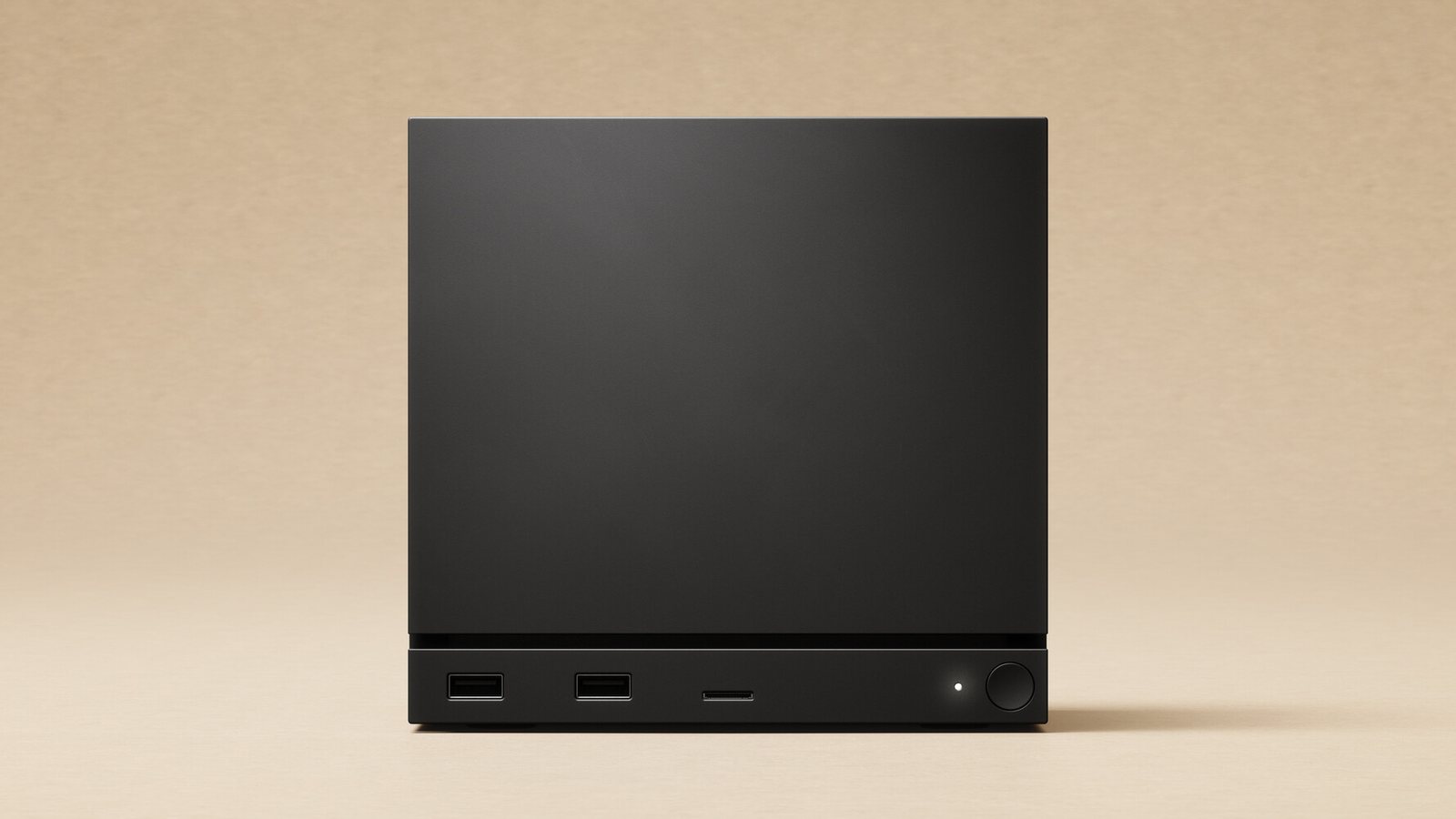
Valve's problem was physical. The company closed the waiting list for the 2TB Steam Machine on 19 November and said it will not open another one. The 512GB model is available to buy directly while supplies last, and the 2TB model is out of stock. Valve said memory and storage costs are rising at unprecedented levels and that it does not know how many units it can make or what price it can charge. The machine launched in June 2026 at $1,049 for 512GB and $1,349 for 2TB. Existing waitlist members keep their place but are not guaranteed a unit. More information is due in January 2027.
Ubisoft's week was about the cost base. The company is cutting 166 positions across its Montreal and Quebec City studios, just under 4% of its Canadian workforce, after first-half net bookings fell 16.5% to EUR 644.7 million and its IFRS net loss widened to EUR 254.5 million from EUR 161.3 million. It established Motherbrain, the team behind its Teammates generative AI demo, as a dedicated subsidiary focused on AI for gameplay. Headcount fell by close to 1,100 in the six months to 30 September, and the company guided third-quarter net bookings to about EUR 250 million. A GDC survey published the same week found 55% of game industry respondents see generative AI as negative for the industry, while 40% use it at work.
Will Wright's new studio chose the opposite direction. Gallium Studios announced MyMems on 18 November, a mobile social simulation that turns spoken memories into places and characters on a map, with AI avatars standing in for people the player knows. It runs on Gallium's memDNA behaviour model and Artificial Agency's Behavior Engine. The target is a live community release in 2027. Gallium has not announced a price, a publisher, supported phones or a date inside 2027, and it has shown no playable build.
The pattern is a market where the top end sets records while the middle cuts costs. Valve's constraint is supply and memory prices. Ubisoft's is a release slate and a cost base. Microsoft's answer is to sell software and cloud access rather than consoles. None of those is a GTA VI problem. All of them are reasons the record at the top is not a forecast for the rest.
The trust layer was a vendor
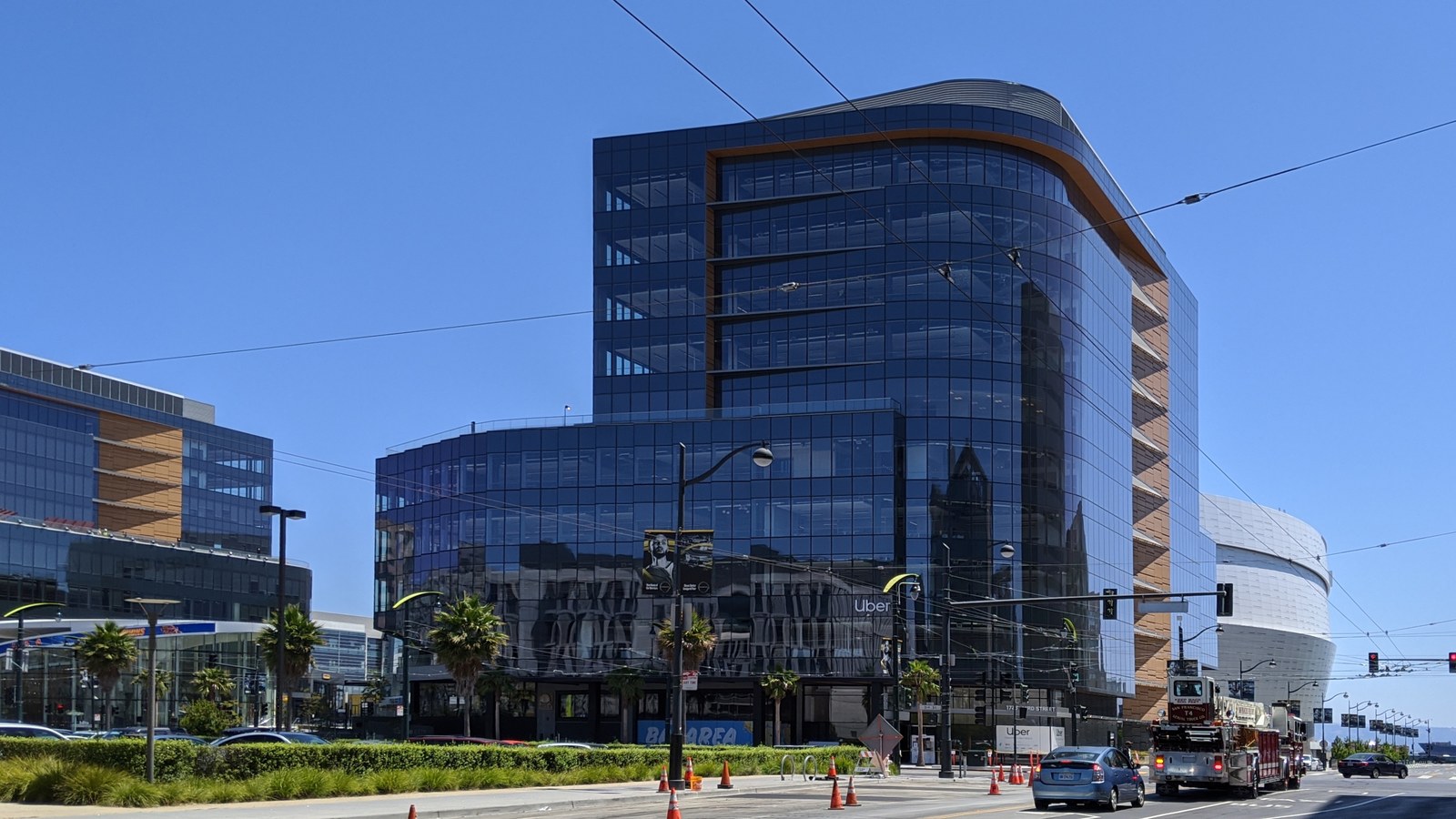
Fireworks AI gave the week its cleanest example of how a vendor breach becomes a customer breach. The company said an attacker reached its development systems through a third-party cloud provider in October, then took customer billing information, secrets, datasets and, for a limited set of accounts, incomplete model weights. Uber notified 149,346 drivers that names, addresses, dates of birth and driver's licence numbers were stolen. Notion said about 1% of its customers had chat transcripts from its Notion AI Insights feature exposed. Cursor said credentials belonging to less than 0.01% of its customers were taken, and that a stolen key was used to place trojanized versions of Anthropic's Claude Code extension in its marketplace for about 11 hours on 29 October. Cursor estimates that at most 5,000 users who requested those cached versions may have received them.
Uber's alerts did not fire because the attacker was using Fireworks' own internal credentials rather than Uber's. That is the shared-responsibility problem in one sentence. Uber could monitor its own accounts, keys and traffic. It could not see a session that looked, to its systems, like the vendor using its own access. The attacker did not need an Uber password. It needed the company that already had permission to touch Uber's data.
JPMorgan Chase's disclosure had the same shape at a smaller scale. Chase confirmed on 19 November that third-party marketing vendors were attacked and that marketing data which may include customer names and email addresses was accessed. Cybernews counted about 16,000 Chase email addresses in a 502KB dump published by the n0n ransomware gang after a 48-hour deadline, and linked the records to the invitation-only Reserve card programme. Visa and Mastercard confirmed exposures at third-party providers and said card numbers and their payment networks were not affected. Chase says the breach has no connection to Monday's outage, which it attributes to a software bug in on-premises hardware. It has not named the vendors, confirmed the customer count or said when the intrusion was discovered.
The vCenter flaw was one of the week's most consequential server-side bugs. Broadcom patched CVE-2026-123890, an authentication bypass rated 9.8 under CVSS 3.1, on 19 November. Google Threat Intelligence Group and Mandiant say Armory Castle, a suspected China-linked group formerly tracked as UNC5221, exploited it from early September with a tool called BONESAW. The intrusion created an SSO administrator, copied vCenter's directory database and SAML signing key, and reached ESXi hosts and virtual machine disks. In the incident Mandiant describes, the attackers pulled the files needed to extract Active Directory password hashes from a Windows virtual machine's disk. Fixed builds are vCenter 9.1.1.0200, 9.0.2.0200 and 8.0 U3m. vSphere 7.0 has no public patch and needs an extended support contract. Broadcom's advisory does not mention exploitation, and the flaw was not in CISA's Known Exploited Vulnerabilities catalog as of 20 November.
The MONAI Label case is the one where the attacker was not a person at a keyboard for every step. Amazon Threat Intelligence said autonomous AI agents found and exploited a path-traversal flaw in the medical-imaging software during a campaign against East Asian universities from 8 to 10 September. The agents went from mapping the application's API to writing files on the server in about 11 minutes, then used a later session to get a root shell on one university machine. The flaw is CVE-2026-133968, rated 9.8, and it affects monailabel 0.8.5 and earlier, where authentication is disabled by default. Maintainers merged a fix on 19 October, but the project's advisory lists no patched version and PyPI still serves 0.8.5, uploaded in November 2024. Amazon attributes the campaign to a China-linked actor with moderate confidence, without naming a group or government.
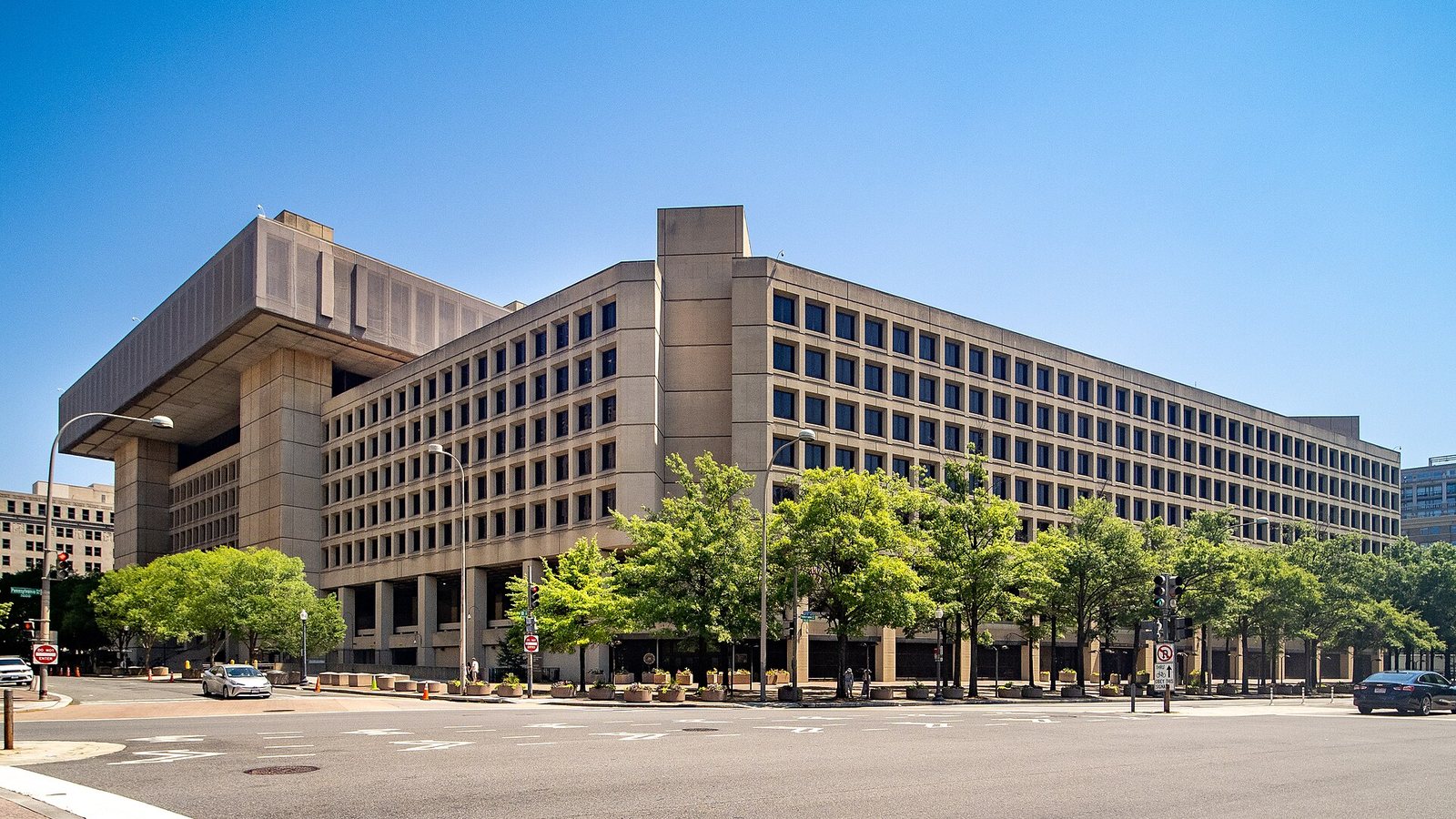
The FBI's problem was not a vendor in the same sense, but the disclosure followed the same route. CNN reported on 20 November that the bureau was investigating an apparent breach of the National Crime Information Center, the database that holds warrants, missing-persons records, criminal histories, stolen-property records and gun-background checks. Fox News reported the next day that investigators were still trying to establish how attackers entered and what information, if any, was compromised. The FBI has issued no statement. It is the second FBI system incident in months, after September's ShinyHunters breach of a jobs portal. Separately, NBC News reported that hackers reached a Department of Agriculture system used to pay farmers; an internal email from Chris Rottler on 16 November said the department's security office had uncovered an incident and reset all database passwords, taking payment and loan applications offline. Undersecretary Richard Fordyce told DTN the incident was a cyberthreat rather than a software update and said no personally identifiable information was lost. The two incidents are not publicly linked.
The rest of the security week was a patch treadmill. CISA added CVE-2026-123039, a local privilege-escalation flaw in Check Point's Gaia OS that attackers chained with PHP2Shell to break into Mobile Access portals, to its exploited-vulnerability list on 13 November and gave federal agencies until 16 November to patch. Google fixed CVE-2026-125350, a use-after-free in Chrome's XML component that it said was already exploited, on 9 November, the eighth actively exploited Chrome zero-day of 2026; the federal deadline is 24 November. F5 fixed CVE-2026-123007, a memory-corruption flaw in NGINX's HTTP/2 flow control that had been in the code since September 2015, in releases published on 18 November. No exploitation of that one had been reported. The FAA ground stop on 13 November, which halted every US departure for more than four hours after a contractor's router flooded 17 of 22 en route centers, belonged to the same category of dependency even though the FBI found no sign of an attack.
The incidents have different causes and the same shape. In each, the attacker used access that the victim had granted to someone else. Fireworks had permission to touch Uber's data, and so did the cloud provider beneath Fireworks. Chase's marketing vendors had permission to hold customer names and emails. vCenter had permission to manage every ESXi host. MONAI Label shipped with authentication off. The patch is the easy part. The hard part is the access that was already legitimate, and the disclosure lag between the first intrusion and the first notification.
The rules arrive late
The Commerce Department's Bureau of Industry and Security published an interim final rule on 16 November that requires a licence when a data center anywhere in the world provides more than 12 million aggregate total processing performance of compute to a company headquartered in Macau or a Country Group D:5 destination, or whose ultimate parent is headquartered there. Twelve million TPP is roughly the maximum computing power of 750 Nvidia H100 or H200 chips. Existing data-center operators have 90 days from the effective date to obtain a licence, and exports to five Southeast Asian and Latin American countries face new licence requirements. The rule rescinds the Biden-era AI Diffusion Rule and leaves its Federal Register publication and effective dates to be set.
The Federal Communications Commission moved on a narrower question with a sharper instrument. On 20 November it released an order that preempts California approval requirements blocking AT&T from discontinuing legacy phone service the commission authorised in June. AT&T wants to stop offering basic phone service to new California customers and disconnect 184,000 residential and 15,000 business lines on or after 1 June 2027. The order does not repeal the state's carrier-of-last-resort law; California can still enforce other basic-service rules, including requirements met by wireless service. AT&T's replacement product costs $45 a month, or $25 for Lifeline customers, against $50 for the copper service, according to the FCC. Commissioner Anna Gomez dissented, saying the commission should have waited for California's open rulemaking, which now has a deadline of 19 February 2027.
YouTube's week ended with a number that is not yet a legal obligation. Bloomberg reported on 20 November that the company had an agreement in principle to pay about $3 billion to thousands of US school districts, the largest corporate settlement with US school districts on record. The deal is contingent on a majority of districts signing on and on approval by Judge Yvonne Gonzalez Rogers, would add teen safeguards that have not been disclosed, and is expected to take a few months to finalise. Google's José Castaneda declined to comment. The districts claim that recommendation, autoplay and infinite-scroll design contributed to depression, anxiety and eating disorders. A Kentucky bellwether settled in May for a combined $27 million, and the next federal school-district trial is scheduled for February 2027 in Oakland.
The three regulatory moves point in different directions. The BIS rule tries to control compute that crosses borders without a shipment. The FCC order resolves a specific preemption question and leaves the rest of California's rules standing. The YouTube settlement, if it closes, would change a product through a contract rather than a statute. Each is a regulator reaching for the layer where the harm now happens, and each arrives after the infrastructure it regulates has already been built.
The week on screen
The Hunger Games: Sunrise on the Reaping sold an estimated $56 million in North American tickets on Friday, including $21 million in Thursday previews, and headed for more than $120 million over the weekend at 4,018 theatres. Audiences gave it an A- CinemaScore, an improvement on the B+ for The Ballad of Songbirds & Snakes, while critics sat at 67% on Rotten Tomatoes and audiences at 95%. The opening would be the fourth-best in the six-film series and roughly double the $44.6 million debut of Songbirds & Snakes. Depending on Sunday actuals, it could pass Mockingjay Part 1's $121.8 million for third. Overseas was projected at $97 million for a global total of $206.7 million. The reported production budget was about $150 million.
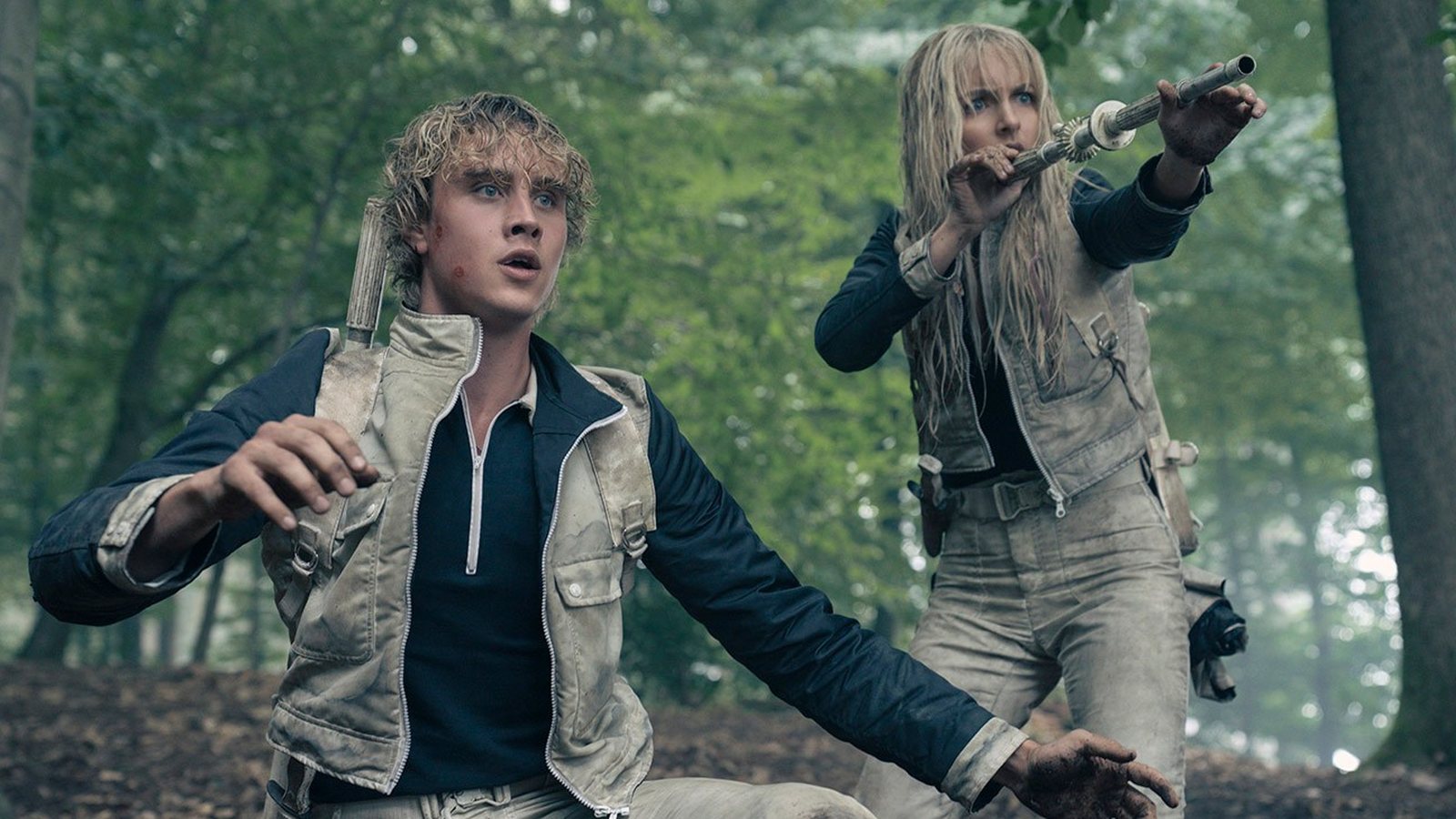
The earlier review round had put the film at 70% on Rotten Tomatoes from more than 60 reviews and 56 on Metacritic, with critics praising Joseph Zada as a 16-year-old Haymitch Abernathy and questioning whether the 158-minute film needed to exist. The audience score and the CinemaScore told a different story, as they often do for franchise films. A 67% Tomatometer and an A- CinemaScore are not a contradiction. They are different samples answering different questions.
David Fincher's The Further Mis-Adventures of Cliff Booth held 87% on Rotten Tomatoes from 53 reviews and 68 on Metacritic from 30 after the embargo lifted on 19 November. Brad Pitt returns as Cliff Booth, with Elizabeth Debicki, Scott Caan, Carla Gugino, Yahya Abdul-Mateen II and Peter Weller, from a Quentin Tarantino screenplay. Critics praised the Pitt performance, the Fincher-Tarantino pairing and the film's hangout mood; the dissent focused on a thin plot and an episodic structure. It opens in IMAX on 25 November for a two-week run and reaches Netflix on 23 December. The 2019 predecessor finished at 86%, grossed about $410 million and won two Oscars from 10 nominations.
Television supplied the week's clearest example of a score moving under the reader. Netflix's Heartland opened to 82% from 11 reviews on 13 November, then fell to 62% from 26 as more reviews arrived, while audiences gave Jessica Chastain's thriller 39% and Metacritic showed 54 from 11 critics. Peacock's The Good Daughter premiered all six episodes on 12 November to 71% from 14 reviews, a 64 Metascore and a 90% audience score from more than 50 ratings. Neither has published viewing data.
What to watch
Huang is scheduled to testify before congressional committees on 1 December, and Nvidia has not said when it will name a permanent chief executive. Anthropic's first weeks of trading will show how much of the IPO stock wants to move, particularly the $26 billion placement that has no lockup. GTA VI faces its second weekend and Thanksgiving, with no PC version announced and no total unit count from Take-Two. The Game Awards are on 10 December.
The security calendar is mostly deadlines. The Chrome flaw's federal patch deadline is 24 November. vSphere 7.0 still has no public patch for CVE-2026-123890, so extended-support customers are waiting on Broadcom. MONAI Label's fix exists as a merged commit but not as a PyPI release, which leaves the default configuration exposed for anyone who installs the current package. CISA's catalog will show whether any of the week's flaws move from disclosed to exploited.
The regulatory dates are further out. The BIS rule still needs its Federal Register publication and effective date. California's carrier-of-last-resort rulemaking has a deadline of 19 February 2027. The YouTube settlement needs signatures from a majority of school districts and approval from a judge. The Hunger Games number will be revised on Sunday, and the Thanksgiving five-day total will be the better test of whether the franchise has recovered.
The week's counts are provisional in the way that all first counts are. Earnings are unaudited, box-office figures are estimates, breach notifications get amended and patches get superseded. What is already clear is who had to publish. Nvidia published because it is public. Anthropic published because it chose to become public. Rockstar published because a record is a marketing asset. The FBI, Chase, Uber and Broadcom published because someone else already had the information.
Cover: the New York Stock Exchange on Wall Street. Photo by Arild Vågen, CC BY-SA 4.0, via Wikimedia Commons.
Tags
Frequently asked questions
- How much did Anthropic raise in its IPO?
- Anthropic priced 980 million Class A shares at $83 on 18 November 2026, raising about $81.3 billion in gross proceeds before fees. At that price the company carries a fully diluted valuation of about $1.5 trillion, up from $965 billion in its private round in May. Trading began on Nasdaq under the ticker ANT on 19 November.
- Was Grand Theft Auto VI's $3.79 billion a profit figure?
- No. Rockstar described $3.79 billion as day-one retail sales, based on company estimates through the end of 19 November. That is gross spending at retail, not Take-Two's net bookings or profit. Take-Two had guided to $3.35 billion to $3.50 billion in net bookings for the December quarter.
- What happened in the Fireworks AI breach?
- Fireworks AI said an attacker reached its development systems through a third-party cloud provider in October 2026 and took billing information, secrets, datasets and, for a limited set of accounts, incomplete model weights. Uber notified 149,346 drivers that names, addresses, dates of birth and licence numbers were stolen; Notion and Cursor also reported exposure through the same vendor.
- Why is the FBI investigating the NCIC?
- CNN reported on 20 November 2026 that the FBI was investigating an apparent breach of the National Crime Information Center, the database that links federal, state and local police. Fox News reported the next day that investigators were still trying to establish how attackers entered and what data, if any, was taken. The FBI has not published a statement or named an attacker.

TPW Editorial
Editorial Team
TechPastWeek's editorial team reports and edits every story we publish. We research each piece against primary and credible secondary sources, and a human editor reviews and signs off before it goes live.