A Router Flood Halted Every U.S. Departure for More Than Four Hours
The FAA stopped all U.S. departures on 13 November after a contractor's router flooded air traffic control networks, cancelling more than 9,100 flights.

On this page
Key takeaways
- The FAA issued a nationwide ground stop at 3:54 p.m. ET on 13 November 2026 and lifted it at about 8:15 p.m. ET.
- Transportation Secretary Sean Duffy said a router installed during L3Harris copper-to-fiber work flooded communications at 17 of the FAA's 22 en route centers.
- FlightAware counted more than 9,100 cancelled and 24,500 delayed flights on Friday; disruptions continued into Saturday.
- Officials have not determined whether the cause was installer error or a faulty router, and the FBI found no sign of a cyberattack.
- The outage exposed the age of the FAA's copper network, which the agency is trying to replace by September 2027.
The Federal Aviation Administration stopped every departing flight in the United States at 3:54 p.m. ET on 13 November 2026 after a communications failure spread across its air traffic control network. The ground stop lasted until about 8:15 p.m. ET, roughly four hours and twenty minutes, and disrupted travel into the weekend.
Related reading: Microsoft 365 Went Down for Hours After Servers Failed Their Own Health Checks · CoreWeave's Revenue Jumps 168% as Its Backlog Reaches $132.5 Billion.
Transportation Secretary Sean Duffy said the trigger was a router installed during routine work to replace copper telecommunications lines with fiber. The router began flooding other routers with connection attempts, overwhelming communications at 17 of the FAA's 22 en route centers and disrupting some radar feeds. The contractor doing the work was L3Harris Technologies.
The FAA's decision to stop all departures rather than manage the problem locally reflects how the failure moved. The en route centers coordinate traffic between airports, and when their communications degrade the agency cannot be sure which sectors are safe to use. A nationwide stop is the blunt version of that caution.
What failed, in order
The sequence Duffy described on 14 November starts with maintenance. L3Harris was converting a remote FAA location from copper to fiber. The work is part of a long-running programme to replace a network that the FAA says costs about $1 billion a year to maintain. During or after the conversion, a router at the site began sending far more traffic than the network expected.
Duffy said the system saw "over 1,000 connection attempts every four to five seconds." Those attempts overloaded switches and spread to other facilities. The FAA lost reliable communications with aircraft in some areas and saw disruption in radar data. It issued the ground stop at 3:54 p.m. ET.
Officials told Reuters that routers in both Arkansas and Texas may have been involved. CBS reported that the preliminary investigation pointed to Cisco 600-series routers made between 2001 and 2006, which had been identified and isolated. Those details have not been confirmed in a published FAA report.
The ground stop was lifted at about 8:15 p.m. ET. Duffy said the agency deployed fixes to reduce the load on its switches and brought the centers back online. He said the new equipment the FAA had installed did not go down, and that the failure involved legacy network equipment.
The travel impact
FlightAware counted more than 9,100 cancelled flights and more than 24,500 delayed flights on Friday, according to Fox Weather. CNN put the combined figure at more than 15,000 delayed or cancelled. The counts differ because they cover different windows and because delays and cancellations are recorded at different points in the day.
The disruption continued on Saturday. Airlines cancelled more than 6,400 U.S. flights and delayed more than 8,000 as of 9:35 p.m. ET, according to Scripps News figures cited by local outlets. The FAA said schedules should return to normal by the end of Sunday.
The operational problem after a ground stop goes beyond the flights that were cancelled. Aircraft and crews are out of position, gates are full, and airports that took diversions have to clear them. Duffy said the agency was back at full operations on Saturday, but full operations and a normal schedule are not the same thing.
The contractor and the network
L3Harris manages the FAA Telecommunications Infrastructure, or FTI. According to the company, the network supports about 45,000 daily U.S. flights and connects more than 4,400 facilities. The company says it has completed more than 70% of the planned conversion from copper to fiber.
Duffy framed the open question as one of installation error versus equipment failure. "We're working to determine whether we had incompetence, meaning was it user error or installer error from L3Harris, or did they install a faulty router," he said. "We haven't determined what the fault was." L3Harris said it was supporting the FAA's investigation and took the disruption seriously.
The FBI looked at the incident and did not find evidence of a cyberattack or criminal activity, according to reporting cited by several outlets. That matters because a nationwide communications failure at a transportation agency invites speculation about sabotage. The available evidence points to a network engineering problem, not an intrusion.
The FAA's en route centers handle traffic between airports, while terminal facilities handle approaches and departures. The 13 November failure affected 17 of the 22 en route centers, which is why the agency could not contain it to one region.
Why one router could do this
A single router should not be able to stop a national air traffic system. The fact that it could says as much about the network's design and age as about the device itself. The FAA's communications system is a patchwork of legacy circuits, newer fiber, and contractor-managed equipment. The copper-to-fiber conversion is meant to simplify it, but the transition creates moments when old and new equipment have to interoperate.
Duffy said the agency spends about $1 billion a year maintaining the copper system. Congress approved $12.5 billion for air traffic control modernization in 2025. In September 2026, Duffy asked for an additional $30 billion, and after the ground stop he raised the request to $50 billion. FAA Administrator Bryan Bedford has said the copper wires should be fully replaced by September 2027.
The FAA is also moving toward a cloud-based system for managing airspace, called SMART, which it began expanding nationally on the same day as the ground stop. Air Space Intelligence, the company behind SMART, denied that its technology had any role in the failure.
The political argument is now about money and oversight. Duffy blamed L3Harris for the work that preceded the failure, while saying the cause was not yet known. L3Harris said it was cooperating. Neither account explains why a local maintenance error propagated to 17 centers before anyone could isolate it.
The safety question
A ground stop is a conservative response. The FAA would rather stop departures than let aircraft fly into a communications environment it does not trust. That is the right default when the alternative is uncertainty, and it is why the agency lifted the stop only after it had reduced the load on its switches.
The cost is large. More than 9,000 cancelled flights strand passengers, cost airlines money, and ripple through the system for days. The question for the FAA and its contractors is whether the same failure could happen again during the remaining 30% of the copper-to-fiber conversion. The agency says it is doing additional testing with L3Harris. It has not published the test plan or a timetable for finishing the work.
There is also a monitoring question. If a router can flood the network with 1,000 connection attempts every four to five seconds, the system should be able to detect and isolate it before it reaches 17 centers. The FAA has not said whether its monitoring caught the flood, whether an automated control failed, or whether the failure was simply faster than the response.
Caveats
The root cause is not settled. Duffy said officials were still trying to determine whether the problem was installer error or a faulty router. No final report has been published. The references to Cisco 600-series routers and to equipment in Arkansas and Texas come from CBS and Reuters reporting, not from an FAA document.
The flight counts are third-party estimates. FlightAware, CNN and Scripps used different windows and definitions, which is why the numbers do not match. The FAA has not published its own cancellation count.
The duration is also reported in slightly different ways. The ground stop was issued at 3:54 p.m. ET and lifted at about 8:15 p.m. ET, which is roughly four hours and twenty minutes. Some coverage describes it as five hours. The difference is rounding, not a factual dispute about the start and end times.
The claim that this was the second-longest nationwide ground stop in U.S. history comes from Fox Weather, which compared it with the 11 January 2023 NOTAM outage and the 11 September 2001 shutdown. The FAA has not published a ranked list.
What to watch
The FAA's investigation will have to answer three questions: what the router did, why the failure spread, and whether the remaining conversion work carries the same risk. The agency has said it is testing with L3Harris. It has not said when the testing will finish.
The funding request is the second track. Duffy's $50 billion figure is a request, not an appropriation. Congress approved $12.5 billion in 2025, and the copper replacement is due by September 2027. If the money does not arrive, the deadline is the first thing that moves.
For travellers, the immediate risk is a repeat during the next maintenance window. The FAA has not said it will pause the copper-to-fiber work while it investigates. L3Harris says it has completed more than 70% of the conversion, which leaves a substantial amount of work still to do on the same network.
The ground stop ended on Friday night. The conditions that produced it have not.
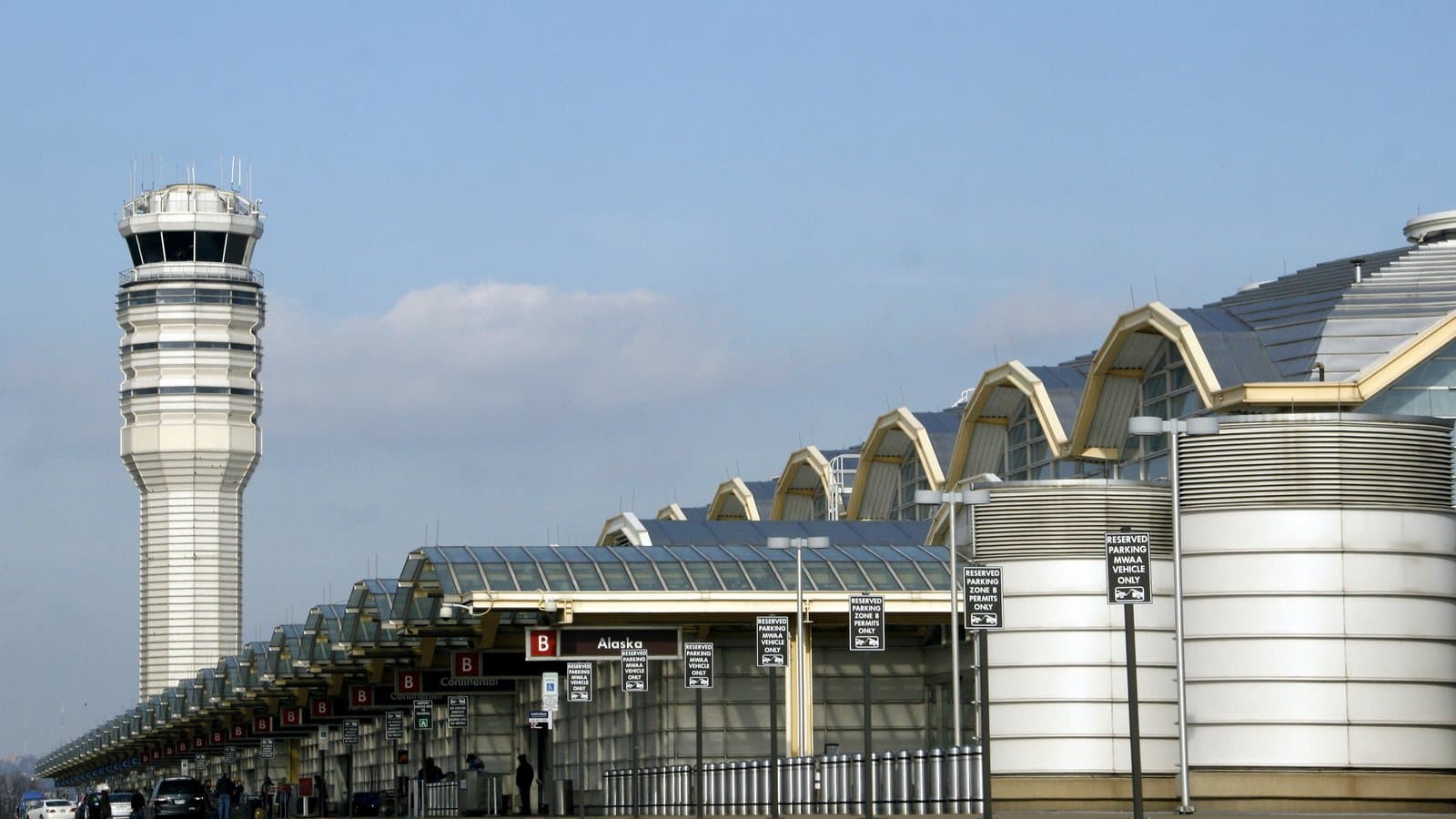
Cover image: the control tower and terminal entrance at Ronald Reagan Washington National Airport. Photo by dbking, CC BY 2.0, via Wikimedia Commons.
Tags
Frequently asked questions
- Why did the FAA stop all flights on 13 November 2026?
- A router installed during a copper-to-fiber conversion flooded the FAA's air traffic control communications network with connection attempts, disrupting communications and some radar feeds. The FAA issued a nationwide ground stop as a safety measure.
- How long was the ground stop?
- The FAA issued it at 3:54 p.m. ET and lifted it at about 8:15 p.m. ET, a period of roughly four hours and twenty minutes. Recovery continued through the weekend.
- Was the FAA outage a cyberattack?
- Officials said there was no evidence of a cyberattack. The FBI examined the incident and did not find signs of criminal activity, according to reporting cited by other outlets.
- Who is L3Harris?
- L3Harris Technologies is an aerospace and defense contractor that manages the FAA Telecommunications Infrastructure, the network that connects more than 4,400 FAA facilities and supports about 45,000 daily U.S. flights.

TPW Editorial
Editorial Team
TechPastWeek's editorial team reports and edits every story we publish. We research each piece against primary and credible secondary sources, and a human editor reviews and signs off before it goes live.