Activists Breach Microsoft's 78 MW Amsterdam Data Center Site in Europe-Wide Protests
Activists breached Pure Data Centres' 78 MW Microsoft site in Amsterdam on 6 November 2026 as over 100 groups staged anti-data-center protests across Europe.

On this page
Key takeaways
- On 6 November 2026, activists from Geef Tegengas, Extinction Rebellion, and pro-Palestinian groups breached the fence of a 78 MW data center construction site on Plimsollweg in Amsterdam.
- UK-based Pure Data Centres Group is investing over €1 billion in the six-acre AMS01 campus, which comprises three 85-meter towers of 26 MW each and is 100% leased to Microsoft.
- Dutch riot police cleared the site with batons, pepper spray, and tear gas; crowd counts inside ranged from over 100 reported by Reuters to around 500 claimed by Geef Tegengas.
- Although Amsterdam restricted new data centers in 2019 and the Netherlands banned hyperscale sites above 70 MW in 2022, AMS01 used a 2016 planning filing approved in January 2026.
- The breach coincided with the Stop Dirty Data Centres campaign on 6 and 7 November 2026, uniting over 100 groups across 15 to 16 European countries behind a moratorium demand.
Activists from the Dutch direct-action group Geef Tegengas ("Push Back"), joined by Extinction Rebellion and pro-Palestinian demonstrators, pushed past police lines around noon CET on Friday, 6 November 2026, and breached the fence of a 78 MW data center construction site on Plimsollweg in Amsterdam's Westpoort district. According to The Guardian and Reuters, protesters climbed cranes and scaffolding, set off flares, spray-painted foundations, and hung banners before Dutch riot police (ME) intervened with batons, pepper spray, and tear gas.
Related reading: Microsoft Plans to Triple Its Data Centres to 38 Gigawatts by 2032 · Google's $15 billion Malaysia expansion comes with power and water attached.
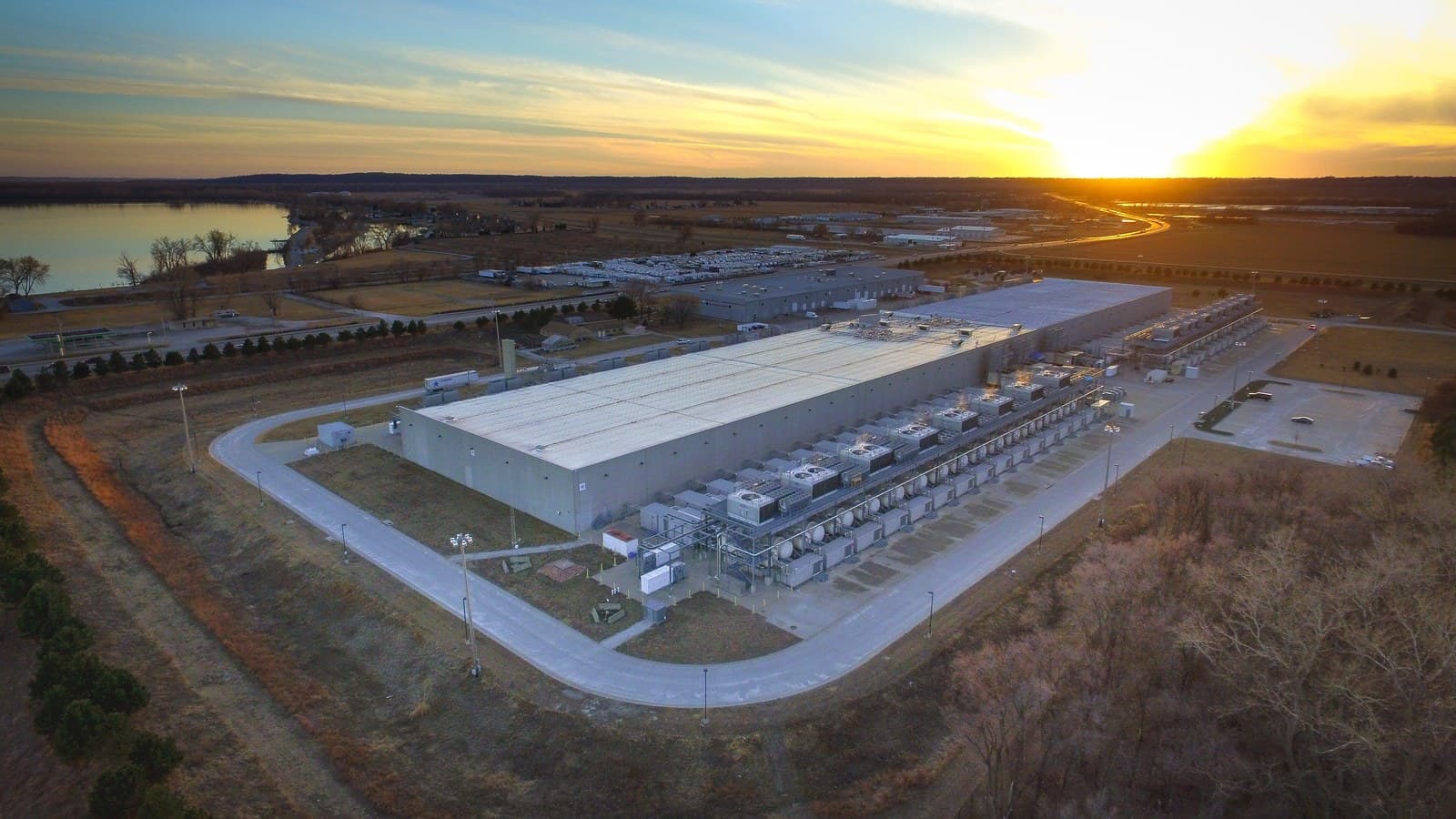
The six-acre campus, designated AMS01, is developed by UK-based Pure Data Centres Group for over €1 billion. Microsoft is the sole contracted tenant, leasing 100% of the campus.
Friday's occupation opened the two-day Stop Dirty Data Centres campaign across 15 to 16 European countries on 6 and 7 November 2026. Over 100 civil-society and environmental groups joined the coordinated actions to demand an immediate moratorium on new large-scale data centers. The protests followed the 3 November US midterm elections, where voters backed data center restrictions in 40 of 41 local ballot measures, covered in our 5 November report.
What happened on Plimsollweg on 6 November
Police intervention in the Sloterdijk and Westpoort harbor district started early Friday morning. Dutch officers halted a march heading toward the site, and the Mayor of Amsterdam issued an emergency ban on the demonstration, according to NL Times and Data Center Dynamics. Outside the fence on Plimsollweg, Fossielvrij NL, Leitmotiv, and De Goede Zaak held a solidarity rally and a "Politics of Data Centres" teach-in by University of Amsterdam (UvA) lecturers.
A separate group broke through. Demonstrators from Geef Tegengas, Extinction Rebellion, and pro-Palestinian groups linked arms, pushed past police lines, cut a hole in the perimeter fence, and used ladders to enter the site. Inside, activists climbed scaffolding, a building roof, and a tall crane. They lit flares, tied helium balloons to equipment, spray-painted concrete foundations, and hung banners reading "Down with data centers, fuck AI", "Genocide", and "No climate justice on occupied land".
It was the third incident at the site in five months. Geef Tegengas broke into the compound in June 2026, and Extinction Rebellion threw balloons filled with acetic acid and paint over the fence in July 2026.
Dutch riot police used batons, pepper spray, and tear gas to clear the compound. Amsterdam police told public broadcaster NOS that one officer was slightly injured and that police confiscated an angle grinder and climbing gear from demonstrators heading to the site.
Crowd and arrest counts varied across sources. Reuters and Bloomberg counted over 100 protesters inside the fence, with hundreds more outside; Fossielvrij NL estimated 400 protesters in total; Geef Tegengas told AT5 that around 500 entered the site. Amsterdam police's initial statement (cited by Bloomberg, Data Center Dynamics, and Quartz) confirmed one arrest for obstructing construction work as officers escorted others off site. NL Times (citing AT5) reported multiple arrests, and AI Weekly (citing Al Jazeera) reported 150 to 200 detained on suspicion of trespassing.
Three 85-meter towers and a 2016 planning application
Pure Data Centres Group is backed by Oaktree Capital Management, which is owned by Brookfield. Per Pure Data Centres' project page and Tom's Hardware, the AMS01 build on Plimsollweg has five core specifications:
- 78 MW of total IT capacity across a six-acre industrial site.
- Three 85-meter-tall (279-foot) towers, each housing 26 MW of data halls.
- A private substation connected to the 50kV grid, already live, with data hall construction underway since January 2026.
- A target power usage effectiveness (PUE) of 1.2.
- Over €1 billion (more than $1 billion) in investment by Pure Data Centres, supporting more than 1,000 construction jobs and about 80 permanent roles once operational.
How a 78 MW campus is rising in Amsterdam in 2026 comes down to filing dates. Amsterdam enacted a temporary moratorium on new data centers in 2019. In 2022, after backlash over Microsoft's Middenmeer campus in North Holland, the Dutch national government banned new hyperscale data centers exceeding 10 hectares and 70 MW. Amsterdam extended its local restrictions through 2030 in 2025.
The Westpoort project survived all three rules because its initial planning application dates back to 2016, predating both the municipal and national bans. The North Holland provincial government approved it to proceed in January 2026. Critics accuse the project of circumventing the 70 MW hyperscale threshold by splitting 78 MW across three 26 MW towers. Legally, the permit held.
Power, water, and the claims over 30,000 delayed homes
Protesters on Plimsollweg tied local grid strain to Microsoft's defense and border contracts. Demonstrators argued the 78 MW facility will consume as much electricity as all households in Amsterdam combined, strain drinking water and grid capacity, and delay the construction of 30,000 new homes because of grid congestion. They also targeted Microsoft's cloud and AI contracts with the Israeli military (IDF) and US Immigration and Customs Enforcement (ICE).
"We won't accept Amsterdam being used for the creation of AI slop and the facilitation of genocide," Geef Tegengas spokesperson Roos Molenaar told The Guardian. "This datacentre is gulping up our drinking water to make the rich even richer."
Both companies focused their responses on site safety. A Microsoft spokesperson told Gizmodo and The Guardian: "We understand that people feel strongly about the project, and we respect their right to express those views peacefully. However, we do not condone any actions that are unlawful or that put people's safety at risk. The wellbeing of everyone at and around the site, including workers, staff and neighbors is our first concern."
A Pure Data Centres spokesperson told The Guardian and Reuters: "Our immediate priority is everyone's safety, and we respectfully ask those on site to leave safely and engage with us in dialogue about the development and any concerns they may have."
Neither company released data on Friday disputing the household electricity comparison or the 30,000-home figure. Those remain the protest group's calculations, just as the job and PUE figures remain Pure Data Centres' projections.
Eighty-five actions across 15 to 16 European countries
Outside Amsterdam, the campaign consisted of legal marches and rallies. According to The Green Web Foundation and Data Center Dynamics, the Stop Dirty Data Centres days of action on 6 and 7 November united more than 100 civil-society, environmental, and digital-rights organizations. Reuters and Tom's Hardware cited 16 countries and 85 targeted actions on the campaign map; The Guardian and Channel NewsAsia cited 15 countries.
Participating groups include Friends of the Earth branches across the UK, Ireland, Croatia, Austria, and Europe, Greenpeace, The Green Web Foundation, Global Action Plan (UK), Foxglove (UK), Fossielvrij NL, and France's Les Soulèvements de la Terre. They demand an immediate moratorium at local, national, and EU levels pausing large-scale data center construction until energy, water, climate, and community impacts are democratically scrutinized. The coalition explicitly stated that Geef Tegengas is not a formal member and that the coalition did not coordinate or promote the Amsterdam break-in, keeping its affiliated demonstrators outside the fence.
"Big tech and government are racing ahead with large-scale datacentre development despite significant public concern about the impacts on local communities, natural resources and other industries. Many datacentre developments are planned with limited transparency or scrutiny, while communities across Europe are being shut out of decisions that will shape their local environments and futures." Owen Espley, campaign coordinator for Stop Dirty Data Centres, to The Guardian on 6 November 2026.
In the UK, where 315 data centers are queued for 73 GW of grid capacity against UK peak power demand of 45 GW, rallies took place in London (Brick Lane, Canary Wharf, and outside DESNZ), Bristol, Leeds, Edinburgh, and West Kilbride. In Denmark, where data center grid connection requests top 60 GW (more than eight times Denmark's peak power demand), protesters gathered outside a Microsoft data center.
Other actions ran on 6 and 7 November in Dublin, outside the Polish Parliament in Warsaw, on the outskirts of Berlin, in Paris, along the Manzanares River in Madrid, in Zagreb, in Finland, and in Vienna and Linz, targeting Google's planned Kronstorf facility.
Brussels between capacity targets and grid politics
European officials want domestic AI capacity without local power crunches. Speaking to Reuters, Henna Virkkunen, EU Executive Vice-President for Tech Sovereignty, Security and Democracy, defended the buildout: "AI, of course, is a super important technology and we need to have our own capacity."
She then acknowledged the voter risk. "It's very important for citizens that they can trust that their energy bills are not skyrocketing and there's not electricity blackouts because of data centres, or they are not destroying the environment with these projects," Virkkunen said.
How national grids square both promises is unclear. We'll see whether Brussels attaches binding power rules to its cloud targets.
The European protests also cap a bruising week for cloud infrastructure in the United States. Three days before the Amsterdam breach, US voters backed data center restrictions in 40 of 41 local ballot measures on 3 November, helping trigger a $2.5 trillion single-day Nasdaq selloff on 5 November (see our 6 November report). Where US opposition moved through ballot measures, European resistance is colliding with legacy permits like Westpoort's 2016 filing on congested urban grids.
What the competing claims leave unresolved
Key caveats and disputed figures
Crowd and arrest counts from 6 November differ by source: Reuters and Bloomberg reported over 100 protesters inside the fence (Geef Tegengas claimed around 500; Fossielvrij NL estimated 400 total), while Amsterdam police confirmed one formal arrest for obstructing construction work, AT5 reported multiple arrests, and Al Jazeera / AI Weekly cited 150 to 200 trespassing detentions. Stop Dirty Data Centres stated that Geef Tegengas is not a coalition member and did not coordinate the site breach. AMS01 is owned and developed by Pure Data Centres Group (backed by Oaktree and Brookfield) with Microsoft as sole tenant under a 2016 planning filing. The 30,000-home delay and household power claims are protest group calculations; job and PUE figures are Pure Data Centres' projections. The Europe-wide moratorium is an activist demand, not enacted law.
Those caveats do not ease the build schedule. Even with its 50kV substation live and North Holland's January 2026 approval in hand, Pure Data Centres is building three 85-meter towers on a six-acre site breached twice in five months.
What to watch
In Amsterdam, police and prosecutors will decide whether Friday's trespassing detentions bring formal charges, while Pure Data Centres faces immediate choices on Plimsollweg perimeter security. Locally, watch whether North Holland or Amsterdam officials review unbuilt pre-2019 data center filings before the city's current restriction period runs through 2030.
Across Europe, the test is whether grid regulators in the UK, Denmark, Ireland, and the Netherlands tighten connection queues for hyperscale loads, or whether the European Commission advances AI compute targets without binding limits on local power and water draw.
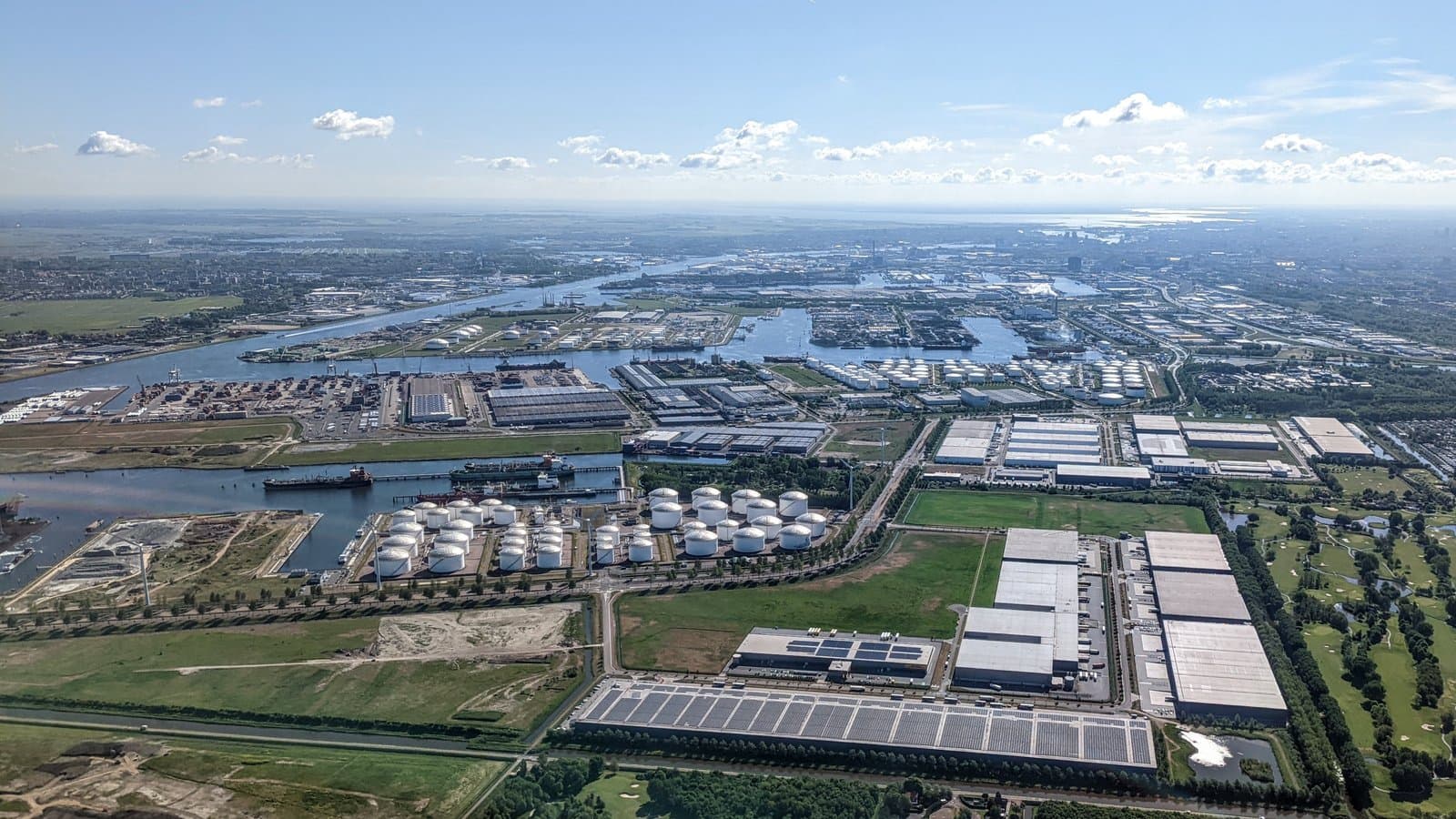
Cover image: aerial view of the Westpoort industrial and port district in western Amsterdam, by Dicklyon, CC BY-SA 4.0, via Wikimedia Commons.
Tags
Frequently asked questions
- Who owns and operates the Amsterdam data center breached by protesters?
- The AMS01 campus on Plimsollweg in Amsterdam's Westpoort district is owned and developed by UK-based Pure Data Centres Group, backed by Oaktree Capital Management and Brookfield. Microsoft is the sole contracted tenant and leases 100% of the 78 MW facility.
- How was the 78 MW Amsterdam data center approved despite Dutch hyperscale bans?
- Amsterdam enacted a local moratorium in 2019 and extended restrictions through 2030 in 2025, while the Dutch government banned new hyperscale sites above 10 hectares and 70 MW in 2022. The Westpoort project proceeded because its initial planning application dates to 2016 and received provincial clearance from North Holland in January 2026.
- How many people were arrested at the Amsterdam data center protest on 6 November 2026?
- Counts differ by outlet. Amsterdam police initially confirmed one formal arrest on suspicion of obstructing construction work, local broadcaster AT5 reported multiple arrests, and Al Jazeera cited between 150 and 200 people detained on suspicion of trespassing.
- Did the Stop Dirty Data Centres coalition organize the Amsterdam site break-in?
- No. The Stop Dirty Data Centres coalition stated that direct-action group Geef Tegengas is not a formal coalition member and that the coalition did not coordinate or promote the site breach.

TPW Editorial
Editorial Team
TechPastWeek's editorial team reports and edits every story we publish. We research each piece against primary and credible secondary sources, and a human editor reviews and signs off before it goes live.