Google's $15 billion Malaysia expansion comes with power and water attached
Google will spend another $15 billion in Malaysia in 2027 and 2028, pairing new data centers with a 1 GW clean-energy deal and a state-owned water plant.

On this page
Key takeaways
- Google said on 4 November 2026 that it will invest an additional US$15 billion (RM61 billion) in Malaysia during 2027 and 2028.
- The plan expands the existing Elmina campus in Selangor and adds campuses in Selangor and Negeri Sembilan; local reports name Port Dickson, Puncak Alam and Serendah as sites.
- Google will work with Tenaga Nasional Berhad to add more than 1 gigawatt of clean energy capacity to the national grid without public subsidies.
- A planned off-river reservoir and treatment plant in Negeri Sembilan is designed to supply 65 million litres of treated water a day and pass to the state government on completion.
- Google projects the spending will add an annual average of US$1.1 billion to Malaysia's GDP and support more than 37,000 local jobs a year during construction.
Google will invest an additional US$15 billion (RM61 billion) in Malaysia across 2027 and 2028, the company said on Wednesday, 4 November 2026, a commitment several times the US$2 billion it made in May 2024. The money goes into data centers and cloud infrastructure, beginning with an expansion of the campus at Elmina Business Park in Selangor.
Related reading: Google Will Spend €13 Billion in Finland, and Buy Nuclear Power for 22 Years · Data Center Cooling, Explained: PUE, Liquid Cooling, and the Water Bill.
The announcement came at an event called “Mantap Malaysia Bersama AI” at Universiti Malaya in Kuala Lumpur, with Prime Minister Datuk Seri Anwar Ibrahim in attendance. Alphabet and Google president and chief investment officer Ruth Porat delivered it, according to Malay Mail. Malaysia’s first Google data center and its Google Cloud region already sit at Elmina, both part of the 2024 commitment, after more than 15 years of the company operating in the country.
Beyond the Elmina expansion, Google plans new campuses in Selangor and Negeri Sembilan. SoyaCincau reported that the sites named locally are Port Dickson, Puncak Alam and Serendah. Google has not published a site-by-site construction schedule, and the announcement did not amount to a signed contract for every campus.
What the $15 billion is meant to buy
Google expects the spending to contribute an annual average of US$1.1 billion to Malaysia’s gross domestic product, Business Times reported. During the construction phase in 2027 and 2028, the company says the work will support more than 37,000 local jobs a year and produce average annual labour income of US$378 million.
Once the facilities are operating, Google projects more than 9,000 long-term local jobs at average wages 45% above Malaysia’s median wage. The company says it is working with more than 80 Malaysian entities across civil engineering, power systems, network infrastructure and logistics.
The word “support” is doing real work in those numbers. It counts construction crews, suppliers and induced jobs, so most of the people inside it will never work for Google. Every figure in that list is also a Google projection published on the day of the announcement. The company has not released the model behind them. A separate Nikkei Asia/Reuters report on the investment and Bloomberg’s account of the announcement carry the same headline figures without additional detail on how they were derived.
Even the headline number is hard to check. Google has not disclosed its total investment in Malaysia to date, the split between data centers and cloud spending, or the terms of its power arrangements, so the RM61 billion cannot be measured against a baseline the company has published.
In 2024 the money bought a way in: a first Google data center and a first Google Cloud region in a market that had neither from the company. The 2026 package is about scale, and scale here runs through infrastructure Google will not own outright. That difference explains the shape of the announcement. The parts that matter most to Malaysia are the parts a cloud company has no ordinary reason to build.
Power is now a grid negotiation
Power has the longest tail of the two non-compute commitments. Google will work with Tenaga Nasional Berhad, the national utility, to add more than 1 gigawatt of clean energy capacity to the grid, and it says the arrangement does not depend on public subsidies. That is a capacity commitment measured at the grid, not at Google’s fence line. The company has not said how much of that 1 gigawatt its own facilities will draw, or when each block comes online.
For Malaysia, the distinction matters. A data center campus is a large, flat, predictable load that arrives years before it generates much local revenue, and the grid has to be ready for it. Adding generation without subsidies shifts the question from “who pays for the power plant” to “who carries the connection risk if the campus is delayed.” Data Center Dynamics reported the commitment alongside the company’s confidence language about Malaysia’s leadership and workforce, and the utility partnership is where most of the operational uncertainty now sits.
If the terms Google accepted become the template for future approvals, the next hyperscaler application in Malaysia will be measured against them. Anwar’s wording points that way. Google’s announcement does not.
What 1 gigawatt of clean capacity does and does not mean
The figure describes capacity added to Malaysia’s national grid with Tenaga Nasional Berhad. It is not a dedicated power plant reserved for Google, it is not a statement that the capacity is already generating, and it is not a disclosure of the power purchase terms. The clean-energy mix behind it has also not been published.
A reservoir with a handover date
Water is the second non-compute commitment. In Negeri Sembilan, Google plans an off-river storage reservoir and a water treatment plant expected to supply 65 million litres of treated water a day. Ownership passes to the state government when the plant is complete, and Google describes the reservoir as flood mitigation and a dry-season reserve as well as a supply source for its operations.
“This investment aligns with Malaysia’s development priorities, providing the foundational computing capacity to deliver the upside of innovation across the country while adding local power and water resources as our operations scale.” — Ruth Porat, president and chief investment officer, Alphabet and Google, 4 November 2026
What happens at handover is worth pausing on. Building the asset and then giving it up puts the state in possession of infrastructure that outlasts any single campus, which is not how a company usually leaves a host region. It also puts the state on the hook for operating costs after the transfer, a detail the announcement did not address.
What is announced, not built
The US$15 billion is planned spending for 2027 and 2028, not money already committed to contracts. The job, GDP and wage figures are Google’s projections. The 1 gigawatt is capacity to be added to the national grid with TNB, not a dedicated supply and not yet online. The water plant is planned, and its daily volume and ownership transfer are future commitments. None of the new campuses has been confirmed as under construction.
The prime minister put conditions on the record
Anwar welcomed the investment and framed foreign direct investment as necessary but insufficient on its own, saying the benefits should extend beyond capital inflows to local businesses, human capital and responsible management of natural resources, Malay Mail reported. Asked whether Google had done enough on environmental concerns, he said: “yes, these are the conditions imposed and they’ve accepted it.”
That answer is worth reading closely. It treats the power and water commitments as terms of approval rather than corporate generosity, which is a different frame from the one Google’s own release uses. Both can be true at once: a company can choose to build a reservoir and a government can make the reservoir a condition of doing business.
The competition moved to substations and catchments
Malaysia already has cloud regions from Amazon Web Services and Microsoft, and Google’s own region at Elmina is live. Regional cloud coverage is no longer the differentiator it was in 2024. What separates the three now is how much power, water and land each can secure, and on what terms.
That reframes the $15 billion. A cloud region can be stood up in a leased facility with contracted power. A campus with its own reservoir and a gigawatt of new generation is a land-use and utility proposition with a much longer horizon, and it pulls the company into planning processes that have little to do with latency.
The constraint is physical. Malaysia’s data center buildout has run into grid capacity, water supply and land availability at the same time, and each one moves at the speed of permits and construction, not at the speed of demand. A commitment to add generation and build a reservoir is, in effect, Google paying to loosen those constraints for itself and for the grid it draws from. It also makes the company a participant in state planning, which is a different kind of exposure than a lease.
The 80 local entities Google named span civil engineering, power systems, network infrastructure and logistics. Those are the trades that build the shell and connect it, and they are also the ones most exposed if a phase slips. Construction employment of the kind Google is projecting is real work, but it is temporary by design, which is why the long-term figure of 9,000 jobs carries more weight in any assessment of the deal’s local value.
The skills target is much larger than the hiring target
Google also committed to upskill 800,000 Malaysians by 2031 through four programmes covering educators and students, microentrepreneurs, local council officers and vocational jobseekers. From 2027 it plans Data Centre Institutes at polytechnics in Selangor and Negeri Sembilan, with a 10-week curriculum and physical data center simulators, SoyaCincau reported.
Set that against 9,000 projected long-term jobs. Most of the 800,000 people will not work for Google, and the programme is better understood as a general labor-market intervention than as a pipeline into the campuses. Whether the training converts into employment outside Google’s own facilities is the part that will be hardest to verify, and Google has not said how it will measure the 2031 target.
Caveats
Whether any of this breaks ground on schedule is the open question. Google has not identified which campus breaks ground first, how much of the US$15 billion is already allocated, or what happens to the power commitment if a phase is delayed. The 1 gigawatt figure is a target for capacity added to the grid, and the connection itself is the step outside Google’s control. The water plant’s operating arrangement after handover is also unspecified.
There is a version of this announcement that is mostly a restatement of prior plans with a bigger number attached, and a version where the utility and water components are genuinely new. The way to tell them apart is to watch Tenaga Nasional’s connection approvals and the Negeri Sembilan state government’s budget for the plant. Neither has been published.
Google’s cloud region at Elmina is live. The reservoir is not.
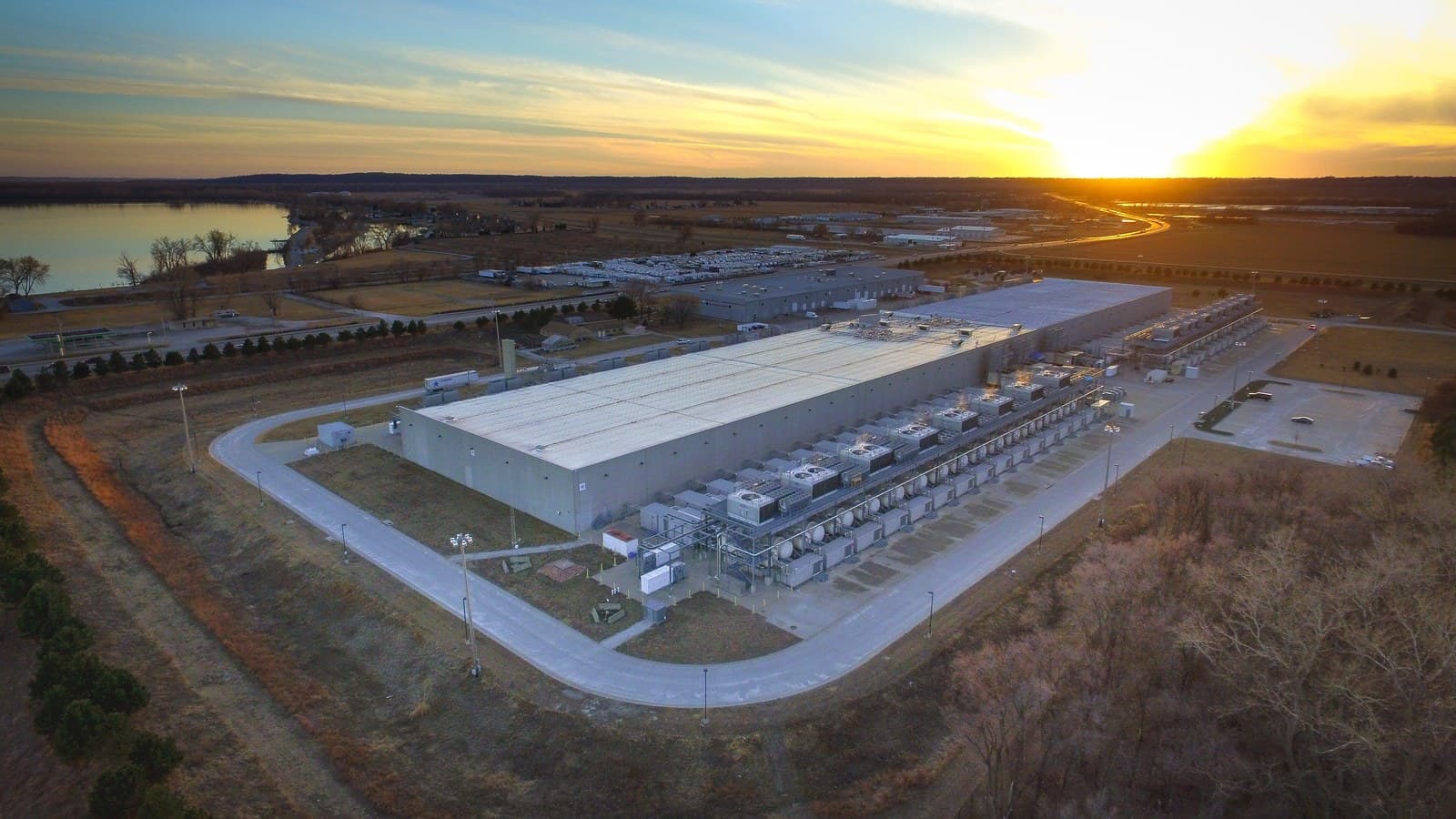
Cover image: aerial view of Google's data center campus in Council Bluffs, Iowa. Photo by Chad Davis, CC BY 2.0, via Wikimedia Commons.
Tags
Frequently asked questions
- How much is Google investing in Malaysia?
- Google announced on 4 November 2026 that it will invest an additional US$15 billion (RM61 billion) in the country in 2027 and 2028. That sits on top of the US$2 billion it committed in May 2024, which funded the Elmina data center and Malaysia's first Google Cloud region.
- Where are Google's new data centers in Malaysia?
- Google says it will expand the Elmina campus in Selangor and build new campuses in Selangor and Negeri Sembilan. Local reports name Port Dickson, Puncak Alam and Serendah. Google has not published a site-by-site construction schedule or confirmed each location itself.
- What does Google's 1 gigawatt clean energy commitment mean?
- Google will work with utility Tenaga Nasional Berhad to add more than 1 gigawatt of clean energy capacity to Malaysia's national grid without public subsidies. The capacity is grid-wide, not a dedicated plant reserved for Google, and it is not online yet.
- Will the Negeri Sembilan water plant belong to Google?
- No. Google plans an off-river storage reservoir and a treatment plant expected to supply 65 million litres of treated water a day, and ownership passes to the state government when the plant is finished. Google also frames the reservoir as flood mitigation and a dry-season reserve.

TPW Editorial
Editorial Team
TechPastWeek's editorial team reports and edits every story we publish. We research each piece against primary and credible secondary sources, and a human editor reviews and signs off before it goes live.