Oracle Raises $20 Billion to Keep Building AI Data Centers
Oracle priced $10 billion of stock and $10 billion of notes on 2 November, using its full planned funding allowance through fiscal 2030 as AI capex mounts.

On this page
Key takeaways
- Oracle priced $10 billion of common stock and $10 billion of senior notes on 2 November 2026, with both offerings expected to close on 4 November.
- The equity sold 86.21 million shares at $116 each for about $10.0 billion gross, or roughly $9.9 billion net after underwriting discounts and expenses.
- The notes came in five tranches with coupons from 7.000% due 2029 to 8.650% due 2046, fixing the company's borrowing cost for up to twenty years.
- The raise uses Oracle's full $20 billion capital-market allowance for the fiscal 2027 to fiscal 2030 cycle, excluding refinancing.
- Oracle expects capex to peak in fiscal 2027 and fiscal 2028, then decline, with free cash flow of at least $30 billion in fiscal 2029, both company forecasts.
Oracle priced $20 billion of new stock and bonds late on Monday 2 November, and the structure says as much about the company's position as the size does. It filed with the SEC that day to sell $10 billion of common stock and $10 billion of senior notes, CNBC reported, then priced both offerings the same evening. The equity moved 86.21 million shares at $116 each. The bonds arrived in five tranches, with coupons from 7.000% to 8.650%, according to Benzinga's pricing report. Both deals are expected to close on 4 November, subject to customary conditions, and neither depends on the other.
Related reading: Oracle Sends Force Majeure Notice on $18 Billion New Mexico Stargate Campus · SK and AWS Push Their Ulsan AI Data Center Toward 900 Megawatts.
The number that matters is not the $20 billion itself. It is that Oracle had already told investors it would raise no more than $20 billion of additional capital-market funding across the fiscal 2027 to fiscal 2030 investment cycle, split between about $10 billion of equity and $10 billion of gross debt, with refinancing excluded. One night used the entire allowance.
The terms, tranche by tranche
Equity is the simpler half. Gross proceeds came to about $10.0 billion, and net proceeds about $9.9 billion after underwriting discounts and expenses, the pricing detail shows. The Reuters report carried by Investing.com covered the debt side before pricing was set.
The final tranches: $2 billion of 7.000% notes due 2029, $1.75 billion of 7.450% notes due 2031, $2.25 billion of 7.850% notes due 2033, $2.5 billion of 8.000% notes due 2037 and $1.5 billion of 8.650% notes due 2046. The coupons fix Oracle's cost for up to twenty years, and the level is what investors are charging for the company's debt load and the execution risk in its buildout. A 2046 note at 8.650% locks that price in for two decades.
Eight percent is a rating in disguise
The shape of the curve matters as much as any single coupon. The 2029 notes pay 7.000% and the 2046 notes pay 8.650%, so Oracle pays 165 basis points more for seventeen extra years of money. The slope is normal, and on its own it is not a distress signal. What stands out is the level. Oracle is issuing long-dated debt at coupons near 8 percent, and it is doing so while its stock is down by a third this year.
For the AI buildout, that turns an abstract debate into arithmetic. Investors have spent the year asking whether data center spending can earn an adequate return. Oracle's cost of capital is now one of the inputs to that calculation. Every campus, chip order and power contract has to clear a hurdle that the bond market set on 2 November, and the 2046 tranche sets the longest-dated version of it.
A $664 billion backlog is a promise, not cash
The reason Oracle needs the money sits on its own books. Remaining performance obligations reached $664 billion at the end of fiscal first-quarter 2027, up $209 billion year on year, the company reported on 10 September 2026, per CNBC. Cloud infrastructure revenue more than doubled to $7.4 billion in that quarter, and Oracle guided fiscal 2027 revenue to at least $90 billion.
None of that is cash in hand. RPO is a company-reported figure that can include contracts with long delivery periods and cancellation terms, and it is not revenue. Before any of it turns into money, Oracle has to build the data centers, buy the chips and secure the power. Those bills arrive first, which is why a company with a record backlog is also a company selling stock.
Oracle's backlog is a promise of future revenue, not cash today. The data centers, chips and power have to be paid for first.
Why sell equity and debt in the same week
Issuing both lets Oracle fund the build without accepting a single constraint. Equity dilutes existing holders but adds no fixed claim. Debt avoids dilution but commits future cash to interest and principal. Selling both at once splits the cost between the two.
The equity half has its own price. Each of the 86.21 million new shares takes a slice of future earnings that existing holders would otherwise own. Oracle avoids paying interest on that $10 billion, and it avoids adding a fixed claim that would sit ahead of shareholders if the buildout disappoints. The trade is dilution now against obligation later, and the company chose to take some of both.
Selling both is also the tell. A company that expects operating cash flow to cover its construction does not need either market. Oracle's own forecast has capital spending peaking in fiscal 2027 and fiscal 2028, then declining in fiscal 2029, with free cash flow of at least $30 billion in that year. The raise bridges the gap until that turn arrives. The forecast is management's, not a commitment, and the market is being asked to fund the years before it.
One allowance, one night
Oracle's $20 billion cap covers additional capital-market funding for fiscal 2027 through fiscal 2030, excluding refinancing. The stock and bond sale fills it. Any further large raise inside that window would go past the plan the company presented to investors, which makes the ceiling a useful test of whether the buildout stays inside its budget.
A 3% drop, then a 6% intraday rally
The first reaction was negative. The shares fell about 3% in premarket trading on 2 November after the filing, CNBC reported. That drop landed on a stock already down 33% in 2026 and 50% over the previous twelve months as of that report.
The second reaction went the other way. Benzinga reported the stock falling in premarket trading on 3 November after pricing. Later that day, 24/7 Wall St. reported that Oracle rallied about 6% as the sale cleared the funding overhang. The same report put CoreWeave up 7% and Microsoft up 2%. The 6% figure is an intraday snapshot, not a closing price, and a two-day move in either direction can reverse.
What the market was debating is whether the raise removes a question or postpones it. A funding overhang is the discount a stock carries while investors wait to learn how a company will pay for something. Once the terms are public, the waiting ends even if the news is not good. That fits the 3 November sequence: the shares fell before pricing, then rose after it, which is the pattern of a known cost replacing an unknown one. The funding overhang is gone for now: the money is committed, the terms are known, and Oracle does not have to return to the market inside its stated envelope. The return on the spending is still unproven, and the cost of the debt is now visible in a way it was not before the tranches were priced.
What the $20 billion ceiling rules out
Using the full allowance changes what comes next. If capital spending runs above the current plan, Oracle cannot simply return to the bond market inside the stated envelope without going beyond it. The alternatives are operating cash flow, refinancing of existing maturities, asset sales, partners, or a larger raise that investors have not been guided to expect.
The capex path matters more than the raise. Oracle expects spending to peak in fiscal 2027 and 2028 and fall in fiscal 2029, with free cash flow of at least $30 billion that year. If the peak slips or the decline does not arrive, the funding question comes back. If it holds, the $20 billion buys time to convert backlog into revenue.
What Oracle has not committed to
The proceeds are not earmarked. Oracle said the money is for general corporate purposes, which may include capital expenditures, debt repayment, investments or acquisitions, dividends and share repurchases, according to the company release cited by Benzinga. Read that as stated intent, not a promise that $20 billion goes into AI data centers. A shareholder cannot point to the filing and say a dollar is reserved for a specific campus.
The pricing terms and tranche sizes come from Oracle's release as reported by Benzinga. The SEC filing is the primary document, and the release is a summary of it. The $20 billion cap, the capex peak and the free cash flow target are all company plans and forecasts, not commitments. The offering had not closed at the time of writing, and closing is subject to customary conditions.
One number is already fixed. Net proceeds of about $9.9 billion reflect underwriting discounts and expenses, which puts the cost of the equity raise at roughly $0.1 billion against $10.0 billion gross. The figure is the price of the dilution, before any judgment about what the money earns.
What to watch as the sale closes
- The 4 November close. Both offerings are expected to close that day, and neither depends on the other. A failure on one side would leave the other standing.
- Capex in the next quarterly report. The peak-and-decline path is the whole case for the raise. A higher peak or a later decline would reopen the funding question.
- Credit ratings and spreads. The new tranches price Oracle's risk for up to twenty years. Movement in the secondary market will show whether buyers accept that price.
- Backlog conversion. RPO is not revenue, and its delivery periods and cancellation terms are not broken out in the headline number. The share that turns into billed cloud revenue is the one that pays the coupons.
Oracle has the money it said it would raise, and it has spent the allowance it set for the next four years. The build now has to earn more than the debt costs. That is a higher bar than clearing a funding overhang for a day.
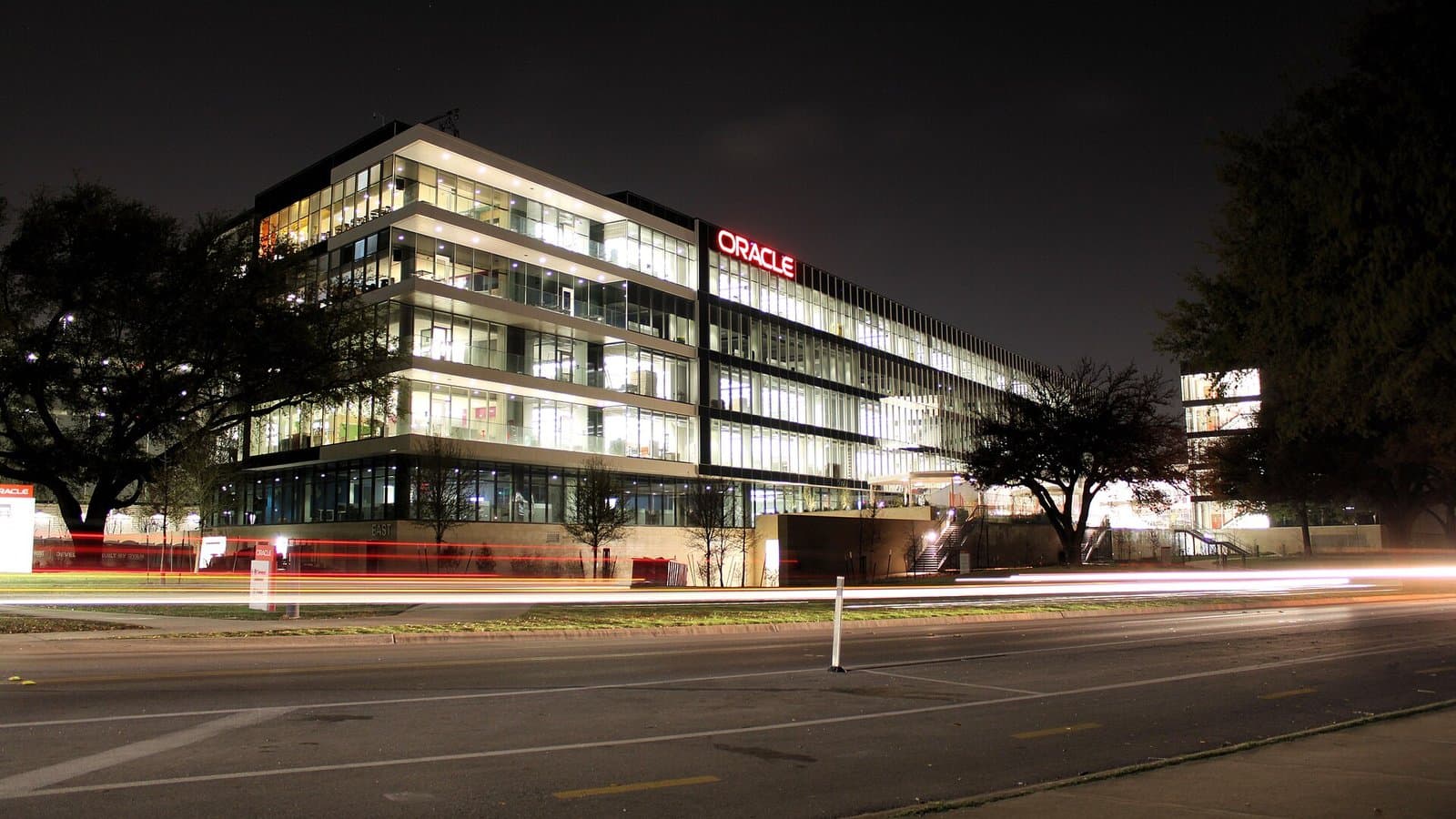
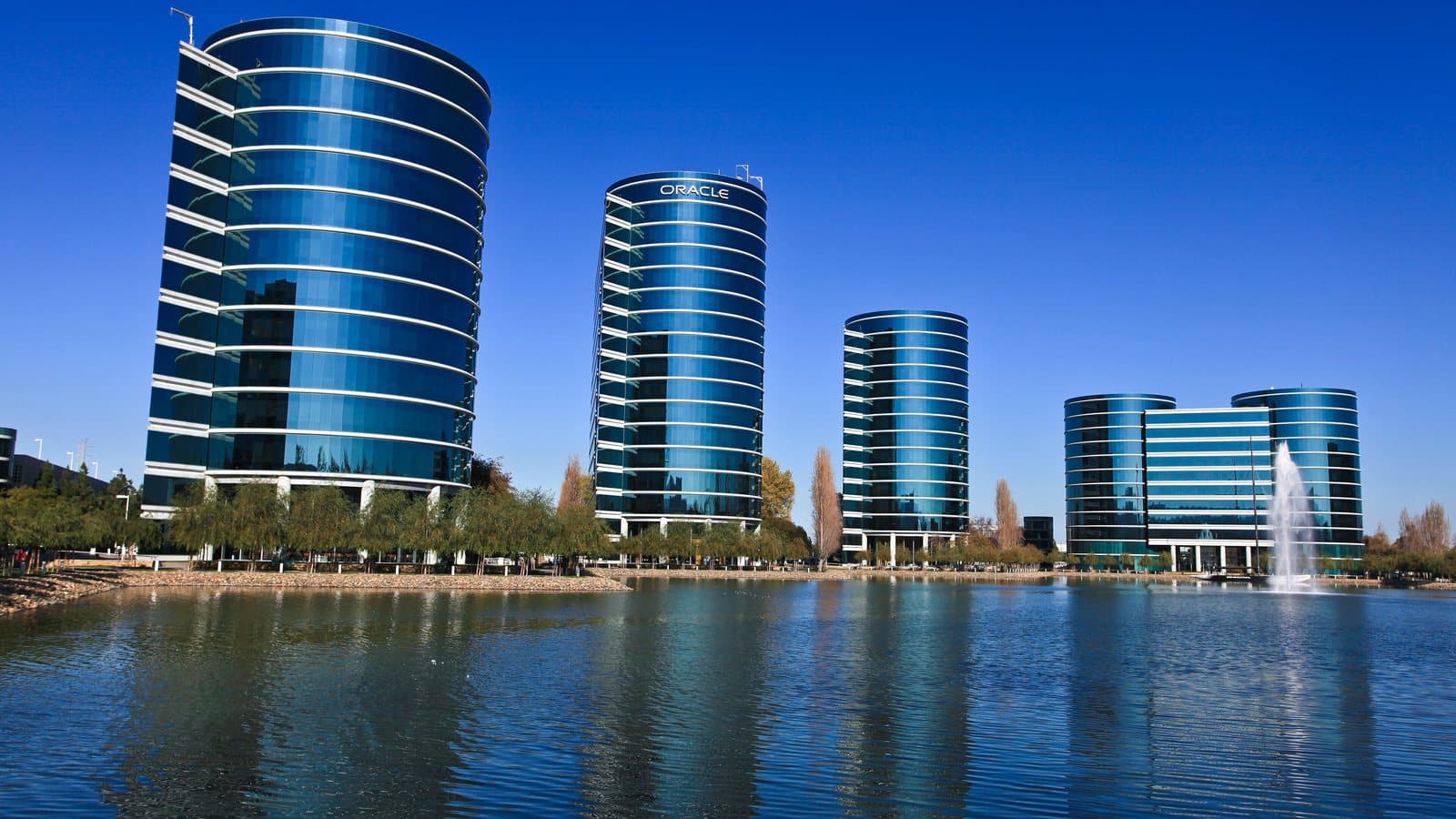
Cover image: "Oracle Headquarters Redwood Shores" by Håkan Dahlström, CC BY 2.0, via Wikimedia Commons.
Tags
Frequently asked questions
- How much did Oracle raise in its November 2026 stock and bond sale?
- Oracle priced $10 billion of common stock and $10 billion of senior notes on 2 November 2026. The equity was 86.21 million shares at $116 each, and the notes were split across five tranches. Both offerings were expected to close on 4 November, subject to customary conditions.
- Why is Oracle selling stock and bonds at the same time?
- The company is funding an expensive AI data center buildout. Selling both lets it raise money without relying on a single source, splitting the cost between dilution and debt. The raise also uses Oracle's full $20 billion capital-market allowance for the fiscal 2027 to fiscal 2030 cycle.
- What interest rate is Oracle paying on the new notes?
- The five tranches carry coupons of 7.000% due 2029, 7.450% due 2031, 7.850% due 2033, 8.000% due 2037 and 8.650% due 2046. The coupon rises with maturity, and the longest tranche fixes the cost for twenty years.
- Did Oracle stock fall after the $20 billion sale?
- The shares fell about 3% in premarket trading on 2 November after the filing, according to CNBC. Benzinga reported a premarket fall on 3 November after pricing, then 24/7 Wall St. reported an intraday rally of about 6% the same day. Those moves are snapshots, not closing prices.

TPW Editorial
Editorial Team
TechPastWeek's editorial team reports and edits every story we publish. We research each piece against primary and credible secondary sources, and a human editor reviews and signs off before it goes live.