Statnett Pauses New Data Center Grid Reservations Until August 2027, With 9,100 MW Queued
Norway's grid operator stopped new data center capacity reservations on 9 November 2026, with 9,100 MW queued and another 18,000 MW in connection requests.

On this page
Key takeaways
- Statnett announced a temporary stop on new grid-capacity reservations for data centers at 08:45 local time on 9 November 2026 and expects to lift it no later than 1 August 2027.
- Norway has 800 MW of data-center capacity connected, 4,200 MW granted reserved capacity and 9,100 MW in the queue, according to Statnett.
- A further 18,000 MW of connection requests are in, taking the total pipeline to 32,100 MW, against peak Norwegian consumption of slightly over 25,000 MW.
- The pause is not a ban: existing connections are unaffected, plants with approved functional requirements can still connect, and some smaller or early projects will still be considered.
- Less than an hour after Statnett's announcement, the government set out plans for a data-center licensing scheme, with main principles due in autumn 2027.
Statnett announced a temporary stop on new grid-capacity reservations for data centers at 08:45 local time on Monday 9 November 2026. The same announcement put a hold on new applications for plant approval under Norway's system-responsibility regulation, and on applications already received from plants that would connect directly to the 420 kV grid. The measures cover large consumption customers with a special consumption profile, which in practice means data centers.
Related reading: A Router Flood Halted Every U.S. Departure for More Than Four Hours · Microsoft 365 Went Down for Hours After Servers Failed Their Own Health Checks.
The numbers behind the decision sit in the press release. Statnett says 800 MW of data-center capacity is connected today, 4,200 MW has been granted reserved capacity, and 9,100 MW is in the capacity queue. A further 18,000 MW of connection requests have come in. The state-owned transmission system operator expects to lift the pause no later than 1 August 2027.
What Statnett did, and what it did not do
Three things did not change on Monday. Existing connections are unaffected. Plants that have had the necessary functional requirements approved can still connect. And Statnett said it will still consider applications from smaller plants and from projects with a planned connection before 1 August 2027. The pause is not a ban on data centers, and Statnett does not describe it as one.
Queue position is being protected while the pause runs. Statnett said capacity that becomes available will not be handed to other customers if doing so would hurt data centers already ahead in the queue. The rule closes an obvious route around the pause: freed-up megawatts cannot be redirected to other customers while earlier applicants are still waiting.
Statnett frames the measure as system security. It does not present it as climate policy, and the release makes no argument about emissions or land use. The government made a different argument the same morning. The two are easy to blur.
A queue that adds up to more than Norway's peak demand
Norway's maximum power consumption is slightly over 25,000 MW, according to Statnett. Connected, reserved and queued data-center capacity together come to 14,100 MW, or about 56% of that peak. Capacity did that arithmetic; Statnett published the components, not the percentage. Add the 18,000 MW of requests still coming in and the total pipeline reaches 32,100 MW.
None of that is capacity that will be built. A queue entry is a place in line, and the 18,000 MW figure covers requests at an even earlier stage. Some projects will fall away for their own reasons, some will fail the functional requirements Statnett is still writing, and some will be refused under whatever licensing system Norway ends up with. The figures describe the queue. They do not forecast load.
The line has grown quickly. Energy minister Terje Aasland said Statnett has received applications for about 26,000 MW of new consumption this year, and that data centers account for three quarters of it, Capacity reported. Norwegian data centers used 3.2 TWh last year, four times the level three years earlier, according to a Menon Economics report presented by the government.
Foreign companies own more than 90% of Norway's data-center capacity, according to the Norwegian Board of Technology, a figure that comes from the board rather than from Statnett. Nscale's 230 MW Narvik campus is in development, with more than 30,000 Nvidia Rubin GPUs due for Microsoft in 2027. It has not been reported as cancelled.
Why a data center is a different kind of customer
A transmission system operator balances generation and demand continuously, and most large industrial loads change slowly compared with a data center. Statnett's stated reasons for singling out this customer class are specific: data centers can make large and rapid power changes, their load is controlled by software, and they are more vulnerable to disturbances in the power system.
The functional requirements under development address three things. One is when data centers must stay connected to the grid during operational disturbances. Another is how quickly their consumption can change, or ramping. The third covers technical requirements that reduce the risk of data centers causing oscillations in the grid. The requirements will go out for consultation and must be approved by the energy regulator RME. Statnett says it will align them with other Nordic operators and with ENTSO-E, the European network of transmission system operators.
The gap in the public record
Statnett has not named a single company or project affected by the pause, and no blocked project has been reported. It also has not said how many applications fall under the exceptions for smaller plants and for connections planned before 1 August 2027. The 4,200 MW of granted reservations has not been reopened for review in anything Statnett has published.
“The temporary pause is necessary to put in place instruments and a framework that ensure connection happens with manageable consequences for the power system and system operation.” — Peer Olav Østli, group director for System Operations and Market at Statnett, 9 November 2026 (Statnett's Norwegian, translated for this article)
The government's answer: a license to build
Less than an hour after Statnett's announcement, Norwegian ministers set out a second set of plans: a licensing scheme for data centers, new rules for grid connection, and possible state ownership of strategically important sites. Digitalisation minister Torgeir Micaelsen and energy minister Terje Aasland led the briefing.
Under the plan, a license would be required to establish and run a data center, with conditions attached. The government said the scheme would favor facilities serving defence, police and emergency preparedness, health services, and critical infrastructure such as mobile networks and the financial system. Micaelsen said the aim was to “get the data centers we actually need,” according to Capacity's account of the press conference, and that Norway would support national AI needs while restricting land and power for global cloud companies and cryptocurrency firms. Reuters reported the same distinction. Crypto operations would not count as socially beneficial.
Cost is part of the proposal. New data centers should pay the grid costs they create, and the government wants to discuss industry funding of new generation, including gas power with carbon capture and offshore wind. The main principles are due in autumn 2027.
That date sits awkwardly against Statnett's. The pause is due to end by 1 August 2027, two months or more before the licensing principles arrive. A project that clears the grid queue in the gap would be connecting under rules the government has said it wants to replace. Nothing in the plan is law yet.
The two tracks also have different reasons. Statnett's case is system operation: frequency, ramping, disturbance response. The government's case adds industrial policy on top, including which uses of electricity count as worth having. The two need to be judged separately.
The Nordic escape valve is narrowing
Norway is not the first country in the region to slow the queue. Denmark's Energinet paused new connection agreements in March, and a four-tier priority system in force since 12 October places most data centers last unless they serve critical societal functions. Sweden had 6,984 MW of data-center applications in its transmission queue on 1 September. Finland has proposed a four-tier system that would move projects above 10 MW further back, and Svenska kraftnät is considering temporary restrictions on applications with large individual power demands.
The pressure extends beyond the Nordics. More than 100 European groups are calling for a moratorium on large-scale data centers, and StackPath counts 22 live or proposed restrictions across 10 countries, according to Capacity. In the United States, Meta president Dina Powell McCormick said last week that new builds there will be harder and that Meta is looking at other countries, with “every hyperscaler” asking whether to build outside the US, the Wall Street Journal reported.
For an operator choosing a site, that leaves fewer places to go. Grid capacity is the constraint now, and it is being rationed by queue rules in several countries at once. The protests that hit a Microsoft site in Amsterdam earlier this month and the ballot defeats for data centers in US midterm votes point at the same squeeze from different directions.
What to watch before August 2027
- RME's approval of the functional requirements. The consultation and the regulator's sign-off decide what a data center must do to connect. Until they land, the technical bar is a draft.
- The 1 August 2027 date. Statnett's wording is “no later than,” not “on.” A second extension would signal that the framework is harder to write than the operator expected.
- The licensing principles in autumn 2027. The scope will show whether the scheme reaches existing facilities, how “critical societal function” is defined, and whether state ownership of sites becomes a real instrument.
- The exceptions. Smaller plants and projects connecting before the deadline can still be processed. Which ones get through, and how quickly, will show how tight the pause really is.
- The 4,200 MW already reserved. Statnett has not said whether any of those grants will be revisited. A change there would affect projects that already hold capacity, a different group from the applicants still waiting.
Quartz reported that Statnett expects to lift the suspension no later than 1 August 2027, matching the release. Data Center Dynamics covered the halt the same day. Neither outlet, and nothing in Statnett's own material, identifies a project that has lost its place.
For now the queue is closed to new reservations, the 4,200 MW already granted stays granted, and the 18,000 MW of requests waits on rules that do not exist yet.
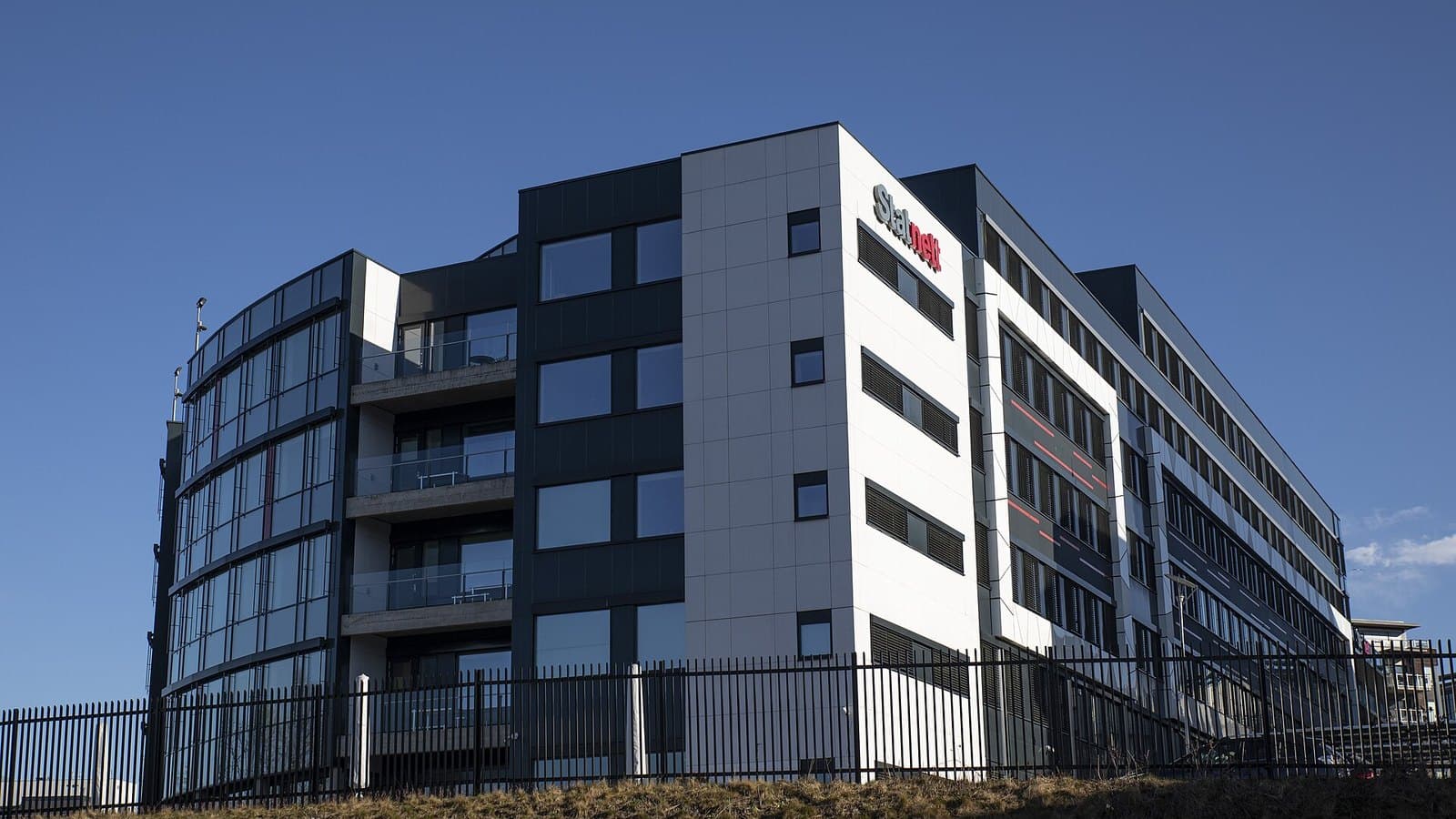
Cover image: the Statnett headquarters building in Oslo.
Tags
Frequently asked questions
- Is Norway banning new data centers?
- No. Statnett has paused new grid-capacity reservations and some application processing for data centers, and it expects to lift the pause no later than 1 August 2027. Existing connections are unaffected, and plants whose functional requirements have been approved can still connect.
- How much data center capacity is waiting for a grid connection in Norway?
- Statnett says 9,100 MW is in the capacity queue, 4,200 MW has been granted reserved capacity and 800 MW is connected. A further 18,000 MW of connection requests are in, which puts the whole pipeline at 32,100 MW. That is a stack of requests, not capacity that will be built.
- When will Statnett lift the data center grid pause?
- Statnett says the pause will be lifted no later than 1 August 2027, and it has not named a firmer date. It will still consider some applications from smaller plants and from projects with a planned connection before that date.
- Will the Norwegian licensing scheme cover existing data centers?
- The government has not published the detailed scope. It said licensing would require permission to establish and run a data center, with conditions, and that the main principles are due in autumn 2027. That is later than the expected end of Statnett's pause, so the sequencing is unresolved.

TPW Editorial
Editorial Team
TechPastWeek's editorial team reports and edits every story we publish. We research each piece against primary and credible secondary sources, and a human editor reviews and signs off before it goes live.