California Subpoenas Nvidia Over Whether Its Chips Reached China
California's attorney general has subpoenaed Nvidia over whether advanced chips or confidential data reached China, and whether the company misled investors.

On this page
Key takeaways
- California Attorney General Rob Bonta served an investigative subpoena on Nvidia on 19 November 2026.
- The subpoena asks whether Nvidia's advanced chips or confidential information reached China and whether the company misled investors about the risk.
- The inquiry follows Jensen Huang's resignation as chief executive on 12 November after he acknowledged an extramarital affair with a woman described as a suspected Chinese spy.
- Nvidia's shares have fallen about 22% over nine trading days and hit a one-year low on 19 November, after a quarter in which revenue reached $115.8 billion.
- Huang is due to testify before congressional committees on 1 December. No charges have been filed, and Nvidia has not responded publicly to the subpoena.
California Attorney General Rob Bonta served an investigative subpoena on Nvidia on 19 November, opening a state inquiry into whether the chipmaker's advanced products or confidential information reached China and whether it misled investors about that risk.
Related reading: FCC Tells California to Stop Blocking AT&T's Copper Retirement · Commerce Closes the Remote-Compute Loophole for Advanced AI Chips.
The subpoena is a fact-finding demand, not a charge. Bonta's office said the information would help it decide whether Nvidia violated California law. Nvidia did not immediately respond to a request for comment from CNBC.
The inquiry lands in the middle of a wider crisis at the company. Nvidia co-founder and chief executive Jensen Huang resigned on 12 November after acknowledging an extramarital affair. One of the women, Alice Huang, is a suspected Chinese spy who worked at Megaspeed, a Singapore-based company under investigation for possibly diverting restricted Nvidia chips to China. Alice Huang is not related to Jensen Huang. Megaspeed has called itself a legitimate and lawful business and said Huang left the company late last year.
What Bonta is asking
The attorney general's press release says the subpoena seeks to establish whether Nvidia's "advanced chips or confidential information may have gone to China" and whether the company "misled investors and the public."
Bonta put the case in investor-protection terms rather than export-control terms.
"The conduct of Nvidia and its former CEO raises bright red flags, including about the ways in which the company may have misled investors," he said. "My office is investigating whether Nvidia or Jensen Huang's actions resulted in China obtaining advanced chips or confidential information, and if Nvidia misled investors and the public about this risk, in violation of the law."
"The underlying principle of our corporate securities law is clear: Companies cannot mislead their investors." — Rob Bonta, California attorney general, 19 November 2026
An investigative subpoena compels documents and testimony. It does not require a court to find that a law was broken, and it can end without any enforcement action. Bonta told Politico that he expects Nvidia to cooperate.
The demand can cover board minutes, export-compliance reviews, communications with distributors and the risk disclosures Nvidia gave investors. California's corporate securities law gives the state a route to investigate false or misleading statements connected to securities. A finding could lead to a civil enforcement action; it would not be a criminal charge. The SEC and private class actions are the usual venues for securities-fraud claims in the United States. A state inquiry adds a separate track with its own subpoena power and its own timetable.
Why the affair matters to a chip probe
The subpoena is tied directly to the allegations around Huang. According to reporting on the inquiry, Megaspeed has bought nearly $5 billion of Nvidia chips and hardware in recent years. The company is being investigated over whether it diverted restricted chips to China. It denies wrongdoing.
Huang's relationship with Alice Huang is the link investigators are examining. The allegation that she was a spy has not been proven in court. Megaspeed has said Alice Huang left the company late last year, and that it is a lawful business.
The timeline matters for the legal question. Huang resigned on 12 November. Nvidia reported quarterly results on 17 November, its first earnings release without him. The California subpoena followed two days later. The company's board has said it does not intend to reinstate Huang, even after Elon Musk and other technology executives campaigned for his return. Harvey Jones, the board chair, has remained in place.
The export-control backdrop
The state inquiry is separate from the federal export-control system, but it draws on the same set of facts.
On 16 November, the Commerce Department's Bureau of Industry and Security published an interim final rule that requires a licence when a data centre anywhere provides more than 12 million aggregate total processing performance of compute to a company headquartered in Macau or a Country Group D:5 destination. TechPastWeek covered the rule when the text appeared.
Nvidia's guidance for the January quarter assumes no Data Center compute revenue from China, an assumption it has kept all fiscal year. The company has not disclosed how much business that removes, and its results do not break out the region. That silence is part of what makes the disclosure question sharp: investors can see the China policy risk in the abstract, but not the number attached to it.
There is also congressional pressure. A CNBC report on 19 November said Commerce Department documents showed approvals for more than 879,000 AI chips to Chinese companies as of May 2026, including entities on the Defense Department's list of Chinese military-linked firms. The report adds another layer to the question of how much advanced computing has flowed to China through legal channels.
A stock already under pressure
Nvidia's share price has taken the strain. The stock fell about 22% in the nine trading days after Huang acknowledged the affair and was on pace for a seventh straight weekly loss, CNBC reported. The Guardian put the decline at about a fifth since the admission, with the stock closing at a one-year low on 19 November and almost $1 trillion wiped from its market value.
The operating business is still growing quickly. Nvidia reported $115.8 billion in revenue for the quarter ended 25 October, up 103% from a year earlier, and guided to about $130 billion for the January quarter. Data Center sales were $107.6 billion, or 93% of the total. Gross margin is expected to fall to 71% to 72% in the current quarter, down from 74.8%, as memory costs rise. TechPastWeek's coverage of the results has the full numbers.
Colette Kress, the chief financial officer, is interim chief executive. The board has not named a permanent successor. Nvidia has also been searching for a new leader externally, and the company approached Arm chief executive Rene Haas about the role, according to reporting from earlier in the week. The search adds another source of uncertainty for employees and investors while the subpoena moves forward.
What Nvidia has said
Nvidia has not published a statement on the subpoena. In its earnings release, the company framed the quarter around the Vera Rubin platform and said its roadmap was on track. The release did not mention the California inquiry, and it did not address the Huang allegations beyond the leadership change.
The company's public position on export controls has been that it complies with applicable laws. It has not said whether it believes the California inquiry has merit.
Caveats
The subpoena is a request for information, not a finding. Bonta has not accused Nvidia of a specific violation, and the company has not responded. The affair and the spy allegation remain allegations; no court has tested them. The $1 trillion figure is the Guardian's estimate of the market-value loss, not a company disclosure, and the share-price moves are snapshots from a volatile week. Nvidia does not break out China revenue in its results, so the size of the exposure is unknown.
What comes next
The immediate next step is Nvidia's response to the subpoena. The attorney general can seek documents, emails and testimony from current and former employees. If the office concludes that Nvidia made misleading statements about China risk, it could bring a civil enforcement action under California's corporate securities law. It could also close the file.
The congressional track is moving on a separate calendar. Huang is due to testify before several congressional committees on 1 December about the potential national-security breach. That appearance will put the affair, the Megaspeed relationship and the chip-diversion allegations back in public view, this time under oath.
An investigative subpoena is not a finding of wrongdoing. It is a demand for information, and many inquiries end without enforcement. The legal question Bonta has framed is narrower than the public scandal: did Nvidia tell investors enough about the risk that its chips or confidential information could reach China?
For Nvidia, the risk is now layered. The company faces a state securities inquiry, a congressional examination, and a federal export-control regime that has tightened twice this month. The affair is the spark, but the subpoena is about disclosure. The subpoena will test what Nvidia told investors about China before Huang left.
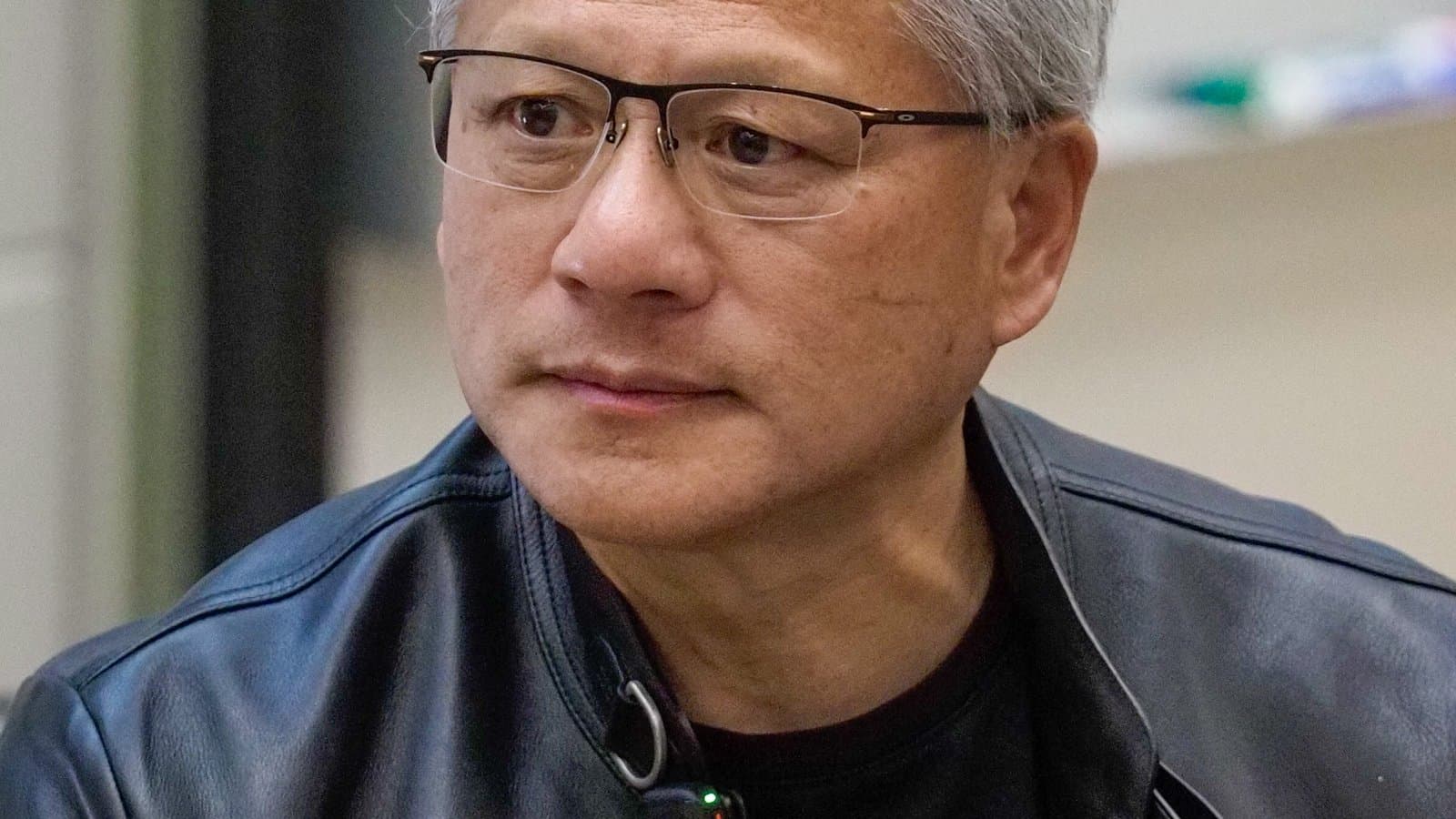
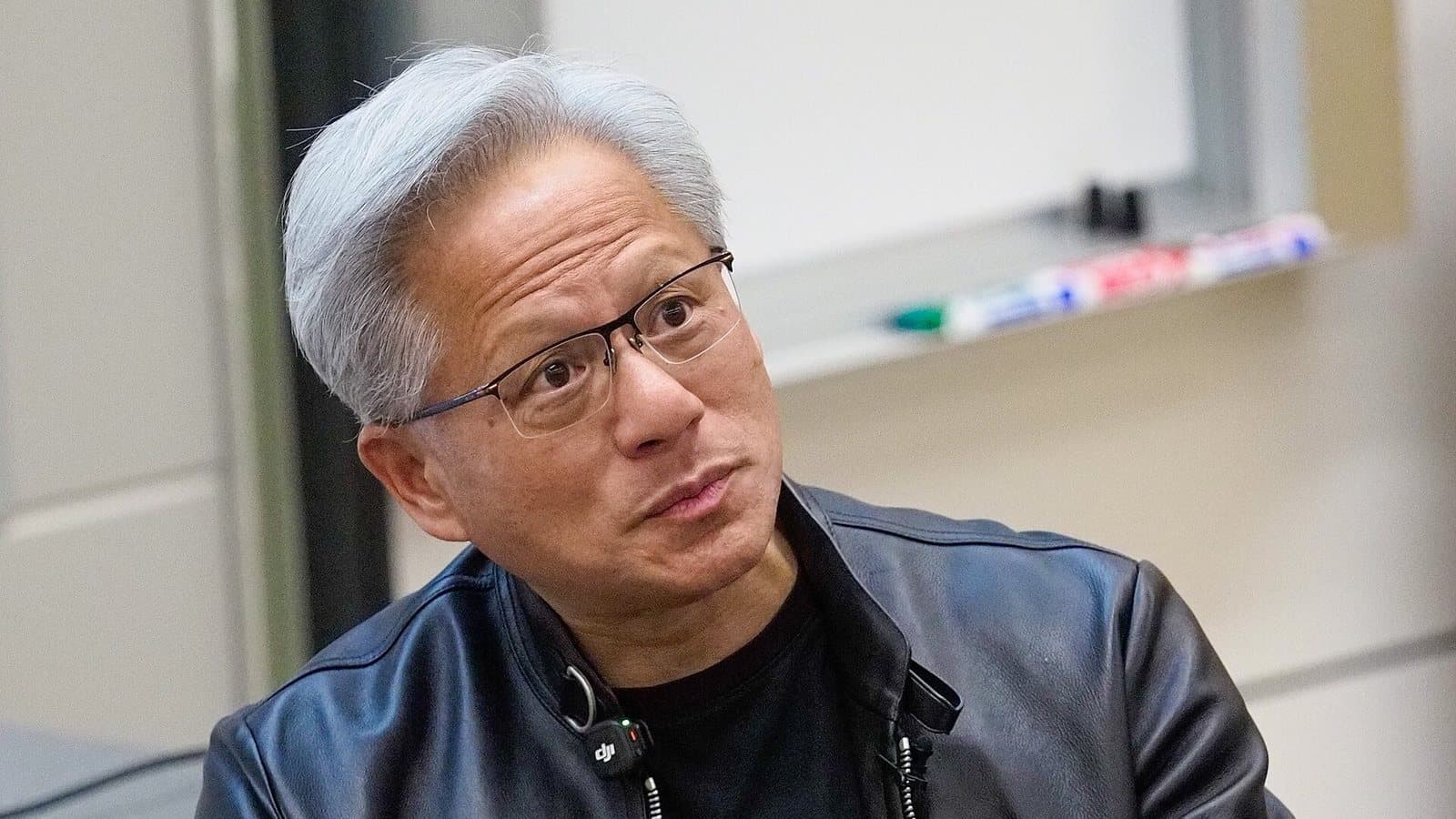
Cover image: Jensen Huang, Nvidia's former chief executive, speaking at Stanford University in April 2026. Photo by Anders Eidesvik, CC BY 4.0, via Wikimedia Commons.
Tags
Frequently asked questions
- What is the California subpoena of Nvidia about?
- It is an investigative subpoena from Attorney General Rob Bonta asking whether Nvidia's advanced chips or confidential information may have reached China, and whether the company misled investors and the public about that risk. It is a fact-finding demand, not a lawsuit or a criminal charge.
- Is Nvidia being charged with a crime?
- No. Bonta's office has served a subpoena and opened an inquiry into whether California law was violated. No charges have been filed, and Nvidia has not been found liable for anything.
- Why is California involved in a chip export case?
- Nvidia is headquartered in Santa Clara, California, and the attorney general enforces the state's corporate securities law. Bonta framed the inquiry around whether Nvidia told investors enough about the risk that its technology or data could reach China.
- What happens next in the Nvidia inquiry?
- Nvidia must respond to the subpoena with documents and testimony. The attorney general could close the inquiry, negotiate changes, or bring a civil enforcement action. Separately, Jensen Huang is scheduled to testify before congressional committees on 1 December.

TPW Editorial
Editorial Team
TechPastWeek's editorial team reports and edits every story we publish. We research each piece against primary and credible secondary sources, and a human editor reviews and signs off before it goes live.