An Nvidia Email Preceded the Transfer of a Chip Probe to Justice
Nvidia's general counsel emailed Commerce investigators about the Megaspeed chip probe in August 2025. The case later moved to the Justice Department.


On this page
Key takeaways
- The New York Times reported on Monday 9 November 2026 that Nvidia general counsel Tim Teter emailed Commerce Department investigators in August 2025 about their inquiry into Singapore-based Megaspeed.
- Teter said senior Commerce official Jeff Kessler had given him permission to contact the investigators; officials were alarmed by the reference, and the investigators declined Nvidia's request for a meeting.
- The Justice Department later asked Commerce to suspend its part of the case and transfer it, according to people familiar with the matter, and is now conducting a criminal investigation into Megaspeed.
- Megaspeed imported billions of dollars' worth of Nvidia AI equipment into Malaysia while building data centres across Southeast Asia for Chinese clients, including Alibaba, according to the reporting.
- The Times also reported that Commerce has not added a company to its Entity List in more than a year, the longest such stretch in 18 years.
Nvidia's general counsel emailed Commerce Department investigators in August 2025 to ask about their inquiry into Megaspeed, a Singapore data-centre company suspected of diverting advanced Nvidia chips to China. The New York Times reported the email on Monday 9 November 2026. The email drew attention because the lawyer, Tim Teter, cited permission from Jeff Kessler, the senior Commerce official who oversees export-control operations and reports directly to Secretary Howard Lutnick. The investigators declined Nvidia's request for a meeting. The Justice Department later asked Commerce to suspend its part of the work and hand over the case.
Related reading: FCC Tells California to Stop Blocking AT&T's Copper Retirement · California Subpoenas Nvidia Over Whether Its Chips Reached China.
The email at the centre of the account
According to the Times, Teter wrote to investigators about their Megaspeed work and said Kessler had given him permission to make contact. Officials were alarmed by the reference to Kessler. He oversees export-control operations and answers to the secretary, so a company lawyer invoking his name in a message to working investigators pointed to a channel the investigators had not agreed to.
Kessler's response, as described by a Commerce Department official cited by the Times, was to tell the investigators to continue handling the case strictly by the book. He did not instruct them to share information with Nvidia, the official said, and he did not intervene in their investigative decisions. Investing.com carried the same account.
The episode still prompted internal discussions at Commerce. Officials raised concerns that the department's interactions with Nvidia could compromise the investigation, the Times reported. That describes a reaction inside the building, not a finding that anyone acted improperly. The concern was as much about process as about motive: whether a case built by career staff could stay insulated from a company with a direct interest in its outcome.
The transfer followed. The Justice Department asked Commerce to suspend its part of the work and move the case, according to people familiar with the matter. NBC News confirmed the sequence with a person familiar with it. The Justice Department is now running a criminal investigation into Megaspeed.
Nothing in the reporting says Teter asked for the case to be dropped or for records to be withheld. As described, the email sought information about an inquiry that involved Nvidia's hardware. Companies do ask agencies about cases that touch their products, and a general counsel is the usual person to make that call. What made this one different was the name attached to the permission, and the fact that the investigators had not invited the contact.
Why a criminal referral is a different instrument
Commerce investigators had spent months on the Megaspeed file. Their work could potentially have produced an administrative action restricting the company's access to U.S. technology. That lever runs through licensing and listing decisions rather than a grand jury, and it does not require proof beyond a reasonable doubt. It can also be applied faster than a prosecution.
A criminal case works differently. Prosecutors have to build something that can survive a trial, which takes time and evidence of intent. A criminal investigation does not by itself impose export restrictions on a company, and it does not automatically stop a shipment. The Justice Department can bring charges, decline the case or leave it open.
The practical difference shows up in what each agency can demand. A grand jury can compel documents and testimony, while a licensing review depends on what applicants and their counterparties choose to provide. A criminal referral can therefore produce a fuller record than a licensing file. It also takes longer to assemble.
The venue also shapes what the public learns. An administrative sanction can arrive as a license denial or a listing notice with the reasoning summarized in a short statement. A prosecution, if it comes, produces exhibits and testimony.
The Times also reported that Commerce has not added a company to its Entity List in more than a year, the longest such stretch in 18 years. The Entity List is one of the main tools for cutting a foreign company off from American components. A pause that long is unusual on its own terms. It does not prove that politics shaped the Megaspeed decision, and the Times did not report that it did.
The Times reported that Kessler told investigators to continue handling the case "strictly by the book" and did not direct them to share information with Nvidia. (New York Times, 9 November 2026)
Megaspeed and the Malaysia route
Megaspeed imported billions of dollars' worth of Nvidia AI equipment into Malaysia while it developed data centres across Southeast Asia for Chinese clients, including Alibaba, according to the reporting. Running data centres for Chinese customers is not illegal. The suspicion that drew U.S. authorities was narrower: that some of the hardware was being rerouted into China rather than staying where the paperwork said it was.
That distinction shapes how the case should be read. A cloud operator with Chinese customers is doing something legal. One that moves restricted accelerators across a border without a license is not, and that is the conduct investigators were looking for when Nvidia's lawyer emailed them.
The route is what makes the gap hard to police. Goods can enter Malaysia or Singapore under one set of declarations and leave for China under another, with the change of hands happening between the two. Each leg can look ordinary on its own. Proving that the chain was designed to reach a restricted destination requires documents, shipping records and testimony from people inside the arrangement, which is closer to the work of a prosecutor than a licensing officer.
Nvidia's own products sit at the centre of the case, which is why its contact with the investigators drew attention. The company has defended its engagement with the government. It says it regularly provides information gathered from the field, requests guidance and works with authorities to stop suspected chip smuggling while preserving lawful sales, NBC News reported.
What the reporting does not establish
The account rests on people familiar with the matter and one Commerce Department official, plus NBC's single source for the sequence. The emails and internal memos have not been published. Readers cannot check the wording of Teter's request, the scope of Kessler's reply or what the investigators said to one another afterward.
The limits of the public account
The reporting does not show that Nvidia broke a law, that Kessler ordered investigators to halt their work or that Nvidia's contact changed the outcome. "Alarmed", "concerns" and "compromise" describe officials' reactions as reported, not findings of misconduct. The Entity List statistic is the Times's, covers a period ending in November 2026 and does not by itself prove political interference.
Two conclusions are often blended in coverage of this kind. One is that a company contacted an agency about a case involving its own products. That is not unusual and not illegal. The other is that the contact changed the outcome, which the reporting does not show. The Justice Department's decision to take the case is consistent with either explanation: prosecutors may have seen a stronger criminal matter, or Commerce may have been told to stand down for reasons that have nothing to do with Nvidia. The public record does not pick between them.
No charges have been announced against Nvidia or Megaspeed in this reporting. A criminal investigation is not a finding of guilt, and the case has not been dropped.
A board probe, a separate case
On Sunday 8 November 2026, Nvidia's board said it had opened an independent investigation into reports that CEO Jensen Huang was the target of a foreign intelligence effort, the Wall Street Journal reported. Huang admitted an affair to staff and said he supported the probe. TechPastWeek covered that story on 9 November. It concerns the chief executive and a reported intelligence operation. This article concerns an export-control case against a customer, and the two should not be read as one affair.
They touch at a single point. Alice Huang, also known as Huang Le, is a Megaspeed executive. U.S. intelligence officials reportedly believed she was working for the Chinese government. She reportedly had a personal relationship with Jensen Huang and is not related to him. Those claims come from unnamed officials, have not been tested in court and no charge names her.
The timing matters. Teter's email went to Commerce in August 2025, more than a year before the board probe and the public scandal. The board inquiry did not produce the email, and nothing in the public record shows the email triggered the board inquiry.
Both threads involve the same company, the same country and some of the same people. They remain separate proceedings with different standards and different decision-makers. Merging them makes a tidier story and a less accurate one.
What to watch
- Charges or a closed file. A criminal complaint or indictment would turn reported suspicion into a court record. A quiet closure would leave the case where it is now, with the allegations untested.
- The Entity List. Whether Megaspeed or an affiliated company is added, and when, will show whether Commerce intends to use its administrative lever after stepping back from the case.
- The unpublished paper. The emails and internal memos remain outside public view. A court filing or a document request could put the actual wording on the record, which is the difference between reconstructing a sequence and reading it.
- Nvidia's account. The company has described its contacts with government officials as routine. Whether it gives a more detailed version of the August 2025 exchange, and to whom, will shape how the episode is judged.
For now, the documented sequence is narrow: an email, a declined meeting, an internal reaction and a transfer. Anything beyond that depends on evidence the public has not seen, and the criminal investigation is still running.
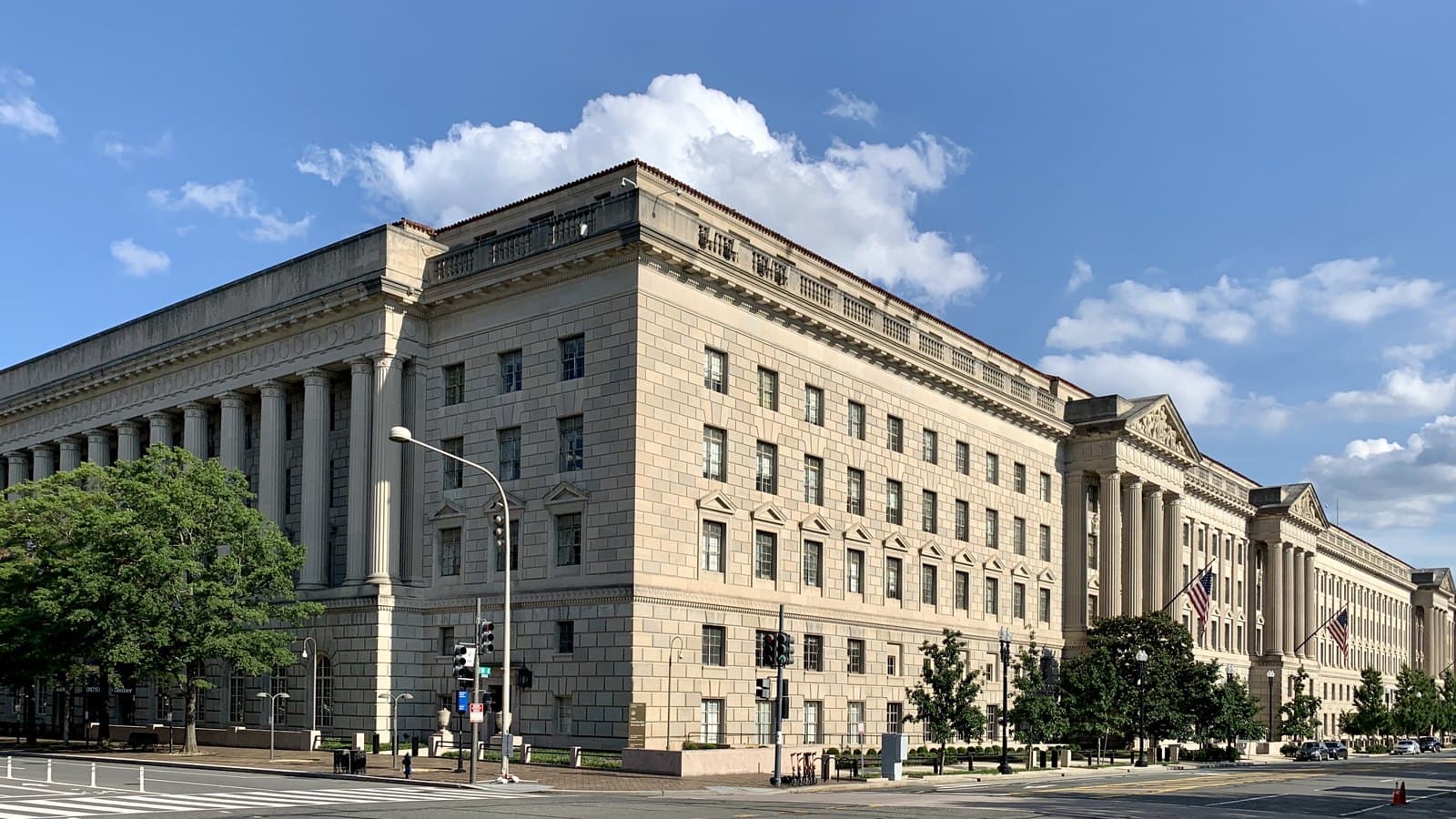
Cover image: The Herbert C. Hoover Building, headquarters of the U.S. Department of Commerce, in Washington, D.C. Photo: Tony Webster, CC BY 2.0, via Wikimedia Commons.
Tags
Frequently asked questions
- Did Nvidia's email stop the Megaspeed investigation?
- The reporting does not show that. A Commerce Department official cited by the New York Times said Jeff Kessler told investigators to continue handling the case strictly by the book and did not direct them to share information with Nvidia. The case later moved to the Justice Department, which is conducting a criminal investigation.
- Why was the Megaspeed case transferred from Commerce to Justice?
- The Justice Department asked Commerce to suspend its part of the work and transfer the case, according to people familiar with the matter. A criminal referral is a different instrument from an administrative action: it can take longer, carries a higher burden of proof and does not automatically impose export restrictions.
- What is Megaspeed accused of?
- Megaspeed is a Singapore-based data-centre company suspected of diverting advanced Nvidia AI chips to China. It imported billions of dollars' worth of Nvidia AI equipment into Malaysia while developing data centres across Southeast Asia for Chinese clients, including Alibaba. Operating data centres for Chinese customers is not itself illegal.
- Has Nvidia been charged with wrongdoing?
- No charges have been announced against Nvidia or Megaspeed in this reporting. The account does not show that Nvidia broke a law or that its contact with Commerce changed the outcome of the case.

TPW Editorial
Editorial Team
TechPastWeek's editorial team reports and edits every story we publish. We research each piece against primary and credible secondary sources, and a human editor reviews and signs off before it goes live.