Nvidia's Board Opens a Spy Probe as Jensen Huang Admits an Affair
Nvidia's board opened an independent investigation into a reported foreign intelligence effort targeting CEO Jensen Huang, who admitted an affair the same day.

On this page
Key takeaways
- Nvidia's board said on 8 November 2026 that it had opened an independent investigation into reporting that founder and CEO Jensen Huang was the target of a foreign intelligence effort.
- A committee of independent directors, assisted by outside counsel, will run the review; Nvidia said it has no reason to believe national security or company secrets were compromised.
- Huang told employees the same day that he had been unfaithful to his wife, that he supported the board investigation and that he would cooperate fully.
- The New York Times reported on 29 October 2026 that US intelligence assessed that China's Ministry of State Security recruited Megaspeed executive Alice Huang to gather information on Jensen Huang.
- Three Republican House committee chairs asked Huang for a closed-door briefing on 18 November, a day after Nvidia's third-quarter earnings call on 17 November.
Nvidia's board of directors said on Sunday 8 November 2026 that it had opened an independent investigation into "recent reporting that founder and CEO Jensen Huang has been the target of a foreign intelligence effort." A committee of independent directors, assisted by outside independent counsel, will oversee the review. The board said it had "no reason to believe that either national security or NVIDIA secrets were compromised," and that the inquiry would examine "all available information."
Related reading: Report Says US Officials Concluded a Megaspeed Executive Close to Jensen Huang Was a Chinese Intelligence Asset · Nvidia Puts $3 Billion Into Meta's Equity Sale and Expands the Muse Partnership.
The same day, Huang told employees that he had been unfaithful to his wife. In an email published on Nvidia's newsroom, he wrote: "I was unfaithful to my wife. My actions hurt her and our children. There is no excuse for what I did. I am deeply sorry." He said he took full responsibility, accepted the criticism that came with it, asked for privacy for his family and would cooperate with the board's review. The admission and the investigation landed together, ten days before lawmakers want to hear from him behind closed doors.
This is a follow-up to our 31 October report on the earlier account of his relationship with a Megaspeed executive.
An investigation built on press reports
Nvidia's statement is brief and leaves most procedural questions open. It says the board is acting "in light of recent reporting," which makes the inquiry a response to published accounts rather than to a regulator, a court or an internal whistleblower. The committee is described only as a group of independent directors. No chair, no outside firm and no deadline are named. The board also said it has confidence in Huang and his leadership team, a line that sits alongside an open investigation but is common in corporate statements written to steady a company rather than answer a question.
What the board committed to is narrow: examine "all available information." It did not say whether the committee will interview Huang, review his communications, hire forensic investigators or publish findings. CNBC reported that the review is being handled by independent directors with outside counsel, matching the statement, and that Nvidia gave no further detail on scope or timing.
The structure of the inquiry will matter as much as its existence. A committee of independent directors is the usual instrument when a board needs to examine conduct involving its chief executive, because the CEO normally controls much of the information the board sees. Whether this committee has its own investigators, a budget and the power to compel documents will decide whether it is a real inquiry or a review of material that management chooses to hand over. On the public record, none of that is settled.
What Huang admitted, and what he did not
Huang's email, "A Message to Our Company", is mostly an apology to his family. Its only reference to the intelligence reporting says the board has opened an investigation, that he supports it and that he will cooperate fully. That is the whole of his public response to the allegations. He did not describe his relationship with Alice Huang, confirm or deny that US agencies assessed her as an intelligence asset, or say when he learned of the concern. The affair he admitted and the intelligence question the board is examining are separate matters in the record so far. Nothing published by Nvidia or reported by the outlets reviewed for this article says the relationship produced a security breach.
A board does not usually investigate a chief executive's marriage, and Nvidia's statement does not frame this one that way. Its stated subject is the foreign-intelligence question: whether a relationship that US officials reportedly examined gave a foreign service a route to the head of a strategic company. That is why the affair sits at the edge of the story rather than at its center.
Three kinds of claim are now in circulation, and only one of them comes from Huang himself:
- Admitted. The affair, the apology and his commitment to cooperate with the board.
- Company position. Nvidia says it has no reason to believe national security or company secrets were compromised, and that Huang's contacts with Alice Huang were ordinary customer meetings.
- Reported. The intelligence assessment, attributed to unnamed US officials through the New York Times and repeated by other outlets.
"Regarding the national security concerns raised in news reports, NVIDIA's Board of Directors has initiated an independent investigation. I support the investigation and will cooperate fully." — Jensen Huang, Nvidia CEO, 8 November 2026
The intelligence claim behind the review
The New York Times reported on Friday 6 November that senior Trump administration officials had received a classified memo about the relationship. The paper had first reported the intelligence assessment itself on 29 October. On Sunday 8 November, the Times reported that Secretary of State Marco Rubio oversaw the memo's creation in spring 2026. CNBC reported that US intelligence assessed that China's Ministry of State Security recruited Alice Huang, a Chinese citizen and an executive at Singapore-based Megaspeed, to gather information on Jensen Huang. TechCrunch and The Verge carried the same account.
Megaspeed is a regional cloud provider that US officials have suspected of helping Chinese customers work around restrictions on AI chip sales, CNBC reported on 5 November. The narrower allegation in the memo is about recruitment, not documents. US intelligence reportedly concluded that a foreign service tried to use a personal relationship to reach the head of the company that designs the accelerators at the center of the US-China technology dispute. Nvidia spokesman John Rizzo told CNBC that Huang's interactions with Alice Huang were consistent with meetings with any Nvidia customer, and that "Our chief executive has an outstanding security team that accompanies him where needed."
Reporting from eeNews Europe adds corporate detail that US investigators have not confirmed: a Malaysian company affiliated with Megaspeed bought at least $4.8 billion of equipment incorporating Nvidia technology between June 2024 and February 2026, and investigators reportedly suspected some of that hardware might have been diverted to China. The outlet notes that allegations of illegal shipments have not been publicly substantiated. Alice Huang, who is also known as Huang Le, has not responded publicly in the sources reviewed.
What the public record does not show
No charge, indictment or public finding names Alice Huang or Jensen Huang. The intelligence assessment reaches the public only through the Times and unnamed officials, not through a court record or a released government document. The board's statement that it has no reason to believe secrets were compromised is a position taken before its review, not a conclusion drawn from it. The investigation has no published deadline, no named outside counsel and no commitment to release findings, and the board's confidence in Huang is not a finding that the matter is closed.
Why a CEO's calendar is the sensitive part
Nvidia's China sales run on US export licenses, and Huang has been a prominent voice in the argument over how tight those controls should be. A person with regular access to him does not need a document to learn which way that argument is going, what Nvidia plans to ship next, or where the company expects the license line to fall. That is the theory of harm behind the reporting, and it remains a theory.
The concern is not new. In June 2026, Senator Elizabeth Warren pressed Nvidia on its export-control compliance, citing Justice Department cases that alleged diversion of Nvidia GPUs to China through Malaysia and Thailand. Reporting in October on Megaspeed had already put a regional cloud customer under scrutiny for helping Beijing reach restricted chips. The board investigation now applies that same question to the chief executive's own contacts. That is a harder problem for a company whose policy standing depends on being seen as a reliable partner in Washington.
No part of the public record alleges that Nvidia's products, roadmaps or pricing were compromised, and the board says it has found no reason to think they were. The risk that remains is about judgment and access: what a CEO says in a private dinner, how a customer relationship is handled, and whether a company that sells accelerators at the center of a US-China dispute can show that its chief executive's circle is managed with the same care as its export paperwork. For the China chip backdrop, see our report on DeepSeek's Huawei Ascend pretraining plans.
Earnings first, then a closed-door briefing
Nvidia's third-quarter fiscal 2027 results call is set for Tuesday 17 November 2026 at 2 p.m. PT (5 p.m. ET), the company said. The next day, Huang has been asked to appear at a joint closed-door briefing of three House committees.
The request came in a letter dated 4 November from House Foreign Affairs Chair Brian Mast, Select Committee on China Chair John Moolenaar and Intelligence Chair Rick Crawford, CNBC reported. The chairs wrote that "Recent reports raise significant national security concerns regarding the [People's Republic of China's] access to sensitive U.S. technology and information." The timing puts lawmakers a day behind investors.
Pressure is coming from both parties. Senator Chris Coons, a Delaware Democrat, posted on X on Saturday that "Congress will investigate and get answers," in a message that also attacked the administration's handling of Chinese espionage and AI billionaires. Representative Seth Magaziner, a Rhode Island Democrat, called on Commerce Secretary Howard Lutnick to testify alongside Huang, which would widen the hearing from a CEO's conduct to the export-control system that is supposed to catch this kind of problem.
For investors, the immediate questions are narrower than the politics. Nvidia has not said whether the review will delay any product decisions, and the board's expression of confidence in Huang suggests it is not preparing a leadership change. Its China license applications and its standing with regulators are exposed to a hearing that can complicate both. Huang built Nvidia and remains its public face in negotiations with Washington. A board inquiry that runs for months, in the middle of an export-control debate, gives his critics a standing line of attack.
What to watch
- The committee's shape. A named outside counsel and a stated timetable would signal a serious inquiry. Silence on both would suggest a review designed to end quietly.
- The 18 November briefing. Whether Huang appears, what he tells the three committees and whether Lutnick is called alongside him will set the political temperature for the rest of the year.
- The intelligence record. A public confirmation from an agency, a charging document or a court filing would move the assessment from anonymous reporting to evidence. None exists yet.
- The earnings call. It is the first scheduled opportunity for investors to ask about the review. Nvidia has not said whether Huang will address it.
The board has promised to examine all available information. It has not said whether it will publish what it finds.
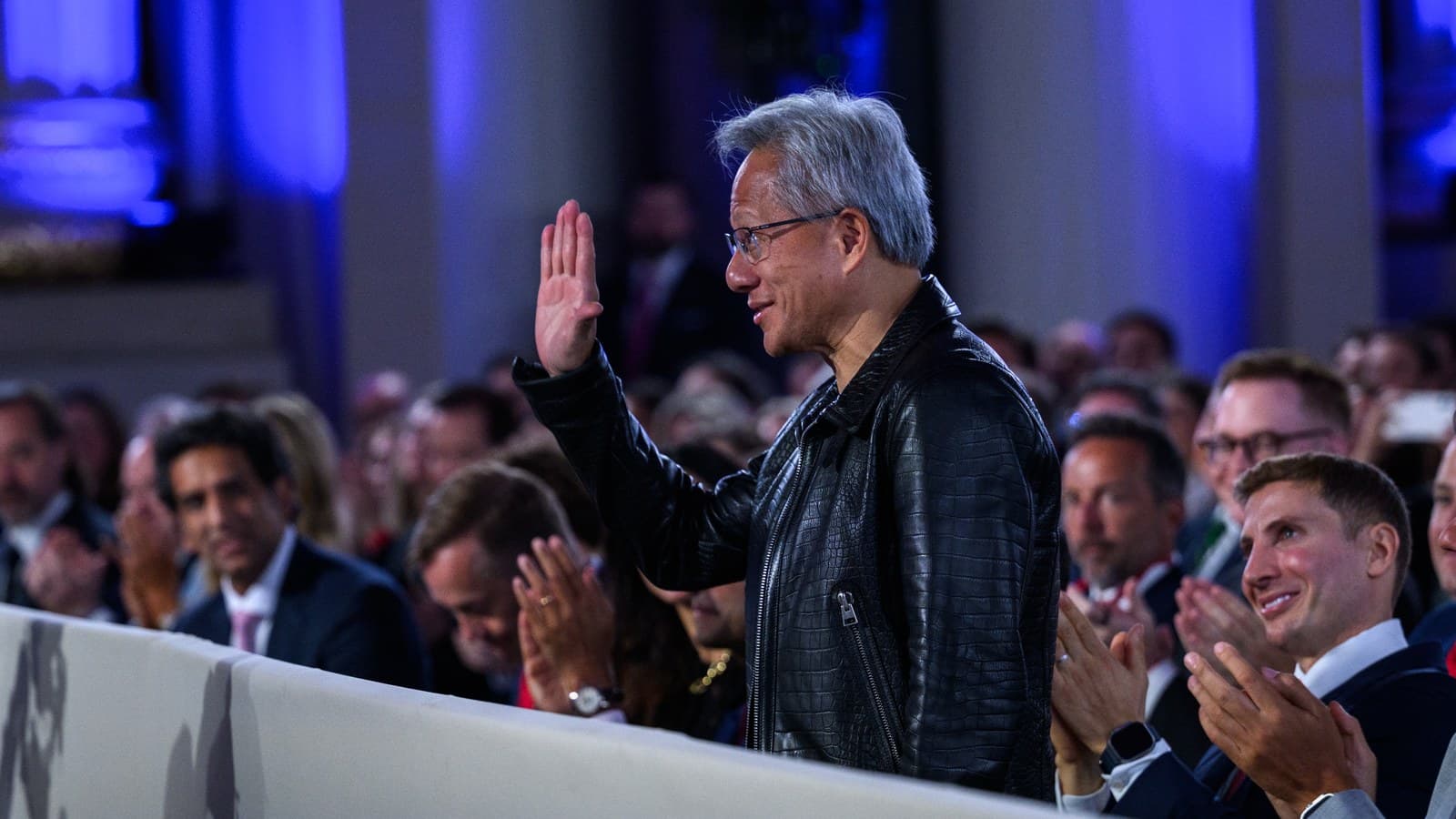
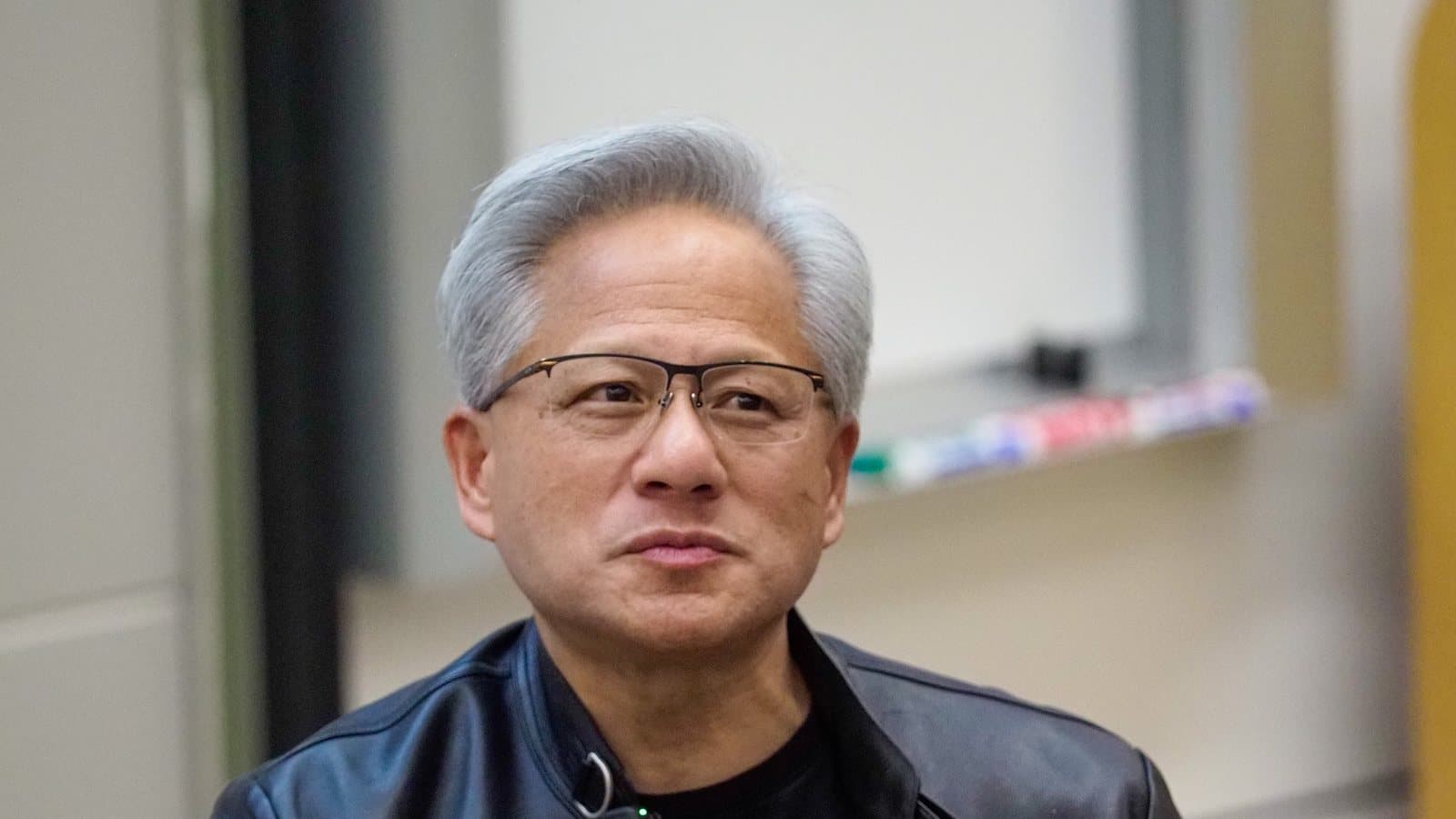
Cover image: Jensen Huang speaking at Stanford University in April 2026.
Tags
Frequently asked questions
- Did Jensen Huang admit to a security breach at Nvidia?
- No. Huang admitted to an affair in an email to employees on 8 November 2026 and said he would cooperate with a board investigation into a reported foreign intelligence effort. Nvidia's board said it has no reason to believe national security or company secrets were compromised, which is its stated position before the review, not a finding.
- Is Jensen Huang under criminal investigation?
- No criminal charge or indictment against Jensen Huang has been announced. The investigation is an internal review commissioned by Nvidia's board of directors and overseen by a committee of independent directors with outside counsel. The intelligence assessment at the center of the reporting comes from unnamed officials cited by the New York Times.
- What is Megaspeed and how is it connected to the Nvidia inquiry?
- Megaspeed is a Singapore-based cloud provider that US officials have suspected of helping Chinese customers work around restrictions on AI chip sales. US intelligence reportedly assessed that Alice Huang, a Chinese citizen and Megaspeed executive also known as Huang Le, was recruited to gather information on Jensen Huang. No charge has been filed against her.
- When are Nvidia's earnings call and the congressional briefing?
- Nvidia's third-quarter fiscal 2027 results call is scheduled for Tuesday 17 November 2026 at 2 p.m. PT (5 p.m. ET). Three Republican House committee chairs asked Jensen Huang to appear for a joint closed-door briefing on 18 November, the following day.

TPW Editorial
Editorial Team
TechPastWeek's editorial team reports and edits every story we publish. We research each piece against primary and credible secondary sources, and a human editor reviews and signs off before it goes live.