DeepSeek Plans to Train Its Next Flagship Model on Huawei Silicon
Chinese reports say DeepSeek V5 will be pre-trained on Huawei's Ascend 950 and ship in 2027, testing whether domestic chips can replace Nvidia at the frontier.

On this page
Key takeaways
- Caiwen News and STAR Market Daily reported on 3 November 2026 that DeepSeek plans to pre-train its V5 model mainly on Huawei's Ascend 950 chips, targeting 2027.
- Neither DeepSeek nor Huawei has confirmed the plan. V5 is reported to be in a selection phase, with specifications and launch timing undisclosed.
- Huawei's Ascend chips have so far been used at DeepSeek mainly for inference rather than training, according to STAR Market Daily.
- DeepSeek-V3 required 2.788 million H800 GPU-hours for full training, and Nvidia engineers helped DeepSeek optimise its software, Reuters reported in January 2026.
- Huawei has pulled the Ascend 960DT forward three quarters to the first quarter of 2027, with the Ascend 960PR due in the third quarter of 2027.
On 3 November 2026, Caiwen News and STAR Market Daily reported that DeepSeek plans to pre-train its next flagship model, V5, mainly on Huawei's Ascend 950 chips, with 2027 as the expected window. Both outlets cited industry and supply-chain sources. Neither DeepSeek nor Huawei has confirmed the plan, and neither company has published anything about it.
Related reading: DeepSeek Open-Sources a Software Stack for Huawei's Ascend Chips, Aiming at CUDA · Huawei Pulls Ascend 960DT to Q1 2027 and Unveils a Near-Packaged-Optics SuperPoD.
The claim is narrow, but it points at a large question. TrendForce's account of the two reports notes that Ascend chips have so far been used at DeepSeek mainly for inference, the work of running a finished model. Pre-training is the stage that produces the model in the first place. Caiwen's sources said V5 could become DeepSeek's first large language model trained natively on Ascend 950 silicon.
That would be a first for the company and a test for the chip. Ascend has carried DeepSeek's inference work; a full pre-training run is the harder test. It runs for weeks across a large cluster and fails loudly when anything in the hardware, the interconnect or the software stack is off. DeepSeek has not said it is doing this. Two outlets, citing industry sources, say it plans to.
What the reports actually claim
The reporting is specific enough to be checkable, and modest enough to be believable. According to Caiwen, V5 is still in what the outlet calls a selection phase. Model specifications, capabilities and launch timing are undisclosed. Industry sources expect a release sometime in 2027, with the date dependent on training progress rather than a fixed schedule.
Two details in the coverage matter more than the headline. The first is that Ascend is already described as DeepSeek's primary training platform, with no reported adoption of chips from other Chinese vendors, Moore Threads included. That suggests the Huawei relationship is not a new fallback being assembled in a hurry. The second is that Huawei holds no equity in DeepSeek, according to Caiwen's sources, and the cooperation is limited to products, computing resources and technical optimisation.
Those claims sit awkwardly beside the inference framing, and the reports do not reconcile them. A platform can be the default for training work in general while the largest runs still go elsewhere. Which reading is right decides how much of a break the V5 plan represents.
The wording also leaves room. “Primarily” is not “exclusively”, and the reports do not say whether Ascend 950 would carry the whole run or most of it, with Nvidia or older Huawei parts filling in around the edges. A hybrid cluster is a smaller claim than a clean break, and the difference matters for anyone reading the story as proof that export controls have been neutralised.
STAR Market Daily's piece supplies the cleaner framing: Ascend has so far been an inference chip for DeepSeek rather than a training one. Digitimes treated the report as a test of whether a Chinese alternative to Nvidia can work at the frontier. That is the right way to read it, as long as the conditional stays attached.
Reported, not announced
This is press reporting based on unnamed industry sources, not a company announcement. Neither DeepSeek nor Huawei has confirmed that V5 exists, that pre-training has started, or that Ascend 950 will carry it. The 2027 date is an expectation, not a schedule. Nothing here shows that Huawei's chips match Nvidia on performance, only that a Chinese lab is reportedly preparing to find out.
Why inference is the easier half
Serving a model and training one place different demands on a chip, and the gap explains why the reported plan is a bigger step than it sounds.
Inference runs data through the network in one direction. The weights are fixed, and the job is to move them through the hardware fast enough and cheaply enough to answer a request. Memory capacity and bandwidth dominate, and a cluster can be built from many small, independent jobs that do not need to agree with each other.
Pre-training runs the same data forward and backward, then updates the weights. That means holding the weights, the gradients, the optimiser state and the activations for every layer in flight. It means an all-reduce of gradients across the whole cluster on every step, so the interconnect becomes part of the critical path rather than a supporting actor. And it means keeping a single job alive for weeks. One accelerator dropping out can corrupt a run that has consumed a month of compute and power unless the checkpointing and restart logic are good enough to absorb it.
None of that is impossible on non-Nvidia hardware. It is simply where the engineering difficulty concentrates. A chip that serves a model well can still be a poor place to train one, and the software stack that makes training tolerable is the part Huawei has been building out in public.
Nothing in the reporting shows that Ascend has trained a frontier model. The claim is that DeepSeek plans to try.
The squeeze that makes Huawei plausible
The reported motive is arithmetic, not sentiment. US export controls limit DeepSeek's access to Nvidia's newest high-end accelerators, and Caiwen reported that previously approved H-series GPUs are struggling to meet the training demands of models such as V4 and V5.
DeepSeek knows what Nvidia hardware costs in effort, because it has measured it. DeepSeek-V3 needed 2.788 million H800 GPU-hours for a full training run, and Reuters reported in January 2026 that Nvidia engineers helped the company optimise its algorithms, software frameworks and hardware. That detail is easy to skip past. DeepSeek's reputation for efficiency was built with the chip vendor's own engineers in the room, on the chip vendor's stack. Reproducing that on Ascend means rebuilding the tuning relationship as well as the kernels.
The counterweight is a Bloomberg report from September 2026 that DeepSeek's large Ascend order was for running models, not training them. If that is right, the training cluster described in the new reports is either being assembled now or has not been proven at the scale the plan requires. Both things can be true: a company can buy inference capacity in volume while preparing a training deployment on the same hardware family.
Huawei's calendar is moving at the same time
The timing of the report is not accidental. Huawei has been compressing its Ascend road map. STAR Market Daily, citing rotating chairman David Wang, reported that the Ascend 960DT was pulled forward three quarters to the first quarter of 2027. The Ascend 960PR is slated for the third quarter of 2027, with the Ascend 970 in 2028 and the Ascend 980 in 2029, according to Guancha.
Set that against a V5 training run expected in 2027 and a detail stands out. The model would be trained on the 950, the generation that the 960DT is due to succeed in the first quarter of 2027. That is normal in chip terms, since a training run has to commit to hardware long before it finishes. It also means the first frontier attempt on Ascend would use the part Huawei is already moving past, which leaves less headroom if the run needs more compute than planned.
Huawei's commercial position in China has improved alongside the road map. The company said in October 2026 that Ascend's market share in China had surpassed Nvidia's, a claim TrendForce reported without independent confirmation. And the software side has been filling in: DeepSeek open-sourced a software stack for Ascend in October 2026, including the TileLang kernel language and libraries for matrix multiplication and inter-chip communication. A model trained on Ascend needs exactly that layer to exist before the run starts.
The money behind DeepSeek is the other background fact. The company has been reported to be raising about $15 billion at a valuation near $74 billion, and Caiwen's sources addressed the speculation directly by saying Huawei has no stake. Capital of that size buys accelerators, data-centre capacity and engineers. It does not buy a proven training stack.
What would count as evidence
The report will be settled by artifacts, not by denials or confirmations. Four would move it from claim to fact.
A cluster description would be the start. The evidence would be a defined number of Ascend 950 accelerators in one place, with an interconnect topology and a utilisation figure. No such disclosure exists.
Training logs would be stronger evidence. Loss curves, throughput per chip and the number of tokens processed would show that a run happened and how efficient it was. DeepSeek published that kind of detail for V3. If V5 arrives with a technical report that names Ascend, the question shifts from whether the shift is possible to how much it cost.
Independent benchmarks are harder to get. Huawei and DeepSeek both have an interest in favourable numbers, and neither has released a training comparison against Nvidia hardware at frontier scale. Outside teams running the same workload on both would be more convincing than any launch slide.
The model itself is the last piece. A shipped V5 with published weights and a paper that describes the hardware would answer most of what the reports leave open. Until then, the strongest available evidence is a sourcing trail: two Chinese financial outlets, unnamed industry sources, and a pair of companies that have said nothing on the record about it.
What to watch
- Confirmation or denial. A statement from DeepSeek or Huawei, even a vague one, would tell you whether the plan is real or was a supply-chain rumour that outlived its origin.
- Ascend 950 deployment. Reports of a single large training cluster, rather than distributed inference capacity, are the closest thing to a leading indicator.
- The V5 technical report. If it names Ascend and gives throughput numbers, the debate moves to efficiency rather than feasibility.
- Huawei's 960DT timing. A slip in the first-quarter 2027 date would raise questions about the generation after the one V5 is reported to use.
- Export-control changes. Any loosening of US rules would change the economics that reportedly pushed DeepSeek toward Huawei in the first place.
DeepSeek is reported to be preparing its most important training run on Chinese silicon, and nobody involved has confirmed it. The next twelve months will show whether that was a plan or a prediction.
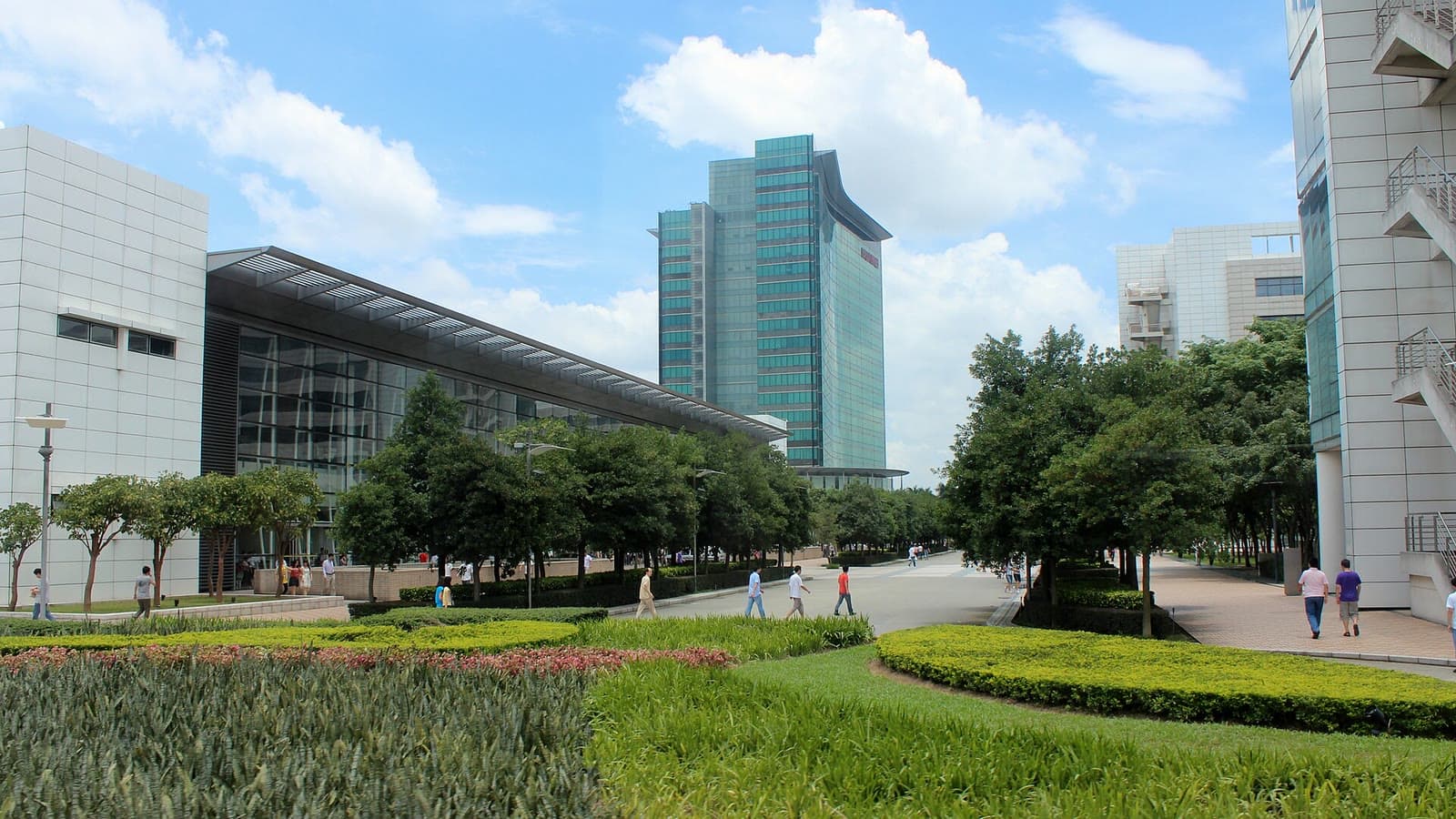
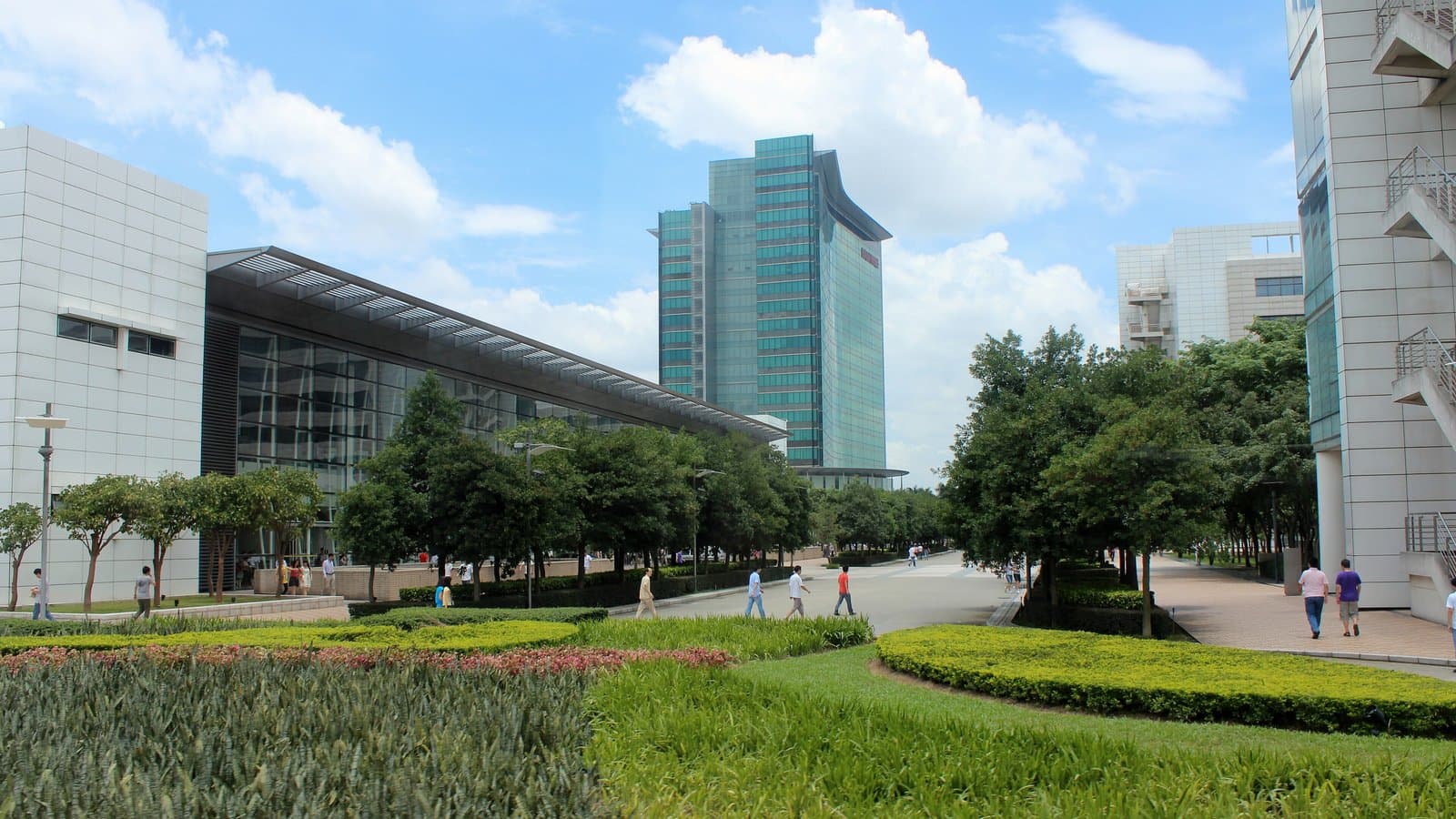
Cover image: Huawei's headquarters campus in Shenzhen, by RG72, CC BY-SA 4.0, via Wikimedia Commons.
Tags
Frequently asked questions
- Is DeepSeek V5 being trained on Huawei chips?
- Not confirmed. Reports on 3 November 2026 said DeepSeek plans to pre-train V5 mainly on Huawei's Ascend 950 chips, but neither company has confirmed the plan and V5 is reported to be still in a selection phase.
- When will DeepSeek V5 be released?
- Industry sources expect a release sometime in 2027, depending on how training progresses. DeepSeek has not announced a date, a specification or a capability target for the model.
- Why would DeepSeek move training from Nvidia to Huawei?
- US export restrictions limit DeepSeek's access to Nvidia's latest high-end AI chips, and previously approved H-series GPUs are reportedly struggling to meet the training demands of models such as V4 and V5, according to Caiwen News.
- Does Huawei own a stake in DeepSeek?
- No. Caiwen's sources said Huawei holds no equity in DeepSeek and that the cooperation is limited to products, computing resources and technical optimisation.

TPW Editorial
Editorial Team
TechPastWeek's editorial team reports and edits every story we publish. We research each piece against primary and credible secondary sources, and a human editor reviews and signs off before it goes live.