Nvidia Mandates Fleet Intelligence Tracking for Southeast Asia Cloud Partners
Nvidia now requires Southeast Asian cloud partners to install its Fleet Intelligence tracking agent as a 51% non-Chinese sales rule reshapes regional AI deals.

On this page
Key takeaways
- On 6 November 2026, Bloomberg and Tom's Hardware reported that Nvidia made its Fleet Intelligence software mandatory for Nvidia Cloud Partner status in Southeast Asia.
- Fleet Intelligence uses GPU telemetry, network configuration data and latency to Nvidia cloud endpoints to estimate accelerator locations without hardware GPS.
- The Financial Times reported on 3 November 2026 that Nvidia verbally instructed cloud partners to sell at least 51% of new computing capacity to non-Chinese customers.
- On 4 November 2026, Oracle cancelled a five-year, $7 billion deal to lease about 100,000 AI chips in Southeast Asia to Tencent after US officials raised security concerns.
- Research nonprofit C4ADS linked $4.6 billion in hardware purchases to Singapore-based Megaspeed International and traced $13.4 million in Nvidia GPUs through shell routes.
Nvidia has made enrollment in its Fleet Intelligence hardware-telemetry and location-monitoring software mandatory for cloud computing and data center operators in Southeast Asia seeking to win or retain official Nvidia Cloud Partner status, Bloomberg and Tom's Hardware reported on 6 November 2026, citing people familiar with the requirements. The move turns an optional diagnostic agent from December 2025 into a condition for preferred GPU supply across Singapore, Malaysia and neighboring hubs.
Related reading: Nvidia's China AI-Chip Share Falls to 34 Percent as Huawei Closes the Gap · Tencent Reportedly Leases 100,000 AI Chips From Oracle in a $7 Billion Overseas Deal.
Two other shifts hit the region the same week. On 3 November 2026, the Financial Times reported that Nvidia verbally instructed cloud partners to sell at least 51% of computing capacity on new contracts to non-Chinese customers, after trimming roughly half of the Asian companies on its pre-approved buyer list earlier in 2026. One day later, on 4 November 2026, the Financial Times reported that Oracle cancelled a five-year, $7 billion deal to lease roughly 100,000 advanced AI accelerators in Southeast Asia to Tencent after US officials approached Oracle directly with national-security concerns.
How the Nvidia Cloud Partner badge became a compliance lever
Buying Nvidia servers through standard distribution channels does not require Fleet Intelligence. Participation stays voluntary for hardware owners who do not seek official partner credentials, according to TechRepublic.
Skipping the Nvidia Cloud Partner (NCP) program is expensive for a regional cloud operator. The NCP badge carries Nvidia's public endorsement and grants preferred access to supply-constrained AI accelerators across the Hopper, Blackwell and Vera Rubin architectures. Demand for those GPUs still exceeds supply. Tying Fleet Intelligence to NCP status makes telemetry enrollment the price of priority allocation.
Earlier in 2026, following May 2026 guidance from the US Bureau of Industry and Security (BIS), Nvidia removed roughly 50% of the Asian firms on its pre-approved buyer list. That cut hit neocloud operators in Singapore, Malaysia and Japan. Nvidia also added site visits, contract reviews and end-user interviews.
Nvidia did not immediately comment on the 6 November 2026 Bloomberg report. The chipmaker also declined to clarify whether existing Southeast Asian NCP holders must retroactively install Fleet Intelligence to keep their badge, or whether the rule applies only to new applicants. Whether other regions will face the same mandate is still unclear.
Inside Fleet Intelligence: latency triangulation and cryptographic attestation
December 2025 was when Fleet Intelligence first appeared, pitched to infrastructure teams trying to keep GPU clusters from sitting idle. In statements cited by Bloomberg and Tom's Hardware on 6 November 2026, Nvidia describes the tool as "a customer-installed agent for monitoring hardware health, integrity and inventory."
According to the Nvidia Fleet Intelligence Agent documentation, the software is published under the Apache 2.0 license on GitHub at NVIDIA/fleet-intelligence-agent and combines four technical layers:
- Open-source stack: Built on GPUd, the NVIDIA Data Center GPU Manager (DCGM) and the NVIDIA Attestation SDK.
- Host footprint: Runs as a read-only host agent using less than 500MB of RAM and under 1% of CPU capacity, without hardware GPS chips or a remote kill switch.
- Geolocation without GPS: Estimates and records the physical location of individual AI accelerators inside data centers using GPU telemetry, network-level configuration data and network latency measurements to Nvidia cloud endpoints, displaying inventory by global compute zones in the Health portal on NVIDIA NGC.
- Cryptographic attestation: Supports Hopper, Blackwell and Vera Rubin GPUs, using the NVIDIA Remote Attestation Service (NRAS) and Reference Integrity Manifests (RIMs) on Blackwell and Vera Rubin to verify hardware integrity.
Round-trip network latency cannot identify which room a rack sits in. It can tell whether a Blackwell server billed to Johor, Malaysia is actually answering packets from Shenzhen. Light in fiber moves at a fixed speed.
Location logs do not go automatically to Nvidia or Washington regulators. An Nvidia representative told Bloomberg that if US officials want data from Fleet Intelligence, they must request it directly from the cloud operators.
The verbal 51% rule for non-Chinese cloud capacity
Physical smuggling is only half of the Southeast Asian problem. Chinese technology companies have also legally rented remote access to export-controlled Nvidia chips inside third-party data centers in Singapore and Malaysia.
On 3 and 4 November 2026, the Financial Times and Forbes reported that Nvidia instructed cloud and data center partners globally, with a focus on Asian regional neoclouds, that at least 51% of computing capacity on new contracts must go to non-Chinese customers. That caps rentals to Chinese companies below half of available Nvidia compute.
Sources told the Financial Times and DataCenterDynamics that Nvidia gave the 51% instruction verbally rather than writing it into partner contracts. Nothing was put on paper.
"Data centers and clouds built on American chips are the foundation that American model and application makers need to compete worldwide. Longstanding US policy encourages every cloud to build on American infrastructure and to win business everywhere they can. America's longstanding policy has always supported the build-out of American infrastructure worldwide, bringing prosperity, influence, and jobs home." Nvidia spokesperson statement to the Financial Times, cited on 4 November 2026.
Many Southeast Asian neoclouds financed their power and real-estate commitments assuming cash-rich Chinese internet companies would rent most of their clusters. Forcing those operators to sell at least 51% of new capacity to non-Chinese buyers pits them directly against AWS, Microsoft Azure and Google Cloud for regional enterprise accounts.
Oracle walks away from a $7 billion Tencent lease
Around 30 September and 1 October 2026, as covered in our 5 October report, Tencent signed a five-year lease worth about $7 billion, or $1.4 billion a year, with Oracle to remotely access roughly 100,000 advanced AI accelerators across Oracle data centers in Southeast Asia. About 30% was paid upfront.
Weeks later, the deal was dead. On 4 November 2026, the Financial Times reported, citing two people familiar with the matter, that Oracle cancelled the contract after US government officials approached the company directly with national-security concerns. Meanwhile, according to the Financial Times and BusinessKorea, senior officials from Guangdong Province visited Tencent's Shenzhen headquarters and urged the company to buy domestically produced Chinese semiconductors.
Walking away from $7 billion barely moved Oracle's backlog. As noted by 24/7 Wall St., the Tencent contract equaled roughly 1% of Oracle's $664 billion in remaining performance obligations (RPO). On 4 November 2026, Oracle shares fell 1.92% to close at $123.77, while Nvidia slipped 3.2%. Even so, US pressure looks selective: Oracle still holds major cloud contracts with ByteDance, including Malaysian data center workloads.
Megaspeed, Super Micro and the Southeast Asian diversion trail
From 2022 through 2025, research nonprofit C4ADS examined regional semiconductor transactions, identifying $13.4 million of Nvidia A100, H100 and AD102 GPUs moving through shell routes and linking $4.6 billion in hardware purchases to Singapore-based Megaspeed International Pte.
Founded in 2023, Megaspeed won NCP status within a week of its founding. It has since come under US and Singaporean investigation over suspected chip diversion to China, including US scrutiny of a Megaspeed executive covered in our 31 October report. In April 2026, Megaspeed's Malaysian data center landlord terminated its contract and reallocated 68.4 megawatts of capacity to another cloud provider, and two other Southeast Asian data center operators disputed Nvidia's account of where Megaspeed's chips sit. Megaspeed has denied any wrongdoing.
Nvidia CEO Jensen Huang called his dealings with Megaspeed "completely normal" and said "we've studied all their deployments of our GPUs and counted every one," according to Bloomberg and Tom's Hardware on 6 November 2026. An Nvidia spokesperson added that the company is "confident that if the U.S. government believes that any person is a threat to American industry, it would let us know."
Criminal cases have stacked up alongside the partner audits. In March 2026, US authorities arrested Super Micro Computer co-founder Wally Liaw on charges of plotting to smuggle $2.5 billion of Nvidia GPU servers into China, and prosecutors unsealed a $300 million smuggling indictment against Earthmade Computer Inc. (see our 4 October report).
Where the reporting leaves gaps and legal limits
What the November reports do not establish
The mandatory Fleet Intelligence requirement for Southeast Asian Nvidia Cloud Partners is reported by Bloomberg and Tom's Hardware citing unnamed people familiar with the matter, and Nvidia has not publicly confirmed the mandate or clarified whether existing partners must enroll retroactively. Enrollment does not automatically transmit location data to Nvidia or US regulators; Washington officials must request logs directly from cloud operators. Separately, the 51% non-Chinese customer rule was reportedly delivered verbally, and neither Oracle, Tencent nor the White House has publicly confirmed the $7 billion cloud lease or its cancellation on the record.
Congress still has not settled the underlying legal question. Shipping an H100 or Blackwell server to China without a license violates US export rules, but renting remote compute on that same server from Singapore or Malaysia to a team in Shenzhen remains legal under existing Commerce Department regulations.
On 12 January 2026, the US House passed the Remote Access Security Act by a 369 to 22 vote to let the Commerce Department regulate offshore cloud access to controlled chips. The bill has sat stalled in the Senate ever since. We will see whether lawmakers revisit it before the session ends.
What to watch
Three tests will show how far these rules reach in 2027. First is whether existing Southeast Asian NCP holders must deploy Fleet Intelligence on already installed Hopper and Blackwell clusters before receiving Vera Rubin allocations, or whether the rule only gates newcomers.
Second is how Washington obtains the telemetry. Because Fleet Intelligence does not automatically share location records with Nvidia or the US government, BIS investigators will either have to request logs from Singaporean and Malaysian cloud operators case by case or make log sharing a condition of future export licenses.
Third is whether US officials leave pre-existing Chinese cloud contracts in Southeast Asia untouched. Oracle cancelled Tencent's $7 billion lease after a direct nudge from Washington, yet ByteDance's Malaysian workloads with Oracle continue to run.
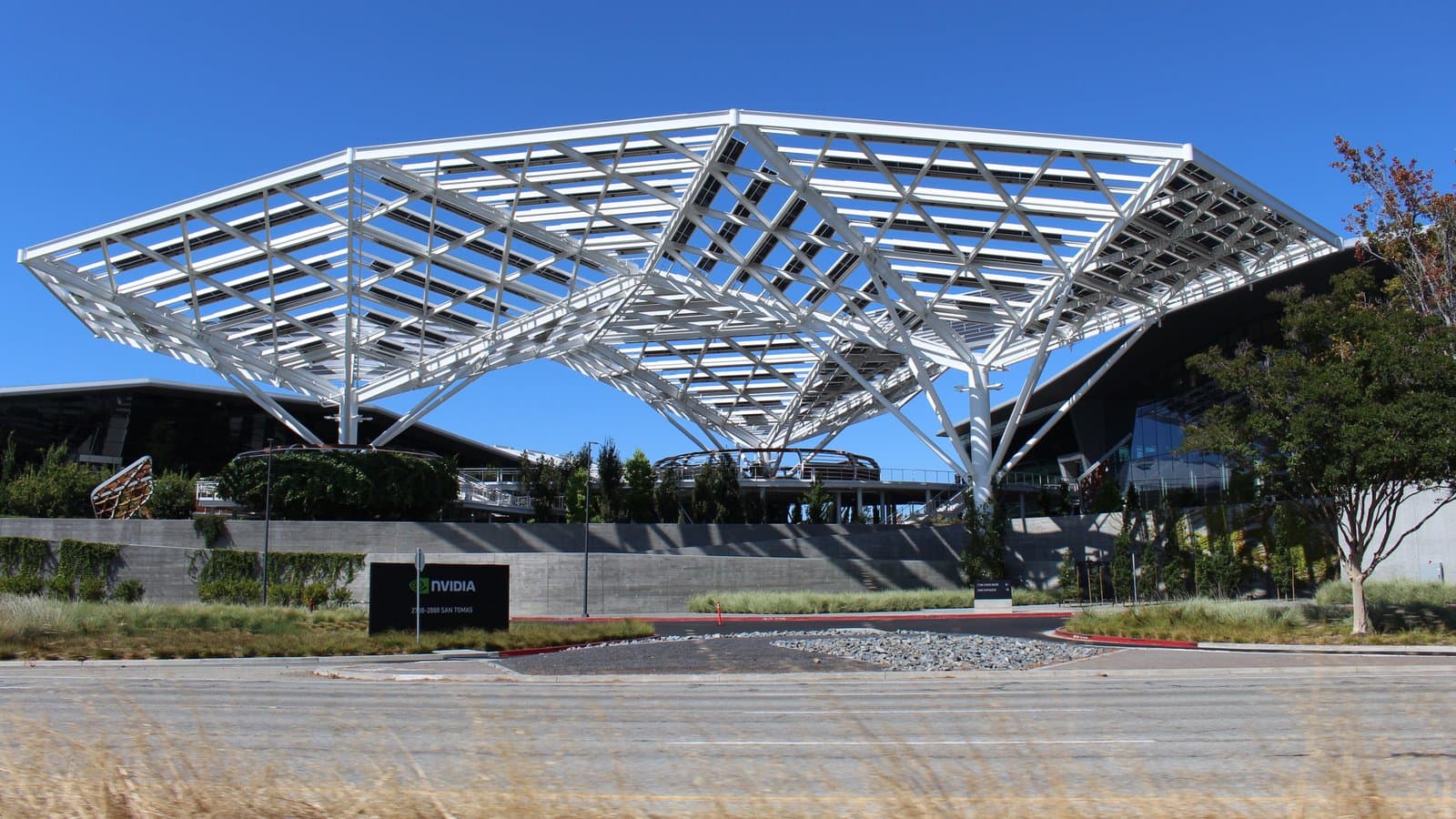
Cover image: Nvidia headquarters at 2788-2888 San Tomas Expressway in Santa Clara, California, by Coolcaesar, CC BY-SA 4.0, via Wikimedia Commons.
Tags
Frequently asked questions
- What is Nvidia Fleet Intelligence and how does it track AI chips?
- Introduced in December 2025, Nvidia Fleet Intelligence is a customer-installed software agent built on GPUd, DCGM and the NVIDIA Attestation SDK. Instead of hardware GPS, it uses GPU telemetry, network configuration data and network latency to Nvidia cloud endpoints to estimate the physical location of Hopper, Blackwell and Vera Rubin accelerators.
- Why did Nvidia make Fleet Intelligence mandatory in Southeast Asia?
- According to 6 November 2026 reports from Bloomberg and Tom's Hardware, cloud and data center operators in Southeast Asia must enroll in Fleet Intelligence to win or keep Nvidia Cloud Partner status. The badge grants priority access to supply-constrained Nvidia GPUs, turning software enrollment into a commercial condition amid US scrutiny of regional chip smuggling.
- What is Nvidia's 51% rule for cloud computing partners?
- The Financial Times reported on 3 November 2026 that Nvidia verbally instructed cloud partners globally, with a focus on Asian regional neoclouds, that at least 51% of computing capacity on new contracts must go to non-Chinese customers. Earlier in 2026, Nvidia also cut roughly half of the Asian companies on its pre-approved buyer list.
- Why did Oracle cancel its $7 billion AI chip lease with Tencent?
- The Financial Times reported on 4 November 2026 that Oracle walked away from a five-year, $7 billion agreement to lease roughly 100,000 AI accelerators in Southeast Asian data centers to Tencent after US government officials approached Oracle directly with national-security concerns. Neither Oracle, Tencent nor the White House has publicly confirmed the cancellation.

TPW Editorial
Editorial Team
TechPastWeek's editorial team reports and edits every story we publish. We research each piece against primary and credible secondary sources, and a human editor reviews and signs off before it goes live.