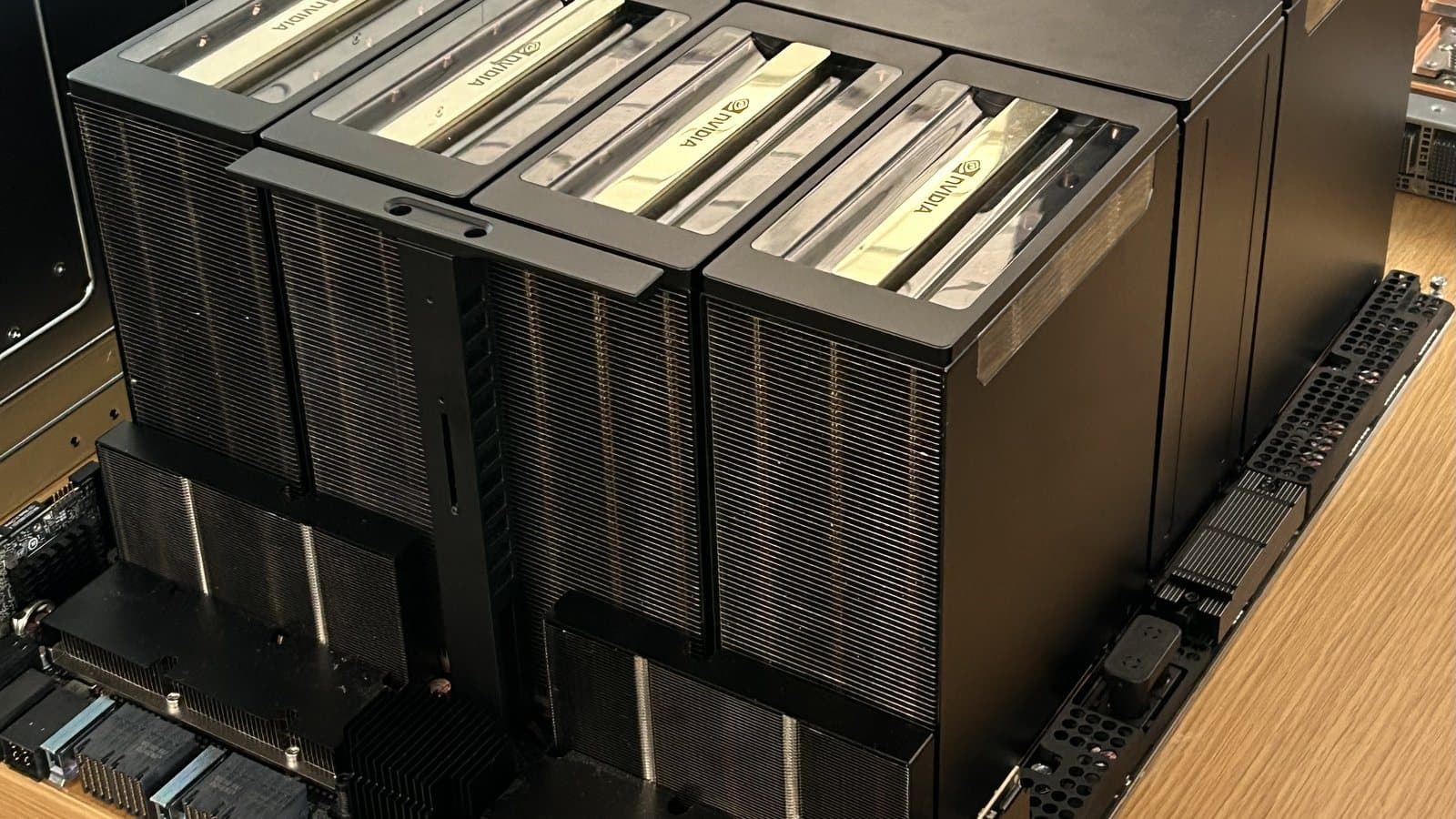
AMD's record quarter carried a $1.07 billion charge for OpenAI and Meta warrants
AMD's record data center quarter came with a $1.07 billion non-cash charge for the stock warrants it gave OpenAI and Meta, plus potential dilution ahead.

On this page
Key takeaways
- AMD reported third-quarter 2026 revenue of $13.38 billion on 3 November, up 45% from $9.25 billion a year earlier and ahead of the $13.09 billion LSEG consensus.
- Data Center revenue reached a record $8.5 billion, up 97% year over year and 64% of total revenue, while Client and Gaming fell 8% to $3.7 billion.
- The quarter included a $1.07 billion non-cash charge, or 66 cents a share, for warrants issued to OpenAI and Meta as shipments under their chip deals ramp.
- Meta's February 2026 agreement covers up to $60 billion of AMD chips over five years and warrants for as much as 10% of AMD if milestones are met; OpenAI holds a similar option for roughly 10%.
- CFO Jean Hu said dilution would begin only after vesting and exercise conditions are satisfied, with more guidance expected in 2027.
AMD reported $13.38 billion in revenue for its September quarter, a record $8.5 billion of it from data centers, and a $1.07 billion non-cash charge tied to the stock warrants it granted OpenAI and Meta. The results, published on Tuesday 3 November 2026 for the quarter ended 26 September, beat the $13.09 billion consensus compiled by LSEG, CNBC reported.
Related reading: AMD Will Buy World Labs for $8.2 Billion and Make Fei-Fei Li Its Chief Scientist · Meta's Broadcom-Designed, TSMC-Made AI Chip Reaches Data Centers in Early 2027.
The charge works out to 66 cents a share, Reuters reported, and it appeared as shipments under the two chip agreements began to ramp. No cash left AMD for OpenAI or Meta. The figure is an accounting estimate of what the warrants are worth, recognized in the income statement as the conditions attached to them start to be satisfied.
That distinction matters for anyone reading the headline numbers. A charge of that size can look like a payment, a penalty or a write-off. It is none of those things.
A charge that moves no cash
A warrant is a right to buy shares later, on terms set in the agreement. AMD wrote those rights into supply deals with two of the largest buyers of AI compute, so the cost to the company is not money spent but a claim on its own equity. Reuters describes the $1.07 billion as a non-cash charge. It reduces reported profit and leaves the bank balance alone.
The accounting follows the deal. AMD recorded the charge to account for the warrants as shipments under the agreements ramped, and it has not disclosed the full schedule on which the cost is recognized. This is why a quarter with record data center revenue can carry a billion-dollar charge at the same time: the two numbers come from the same set of contracts.
Dilution is a separate event, and it has not happened. The charge is a cost already taken. Dilution would begin only if the warrants vest and the holders exercise them, at which point AMD issues new shares and the share count rises. CFO Jean Hu said on the analyst call that the warrants would begin diluting shareholders once OpenAI and Meta satisfy vesting and exercise conditions, and that AMD expects to provide more guidance in 2027 on when those conditions could be met, according to Reuters.
What the charge is not
The $1.07 billion is not cash paid to OpenAI or Meta, and it is not a current transfer of shares. It is an accounting cost for warrants whose vesting depends on shipment volumes, commercial milestones and AMD's share price. The 10% figures in both deals are maximums, not current stakes, and AMD has not said when the thresholds might be reached.
What $60 billion of orders bought
The larger of the two arrangements is with Meta. In February 2026, AMD agreed to sell up to $60 billion of AI chips to the company over five years, with warrants that could let Meta buy as much as 10% of AMD if it meets certain milestones, Reuters reported. The OpenAI deal came first, in 2025, and gave OpenAI the option to buy up to roughly 10% of AMD.
Both sets of warrants carry share-price thresholds alongside shipment and other commercial vesting conditions, per Reuters. That combination is the part worth watching. A pure volume target would reward a customer for ordering more chips. A share-price threshold ties the value of the reward to how the market values AMD, which means the customer's return improves as AMD's stock rises, independent of how well the chips perform.
Reuters put the potential exercise price in stark terms: OpenAI and Meta could own a large stake for as little as a penny apiece if the warrants fully vest and are exercised. The value at that point depends on AMD's share price, and the potential increase in the share count is substantial.
The structure is not unique to AMD. Cerebras granted OpenAI warrants against a $20 billion commitment. Marvell issued Google warrants tied to a potential $12.2 billion stake. Qualcomm gave Amazon warrants in a $60 billion AI data center chip deal. Equity has become a standard sales tool in the market for accelerators, with several such deals now on the record.
Customers, suppliers and shareholders at once
The uncomfortable part of the arrangement is the loop it creates. AMD sells chips to OpenAI and Meta and books revenue. It also hands those same customers a claim on its equity. And in adjacent deals, it puts money into them: AMD agreed to invest $1 billion in Meta's equity offering and has committed up to $5 billion in Anthropic, which also buys its chips. Meta said last week that its Helios racks, AMD's rack-scale AI system, are up and running, CNBC reported.
None of this is secret: the deals were announced and the warrants show up in the financial statements. But it makes the quality of the revenue harder to read from the outside. A dollar of data center sales now arrives with a contingent claim on AMD's own stock attached, and in some cases with AMD capital going back to the buyer. When part of a customer's return comes from the supplier's equity, the sales figure and the share price start to feed each other.
That cuts both ways. If AMD's stock climbs, the warrants are worth more, which lowers the effective price the customers pay for chips and keeps them buying. If the stock falls, the incentive weakens at the same moment AMD's cost of capital rises. The warrants make the customer relationship move with the share price.
The quarter underneath the charge
Strip out the warrants and the operating business had a strong three months. Revenue rose 45% from $9.25 billion a year earlier. Data Center brought in $8.5 billion, up 97%, and accounted for 64% of total revenue, against 47% a year earlier, CNBC reported. GAAP gross margin was 54%, operating income $2.8 billion, net income $2.4 billion and diluted earnings $1.49 a share, AMD said. Adjusted earnings were $2.09 a share against about $1.95 expected, using LSEG's consensus; the adjusted figure is a non-GAAP measure, so it is not directly comparable with the GAAP number.
The weak spot was the consumer side. Client and Gaming revenue fell 8% to $3.7 billion, with gaming down 40%. AMD also faces a soft PC market: global shipments fell 4% in the second quarter of 2026 on memory and component costs, according to Counterpoint data cited by CNBC. The company's growth now depends on data center demand, which is the same demand the warrant deals are designed to secure.
Guidance pointed higher. AMD told investors to expect about $17 billion in fourth-quarter revenue, against a $16.2 billion LSEG consensus, with gross margin around 55% versus the 55.3% StreetAccount estimate, CNBC reported. CEO Lisa Su said she expects server revenue to double year over year in 2027 and that data center AI growth would accelerate faster than the company projected 90 days earlier.
What is confirmed and what is forecast
The $13.38 billion in revenue, the $8.5 billion data center figure and the $1.07 billion charge are reported results for a closed quarter. The 2027 server doubling is a forecast without a numeric range attached. The fourth-quarter revenue figure is company guidance, not a result.
Why the market mostly shrugged
AMD shares rose about 8% in extended trading after the report, then pared the gain as election results came in, CNBC reported. The stock had already run up roughly 125% to 129% for the year before the results, which sets a high bar for any quarterly print. A charge that does not affect cash and does not yet affect the share count was easy for investors to look past.
Analysts have made a similar point about the deals themselves. Bob O'Donnell, chief analyst at TECHnalysis Research, told Reuters that incentives played a role in some sales but that the larger factor was demand for an alternative to Nvidia. “While I do believe incentives played a role in some of their sales, I believe the bigger issue is that there is pent-up demand for a serious alternative to Nvidia and AMD's products are now starting to compete on price/performance metrics,” he said.
That is the optimist's reading: the warrants are a discount, and the discount is doing its job. The skeptical reading is that the discount is masking how much of the demand would exist at full price. Neither side can settle the question yet, because the vesting conditions and shipment volumes are not public in enough detail to model.
Nvidia remains dominant, and analysts told Reuters that AMD's agreements are a vote of confidence, though unlikely to dent the lead. The competitive backdrop is mixed elsewhere. Intel reported data center revenue up 78% in its third quarter, but its stock fell 29% on 30 October on weak guidance, CNBC reported.
“Adoption is just starting, and we expect demand to grow sharply as agents are deployed more broadly and take on more complex work.” — Lisa Su, CEO, AMD, 3 November 2026
Caveats
Several things are not known. AMD has not disclosed the share-price thresholds in either warrant package, the shipment volumes required or the schedule on which the charge is recognized. The 2027 outlook for server revenue is a directional forecast, not guidance with a number, and the company has said only that it will give more detail in 2027 about when vesting might occur.
The 10% figures are maximums under the warrants, not current holdings. Neither company reaches that level unless every condition is met and the warrants are exercised. The ultimate cost to existing shareholders depends on AMD's share price at the time of exercise, which is unknowable now.
The quarterly comparisons also carry the usual caveats. Consensus figures come from LSEG and StreetAccount and can differ from other providers. The 8% stock move was an extended-trading snapshot taken before election results changed the broader market. And the $1.07 billion charge reflects a fair-value estimate made as the agreements ramp, not a fixed contractual price.
AMD has converted part of its sales effort into equity. The charge is booked. The share count is not yet affected. AMD has said it will provide more guidance in 2027 on when the vesting conditions might be met. Until then, the 10% figures are ceilings.
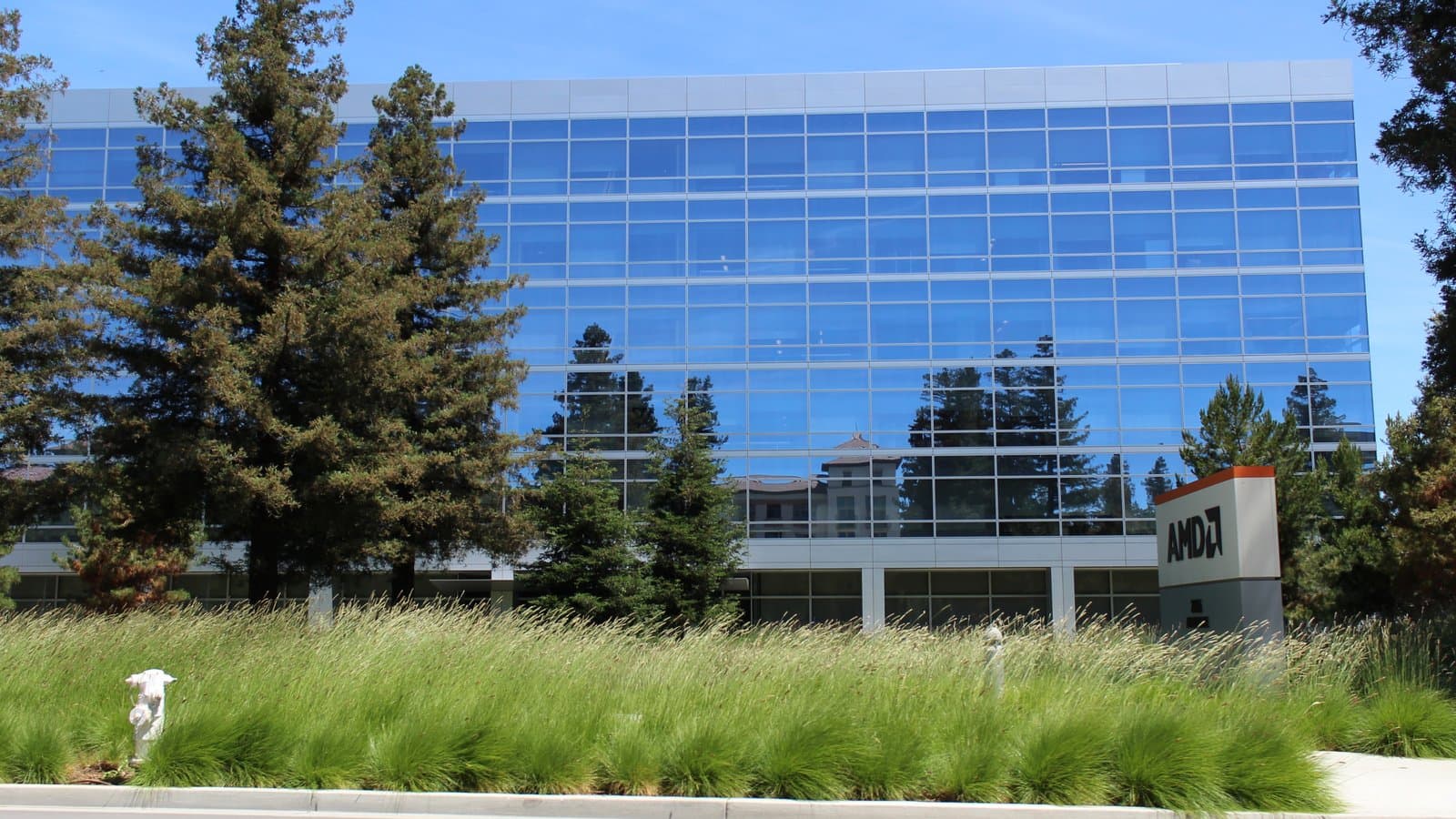
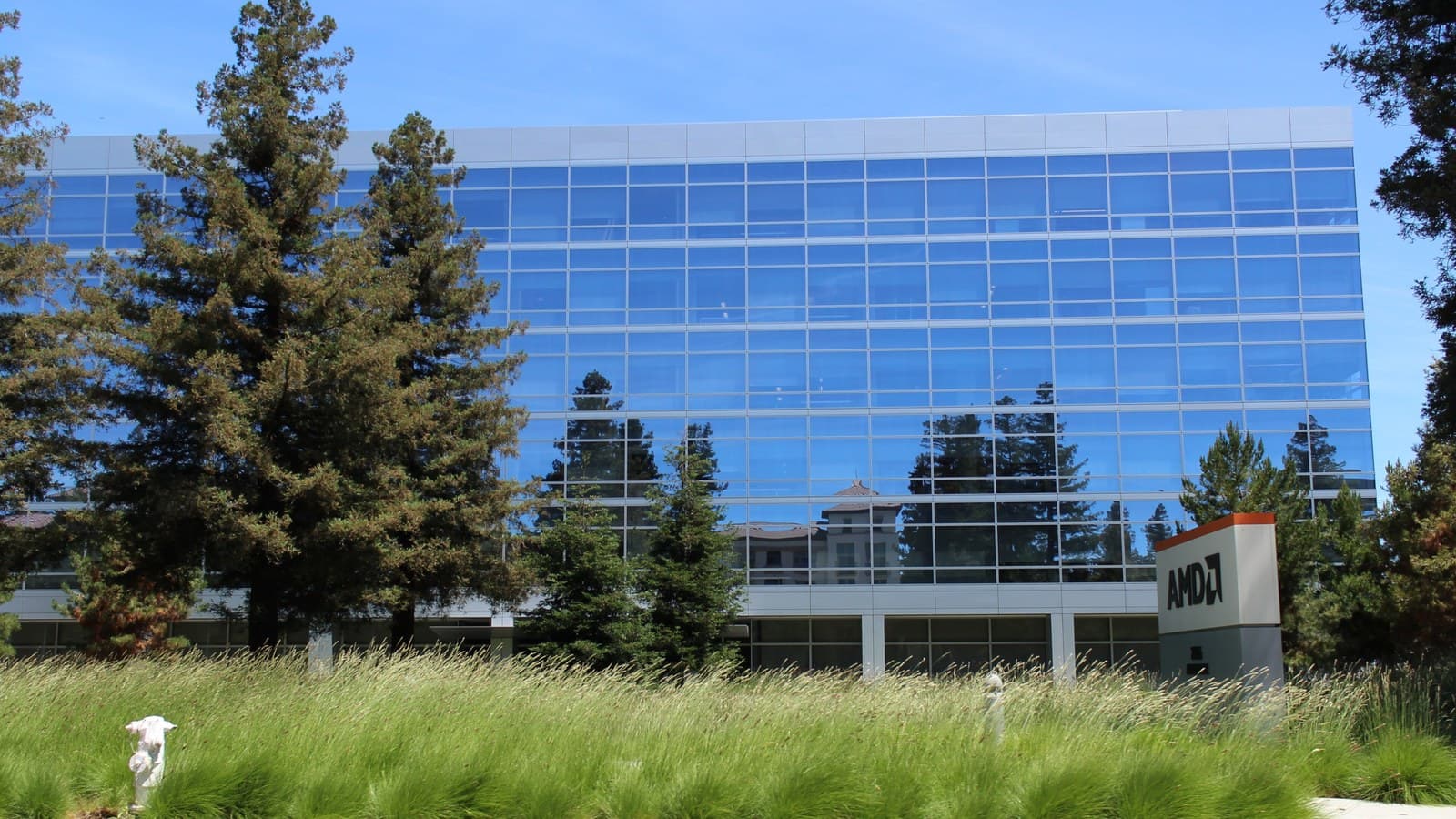
Cover image: the AMD headquarters at 2485 Augustine Drive, Santa Clara, California. Photo by Coolcaesar, CC BY-SA 4.0, via Wikimedia Commons.
Tags
Frequently asked questions
- Did AMD pay OpenAI or Meta $1.07 billion in cash?
- No. The $1.07 billion is a non-cash accounting charge for the fair value of stock warrants AMD granted to the two companies. It reduced reported profit but did not move cash out of AMD.
- Will the OpenAI and Meta warrants dilute AMD shareholders?
- Possibly, but not yet. The warrants vest only if shipment, commercial and share-price conditions are met. If they vest and are exercised, AMD would issue new shares and its share count would rise.
- How much of AMD could OpenAI and Meta own?
- Each agreement allows for warrants covering up to roughly 10% of AMD, which is a ceiling rather than a current holding. Reuters reports the ultimate value depends on AMD's share price at exercise.
- Why did AMD's stock rise after the report?
- AMD shares rose about 8% in extended trading on the revenue beat and strong data center growth, then pared those gains as election results came in on the night of 3 November 2026.

TPW Editorial
Editorial Team
TechPastWeek's editorial team reports and edits every story we publish. We research each piece against primary and credible secondary sources, and a human editor reviews and signs off before it goes live.